


How ai and artificial intelligence are transforming the hospitality industry: the rise of ai and the hotel tech report
First, the market is shifting fast. The 2025 State of Hotel Guest Technology Report shows AI agents are driving more direct bookings and reshaping guest interactions https://asksuite.com/blog/ai-agents-hospitality-industry/. Next, adoption moves beyond pilots. Hotel brands invest in systems and data to gain competitive advantage. Also, guests now expect speed and personalization. For example, over 50% of U.S. adults interact with AI multiple times daily, which increases comfort with automated touchpoints https://www.facebook.com/ULIGlobal/posts/more-than-half-of-us-adults-now-interact-with-ai-multiple-times-a-week-and-that-/1362381905917222/.
Furthermore, leaders in the hotel tech space report that process orchestration and conversational layers are priority areas. In fact, analysts show that process orchestration accounts for about 44% of AI deployments in commercial settings https://www.kore.ai/ai-research-reports/ai-use-cases-insights-report. Therefore, hotels focus on integrations with property management systems and CRM to serve guests faster. The rise of AI and the hotel tech report together give a clear picture: investment follows measurable impact.
Also, the shift affects both distribution and on-property service. Direct booking lifts incentivize hotel teams to rethink their booking engine, conversion rate optimization and the role of the website. Additionally, brands aim to protect hotel revenue by reducing dependence on third-party platforms while they improve customer satisfaction. Meanwhile, front-line staff benefit from automation that reduces repetitive work and lets staff to focus on moments that matter.
Finally, operations and back-office teams see a similar pressure to modernize. For example, email and request handling in operations creates heavy manual loads. Our platform uses AI agents to automate repetitive operational emails, cutting handling time and increasing accuracy. If you want deeper examples of automated assistant workflows and integrations, explore our virtual assistant resources for logistics use cases virtual assistant for logistics. Overall, the rise of AI is reshaping both guest-facing and back-office practices across the hotel tech report findings and beyond.
Use ai to automate booking and reservation flows and boost direct booking
First, hotels can automate booking flows to increase conversion and protect direct booking revenue. For example, conversational AI and AI agents on websites and messaging channels can answer product questions instantly and guide a guest to the booking engine. As a result, some properties report meaningful uplifts in direct booking conversion. Additionally, AI-driven messaging addresses abandonment by recovering guests with timely offers and frictionless checkout.
Next, implement CRO tactics alongside automation. Use targeted nudges, clear offers, and simplified forms. Also, connect the conversational layer to the booking engine and to property management systems so the reservation flow remains consistent. Therefore, KPIs such as conversion rate, abandonment rate, average booking value and time-to-confirmation become your north star. Track direct booking lift and compare channels weekly to measure impact.
Furthermore, AI helps with dynamic pricing and package suggestions in the booking path. For example, a conversational interface can recommend a room upgrade or late checkout during checkout, which increases hotel revenue and guest satisfaction. Also, automated email confirmations can confirm details, upsell services like room service or concierge services, and reduce manual tasks for reservations teams.
In addition, you can automate follow-ups for incomplete reservation attempts. Use intent detection to identify a high-value lead and route it for immediate engagement. Meanwhile, use analytics to A/B test messages and offers. If you want to automate communications and reduce repetitive work across operations, our automated logistics correspondence resources show similar workflows in action and explain setup steps automated logistics correspondence. Finally, measure results. Monitor booking engine performance, direct booking share and customer satisfaction to ensure the automation moves KPIs in the right direction.

Drowning in emails?
Here’s your way out
Save hours every day as AI Agents label and draft emails directly in Outlook or Gmail, giving your team more time to focus on high-value work.
Hotel tech and ai solutions: deploy ai agent, ai assistant, ai voice assistant and ai voice to improve guest experience
First, map the common AI tools you can deploy. AI chatbots handle FAQs, AI voice assistants take voice requests, and agentic AI coordinates multi-step tasks. Also, AI concierge features can recommend local experiences and manage in-stay requests. These AI solutions reduce friction and let staff to focus on higher-value interactions. For guest-facing channels, integrate conversational AI with CRM and property management systems for accurate, personalized replies.
Next, plan integrations carefully. The AI layer must connect to property management systems, booking engine and guest data to show availability and rates in real-time. Additionally, linking to guest profiles improves relevance and guest satisfaction. For example, when AI retrieves past preferences it can tailor room setup or amenities. Furthermore, generative AI can create contextual replies, but only when grounded in data to avoid mistakes https://masterofcode.com/blog/generative-ai-chatbots-in-the-travel-and-hospitality-industry-use-cases.
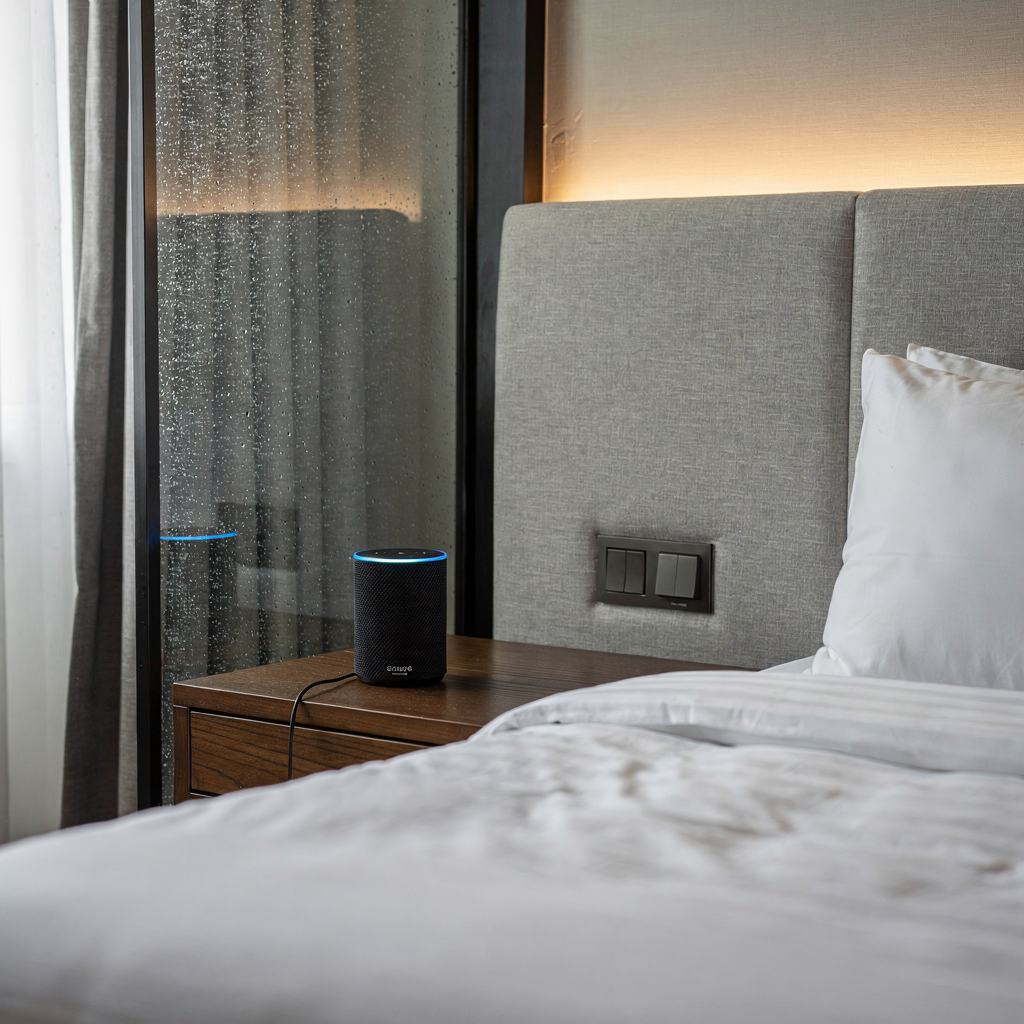
Also, choose where to deploy voice tech. An in-room AI voice assistant can control lighting, call room service, and provide local recommendations. Meanwhile, lobby kiosks with an AI voice interface reduce queueing at the front desk. However, keep human staff available for complex requests and warm interactions. Use AI to speed routine requests and to surface tasks that need empathy and human judgment.
In addition, back-office AI agents support operations by resolving structured tasks such as inventory updates and supplier inquiries. Our company automates the full email lifecycle for ops teams, which shows how AI can handle unstructured operational messages and route or resolve them with data grounding. For teams exploring integration patterns, see our guide on automated logistics correspondence for practical examples of AI handling complex, data-dependent emails automated logistics correspondence. Finally, test features on a limited scale. Launch chat and voice pilots, measure response time, guest satisfaction and operational efficiency, then scale the features that move the metrics.
Agentic ai and ai reservation: how to implement ai for hotels and automate operations with process orchestration
First, start with process mapping. Identify multi-step workflows you want to automate. For example, reservations, check-in, payment confirmation and special requests often require multiple systems and approvals. Next, apply process orchestration so AI can coordinate these steps without human handoffs. Remember that process orchestration accounts for roughly 44% of AI deployments, so this approach aligns with broader market practice https://www.kore.ai/ai-research-reports/ai-use-cases-insights-report.
Additionally, build an implementation plan. Phase one: connect AI systems to PMS and booking engine to automate reservation confirmation and room assignment. Phase two: add payment verification and ancillary upsells. Phase three: extend to post-stay surveys and loyalty logic. Also, define governance up front. Set data access rules, escalation paths and audit logs so the AI behaves predictably.
Furthermore, agentic AI gives the assistant capability to act across systems. For instance, an AI reservation flow can reserve a room, apply a promotion, confirm payment, and send a pre-arrival message. AI handles routine steps and escalates only when needed. Also, train the AI with historical booking data to reduce errors and to reflect your cancellation and refund policies.
In addition, consider accuracy and traceability. Use an AI platform that grounds replies in transactional data. Our solution automates email lifecycle tasks for operations by pulling context from ERP, WMS and other systems, drafting replies and creating structured records. This approach helps hotels avoid errors and keeps a clear audit trail. If you need examples of scaling operations without extra headcount, review our guidance on scaling logistics operations with AI agents how to scale logistics operations without hiring. Finally, measure outcomes. Track time-to-resolution, reservation error rates, and effect on hotel revenue. These metrics prove value and guide next steps for broader ai implementation.
Drowning in emails?
Here’s your way out
Save hours every day as AI Agents label and draft emails directly in Outlook or Gmail, giving your team more time to focus on high-value work.
Personalize service with hotel ai and voice ai while keeping the human touch at the front desk
First, personalization matters. Around a third of consumers expect AI to personalize service, so hotels must deliver tailored offers to satisfy guests https://www.theaccessgroup.com/en-gb/hospitality/resources/ai-in-hospitality-hub/embracing-ai-in-hospitality/. Also, use guest data to create offers and in-stay messaging that feel relevant. For instance, promote a spa package to a returning guest who booked it previously. As a result, you increase ancillary spend and guest satisfaction.
Next, balance automation and empathy. A front desk must remain a place for human connection. Therefore, use AI to handle low-value tasks and let staff to focus on complex service and memorable moments. Also, deploy AI voice assistants in rooms for convenience. Guests can request extra towels or room service via voice, which speeds service and reduces staff load. However, train staff to step in for requests that require judgment or a personal touch.
Furthermore, personalization can include dynamic offers, preference-based room setup and targeted upsells. Use AI to analyze past stays, preferences and behavior in real-time to make relevant suggestions. Additionally, integrate loyalty status into offers so VIPs receive faster service. Meanwhile, measure guest satisfaction and response rates to refine your personalization logic.
In addition, privacy and consent must guide personalization. Collect only necessary guest data and provide clear opt-outs. Also, ensure data flows between systems like CRM and property management systems are secure. For hotels exploring operational automation and email handling to support guest-facing teams, our tools show how to reduce manual email work while keeping context-rich replies for the guest and staff automate emails with Google Workspace. Finally, keep iterating. Test voice prompts, tweak messaging and train the AI with new examples so it improves over time and helps improve guest experience while preserving the human touch at the front desk.
Choosing the right ai: best ai, right ai and hospitality ai solutions for independent hotels, leading hotels and hotel brands — ai for your hotel, harness the power of ai
First, decide the problem you want AI to solve. Do you want to improve direct booking, speed guest inquiries, or streamline operations? Next, choose vendors that integrate with your hotel systems and that provide clear ROI. Also, pick scalable ai that can grow with your property or portfolio. For independent hotels, prioritize cost-effective integrations and quick wins. For hotel chains, focus on consistency and centralized governance.
Additionally, evaluate vendors against a checklist: data grounding, auditability, ease of integration with property management systems and CRM, thread-aware memory for long conversations, and a clear escalation path. Also, check whether the provider supports conversational AI, AI chatbots and ai voice assistants. Furthermore, verify references from other hotels and resorts and request case studies showing booking lift and operational efficiency gains.
Next, balance scale and cost. Start with a pilot on a single site or market. Measure KPIs like direct booking share, reservation error rate and guest satisfaction. Also, train the AI on your guest data and policies. Remember to train the AI with real examples and to validate outputs before full rollout. Additionally, ensure governance structures that let your teams control tone and routing without engineering skills.
In addition, consider vendors that offer end-to-end automation for operations and guest communication. For example, our virtualworkforce.ai platform automates email-driven workflows across operational systems, reducing manual email handling and freeing staff to focus on guest-facing tasks. If you work in operations and want to see how AI can scale email-based workflows, review our guide on AI for freight forwarder communication for a comparable automation model AI for freight forwarder communication. Finally, track outcomes. Monitor hotel revenue, booking lift, guest satisfaction and operational efficiency. Use those metrics to choose the right ai solution and to iterate toward the best AI mix for your hospitality business.
FAQ
What is an AI assistant for hospitality and how does it help hotels?
An AI assistant for hospitality is an automated tool that handles guest-facing tasks like inquiries, reservation steps and in-stay requests. It helps hotels by speeding responses, reducing manual load and increasing direct booking conversion while letting staff to focus on higher-value interactions.
Can AI truly increase direct booking for hotels?
Yes. Conversational AI and agentic AI tools can guide visitors through the booking engine, answer questions in real-time and recover abandoned reservations, which lifts direct booking. Reports and pilots across the industry show measurable increases in direct booking conversion when AI is applied correctly.
How do AI and voice AI work with property management systems?
AI systems integrate with property management systems and CRM to fetch availability, rates and guest preferences in real-time. This connection ensures accurate responses, synchronized reservations and a consistent personalized experience across channels.
What is agentic AI and how does it support hotel reservations?
Agentic AI can act across multiple systems to complete multi-step tasks like reservations, payment processing and confirmation messaging. It automates orchestration so that routine flows run end-to-end without manual intervention and only escalate when needed.
Will AI replace the front desk staff?
No. AI handles routine requests and speeds response, but human staff remain essential for empathy, complex problem solving and memorable guest interactions. AI frees staff to focus on high-touch service and to improve guest satisfaction.
How do hotels protect guest data when using AI?
Hotels must apply strict data governance, limit data access, and use secure integrations with management systems. Additionally, consent and transparent privacy notices are key so guests understand how their data supports personalized experience.
What KPIs should hotels track after implementing AI?
Track direct booking share, conversion rate, time-to-confirmation, reservation error rate and guest satisfaction. Also monitor operational metrics like time-to-resolution and email handling time to quantify efficiency gains.
Can small independent hotels benefit from AI?
Yes. Independent hotels can use focused AI pilots to automate booking flows, manage inquiries and handle routine emails. Start small, measure ROI and scale with scalable AI tools that fit your budget and systems.
How long does it take to implement AI for reservations?
Implementation time varies by scope. A simple chatbot integration can launch in weeks, while full process orchestration across hotel systems may take months. Phased rollouts and clear governance speed adoption and reduce risk.
Where can I learn more about AI automation for operational emails and workflows?
Explore examples of automated operational email workflows and integrations on VirtualWorkforce.ai to see how thread-aware AI agents reduce manual work and improve consistency. These resources show how AI can turn email from a bottleneck into a reliable operational workflow virtual assistant for logistics.
Drowning in emails?
Here’s your way out
Save hours every day as AI Agents label and draft emails directly in Outlook or Gmail, giving your team more time to focus on high-value work.