


ai + hotel tech: automate the booking process and reduce human intervention
AI can automate repetitive reservation tasks and free staff to focus on higher‑value work. Also, hotels save time when AI updates rates, syncs availability and routes complex cases to humans. For example, hotels that use AI pricing and guest management strategies report up to a 10% increase in revenue (source). Next, research shows AI-enabled service attributes improve operational performance, with a positive effect size (β = 0.251, p < 0.05) in a guest study of 186 participants (study).
To automate the booking flow, start with automated rate updates, direct‑booking prompts and OTA synchronisation. Then add escalation rules so human intervention only happens when needed. Also include clear KPIs such as ADR, conversion rate and average response time. Hotels reduce manual triage and cut wait times, which improves guest satisfaction. For a practical integration checklist, consider identity linking, session continuity, audit trails and fallbacks to a human agent.
Hilton’s chatbot pilots show how an ai hotel virtual concierge can answer routine queries and reduce queue delays (case). In parallel, more than half of U.S. adults interact with AI multiple times a week, so guest familiarity is rising (stat). Therefore, hotels gain both trust and conversion when they introduce fast, accurate automation for basic hotel reservations and pre‑stay questions.
Operationally, link your hotel tech stack to the PMS and booking engines, plus channel managers and hotel management systems. Also, use a rules engine to route complex requests to the front desk or a specialist. For teams wrestling with email and message overload, virtualworkforce.ai offers AI agents that automate email lifecycle tasks and reduce handling time, which complements reservation automation and lets staff to focus on guest service and upsells learn more. Finally, track ROI with conversion lift, ADR gains and staff hours reclaimed.
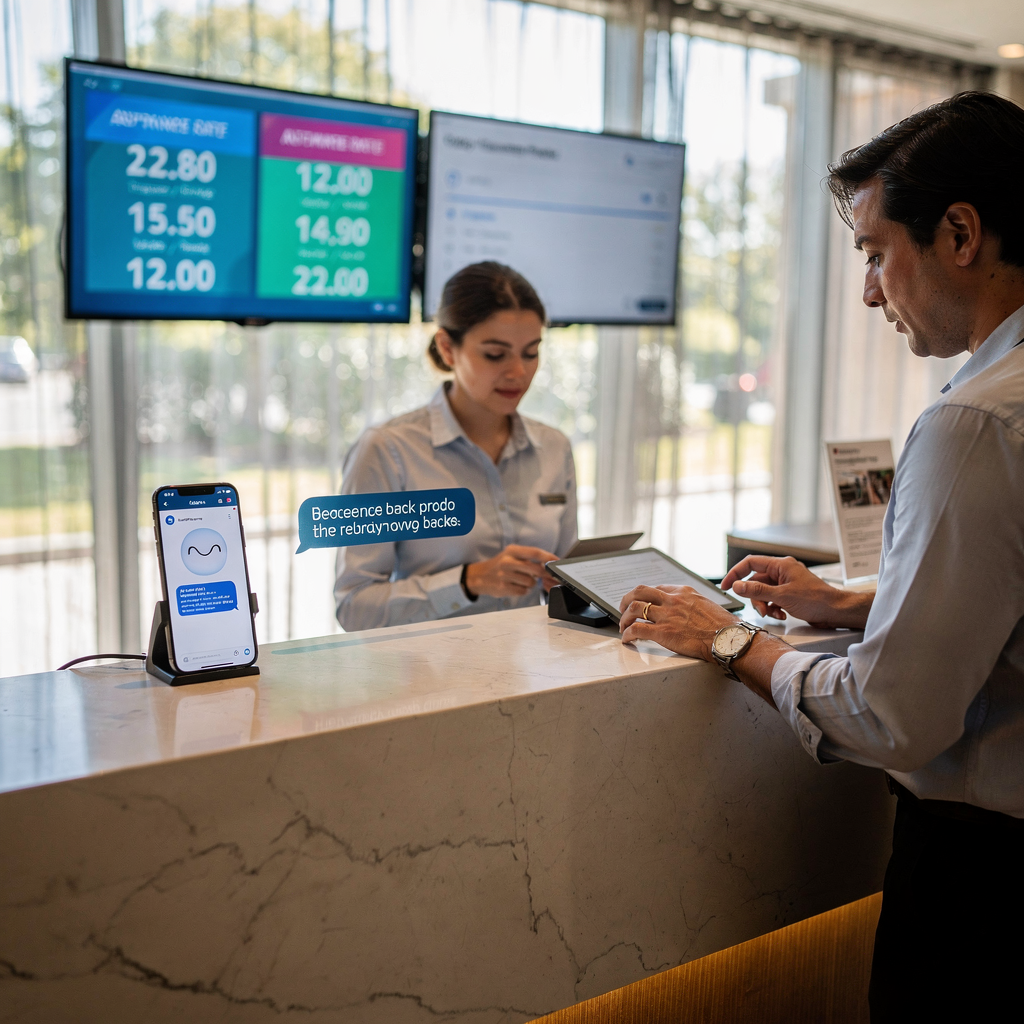
booking, reservation & faqs: conversational natural language tools to streamline the booking process
Conversational AI improves the booking process by understanding free‑text requests, filling slots and completing confirmation flows. First, implement intent classification so the system recognises a request for dates, room type or special needs. Then use slot filling to capture arrival, departure and occupancy. Also, provide pre‑populated forms to speed checkout and reduce errors. This approach lowers friction for webchat and booking platforms while increasing direct bookings.
Because over half of U.S. adults now interact with AI regularly, user familiarity reduces friction for conversational booking tools (stat). Next, add multilingual support so international guests get accurate responses and feel recognised. Also automate FAQs and common guest inquiries such as breakfast hours, parking and check‑out times to cut repetitive work. Quick wins include instant availability checks, automatic confirmation emails or SMS, and simple upsell prompts during confirmation.
Respect data rules: design flows that capture consent and follow EU data practices for reservation data and guest profiles. Moreover, implement GDPR‑aware confirmation flows and data retention policies. Use secure tokenised payment flows for any card capture. Then integrate confirmations directly into the PMS so rates and inventory stay accurate in real‑time.
Practical implementation notes: first train models on historical booking language and common enquiries. Next test for intent accuracy across languages and local idioms. Also, build fallbacks that escalate to a human when the model low‑confidence flags an edge case. For hotels that want to streamline hotel messaging and automate email replies, explore solutions that connect CRM and email threads to automate context and reduce manual lookups see a related email automation example. Finally, improve conversion by surfacing relevant booking engines and displaying rate guarantees during the chat.
Drowning in emails?
Here’s your way out
Save hours every day as AI Agents label and draft emails directly in Outlook or Gmail, giving your team more time to focus on high-value work.
hospitality ai, hotel ai & ai tools: enhance guest experience and operational efficiency
Hospitality AI and hotel AI tools map directly to measurable outcomes. For example, personalised offers driven by AI increase engagement and repeat bookings. Also, conversational systems handle high volume at low marginal cost, so hotels scale without proportional headcount growth. Use AI tools to profile guests, predict preferences and trigger targeted offers before arrival. This approach drives increased revenue and higher guest satisfaction and loyalty.
Key use cases include housekeeping optimisation, predictive maintenance and personalised guest communications. For housekeeping, AI models schedule cleanings based on occupancy, special requests and predicted check‑out times. Next, predictive maintenance flags HVAC faults before a guest notices them. Also, tie those signals into the PMS and hotel management systems so technicians get work orders automatically and the guest stays informed with accurate responses.
Measure impact with KPIs such as CSAT, repeat booking rate, staff time saved and cost per interaction. Then report on improved operational efficiency and revenue lift. Use data sources like PMS, CRM and POS to enrich profiles and to fuel ai algorithms for personalisation. Also ensure model governance and explainability so staff understand why an AI agent suggested an upgrade or reroute service requests.
For operators, the power of AI lies in practical automation that respects the human brand. For instance, an AI agent can propose a room upgrade based on a guest profile and recent stays while allowing hotel staff to accept or adjust the offer. Similarly, ai-powered messaging and ai voice assistants can handle routine guest communication via voice or chat, then hand over to a human when the conversation needs empathy. To explore how AI agents reduce email workload in ops teams, consider virtualworkforce.ai’s approach to automating the full email lifecycle for operations see how it works.
omnichannel inbox and conversational systems: seamless guest messaging to enhance service and revenue
An omnichannel inbox centralises guest messaging from webchat, WhatsApp, social and OTAs. First, aggregate channels so every message flows into one assignable ticket. Then apply conversational AI to triage intent, propose canned replies and suggest upsells. This approach reduces missed messages, increases response speed and improves conversion. Also, bots handle check‑out queries and pre‑arrival messages that drive ancillary spend.
Design the system to support bot‑to‑agent handover. For example, escalate sensitive issues or complex service requests to a human with full context. Next, log the entire thread in CRM so future interactions appear personalised. Also, use templates and recommended replies to help staff keep tone consistent while they handle high‑value tasks. An omnichannel inbox increases accuracy and reduces duplicated replies.
Operational tips: route payment or privacy issues directly to trained agents. Also, set SLA‑based routing and use escalation thresholds to limit automation overreach. For hotels that want to automate email and message flows across departments, virtualworkforce.ai shows how AI agents can label, route and draft replies inside Outlook or Gmail, grounding responses in ERP and other data sources learn more. Finally, track metrics such as average response time, conversion uplift from pre‑arrival messages and the percentage of tickets fully resolved by conversational AI.
Drowning in emails?
Here’s your way out
Save hours every day as AI Agents label and draft emails directly in Outlook or Gmail, giving your team more time to focus on high-value work.
ai hotel integrations: CRM, voice and chat to automate guest service and streamline operations
Integrations make AI useful. Connect voice SDKs, webchat widgets, API middleware and secure CRM syncs to deliver end‑to‑end automation. First, link the PMS and CRM so the AI agent can access loyalty data and past preferences. Next, add payment verification flows that use tokenisation to reduce fraud risk. Also, implement session continuity so a guest who starts via webchat can continue via voice without losing context.
Typical implementation checklist: identity linking, session continuity across channels, audit trail and robust fallbacks. Also, define escalation paths and human intervention thresholds. For voice interactions, support ai voice assistants with clear voice commands and secure verification. Then ensure that audits and logs record any price changes or booking amendments. Integration with hotel management systems and booking engines allows the AI to confirm real‑time availability and to update room control settings when a guest checks in.
Security and compliance matter. Use consent capture, data retention policies and tokenised payments. Also, ensure models are transparent and that staff can view the reason behind a suggested action from an ai agent. For ops teams tackling high email loads, AI can reduce handling time substantially by grounding drafts in ERP, TMS or internal documents and by creating structured data for the CRM read about scaling operations. Finally, test voice flows, chat flows and CRM triggers in pilot phases before full rollout.
hospitality industry outlook: artificial intelligence, human intervention and measurable ROI
The hospitality industry will see broader AI adoption across booking funnels and guest support. First, a trend toward “zero‑click” influence means AI summaries and recommendations will shape booking decisions without a search result click (trend). Also, hotels that adopt AI strategies report measurable gains in revenue and operational efficiency, including the cited 10% revenue lift for some adopters (study).
Balance automation with human touch. Create blended service models where automation handles routine work and staff handle complex or emotional interactions. Next, define escalation thresholds to protect brand and guest trust. Also, measure pilots with conversion, ADR, CSAT and staff hours saved. Then scale what works and revisit model governance and data policies regularly.
Risks include privacy, loss of personal touch and brittle integrations. Mitigate these risks with clear consent flows, human overrides and fallback routing. Also document audit trails and maintain explainability for AI suggestions. For teams overwhelmed by repetitive messages and operational emails, AI agents that automate the full email lifecycle reduce errors and restore time for high‑value tasks, while keeping traceability and governance intact learn practical options.
Next steps for operators: prioritise high‑impact automations such as booking, FAQs and omnichannel inbox pilots. Then expand to voice, CRM and predictive operations. Finally, view AI not just as technology but as a partner that helps hotels deliver exceptional guest experiences, lift revenue and improve operational efficiency while preserving the human service that defines hospitality.
FAQ
What is an AI assistant for hotels and how does it work?
An AI assistant for hotels uses conversational AI, natural language understanding and integrations with PMS and CRM to manage bookings, answer FAQs and route complex cases to staff. It automates routine tasks, provides real‑time availability checks and can send confirmations via email or SMS.
Can AI really increase hotel revenue?
Yes. Studies and industry reports show hotels that use AI‑driven pricing and guest management can see revenue improvements, in some cases up to about 10% (source). The lift comes from better pricing, higher conversion on direct channels and ancillary upsells driven by personalised offers.
How does conversational AI improve the booking process?
Conversational AI recognises intent, fills required booking fields and confirms reservation details in seconds. It reduces manual entry, speeds up conversions on webchat and booking platforms, and supports multilingual queries so international guests can book without friction.
What about data privacy and compliance?
Design flows with consent capture, GDPR/EU compliance and tokenised payments. Also set data retention policies and audit trails so every automated action remains traceable and compliant with local rules.
When should a hotel use human intervention?
Escalate to humans for sensitive issues, payment disputes, complex group bookings or any low‑confidence AI outputs. Set escalation thresholds and routing rules so staff only handle the cases that need contextual judgement.
Which KPIs should hotels track for AI pilots?
Track conversion rate, ADR, CSAT, staff hours saved and cost per interaction. Also monitor response time and the percentage of interactions fully resolved by automation to measure operational efficiency.
How do omnichannel inboxes help guest communication?
An omnichannel inbox centralises messages from webchat, WhatsApp, social and OTAs so teams never miss a request. It allows conversational AI to triage, answer FAQs and hand over to staff with full context if needed.
Can voice assistants be part of hotel automation?
Yes, ai voice assistants can handle check‑in instructions, room control requests and simple inquiries via voice commands. They must integrate with PMS and verify identity to perform actions securely.
What integrations are essential for an AI hotel deployment?
Connectors to PMS, CRM, POS and booking engines are essential. Also include middleware for API orchestration, secure payment tokenisation and logging so the AI agent has the data it needs to act accurately.
How do I start a successful AI pilot?
Start with a small, measurable use case like booking FAQs or pre‑arrival messages. Then measure conversion, CSAT and staff time saved. Finally, scale the pilot if it meets ROI thresholds and maintain governance and monitoring as you expand.
Drowning in emails?
Here’s your way out
Save hours every day as AI Agents label and draft emails directly in Outlook or Gmail, giving your team more time to focus on high-value work.