


ai assistant, copilot and the business case: power of generative ai to transform manufacturing operations
Manufacturers face tight margins and complex supply chains. Also, they must reduce downtime and raise throughput while controlling costs. An AI assistant as a copilot makes that practical. For example, predictive maintenance driven by machine learning can cut downtime by around 30% when condition-based models and sensor analytics are applied (study on predictive maintenance). Next, adopters report productivity gains of roughly 20–25% in operations when they scale AI tools across plants (McKinsey Global Survey). These figures give a clear ROI for pilots that focus on fast wins.
First, the business case rests on measurable improvements. Secondly, short-term gains come from fewer stoppages and faster troubleshooting. Thirdly, longer-term value comes from higher throughput and better quality. For example, an AI assistant can automatically parse PLC logs and flag anomalies. Then it can suggest corrective steps to technicians. As a result, mean time to repair drops. Also, spare parts inventory falls. Companies can therefore reduce tied-up capital and operating expense.
One firm example is using virtual email AI agents to speed logistics and shop-floor communication. For details on how this works in logistics, see a practical walk-through of an AI virtual assistant for logistics teams virtualworkforce.ai virtual assistant for logistics. The same approach applies on the shop floor. For instance, a copilot can generate a shift-handover summary from sensor events, operator notes and MES entries. This short summary saves time at shift change and preserves tribal knowledge.
Also, job impacts are predictable. Analysts expect the virtual assistant industry to create roles while automating routine tasks; the trend will reframe work rather than simply remove it (industry forecast). However, companies must plan for upskilling. Gartner® and others note that a preference exists for copilots over fully autonomous agents, which eases adoption. Finally, a clear metrics plan and a narrow initial use case make ROI visible early. Deploying a focused genai assistant for maintenance or quality inspection is an efficient path to scale and to demonstrate the power of generative AI.
generative ai and agentic ai: how an industrial ai assistant can automate operational data, summarize tribal knowledge and give actionable insights
Generative AI creates text, summaries and plans from raw inputs. In contrast, agentic AI acts with autonomy, taking multi-step actions. For manufacturing, a copilot is usually the right balance. Also, a copilot keeps humans in the loop. Therefore it reduces risk and preserves tacit, experienced judgement.
An industrial AI assistant can summarize operator notes, manuals and chat logs. For example, a large language model can read decades of maintenance records and generate a short repair plan. Then technicians get a step-by-step checklist in plain language. This lets frontline workers follow a clear route to repair. Also, it helps preserve tribal knowledge that often lives only in heads or spreadsheets. The assistant can pull relevant excerpts from SOPs, manuals and a connected spreadsheet to provide real-time context. This makes it easier to contextualize data during outages.
However, generative models can hallucinate. Therefore grounding in reliable operational data is essential. For that reason, organisations must connect the LLM to live PLC feeds, MES records and maintenance logs. Next, they should verify outputs with an SME before executing high-risk actions. A practical example: feed sensor logs and maintenance notes to the model. Then request a concise repair plan. The output should list required tools, safety steps and estimated repair time. This reduces search time for technicians and improves repair accuracy.
Also, governance matters. Permission controls and audit trails prevent unsafe actions. For guidance on scaling these agents in logistics and operations, consult a case study on how to scale logistics operations without hiring more staff (scaling logistics operations). In factory settings, a genai assistant delivers immediate productivity improvements and reduces human error. Finally, while an AI agent can take actions, most manufacturers prefer a copilot that recommends rather than overrides. This balances agility with safety in manufacturing operations.

Drowning in emails?
Here’s your way out
Save hours every day as AI Agents label and draft emails directly in Outlook or Gmail, giving your team more time to focus on high-value work.
operational data, industrial data and data types: deploy a purpose-built ai tool that delivers personalised support and actionable insights
Start by cataloguing the data you need. Core data types include sensor streams, PLC logs, MES and WMS records, maintenance histories and SOPs. Also add work orders, email threads and inventory snapshots. These combined data sources let models contextualize faults and suggest corrective steps. For an organised approach, classify data by latency and sensitivity. Some streams need real-time access. Others can be batched for nightly retraining.
Next, prepare data for modelling. Label key events such as motor overheat, bearing failure or quality reject. Then align timestamps across systems. Also normalise units and create semantic tags for parts and processes. For access control, apply role-based permission and redact personal data. Finally, keep an immutable audit trail so operators can trust the assistant’s recommendations.
A purpose-built AI tool differs from a generic chatbot. First, it uses domain-specific connectors and schemas. Second, it understands SOPs and can cite their sections. virtualworkforce.ai builds no-code connectors that ground replies in ERP/TMS/WMS and SharePoint, which reduces hunting across systems. See how tailored email drafting works in logistics to reduce handling time (logistics email drafting). The same design principles apply in manufacturing: integrate MES, ERP and maintenance boards so the assistant can pull context quickly and deliver personalised support to a connected worker on the manufacturing floor.
Also include a data‑readiness checklist: 1) map sensors and data types, 2) define latency needs, 3) label historical incidents, 4) set access rules and permission, 5) design validation tests for outputs. For privacy, use encryption and enterprise-grade security. Finally, train the model to summarise incident threads, not invent causes. This keeps outputs dependable and useful for frontline workers and supervisors who need actionable insights fast.
enterprise ai, extensibility and ai that works: integrating industrial operations while preserving security and scale
Enterprise integration must balance speed and safety. Also, architecture choices determine cost and responsiveness. Edge inference reduces latency for critical alerts. Cloud models simplify retraining and long-term learning. A hybrid approach often fits best: run lightweight models on the edge for immediate inference, then aggregate data in the cloud for deeper analysis.
APIs connect the AI to ERP, MES and historian systems. For example, a small API call can fetch work order details from an enterprise system. Then the assistant uses that context to answer user queries. Also, role-based access and audit logs ensure actions stay within approved boundaries. Enterprise-grade security and single sign-on help IT adopt the solution quickly.
Extensibility matters. Choose an ai platform that supports new data types and custom connectors. Then you can extend the assistant from maintenance to quality, to logistics, and to shop-floor inspections. For how this looks in logistics email automation, see an example of automating correspondence across systems (automated logistics correspondence). A similar integration pattern ties MES events to dispatch and inventory adjustments in manufacturing.
Also, measure success with a clear KPI framework. Track uptime, MTTF improvements, reductions in downtime, and user adoption. Then monitor model drift through data and learning pipelines. For governance, use a layered policy: approval gates for high-risk actions, logging for compliance, and a human-in-the-loop for troubleshooting. Finally, a trusted ai that works combines secure architecture, clear KPIs and tight integrations so leaders can scale with confidence.
Drowning in emails?
Here’s your way out
Save hours every day as AI Agents label and draft emails directly in Outlook or Gmail, giving your team more time to focus on high-value work.
deploy, automate and copilot frontline work: meeting business needs while preserving tribal knowledge
Start with a focused pilot. Also, pick a narrow use case such as shift-handover summaries or repair checklists. Next, prove accuracy on historical incidents. Then run the assistant in review mode so SMEs can validate outputs. This reduces risk and improves the model quickly.
Capture tribal knowledge during the pilot. Interview experienced operators and store their tips in a structured format. Also, feed these notes into the model so it can contextualize recommendations. virtualworkforce.ai uses email memory and connectors to keep context in shared mailboxes. This approach reduces the bottleneck caused by hunting for info across systems.
Adoption depends on clear incentives. Provide training, offer time savings metrics and measure improvements in employee experience. For example, a connected worker who receives an on-demand repair instruction will complete tasks faster. Then the team sees tangible time savings. Also, set rollback procedures if the assistant suggests a risky action. Human oversight must remain for high-impact tasks.
Quick wins include automating shift-handover summaries, drafting on-demand repair instructions from logs, and streamlining approval emails tied to work orders. Use the assistant to automate tasks such as compiling parts lists from a maintenance record or generating a safety checklist from SOPs. Finally, involve frontline workers in tuning the assistant so it stays practical and credible. This creates trust and ensures the copilot becomes a reliable part of daily work.
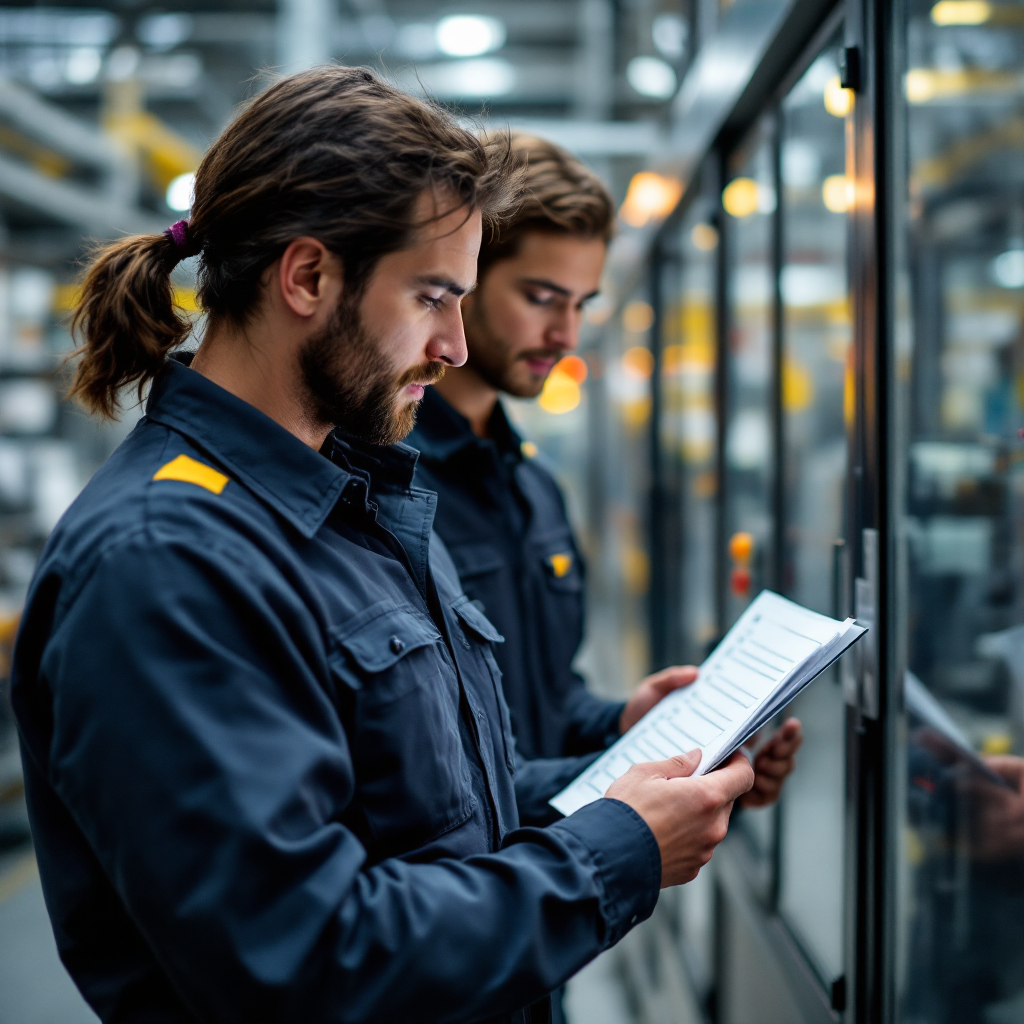
future of industrial, gartner® insights and the path to an industrial ai assistant that transforms operations
Gartner® research shows that many organisations prefer copilots to fully autonomous AI agents as a staged approach to autonomy. Also, Gartner highlights upskilling and governance as barriers to adoption. Therefore leaders should plan phased deployments that train staff and enforce policies. For example, start with advisory workflows and then add low-risk automation.
Looking ahead, AI assistants will grow more context-aware and better at linking operational data to human decisions. For manufacturing, that means fewer manual lookups and faster troubleshooting. Also, models will combine sensor feeds, maintenance records and work orders to identify potential faults before they cascade. This capability helps to reduce downtime and preserve throughput.
Risks remain. Model drift, regulatory change and misaligned incentives can erode trust. For mitigation, monitor performance continuously and retrain with fresh data and annotated incidents. Also, maintain enterprise systems that log approvals and maintain permission for actions. For compliance, follow current regulatory guidance and maintain an audit trail for decision-making.
Finally, leaders need a simple roadmap. First, identify potential pilot use cases and set clear KPIs. Next, connect the right data types and run a validation phase. Then, expand to other lines and integrate with ERP via an API. For organisations that handle logistics and high-volume emails, consider how AI can reduce handling time across systems; see a practical ROI example for logistics operations (virtualworkforce.ai ROI). In short, the future of industrial AI is about practical, secure, and extensible copilots that help teams gain insights and preserve tribal knowledge while transforming manufacturing operations.
FAQ
What is an AI assistant for manufacturing?
An AI assistant is a system that supports workers and managers by analysing operational data and offering recommendations. It can summarise maintenance logs, suggest troubleshooting steps and draft standard responses for routine communications.
How does predictive maintenance reduce downtime?
Predictive maintenance uses sensor streams and historical failure records to predict faults before they cause stoppages. Studies show reductions in downtime of around 30% when applied correctly (predictive maintenance study).
Why choose a copilot over a fully autonomous AI agent?
A copilot keeps humans in the loop and reduces safety risk while still improving productivity. Gartner® and other analysts report a preference for copilots as organisations upskill and refine governance (McKinsey).
What data types are required to deploy an industrial AI assistant?
You need sensor streams, PLC logs, MES/WMS records, maintenance notes and SOPs. Also, combine email threads and spreadsheets where relevant so the assistant can contextualize incidents.
Can a generative AI model summarise tribal knowledge?
Yes. A large language model can summarise manuals and operator notes into concise instructions. However, grounding in operational data is essential to avoid hallucination and to ensure accuracy.
How do you secure an AI assistant in an enterprise?
Use role-based permission, encryption and audit logs to protect data and actions. Also, connect the assistant through approved APIs to enterprise systems and enforce approval gates for high-risk operations.
What are quick wins for manufacturers deploying AI copilots?
Quick wins include shift-handover summaries, on-demand repair instructions and automating recurring email replies tied to work orders. These reduce handling time and improve employee experience quickly.
How does data readiness affect success?
Labelled incidents, aligned timestamps and clear schemas make outputs trustworthy. A data-readiness checklist helps teams prepare sensor and maintenance data for modelling and validation.
Will AI assistants replace shop-floor workers?
AI assistants automate routine tasks and streamline workflows, but they also create new roles and require human oversight. The typical outcome is a rebalancing of tasks rather than wholesale replacement.
Where can I read more about practical deployments in logistics and operations?
For logistics-focused examples and ROI guidance, review virtualworkforce.ai case studies and resources on automating logistics emails and scaling operations (automate logistics emails). These resources show how connected systems and personalised support deliver measurable efficiency gains.
Drowning in emails?
Here’s your way out
Save hours every day as AI Agents label and draft emails directly in Outlook or Gmail, giving your team more time to focus on high-value work.