


AI (ai) in the mining industry and mining sector: market size, scope and why supply chain change is urgent
First, the scale of AI adoption in the mining industry is rising fast. For example, market forecasts project the AI in mining market to grow from USD 2.60 billion in 2025 to USD 9.93 billion by 2032, at a CAGR near 20–21% AI in Mining Market worth $9.93 billion by 2032 – MarketsandMarkets. Next, this rapid expansion creates a strong commercial push to apply AI to supply chain problems. Also, mining companies face pressure to reduce costs, improve safety, and speed decisions across the value chain. Therefore, change is urgent.
Second, drivers are clear and measurable. Sensors now capture thousands of data points. Cloud and edge platforms make those data usable in real-time. Regulatory pressure demands better traceability and faster reporting. At the same time, the cost of downtime looms large for every mining operation. For example, predictive tools can reduce unplanned halts and improve operational efficiency. In addition, new AI tools help streamline communications between field crews and office teams. For instance, smart email agents can cut reply time and remove manual copy‑paste across systems. If your team has repeated order and ETA emails, a virtual assistant focused on logistics can save hours. See our guide to a virtual assistant for logistics for details: virtual assistant for logistics.
Also, AI brings analytics that turn raw telemetry into actionable insights. The use of artificial intelligence adds pattern recognition and prediction to traditional rule engines. For mining companies that use AI-driven planning, the payoff includes fewer stockouts, lower fuel costs, and safer operations. Finally, the transition to AI-enabled supply chain tools is no longer optional. Companies that delay will fall behind in operational planning and lose competitive edge. Start with a pilot project that targets a high-impact pain point, and scale from there.
How an AI assistant (ai assistant) and ai agents deliver real-time visibility across end-to-end logistics and ai platforms
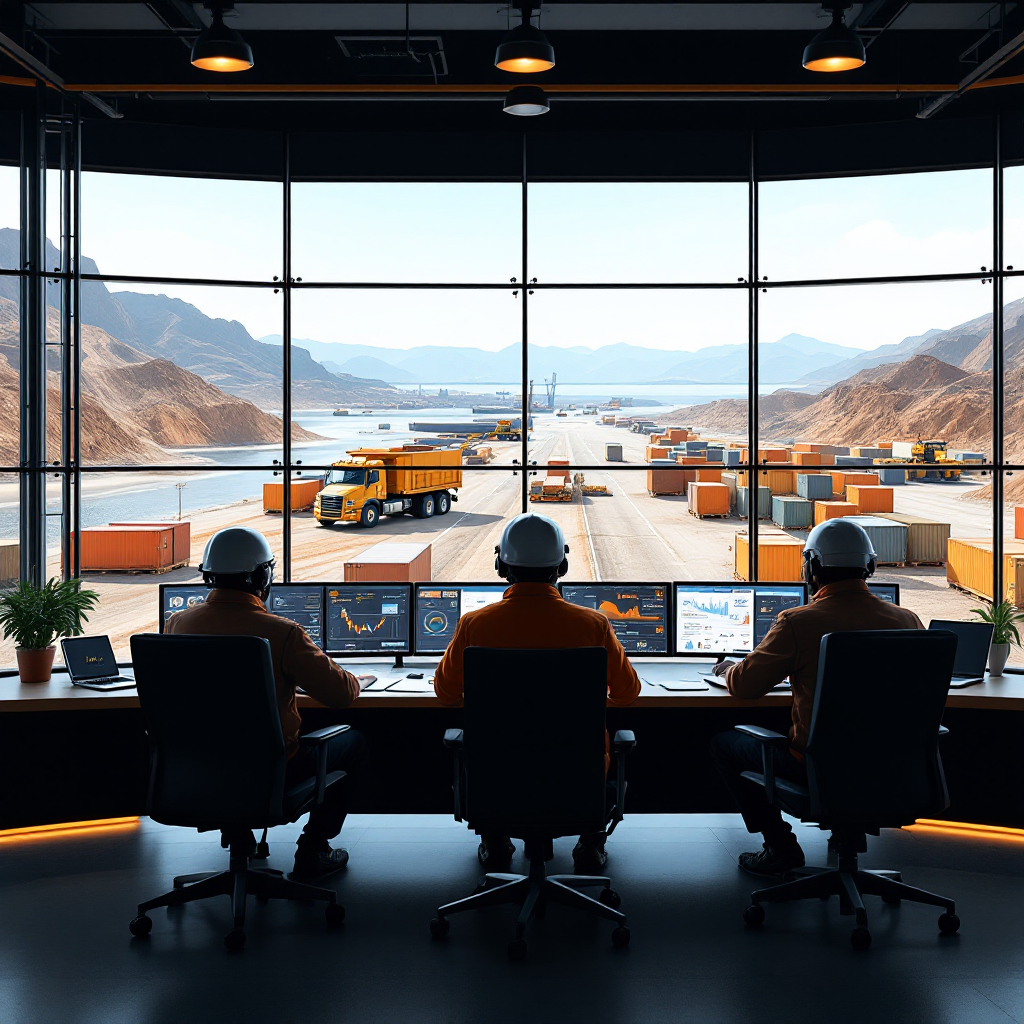
First, an AI assistant ties together telemetry, telematics, and operations data to provide supply chain visibility that field teams can trust. Real-time dashboards show stock and shipments. Also, they show equipment state and alerts. A dashboard that provides real-time visibility reduces uncertainty and speeds decisions. For example, shipment tracking updates can cut manual checks and phone calls. In practice, smart AI agents monitor feeds and generate automated alerts when exceptions appear. They also route issues to the right person. This reduces email clutter and lowers response times.
Next, ai agents act as on-call coordinators. They ingest inputs from ERP, fleet trackers, and warehouse systems, then surface the highest-priority items. In addition, they can propose actions or automatically start workflows that handle routine exceptions. For teams that need faster replies to carriers and vendors, a logistics email drafting assistant can draft context-aware answers and update systems directly. Learn how automated logistics correspondence can work with existing systems: automated logistics correspondence.
Also, the role of ai platforms is to orchestrate data flows and analytics. AI platforms fuse IoT streams with historical records and produce actionable insights. Consequently, ETA accuracy improves, cycle times shorten, and there are fewer stockouts. For mining logistics, this matters because sites depend on timely spares and fuel. Furthermore, integrated solutions help cross-site coordination. For example, central planners can see spare parts in transit to multiple mining sites and reallocate items where they matter most. Finally, these tools give end-to-end visibility across procurement, transport, and warehouse stages. They also reduce the human load and enable teams to focus on exceptions and strategy.
Drowning in emails?
Here’s your way out
Save hours every day as AI Agents label and draft emails directly in Outlook or Gmail, giving your team more time to focus on high-value work.
ai-powered and ai powered solutions for mining industry to automate and optimize maintenance and inventory
First, predictive maintenance has become a core use case of AI for mining. AI models analyze vibration, temperature, and operating patterns to detect failure signatures. Then, maintenance teams can schedule repairs before breakdowns occur. This approach reduces unplanned downtime and lowers repair costs. One implemented assistant delivered roughly a 47% increase in AI response and diagnostic accuracy, which translated into faster decisions and less reactive work AI Content Assistant Success Story: Global Mining Company. In practice, machine learning models learn from historical data and ongoing sensor feeds to predict which component needs attention next.
Second, inventory optimisation benefits from demand forecasting. AI-powered reorder rules, coupled with automated approvals, reduce carrying costs and stock risk. For instance, AI to predict future part demand can recommend reorder points and batch sizes. Also, connecting those recommendations to an ERP reduces manual entry and human error. If you want a focused example on ERP-driven mail and order automation, explore our ERP email automation page: ERP email automation for logistics. In addition, ai-powered supply planning links maintenance schedules to spare part availability. This decreases the chance of loss of valuable materials due to poor storage or overstocking.
Finally, automation extends beyond planning. Autonomous haulage, robotics, and process control systems can adjust material flow in real-time. These systems integrate with supply chain tools to harmonize orders, transport, and mine-site handling. For teams that handle thousands of emails about orders and ETAs, automating routine replies frees staff for higher-value tasks. In short, ai-powered and ai powered solutions help mining companies cut costs and improve safety, while keeping equipment and inventory aligned with actual operations.
Digital twin, generative ai and ai in supply chain: simulation, planning and scenario testing
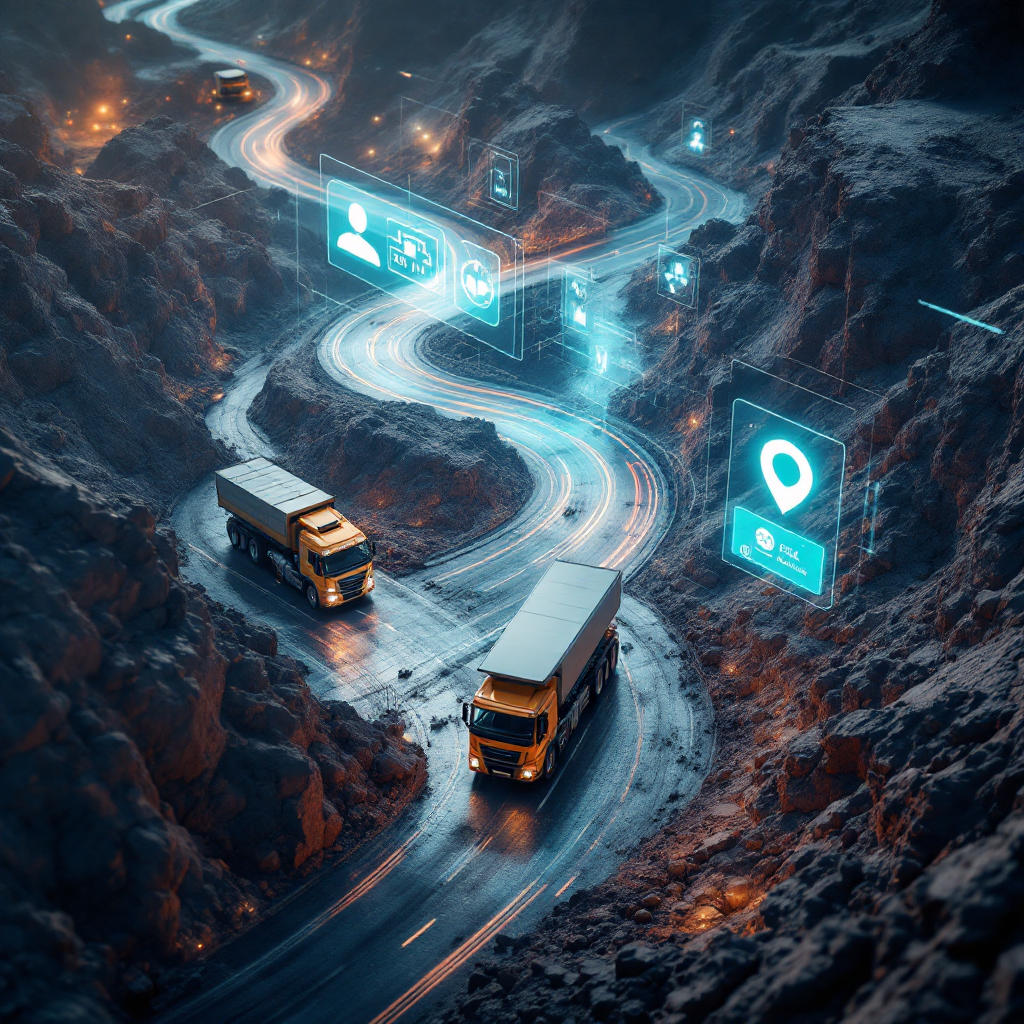
First, digital twin technology creates a virtual replica of a mining site and its fleets. A digital twin allows planners to run scenario planning without risking production. For example, teams can test rerouting when a haul road is closed. Next, simulation reveals the impact on inventory levels and transport cycles. As a result, contingency plans are clearer and faster to execute. A digital twin also helps with spare parts allocation and fuel costs optimization.
Second, generative AI helps produce alternative plans and procurement text quickly. For instance, it can draft vendor requests, suggest sourcing alternatives, and create risk scenarios. Then, planners can compare options in minutes rather than days. Using generative ai reduces the time to generate feasibility checks and speeds collaborative decision-making. In addition, natural language interfaces let non-technical users query models and get human-friendly explanations.
Also, combining digital twin with analytics and ai models enables what-if testing at scale. Historical data feeds the twin, while advanced AI runs through thousands of permutations. Consequently, planners can identify bottlenecks and verify mitigation strategies. This improves operational planning and provides end-to-end visibility into supply chain processes. Finally, these tools support smarter scenario planning and shorten decision loops. Teams can therefore prepare for potential disruptions with confidence and traceable rationale.
Drowning in emails?
Here’s your way out
Save hours every day as AI Agents label and draft emails directly in Outlook or Gmail, giving your team more time to focus on high-value work.
Automation, ai solution and ai-powered supply chain logistics: streamlining procurement, transport and compliance
First, end-to-end automation of orders speeds procurement and reduces manual errors. Automated workflows can create purchase orders, notify vendors, and schedule transport. Then, TMS and carrier confirmations feed back into the system to update ETAs and inventory records. For teams handling customs and shipping emails, AI for freight forwarder communication can draft accurate replies and attach required documents. See our guide to logistics email drafting to understand the impact: logistics email drafting with AI.
Second, logistics optimisation cuts cost per tonne moved. Route planning, load consolidation, and dynamic rescheduling reduce empty miles and fuel costs. AI-driven load plans can also match shipments to equipment capacities and site constraints. In addition, ai-powered supply solutions improve traceability and vendor coordination. For example, automated status updates reduce back-and-forth and speed approvals. This helps mining operations meet contractual SLAs and avoid costly delays.
Also, compliance and traceability improve with automated reporting. AI-generated logs support safety, environmental, and customs requirements with consistent formats and timely filing. Access controls and audit logs ensure only authorized users can change records. Meanwhile, shipment tracking data links to reporting, which simplifies inspections and audits. Finally, these supply chain tools reduce human toil and create clearer accountability across procurement, transport, and site operations.
ai platforms, ai assistant deployment and ai and supply chain governance: steps to implement secure, scalable solutions
First, practical rollout steps matter. Start with a pilot that targets a specific pain point, such as slow vendor replies or late spares. Next, define clear KPIs and success criteria. Then, build a data model that maps sources and fields. After that, integrate the pilot with ERP and warehouse systems. For example, a phased integration with existing systems reduces risk and complexity. Start with low-risk automations, then scale once metrics validate the approach. Start with a pilot.
Second, governance is non-negotiable. Data quality, role-based access controls, and audit trails are essential. Ensure the AI logs decisions and cites sources. Also, ensure the ai is subject to human review and escalation rules. Cyber security and change management must be part of every deployment plan. In addition, measure ROI with clear operational metrics: uptime improvement, reduced inventory days, lower transport cost, and faster decision times. Use both quantitative and qualitative indicators.
Finally, teams must train users and iterate. No-code AI email agents can speed adoption because business users control behavior without deep prompt engineering. For logistics teams, a no-code approach simplifies integration with ERPs. Learn more about how to scale logistics operations without hiring in our resource: how to scale logistics operations without hiring. In sum, plan pilots, protect data, measure outcomes, and then scale. Over time, you will leverage AI to achieve cost savings and improved operational efficiency while keeping systems secure and auditable.
FAQ
What is an AI assistant for mining supply chain?
An AI assistant for supply chain is a software agent that automates routine tasks and provides insights for logistics, procurement, and maintenance. It combines data from ERP, telematics, and sensors to support faster, more accurate decisions.
How can AI reduce costs in mining supply chains?
AI reduces costs by optimizing routes, forecasting demand, and automating procurement tasks. In addition, predictive maintenance lowers repair expenses and reduces unplanned downtime.
What is a digital twin and how does it help planning?
A digital twin is a virtual replica of a mining site or fleet. It enables scenario planning, simulation of route changes, and testing of spare parts plans without disrupting operations.
Can AI improve ETA accuracy and shipment tracking?
Yes. AI can analyze carrier updates and telematics to provide real-time data and better ETA accuracy. This improves coordination between sites, vendors, and transport partners.
How do AI agents handle exceptions and alerts?
AI agents monitor data streams and flag anomalies using predefined rules and models. They can draft responses, route issues to the right person, or trigger automated workflows to resolve exceptions.
Is it risky to integrate AI with existing systems like ERP?
Integration carries risk if not managed correctly, but a phased approach reduces it. Use pilots, role-based access controls, and audit logs to maintain security and governance.
What are quick wins when deploying AI in mining logistics?
Quick wins include automating routine email replies, improving ETA visibility, and implementing predictive maintenance for critical assets. These yield fast measurable productivity improvements.
How does generative AI support procurement and planning?
Generative AI can draft procurement text, propose sourcing alternatives, and create risk scenarios for review. It accelerates planning and reduces the manual drafting burden on teams.
What metrics should I track to measure ROI?
Track uptime improvement, reduced inventory days, transport cost per tonne, and average response times for vendor and carrier communications. Combine these with user feedback for a complete picture.
How do I start adopting AI for mining supply chain tasks?
Start with a targeted pilot that addresses a high-impact pain point. Define KPIs, connect key data sources, and use role-based governance. Then scale successful pilots to broader operations.
Drowning in emails?
Here’s your way out
Save hours every day as AI Agents label and draft emails directly in Outlook or Gmail, giving your team more time to focus on high-value work.