


ai and commodity trading: use real‑time market data and analytics to transform decisions.
Commodity traders face volatile markets every day. AI helps by ingesting MARKET DATA such as price feeds, shipping AIS signals, satellite imagery, and newswire alerts to produce trade signals and actionable insights. The AI assistant ingests these inputs, normalizes data points, and runs them through AI models to surface trade signals with expected latency measured in seconds for some feeds and minutes for aggregated signals. For example, combining PRICE MOVEMENTS from exchanges, vessel AIS, and weather forecasts lets a system flag supply shocks and suggest hedges or buys. As a result, teams make informed decisions faster and reduce response lag in volatile markets.
Studies show advanced AI improves forecasting and sourcing versus rule‑based systems, and real implementations drive measurable time savings and increased efficiency. For evidence, see research on AI for efficiency and sustainability in tradeTech that highlights faster, more accurate market intelligence here. Also, precision farming and mining work using AI underpins better supply estimates in raw materials, which feeds commodity pricing models here.
Define input feeds, signal types, and KPIs before production. Inputs include exchange price feeds, satellite and AIS, weather, newswire, supplier notifications, and ERP feeds. Signal types cover PRICE, SUPPLY, and SENTIMENT signals. Expected latency targets might be under 30 seconds for price ticks, under 5 minutes for vessel events, and under 15 minutes for news‑driven alerts. Sample KPIs include signal accuracy, time‑to‑action, and forecast error. For operational teams, linking signals to your trading platform and ERP matters; see ERP email automation examples for how data can flow back to operations ERP automation.
Also, traders should track signal precision and conversion rate from signal to executed order. Finally, IBM reports that employees paired with AI assistants deliver more value than either alone in supply contexts, reinforcing the need for human-in-the-loop governance here. Therefore, teams can use these architectures to stay ahead of market movements and market shifts while maintaining clear risk profiles.
ai agent and agentic ai to automate inventory management and workflow.
Agentic AI and AI agent patterns let teams automate reorder decisions and execution across procurement and trading. First, set thresholds and governance rules. Then, build closed‑loop tests to validate decisions. Next, start with low‑value SKUs and scale. An AI agent can place orders, reroute shipments, or trigger hedges based on probabilistic forecast outputs. At the same time, human oversight remains central. Human-in-the-loop approval reduces the need for manual intervention and helps teams predefine escalation paths.

Automation drives time savings while reducing errors in routine tasks. For instance, a system monitoring stock levels and inventory levels can send alerts, then automate replenishment when thresholds are crossed. The design must include rollback rules and error rate monitoring. Also, cybersecurity controls and audit trails protect against malicious changes. In practice, teams at virtualworkforce.ai have reduced handling time per message by two thirds by replacing manual copy‑paste tasks across ERP/TMS/WMS with a no-code AI email agent. Learn how AI can improve logistics customer service through automated email drafting here.
Agentic AI needs clear KPIs and safe modes. Track reorder accuracy, false positive rate, and time to rollback. Additionally, monitor supplier performance and delivery variance. The agent should log why it placed each order and include explainability notes that an operator can review. For low‑risk automation use cases, bots can execute after a predefined confidence threshold. Finally, treat automation as an iterative rollout: pilot, review, expand. This approach reduces manual data entry and helps teams focus on more strategic work.
Drowning in emails?
Here’s your way out
Save hours every day as AI Agents label and draft emails directly in Outlook or Gmail, giving your team more time to focus on high-value work.
ai-driven supply chain to optimize sourcing, logistics and commodity markets.
AI‑DRIVEN applications can optimize supplier selection, routing, and exposure across commodity markets. Predictive analytics identify bottlenecks and recommend alternative suppliers while quantifying cost versus risk trade‑offs. For agricultural commodities and industrial raw materials, visibility into supplier reliability and days of cover transforms procurement decisions. Predictive models also detect potential supply chain disruptions before they widen. For proof points on procurement benefits from AI, see the Sievo guide on AI in procurement here.
Map data flows from ERP, ETRM, and TMS to external feeds. This mapping creates a single source of truth for supplier metrics and landed cost. Use supplier scores to rank alternatives when risk increases. For example, when a port delay impacts a vessel and a predictive model flags longer berth times, AI can suggest a secondary supplier or a route change and quantify the impact on landed cost variance and days of cover.
Operational teams must balance cost and resilience. AI systems provide scenario analyses that show cost, delay, and ESG outcomes for each sourcing choice. These outputs help procurement lead to make informed decisions that align with corporate ESG targets. Moreover, workflows should push recommendations into daily operations and trigger emails or tasks. Virtualworkforce.ai’s connectors across ERP/TMS/WMS make it easier to surface these recommendations inside shared mailboxes and reduce repetitive tasks caused by fragmented systems automated logistics correspondence. Finally, measure supplier reliability score, days of cover, and landed cost variance to quantify improvements and identify inefficiencies.
automation and automate: from real‑time signals to automated trading and replenishment using ai tools and ai technology.
Linking AUTOMATION to AI TOOLS and AI TECHNOLOGY turns signals into executed actions. A practical stack has a signal engine, a rule engine, an execution layer, audit trails, and APIs into trading platforms and ERPs. The signal engine ingests real-time market feeds and synthesizes AI-driven signals. Then, the rule engine evaluates governance rules. Finally, the execution layer posts orders to the trading platform or sends purchase orders to ERP. Ensure explainability logs accompany every action so teams can review decisions.
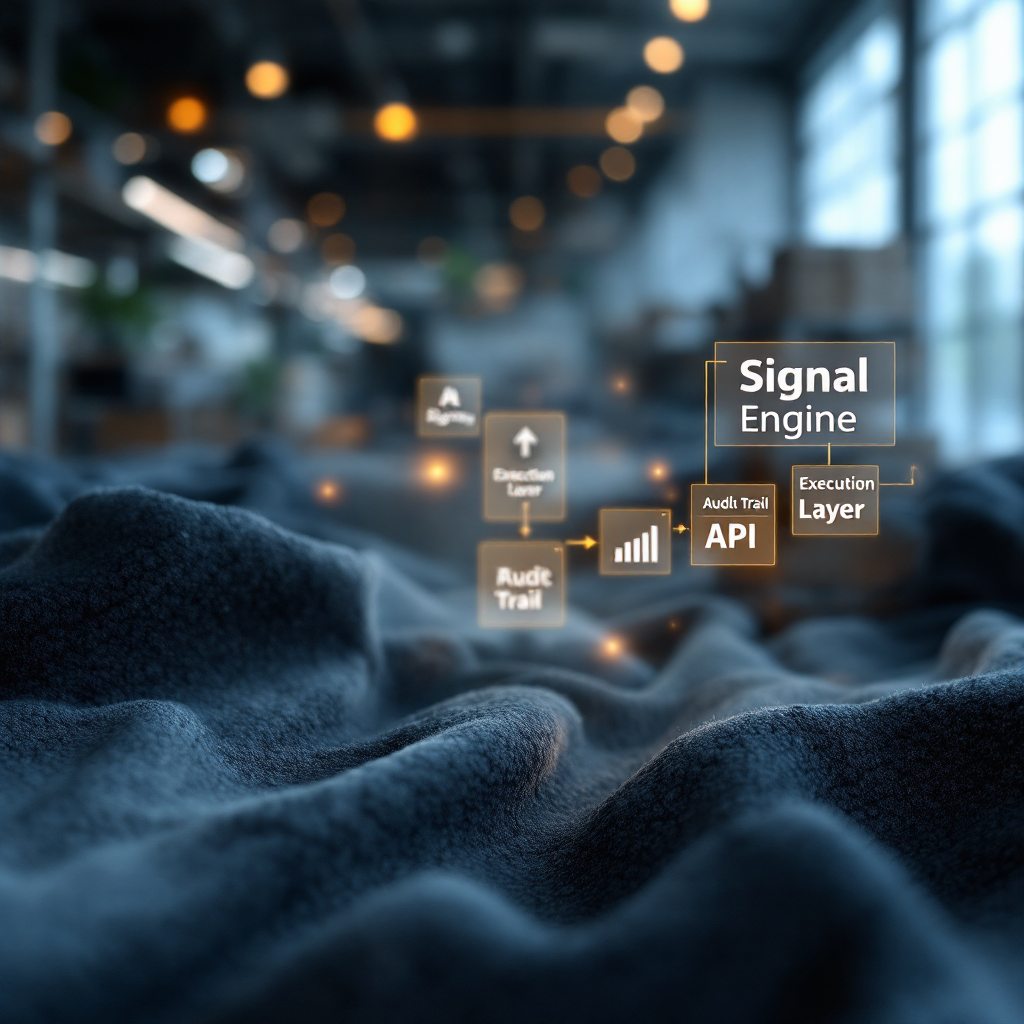
Choose modular AI-powered tools for piloting. Start with non-critical execution paths and require manual approval for trades above predefined thresholds. Use versioned models and continuous monitoring to detect drift and unusual price movements. For example, a computer‑vision count of pallets can trigger automated purchase orders when stock checks show low inventory levels. That automates replenishment while keeping human oversight for exceptions.
Security and traceability matter. Include SLAs for signal latency and incident response clauses for model failure. Also, keep a log of data provenance for each decision. Integrate AI systems with your existing ERPs and trading platforms to reduce manual intervention and to create a closed decision loop. This reduces error, increases operational efficiency, and helps teams reduce risk while executing fast in commodity markets.
Drowning in emails?
Here’s your way out
Save hours every day as AI Agents label and draft emails directly in Outlook or Gmail, giving your team more time to focus on high-value work.
best ai selection and governance: choosing ai tools for commodity analytics and market data reliability.
Selecting the BEST AI requires clear criteria. First, prioritize data quality and latency. Second, insist on explainability and documented ROI. Third, check vendor references and ETRM or ERP integration examples. Vendor claims vary, so prefer tools with proof points in commodity markets and supply chain contexts. For contractual protection, add clauses for model performance, incident response, and data provenance.
Build a testing plan that includes backtests against historical price movements and simulated supply chain disruptions. Require an SLA on signal latency and a security assessment. Include a governance checklist: required data feeds, testing plan, SLA on signal latency, security, and update cadence. Also, predefine roles for model owners, reviewers, and operators. This governance reduces the need for ad hoc manual intervention and keeps teams accountable.
When you integrate AI, choose vendors that expose explainability logs and allow you to integrate with your ERP and trading platform. For practical vendor selection, look at integration examples, documented ROI, and industry case studies. For example, the World Economic Forum highlights how AI can support efficiency and inclusivity when governance is strong here. Also, test security practices and require incident response commitments in contracts. Finally, train users to read model outputs and to know the need for human overrides to maintain resilience when complex global events occur.
commodity, ai-driven analytics and inventory management: KPIs, rollout plan and how to transform workflows.
To transform teams and workflows, align KPIs to business outcomes. Suggested KPIs include fill rate, holding cost reduction, forecast error (MAPE), signal precision, and time to decision. Also measure operational metrics such as reduced manual data entry rates and time saved per email. Start with a pilot on a subset of SKUs, ideally agricultural commodities or non‑critical inputs. Then, move to controlled automation and finally expand agentic functions. This phased rollout lowers risk and enables continuous learning.
Design a roadmap: pilot → controlled automation → expanded agentic functions → continuous learning loop. During pilots, predefine thresholds and keep human-in-the-loop approvals for high‑value actions. Track change in inventory levels and time to action. Use A/B testing to measure the impact on reducing costs and improving product availability. Also, generate reports that show how AI models affect forecast error and supplier performance.
Operational change requires training and governance. The ai assistant is designed to reduce repetitive tasks and to draft contextual emails using natural language that cites source systems. For teams drowning in email, a no‑code AI email agent can cut handling time and free staff to focus on more strategic work. For implementation examples that automate logistics emails and scale operations without hiring, see virtualworkforce.ai guides on scaling logistics operations with AI agents scale logistics with AI agents and on improving customer service with AI improve logistics customer service.
Finally, include periodic revalidation of AI models against market shifts and black‑swan events. Maintain strict data governance and monitor model drift. As a result, teams will reduce risk, gain a competitive edge, and make smarter procurement and trading choices based on real-time data.
FAQ
What is an AI assistant for commodity trading?
An AI assistant is a system that ingests market data, supplier updates, and operational feeds to generate signals and suggestions for traders and procurement teams. It helps teams make informed decisions faster while preserving human oversight for high‑risk actions.
How does AI process real-time data for trading?
AI systems normalize feeds such as exchange prices, AIS, and satellite imagery, then run models to produce trade signals and forecasts. These outputs can integrate with trading platforms and ERPs for fast execution.
Can agentic AI automate reorder decisions?
Yes. An AI agent can place orders and reroute shipments based on probabilistic forecasts with predefined governance controls. Human-in-the-loop approvals and rollbacks reduce the need for manual intervention.
What KPIs should I track when deploying AI for inventory management?
Track fill rate, holding cost reduction, forecast error (MAPE), signal precision, and time to decision. Also monitor time savings and reductions in manual data entry to prove operational efficiency.
How do I choose the best AI tools for commodity analytics?
Prioritize data quality, latency, explainability, and documented ROI. Require integration examples with ERP and trading platforms and include contract clauses for model performance and incident response.
What risks should teams watch for with AI automation?
Monitor error rates, model drift, cybersecurity threats, and data quality issues. Maintain audit trails and human overrides to handle edge cases and supply chain disruptions.
How does AI help with supplier selection?
AI ranks suppliers by reliability, cost, and ESG metrics and simulates outcomes for alternate sourcing. This helps procurement quantify trade‑offs and identify inefficiencies.
Can I integrate AI with existing ERPs and trading platforms?
Yes. Modern AI systems expose APIs and connectors that allow data flow into ERPs and trading platforms. Proper integration reduces manual copy‑paste and speeds up daily operations.
How long does it take to pilot an AI agent?
Pilots can run in weeks for narrow use cases, such as low‑value SKUs or email automation. A phased approach—pilot, controlled automation, then scale—limits risk and accelerates learning.
What governance is needed after deployment?
Maintain model monitoring, periodic revalidation against market shifts, SLA enforcement, and incident response plans. Continue to require human oversight for major trade decisions and keep audit logs for compliance.
Drowning in emails?
Here’s your way out
Save hours every day as AI Agents label and draft emails directly in Outlook or Gmail, giving your team more time to focus on high-value work.