


AI and operational efficiency for the real estate agent: CRM, automation and saving time
Real estate agents face growing admin loads every day, yet AI can streamline workflows and free time for client work. For example, McKinsey estimates that firms using generative AI can see around a 10% uplift in net operating income when they integrate these tools into operations and asset management (McKinsey).
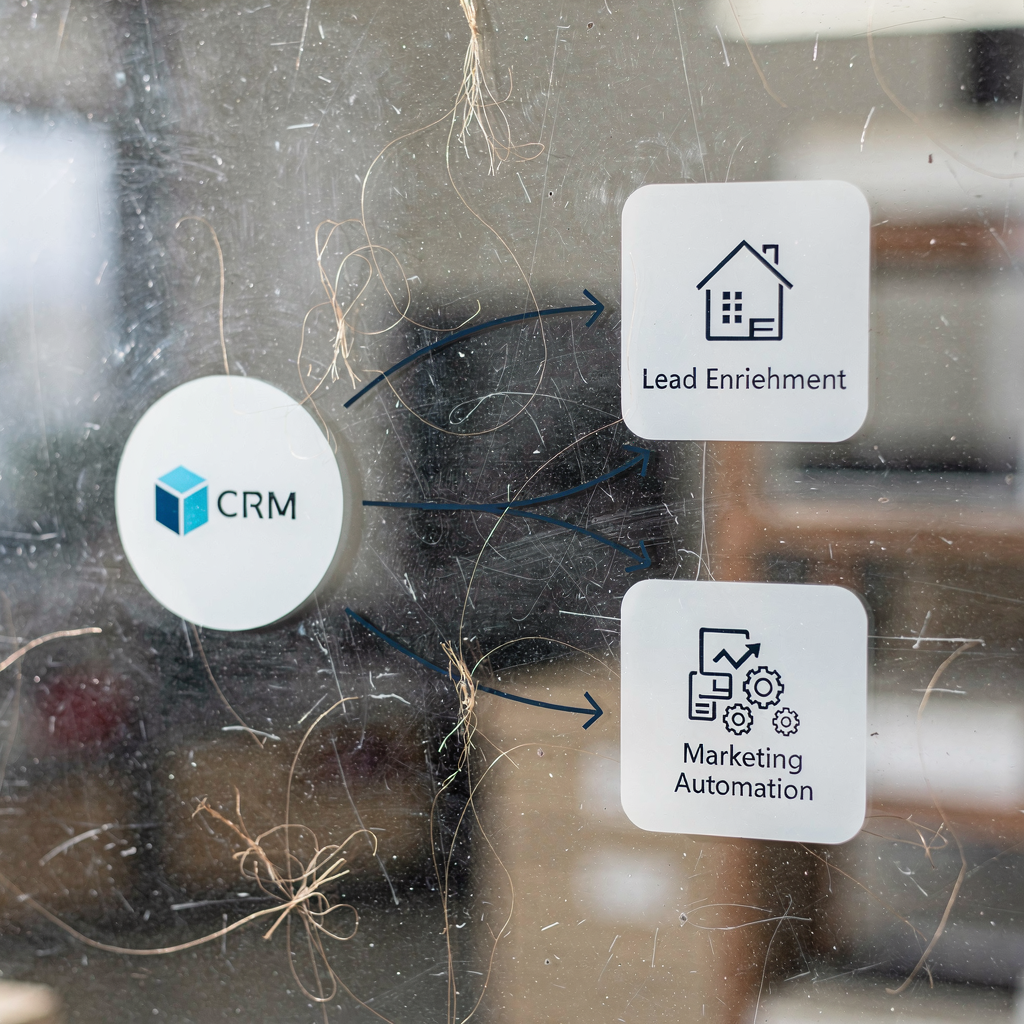
Start with a simple workflow: lead capture → CRM → automated followup → appointment scheduling. First, an online ad or MLS inquiry enters the CRM. Next, the system enriches the contact and scores the lead. Then, the AI assistant sends a personalised followup and proposes available times, and finally the agent confirms the showing. This stepwise approach helps agents stay organised and reduces repetitive tasks; CRMs with AI have been reported to free between 12–16 hours per week for active agents.
AI-enhanced CRM systems, such as solutions modelled after Ascendix-style platforms, use templates and data-driven rules to automate followup, calendar booking and document collection. For example, the CRM drafts a listing checklist, reminds clients of required documents and pre-populates forms. Then, the agent reviews and approves. This saves time and improves consistency; lease-review automation alone has cut processing time by up to 92% in some deployments (Inoxoft).
Another practical use is email triage and routing. Our company, virtualworkforce.ai, automates the full email lifecycle for ops teams and can adapt to property management and brokerage inboxes. By understanding intent, routing messages and drafting grounded replies, the system reduces handling time per email substantially. As a result, teams gain back time for high-value tasks and agents to focus on relationships rather than admin.
Case example: a small brokerage used an AI assistant to handle new leads. The assistant enriched contacts, created a followup cadence, booked viewings and pushed lead data into the CRM. Conversion improved, and the team reported 14 hours a week reclaimed for client meetings. For real estate agents, these practical changes translate into more showings and better client service, and a clearer path to higher productivity.
AI tools for real estate: lead generation, AI marketing and nurturing without the back-and-forth
Lead generation and nurturing change when you use AI tools for real estate. Today, more than 39% of prospective homebuyers use AI tools during their search, reflecting rapid adoption and new expectations from buyers (Veterans United). Therefore, agents who integrate AI marketing can reach buyers faster and more personally.
Compare a manual funnel with an AI-led funnel. Manually, an agent runs ads, checks leads, sends emails and chases responses. With AI, a lead generation and nurturing platform enriches contact data, scores leads, launches drip campaigns and hands off warm prospects. This removes repeated back-and-forth. Tools like Ylopo and Clay use data enrichment and automated nurturing to increase lead velocity and reduce wasted outreach.
Practical features include automated ad creative, hyper-personalised social media posts, lead scoring and chatbots that qualify prospects and pass hot leads to agents. An ai chatbot can ask qualifying questions, schedule viewings and flag urgency so agents only engage with warm prospects. This method helps agents convert more leads without extra hours chasing cold contacts; it also improves response time and client experience.
One short comparison idea shows time per lead: manual outreach often takes 45–60 minutes per lead across tasks, while AI-led funnels cut that to 10–15 minutes of agent time because the platform handles enrichment, initial contact and nurture. That difference scales quickly across dozens of leads each week.
Agents should test a free trial from a reputable ai platform, measure conversion uplift and then scale. Remember to integrate with your crm so lead data flows into your database and followup sequences remain consistent. When implemented correctly, AI marketing helps real estate agents reach buyers and sellers faster, and convert more leads without the back-and-forth.

Drowning in emails?
Here’s your way out
Save hours every day as AI Agents label and draft emails directly in Outlook or Gmail, giving your team more time to focus on high-value work.
AI-powered listing content and property details: creating an AI real estate assistant to boost sales
Listing descriptions and visual presentation strongly influence buyer interest. An AI real estate assistant can draft engaging listing descriptions, produce virtual staging concepts and surface accurate property details from MLS feeds. Generative AI helps create copy that highlights key features and local amenities, and virtual staging cuts staging costs while showing buyers how spaces could look.
For example, a simple before/after listing description shows the impact: before, a plain line: “3-bed house near town.” After, an AI-powered description reads: “Light-filled three-bedroom with original oak floors, a south-facing garden and a short walk to the village café.” That richer copy increases click-through and tour requests. Agents can then tweak tone and facts before publication.
Automated valuation tools, known as AVMs, analyse comparable sales and market data to suggest prices. AVMs improve appraisal speed and consistency, but they can miss unique property features or recent renovations. Always validate AI-generated property details and check the number of bedrooms, recent upgrades and tenure. For accuracy, run a short checklist: verify MLS fields, compare local comps, and inspect photos for inconsistencies.
Prompts an agent can use with an assistant include: “Write a 100-word listing that emphasises light, garden and transport links,” or “Create three headline variants for a two-bedroom flat near the river.” Use ChatGPT-style prompts for variety, then localise the language. This approach saves time and helps listing agents produce multiple versions for different platforms.
Legal and accuracy checks remain critical. Licensed real estate professionals must confirm facts, avoid misleading statements and ensure compliance with local advertising rules. Use the AI-generated copy as a draft, and then apply a quick verification pass before posting. When combined thoughtfully, AI-powered listing descriptions and virtual staging help agents sell more homes more efficiently.
Tools for real estate agents: intelligent AI platforms agents using and how to leverage them
Knowing which categories to adopt helps you build a practical stack. Core categories include CRM automation, lead enrichment, AVMs, marketing automation, and contract automation. Vendors to consider include HouseCanary/CanaryAI for valuations, Ylopo and Clay for lead generation, and Ascendix-style CRMs for workflow integration. Choose based on interoperability and your size.
For a small agency, a recommended stack might include an AI-enabled crm, an ai-driven marketing tool and a basic AVM. For a franchise office, add contract automation and deeper data integration across systems. Whether you’re a solo agent or part of a larger brokerage, start small and scale. Many agents find success by testing one ai tool at a time and measuring results.
Integration tips: ensure your crm connects to the MLS and your email system so lead data and listing information sync automatically. Also, plan for escalation rules when the AI cannot resolve a query. For complex operational email and escalation, virtualworkforce.ai shows how end-to-end email automation reduces handling time and prevents lost context; see the virtual assistant logistics resource for details (virtual assistant logistics).
A simple 90-day adoption plan works well: month one, pilot an ai platform and set KPIs; month two, refine rules, train staff and connect systems; month three, measure ROI and expand tools. Focus on cost versus benefit: pick vendors that support data export and have a free basic or free trial so you can test without heavy commitment. Also, prioritise tools designed specifically for real estate to speed adoption.
Finally, check vendor support for workflows like showings, contract uploads and cmas. Interoperability matters more than bells and whistles. Use an integration-first approach, and leverage platforms that allow you to automate routine tasks without adding headcount. For more on scaling operations without hiring, see our guide on how to scale logistics operations with AI agents (how to scale logistics operations with AI agents).
Drowning in emails?
Here’s your way out
Save hours every day as AI Agents label and draft emails directly in Outlook or Gmail, giving your team more time to focus on high-value work.
Real estate AI in practice: pricing, contracts, compliance and measurable results from ai tool use
Real estate AI delivers measurable gains and has practical limits. McKinsey reports firms using generative AI saw more than a 10% increase in net operating income through efficiency and smarter asset management (McKinsey). Trackable metrics include time saved, lead-to-client conversion and days on market.
AI helps with pricing by analysing market data and comparable sales to suggest a valuation. Automated Valuation Models (AVMs) speed up appraisals and increase consistency, yet they sometimes miss unique upgrades or local quirks (V7 Go). Therefore, agents must review AVM outputs and adjust for renovations, bespoke layouts or staging.
Contract automation reduces manual review and extracts critical terms, but accuracy matters. A major study found AI assistants produced issues in about 45% of news-related queries, which underscores the need for human oversight and compliance checks (JDSupra). Use AI to draft or flag clauses, and then have a licensed real estate or legal professional confirm the final text.
Typical metrics you should track: time per transaction, number of leads progressed to showing, conversion rate, and average days on market. A case study: a mid-size brokerage introduced an AI assistant to handle lead enrichment and followup. Over six months, time spent on lead triage fell by 60%, days on market improved by 8% and lead-to-client conversion rose by 12%. Those numbers came from combining automated nurturing, ai-powered listing descriptions, and more timely agent followup.
Where does AI add most value? It automates routine tasks, analyses large datasets and creates consistent client communications. Where should humans remain in control? Pricing judgments on unique properties, final contract approvals and any compliance-sensitive communication. Agents and brokers must set clear escalation paths and guardrails so the ai-driven outputs remain accurate and defensible.
Finally, use a staged rollout: pilot on low-risk tasks, measure results and then expand. For example, start with automated followup and calendar booking, then add contract automation once confidence grows. This phased approach helps agencies reap benefits without compromising accuracy or client trust.
Frequently asked questions
What tasks should agents automate first?
Start with repetitive, high-volume tasks such as lead enrichment, followup emails and appointment scheduling. Automating these routine tasks quickly frees time for client work and reduces human error.
How accurate are AI valuations and AVMs?
AVMs are useful for speed and consistency but can miss unique property features and recent upgrades. Always validate AI valuations with local comps and an on-site inspection by a licensed real estate professional.
How do I keep client data private and compliant?
Use vendors that follow local privacy laws, implement access controls and encrypt data in transit and at rest. Also, create a privacy checklist and limit data sharing to necessary systems.
How do I create an AI assistant with minimal setup?
Start with a minimal viable setup: connect your CRM, enable a lead scoring and followup module, and configure simple escalation rules. For operational email and grounded replies, explore solutions that automate email lifecycle and connect to your operational systems (automated logistics correspondence).
When should a human review AI outputs?
Humans should review any pricing decisions, final contracts and compliance-sensitive messages. Also, review unusual property details and any AI answers flagged as low confidence.
What is the best way to train staff on AI tools?
Provide short, hands-on workshops, document common prompts and create escalation paths. Use vendor support and pilot phases so staff gain confidence slowly.
Can AI replace listing agents?
AI optimises many tasks but does not replace the human skills of negotiation, local knowledge and client trust. Agents using AI typically sell more homes because AI handles routine work while agents focus on clients.
Which AI tools are most relevant for small teams?
Small teams benefit from an integrated CRM with AI followup, an AVM for quick pricing and a lead generation platform with built-in nurture. Test free basic tiers and free trials before committing.
How do I measure ROI from AI tools?
Track time saved, conversion rates, days on market and net operating income changes. Set clear KPIs during the pilot and compare the baseline period to the test period for a direct ROI view.
What are simple prompts and guardrails to reduce errors?
Use precise prompts like “Draft a 75-word listing that emphasises transport links and garden.” Always include a verification step to cross-check MLS fields and image details. Establish fallback rules so requests escalate to a human when confidence is low.
Starter checklist: 1) Pilot one AI feature for 30 days and measure time saved, 2) Define escalation rules and compliance checks, 3) Integrate the tool with your CRM and monitor conversion metrics. For help with end-to-end email automation and grounded replies, see how to automate logistics emails with Google Workspace and virtualworkforce.ai (automate logistics emails with Google Workspace and virtualworkforce.ai).
Drowning in emails?
Here’s your way out
Save hours every day as AI Agents label and draft emails directly in Outlook or Gmail, giving your team more time to focus on high-value work.