


AI tool as a brokerage sidekick: streamline automation for real estate agent workflows
An AI tool can act as a true sidekick for a LICENSED REAL ESTATE professional. It handles routine tasks so a real estate agent can focus on selling. In practice, an ai assistant for real estate sits on lead channels. It answers initial questions, qualifies interest, and books SHOWINGS without delay. For example, conversational ai that connects to calendars can reduce response time and lift lead conversion by as much as 62% reported here. This instant engagement matters. It increases lead coverage and prevents lost prospects.
Map the workflow simply: lead → qualification → booking → handover. First, a chat or ai chatbot engages a visitor. Next, the assistant asks qualifying questions. Then, a scheduling bot syncs with MLS and an agent calendar to propose times. Finally, the bot hands the contact to the agent with context and a meeting link. Required integrations include calendar, MLS, phone and CRM. These connections let the bot read availability, confirm listing details, and push a record into the CRM so an agent sees history immediately.
Agents and brokers will find quick wins fast. A small brokerage can streamline routine tasks, increase appointment fill rates, and reduce no-shows. Time saved per agent varies, but teams often reclaim hours weekly when they automate routine tasks. For operations with heavy email volumes, virtualworkforce.ai shows how automating the full email lifecycle speeds replies and reduces manual lookups; see a practical logistics example in our guide to automated logistics correspondence here.
Set clear hand-off rules. If a lead asks a legal or complex pricing question, escalate to a human. If the request involves negotiation or contract review, route to a broker. Also, tag leads by intent and urgency for followup. Use short, explicit thresholds so the assistant knows when to escalate. Finally, measure gains: track appointments per agent, time to first contact, and lead conversion. When implemented well, a sidekick-style ai assistant lifts coverage and helps listing agents sell more homes.

AI assistant and AI-powered CRM to supercharge lead generation and agent performance
Embedding an ai assistant into a CRM lets teams automate followup and boost AGENT PERFORMANCE. Surveys show broad adoption of AI agents, with about 79% of businesses using them and many measuring productivity gains as reported here. An ai-powered CRM combines lead scoring, automated followups, and personalized outreach templates to cut time to first contact. That reduces churn and improves conversion.
Start with lead scoring. The system pulls signals from property listings, prior interactions, and MARKET DATA to rank prospects. Then, automated sequences trigger text, email, or chat responses. Use crm integrations to ensure every reply creates or updates a record. That keeps the database clean and supports compliance. For teams that want operational examples, our post on how to scale logistics operations without hiring shows practical automation patterns you can adapt to a real estate context see here.
Tools like HubSpot Smart CRM paired with ai chatbots or Top Producer-style targeting illustrate the approach. An ai assistant can run nurture tracks and generate personalized templates for open houses and followup. If you use a professional ai model or chatgpt for drafts, always review tone and facts before sending. Track key metrics: qualified leads, time to first contact, conversion rate, and appointments per agent. These indicate whether your ai-driven workflows perform.
Real estate professionals gain the most when they align automation with human workflows. Train agents to trust the assistant for initial screening but to take over for negotiation and complex client education. Also, pick an ai platform that offers role-based access and audit trails. That ensures compliance for licensed real estate transactions and preserves record accuracy. Finally, test with a small cohort, measure lift, then scale. A thoughtful rollout lets your real estate business adopt AI without disrupting sales activity.
Drowning in emails?
Here’s your way out
Save hours every day as AI Agents label and draft emails directly in Outlook or Gmail, giving your team more time to focus on high-value work.
AI tools for real estate and tools for real estate agents: valuation, real estate data and best AI picks
Valuation models form a core use case for real estate ai. AI valuation systems analyze transaction history, local comps, macro trends, and neighborhood signals to reduce pricing uncertainty. For reliable estimates, feed models with MLS, tax rolls, and sales records. Data-rich models tend to outperform simple heuristics as outlined here. Use those outputs to set competitive pricing and to stress-test offers.
Specialist tools exist for each step. For valuation, HouseCanary (CanaryAI) is commonly cited. For document review, document-processing agents extract clauses and dates from contracts. For lead work, ai-powered CRMs add scoring and followup automation. When selecting the best ai tools, evaluate data feeds, model transparency, and integrations. Look for vendors that permit human override and that log changes for audits.
Here is a short list of best AI tools by function with one-line pros and cons. For VALUATION use HouseCanary — pro: deep comps; con: limited local adjustments. For CRM use a HubSpot AI add-on — pro: strong contact flows; con: customization needed. For LEAD GEN use targeted ai-powered chatbots — pro: 24/7 outreach; con: requires tuning. For DOCUMENT PROCESSING choose a document agent that extracts contract dates and obligations — pro: saves review time; con: initial setup cost. These picks help agents and brokers close more deals while keeping accuracy high.
Also consider practical matters: data governance, MLS licensing, and ongoing model validation. When you pick an ai tool, confirm that it supports MLS ingest and that it updates valuations as new sales appear. If you need examples of automated email lifecycles grounded in ERP and document memory, virtualworkforce.ai has examples of how AI agents reduce manual triage and improve consistency read more. With the right mix, an assistant for real estate agents and an ai-powered platform bring valuation, market data, and CRM into a single productivity loop.
AI in real estate: intelligent AI for listings, AI marketing and tools for marketing
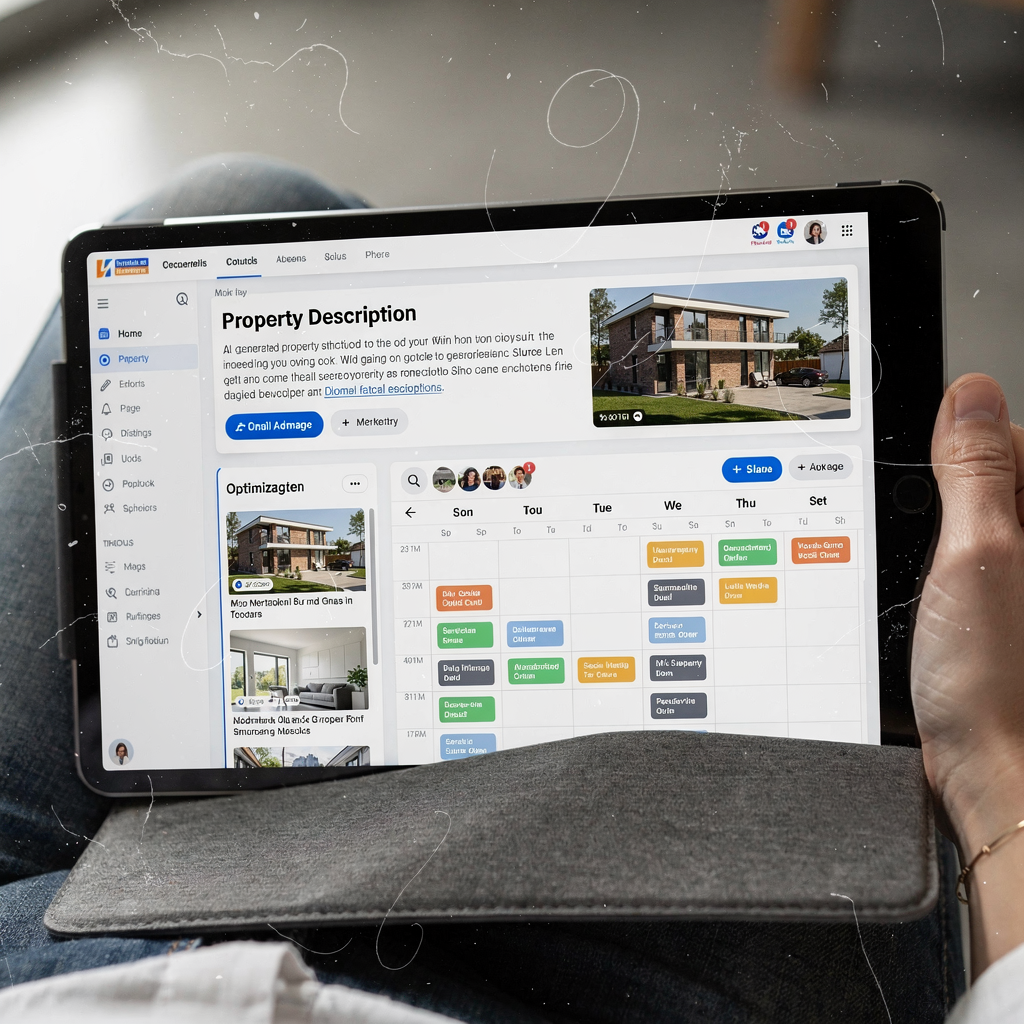
Intelligent AI transforms how teams create and distribute property listings. It can auto-generate listing descriptions, optimize images, and produce social media posts from brief notes. A typical content workflow runs: upload photos and specs → AI draft listing descriptions → agent edit → multi-channel publish. This approach speeds content creation and keeps messaging consistent. Use brand voice templates so automated copy matches your brokerage tone.
AI marketing tools can also run A/B tests on ad copy and image sets. They help lower lead costs and increase CTR. For example, targeted ai-powered campaigns can tailor messages for buyers versus investors. They can produce social media posts, banner copy, and email subject lines automatically. When you combine these outputs with a lead generation and nurturing platform, you create a repeatable pipeline that scales without adding headcount.
Guardrails matter. Always verify property facts before publishing. Train listings agents to confirm room counts, square footage, and legal descriptions. For compliance and accuracy, include a human review step before any paid campaign goes live. If you use tools like Canva for quick image edits or to format social posts, keep templates consistent so your brand stays recognizable.
AI can help you sell more homes when used responsibly. Use an ai virtual assistant to prepare open house materials, and an ai-powered content tool to draft email invites and listing descriptions. For metrics, measure cost per lead, CTR, and lead quality. If you want to see how AI helps operations and customer messages, read our guide on improving logistics customer service with AI for transferable patterns here.
Drowning in emails?
Here’s your way out
Save hours every day as AI Agents label and draft emails directly in Outlook or Gmail, giving your team more time to focus on high-value work.
Brokerage automation and CRM integration: leverage AI tool workflows for compliance and speed
Brokerages benefit when automation links AI agents to CRM and transaction platforms. An AI agent that populates CRM records from inbound chats saves data entry time. It also reduces errors and ensures that every lead gets a timely followup. Design an architecture where AI agents feed the CRM, the CRM triggers compliance checks, and a transaction platform holds contract versions. This end-to-end chain speeds deal progression and improves traceability.
Data governance matters. Define role-based access and audit trails so brokers can review edits. Ensure the system logs who approved price changes and who signed documents. For EU or other regional rules, enforce data retention and consent flows. Our automation platform designed for operations highlights how thread-aware memory and deep data grounding can reduce manual lookups and increase consistency across teams.
Integrating ai into a brokerage requires clear routing rules. For routine TASKS, automate responses. For legal or negotiation items, route to a licensed real estate broker. Use triggers to flag unusual valuations or conflicting contract clauses. Also, maintain human override points in every automated path so agents can step in fast. That balance keeps transactions safe while moving them faster.
In addition, automated followup sequences reduce lapse between contact and engagement. The ai tool can handle initial qualification and booking, while the CRM keeps the record updated. For teams that manage heavy correspondence, solutions such as virtualworkforce.ai demonstrate how end-to-end automation drafts replies grounded in operational systems and escalates only when needed. These patterns translate well from logistics to brokerage, and they help teams stay organized and compliant.
Measure ROI: lead generation, valuation accuracy and agent performance metrics with AI assistant
Measure ROI before you scale. Start with a pilot that runs 6–12 weeks. Compare conversational AI response streams versus standard responses. Track qualified leads, conversion rate, time to first contact, and appointments per agent. Also measure valuation delta by comparing AI valuations to an appraiser baseline. These metrics show whether the model reduces pricing error and speeds deal cycles.
Design a dashboard with concise KPIs: leads by channel, qualified leads, time to first contact, conversion%, valuation error, and cycles per transaction. Include agent performance and time saved per agent. In pilots, track revenue per agent to estimate payback. Many teams see improvements in lead coverage and a drop in manual entry when they automate tasks. For operational email-heavy teams, virtualworkforce.ai found handling times drop from ~4.5 minutes to ~1.5 minutes per email; that kind of efficiency scales across many interactions see ROI insights.
Run A/B tests. For example, compare an ai-driven scheduling bot with a manual scheduler. Or compare valuations from a data model against a local appraisal on a sample of closed deals. Use statistical significance to decide whether to scale. If conversion lifts and valuation accuracy improve, expand integrations and add governance checkpoints. Finally, build a tuning cadence. Retrain models on new MARKET DATA quarterly and review escalation rules monthly. That practice keeps your ai platform accurate and aligned with market shifts, and it helps your brokerage stay ahead.
FAQ
What is an AI assistant for real estate and how does it help agents?
An AI assistant for real estate automates routine tasks like initial inquiries, scheduling, and basic qualification. It frees agents to focus on negotiations and client relationships while handling repetitive tasks at scale.
Can an AI tool book showings and sync with calendars?
Yes. Integrating an ai tool with calendars and MLS lets it propose times, confirm availability, and create calendar invites. Agents retain control and can set handoff rules for complex cases.
How does AI improve lead generation and followup?
AI speeds first contact and runs nurture sequences automatically, which increases response rates. It also scores leads so agents prioritize high-value prospects and improve conversion.
Are AI valuations accurate for pricing homes?
AI valuation models use large datasets such as MLS and tax records to estimate property values. They reduce uncertainty, but you should validate outputs against local appraisals and update models with new market data.
What integrations should a brokerage prioritize?
Start with CRM, calendar, MLS, and phone systems so data flows smoothly. Add document processing and transaction platforms next to automate contract review and closing steps.
How do I measure ROI from AI implementations?
Track qualified leads, time to first contact, conversion rates, valuation error, and revenue per agent. Run a 6–12 week pilot with control and test groups to quantify impact before scaling.
Does AI replace licensed real estate professionals?
No. AI handles routine and data-heavy tasks, while licensed agents handle negotiation, legal questions, and client relationships. AI scales capacity without replacing human judgment.
What compliance risks should brokerages watch for?
Watch data privacy rules like EU regulations and local disclosure requirements. Maintain audit trails, role-based access, and human review steps for legal or pricing decisions.
Which tools are best for AI marketing and content creation?
Look for ai-powered content tools that generate listing descriptions and social media posts while preserving brand voice. Use templates and human review to ensure accuracy and compliance.
How do I start a pilot without disrupting operations?
Begin with a narrow pilot focused on one channel, such as chat or scheduling, and pick clear KPIs. Use an ai platform with human override and audit logs, then iterate based on results.
Drowning in emails?
Here’s your way out
Save hours every day as AI Agents label and draft emails directly in Outlook or Gmail, giving your team more time to focus on high-value work.