


Why recycle with smarter ai (recycle; smarter; ai)
The business case for AI is straightforward. Firms that deploy AI in processing see measurable gains: recycling rates can rise by 20–30% and operating costs fall by about 10–15%. For example, meta‑analyses and industry studies report these typical gains for facilities that add AI sorting and smart controls (study on AI in waste management). These improvements increase landfill diversion. They also lower contamination and raise the market value of recovered material.
Payback times vary. Small retrofits may pay back in 18–36 months. Larger plant upgrades often take longer. Still, many operators see positive returns within three years. Reduced manual labour, higher throughputs and improved material purity all help. In practice, an AMP‑type optical sorter or a robotic picker can cut manual sort shifts while increasing throughput.
Operational KPIs matter. Aim for measurable targets. For pilots, common KPIs include throughput per hour, purity percentage, material recovery rate and cost per tonne. Target an uplift in recycling rates and a decrease in contamination. A clear baseline lets you prove ROI. Use audit sampling to confirm gains before scaling.
There are real examples and technical reviews that document near‑perfect identification by advanced systems. A review showed classification accuracy ranges from about 72.8% up to 99.95% in lab and field tests, depending on sensors and labels (AI for waste management review). These figures explain why operators invest. They also explain why regulators and customers expect higher standards from recycling facilities.
At the household level, smarter AI can also cut confusion about proper disposal and recycling guidelines. Real‑time feedback via apps or smart labels helps citizens sort better. This reduces contamination before material even reaches the plant. For operators, fewer contaminants mean higher yields and better prices for recyclable commodities. As a result, the whole recycling ecosystem improves.
How ai agent and ai-based sorting work: tech, accuracy and field examples (ai agent; ai-based)
Start with the input stream. Cameras, NIR sensors and other scanners capture images and spectral data. Then, machine learning models classify items by material type. Finally, actuators such as pneumatic blasts or robotic arms remove, redirect or containerise the selected pieces. The simple flow is: scan → model → actuator. This architecture supports high throughput and repeatable decisions in real‑world conditions.
Computer vision models run either at the edge or in the cloud. Edge inference reduces latency and supports real-time control of sorting gates. Cloud‑based training simplifies retraining and version control. Both approaches have trade‑offs. For heavy throughput plants, edge deployment lowers network risk. For multi‑site rollouts, centralised training helps maintain consistent models.
Field deployments from vendors like AMP Robotics, ZenRobotics and TOMRA show practical results. For example, AMP uses a combination of vision, ML and robotics to pick and route recyclables at scale. TOMRA combines sensors and mechanical sorters for high‑speed lines. Companies report throughput increases and lower labour. Research reviews also document accuracy ranges between roughly 72.8% and 99.95% depending on sensor mix and training data (accuracy ranges).
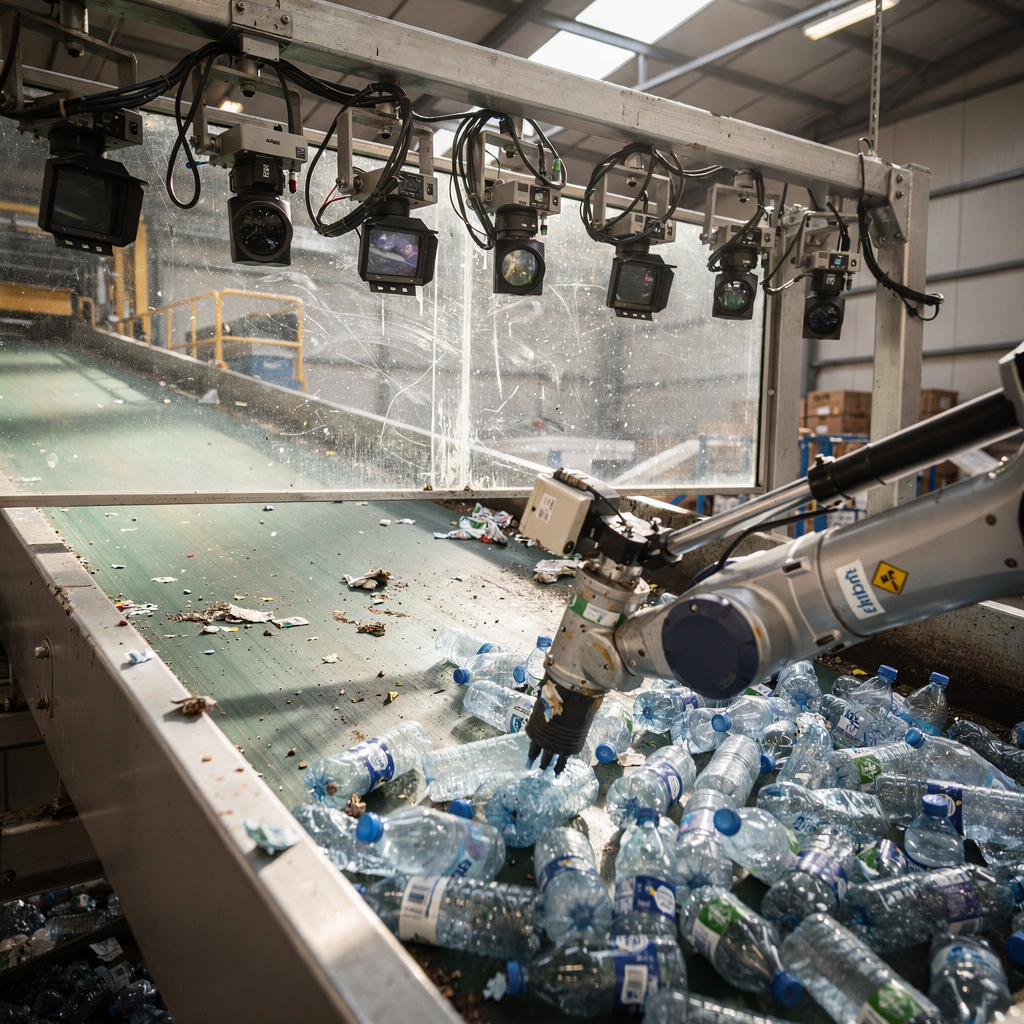
Common failure modes are simple to list. Overlap and occlusion hide items. Dirty or wet labels confuse spectral signatures. Mixed materials (laminates, multi‑layer composites) resist clean classification. Models trained on one waste stream may underperform on another. That is why site‑specific calibration and ongoing labelling are routine for successful deployments.
Systems that pair vision with material sensors (for example NIR or fluorescence) typically perform best. When paired with domain‑specific training data, these systems can reliably identify items such as PET, HDPE, aluminium and mixed paper. This improves commodity purity and marketability. For practical guidance on integrating AI into email and operations workflows at recycling operations, see how AI agents automate logistics email lifecycles for operations teams and reduce handling time virtual assistant for logistics.
Drowning in emails?
Here’s your way out
Save hours every day as AI Agents label and draft emails directly in Outlook or Gmail, giving your team more time to focus on high-value work.
Custom ai for recycler operations: data, models and integration (custom ai; recycler)
Deciding to buy or build depends on three things: data, frequency of change and integration needs. If your waste mix is stable and standard, off‑the‑shelf models can work. If your municipal stream has unique contaminants, a custom AI model often performs better. Site‑specific training reduces contamination and increases recovered material value.
Data requirements drive model quality. You need labelled images and spectral captures that reflect real line speed, lighting and soiling. Label every common material and also tricky edge cases like wet paper or soiled plastics. A short data checklist helps new projects get started:
1. Capture: high‑resolution frames across shifts. 2. Label: consistent tags for material type and condition. 3. Balance: ensure rarer items appear enough in the set. 4. Validate: hold out a testing set for accuracy measurement. 5. Retrain cadence: schedule regular updates.
Integration is the often underestimated part. Models must link to PLCs, conveyor controls and QA checks. They must also fit into procurement and commodity tracking. For example, linking detection outputs to ERP and logistics systems lets you create structured records of tonnage and quality. Our platform experience shows that automating the lifecycle of operational email and triage dramatically reduces manual steps when coordinating vendors, buyers and transport providers. See an example of automated logistics correspondence to learn how AI can streamline coordination between plant teams and external partners automated logistics correspondence.
Edge vs cloud matters. Edge inference keeps latency low, but remote model management is harder. Cloud training centralises expertise. Many teams choose a hybrid architecture. They run inference at the edge and push data for retraining to the cloud. That approach balances performance, governance and cost.
Finally, implement governance and testing. Track model drift. Keep a process to retrain on new contaminant types. Maintain a single source of truth for labels. Small, frequent updates outperform large, infrequent overhauls. This approach helps recyclers scale AI responsibly and measurably.
AI-based automation on the plant floor: robotics, sensors and throughput (ai-based)
Hardware and software must pair cleanly. Typical plant deployments combine cameras, NIR scanners, robotic pickers and active diverter gates. Sensors feed models with RGB and spectral inputs. Models then instruct actuators. The result is faster, consistent sorting and less manual handling of trash and recyclables.
Throughput gains are measurable. Many facilities report higher tonnes per hour after installing AI‑powered pickers or optical sorters. For example, studies show AI-driven optimisation improves resource recovery and material circularity (AI‑driven circular economy optimization). Facilities that install combined sensor suites can often increase speed while holding or improving commodity purity.
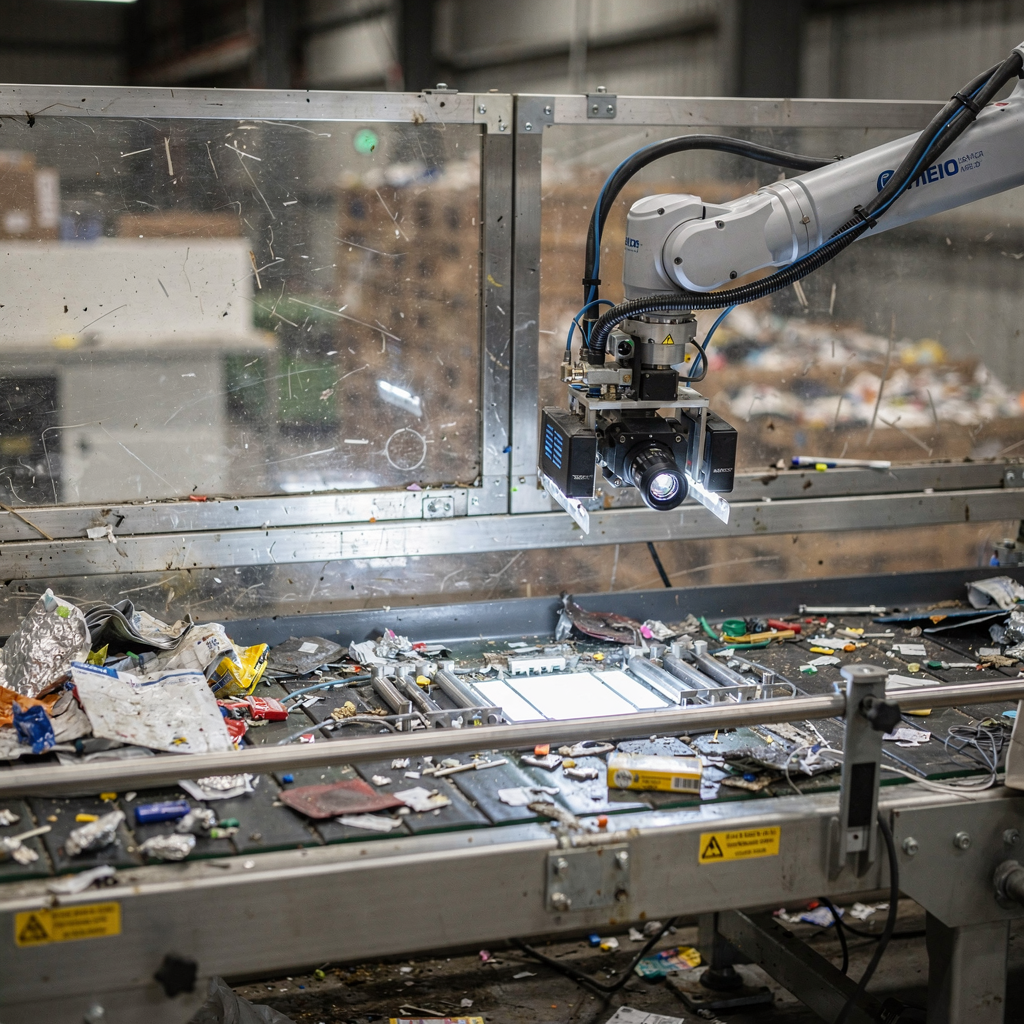
Maintenance and data responsibilities are continuous. Sensors suffer drift. Cameras need cleaning. Robotic grippers wear. Plan spare parts and a maintenance schedule. Also plan for labelled data refreshes when entering new seasons or changing incoming materials.
Risk areas include capital cost and integration complexity. Capital costs can be high up front. Yet automation reduces repetitive manual tasks and can improve employee safety. Balance short term cost against long term savings in labour, disposal and landfill fees. To better manage operational communications during this transition, recycling plants often adopt AI agents that automate incoming operational emails. That reduces administrative load on operations managers and procurement teams scale logistics operations with AI agents.
Finally, ensure validation on the plant floor. Run A/B trials. Sample outputs for purity. Adjust pick thresholds to trade off recovery against contamination. Use regular audits to confirm the model is meeting targets. These steps help you convert pilot success into reliable production performance.
Drowning in emails?
Here’s your way out
Save hours every day as AI Agents label and draft emails directly in Outlook or Gmail, giving your team more time to focus on high-value work.
Smarter recycling solutions across the ecosystem: collection, logistics and compliance (smarter; recycling solutions; ecosystem)
AI extends beyond the facility. It helps in collection planning, route optimisation and citizen engagement. Smart bins with sensors can report fill levels and contamination alerts. Route optimisation software can reduce collection miles and fuel use. Together these parts shrink the environmental footprint and support sustainability goals.
Upstream interventions are powerful. For instance, an interactive citizen app that accepts a photo of the item can provide instant guidance on proper recycling. The app can personalise tips and reduce confusion about household hazardous waste or electronics disposal. Simple guidance reduces wrong items in the blue bin and makes the inbound stream cleaner.
Examples of flows include: citizen guidance app → smart bin sensor → central AI dashboard → dynamic route planning. This chain lowers collection costs and improves compliance reporting. It also helps municipal programs show progress toward sustainability goals and reduce landfill use. Use sensors to flag contamination early and send targeted education campaigns where needed. That reduces collection delays and improves material quality at sorting facilities.
Other practical uses include automated compliance reports for regulators and automated matching of container manifests with incoming loads to verify weights and materials. AI can also support incentive schemes that reward households or businesses for proper recycling. These programmes are more effective when they combine user‑friendly digital touchpoints with clear recycling guidelines.
To align plant and collection operations, create shared dashboards that present insight on inbound composition, contamination trends and route efficiency. This system‑level view helps operators tailor collection strategies, refine and optimize pricing, and ensure the whole ecosystem performs better. For teams that need tighter operational email handling during cross‑functional rollouts, an AI assistant that understands intents and routes or drafts responses can streamline vendor and customer‑service interactions improve logistics customer service with AI.
Deployment roadmap: adopt an ai agent and build a custom ai plan for recyclers (ai agent; custom ai; recycler)
Adopt a phased, low‑risk approach. A typical roadmap has five stages. Stage one: pilot scoping. Stage two: deploy sensors and collect data. Stage three: offline training and validation. Stage four: live pilot with human oversight. Stage five: scale across lines or sites. Keep pilots tight. A 3–6 month pilot with clear KPIs is a common, sensible choice.
KPIs to measure during pilots include accuracy of material identification, throughput gain, reduction in contamination, and cost per tonne. Aim for a measurable uplift in recycling rates and a target reduction in manual sort labour. Use standard audit protocols to validate results. Many teams set a target accuracy uplift and a throughput gain percentage before approving further rollout.
Budget bands vary. Small pilots may cost tens of thousands. Full line replacements run into mid six figures or more. Include integration costs for PLCs, ERP and QA systems. Also include staff time for labelling and retraining. For operational teams, automating routine emails and task routing can free staff to focus on plant performance. Our virtualworkforce.ai experience shows that automating the full email lifecycle for operations teams reduces handling time and preserves traceable decisions during deployment.
Partner checklist:
1. Proven sensors and robotics vendors. 2. Data and labelling support. 3. Edge/cloud hybrid architecture. 4. Safety and operational training. 5. Clear escalation and governance. 6. Integration plan with ERP and logistics systems. For those who need help with operational correspondence and coordination during deployment, consult resources that show how virtual assistants can handle logistics workflows and reduce manual triage virtualworkforce.ai ROI for logistics.
Governance items include data quality checks, regular retraining schedules, and safety audits. After successful pilots, scale in phases. Validate each new line and maintain a data‑driven governance process. This method reduces risk and supports long‑term value creation for recyclers and the broader ecosystem.
FAQ
What is an AI assistant for recycling companies?
An AI assistant is a software agent that helps operations teams with tasks such as item identification, process alerts and scheduling. It can also automate repetitive communications and provide insight to managers.
How quickly do AI sorting systems pay back?
Payback varies by scope and throughput. Small retrofits often show payback in 18–36 months, while full line upgrades may take longer.
Can AI reduce contamination in recycling streams?
Yes. AI improves identification and separation which lowers contamination and increases commodity quality. Clean inbound streams also reduce processing costs downstream.
Is custom ai required for every recycler?
No. Off‑the‑shelf models work when incoming material is standard. Custom AI is recommended when local waste mixes are unique or when facilities need higher purity targets.
Do AI systems need constant retraining?
They need periodic retraining, especially when the waste stream changes with seasons or new local policies. A retrain cadence ensures models remain accurate and perform as expected.
How do smart bins and route optimisation help plants?
Smart bins report fill and contamination levels. Route optimisation reduces miles and fuel use. Together they lower collection costs and improve inbound material quality to recycling facilities.
Can AI handle hazardous items like household hazardous waste?
AI can flag likely hazardous items for manual review and route them to specialised disposal streams. It can also support public education by identifying common hazardous items and promoting proper disposal.
Will automation eliminate jobs in recycling?
Automation shifts tasks rather than simply eliminating them. It reduces repetitive labour and creates roles for system operators, data managers and maintenance technicians. Staff often move to higher‑value supervision and quality control tasks.
How do I start a pilot project?
Begin with a 3–6 month pilot focused on a single line or shift. Define KPIs: throughput, purity, cost per tonne and accuracy. Collect baseline data and then measure improvements during the pilot.
How can email automation help during deployment?
Email automation can route vendor requests, draft coordination messages and extract operational data from communications. That reduces admin burden and keeps deployment timelines on schedule. Companies like virtualworkforce.ai specialise in automating the full email lifecycle for operations and procurement teams to support projects like these.
Drowning in emails?
Here’s your way out
Save hours every day as AI Agents label and draft emails directly in Outlook or Gmail, giving your team more time to focus on high-value work.