


How AI (ai) transforms renewable energy — quick overview and key facts
AI transforms how teams predict, dispatch, and maintain renewable systems. First, an AI assistant analyzes weather feeds, grid telemetry, and asset logs. Then it forecasts output, decides dispatch priorities, and acts through control systems or operators. The pattern is simple: forecast → decide → act. This workflow reduces downtime and increases usable energy from renewable sources. For clarity, data centres that run AI workloads consumed roughly 4.4% of U.S. electricity in 2023, and that share is growing. Yet studies report AI-driven optimization could reduce emissions enough to offset its extra power draw; for example, a 2025 report finds those reductions “would outweigh even the expected increase in global energy consumption” caused by AI systems (POLITICO Pro, 2025). Also, pilots from cloud leaders and grid operators demonstrate how demand-forecasting and dispatch models cut curtailment and raise utilization for wind and solar. For instance, industry pilots using predictive control reduced lost generation and improved capacity factors. In short, AI tools link weather science, market signals, and equipment health to optimize energy scheduling and to increase renewable energy generation. Energy teams that integrate AI see faster responses and clearer operational signals. Companies that adopt AI models report better visibility into energy supply and lower imbalance costs. Therefore, the role of AI in the renewable energy sector goes well beyond analytics. It becomes an operational layer that helps energy providers meet demand, improve energy efficiency, and support the energy transition from fossil fuels to clean energy.
Solar, storage and ai agents (ai agents) — production forecasting and battery optimisation
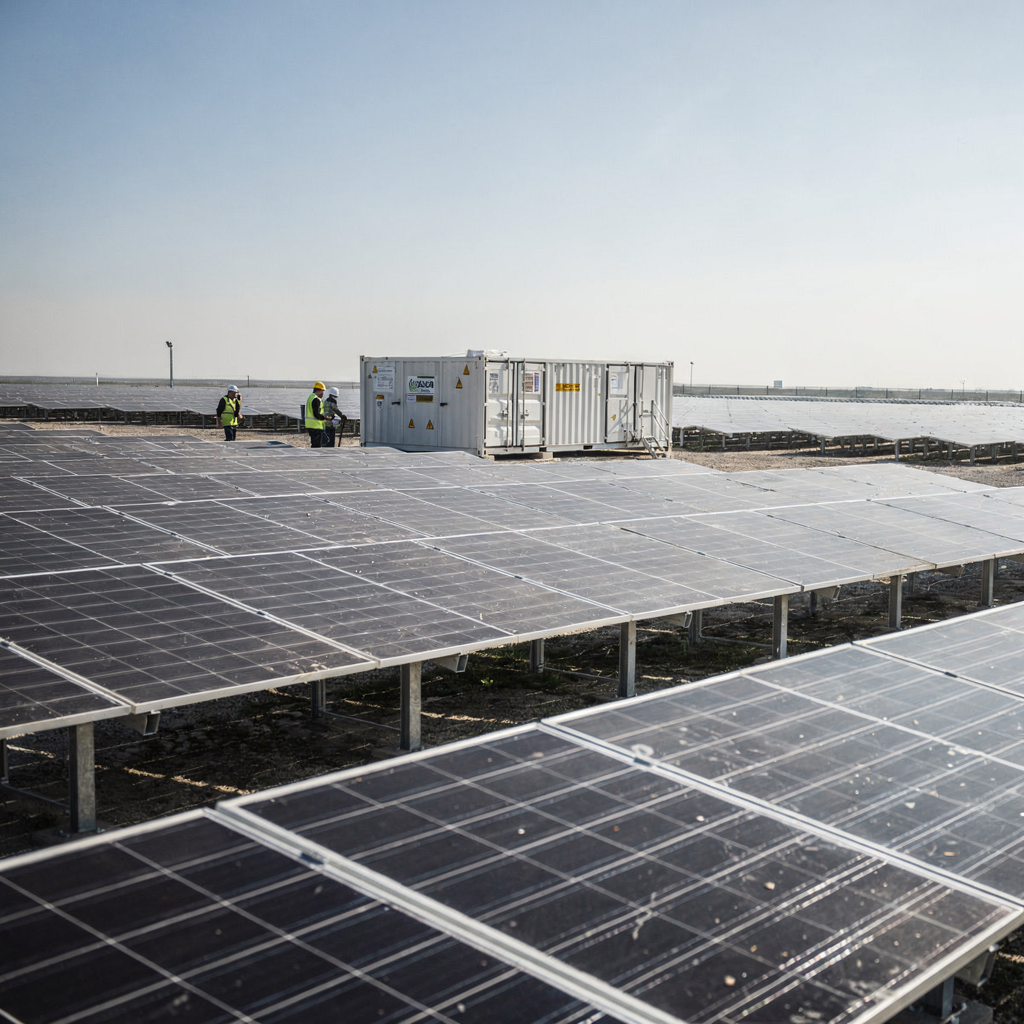
AI agents forecast irradiance, predict panel output, and schedule batteries to reduce curtailment and to maximize revenue. They use PV telemetry, inverter logs, weather APIs, and market price feeds. Then models output charge schedules, state-of-health estimates, and confidence intervals. A typical deployment feeds high-frequency SCADA streams into an AI system that produces minute-level dispatch signals. Real-world pilots—such as utility-scale storage projects—show predictive models can improve solar yield and storage arbitrage. For example, storage systems that use forecasting extended battery lifetime by smoothing cycles and by avoiding shallow-but-frequent degradation. Teams track KPIs like forecast MAE, round-trip efficiency, cycle life impact, and avoided curtailment. To run these pilots, collect PV telemetry, inverter logs, battery management system outputs, weather data, and market prices. Then train AI models to predict energy output and to schedule charge/discharge to optimize lifetime and revenue. Typical outputs include dispatch commands, alerts for abnormal degradation, and revenue estimates. In many setups, operators use the AI energy assistant to translate model outputs into action. For LiFePO4 chemistries used for frequency response, predictive schedules reduce stress and improve availability for ancillary markets. Actionable items include setting a forecast MAE target, validating round-trip efficiency each month, and measuring cycle depth trends. Integrate model outputs with asset control and with human-in-the-loop approval for safety. Also, teams can link these workflows to back-office tools. For example, virtualworkforce.ai automates email workflows for ops teams so dispatch alerts, maintenance requests, and vendor communications move faster and stay grounded in operational data. This reduces manual steps and helps teams act on forecasts quicker.
Drowning in emails?
Here’s your way out
Save hours every day as AI Agents label and draft emails directly in Outlook or Gmail, giving your team more time to focus on high-value work.
Grid balancing, energy management and ai integration (ai integration) — from microgrids to system operators
AI integrates distributed resources to balance supply and demand in real-time. It coordinates storage, demand response, and conventional plants to smooth variability. At the distribution level, agentic AI can manage local microgrids and coordinate with DSO/TSO systems. This reduces imbalance costs and improves grid stability by predicting variability and enabling automated responses. Real-time forecasts allow faster, data-driven market participation and better alignment with dispatch signals. Implementation requires attention to latency and interoperability. Edge processing handles low-latency tasks, while cloud models perform heavier optimization. Teams must connect SCADA, DSO interfaces, and market APIs. Consider latency needs when choosing where to run models: frequency response needs edge inference; trading and long-horizon optimization can run in cloud. Regulatory rules govern market participation and dictate what autonomous agents can do without human oversight. Therefore, define explicit human-in-the-loop gates for safety-critical actions. An implementation checklist includes latency targets, security and encryption, SCADA adapters, and compliance paths for market rules. AI agents should publish auditable logs and rollback options. For operators, common KPIs include imbalance cost reduction, frequency response availability, and forecast accuracy. These metrics show how well AI lowers operating expenses and improves reliability. Also, artificial intelligence applies to decision support, automated bidding, and real-time dispatch. Integrating AI into system operations helps manage a high share of renewable sources, reduces curtailment, and strengthens grid resilience. As grid complexity rises, energy companies must adopt clear governance, strong integration testing, and collaborative change management to ensure benefits scale safely. For more on automating operational correspondence and workflows that support dispatch and vendor management, see a practical example of automating logistics emails with AI here.
AI tools, ai system and energy companies — platforms, deployment and organisational change
The AI landscape for energy covers forecasting ML models, digital twins, predictive maintenance, automated trading agents, and chatbots and virtual assistants. Each tool matches different needs. Forecasting models improve generation estimates. Digital twins model plant behavior. Predictive maintenance cuts O&M cost by spotting failures early. Automated trading agents handle market bids. Chatbots and virtual assistants improve customer and vendor interactions. Energy companies should follow a procurement checklist: check data quality, demand explainability from vendors, verify security, and set SLAs for latency and availability. Also require vendor support for model audits and for retraining. Cost-benefit analysis must compare compute-driven energy consumption with operational savings. For example, predictive maintenance often reduces outage time and lowers spare-part inventory. Deploy pilots to measure savings before scaling. A pilot → measure → scale approach keeps risk low and delivers measurable ROI. In procurement, prioritize vendors with clear integrations to ERP and field systems. For front-line teams, tools that create structured data from emails and push context back into operational systems are especially valuable. That is where virtualworkforce.ai fits: the platform automates email workflows, grounds replies in ERP and WMS data, and reduces handling time. For energy projects that rely on complex vendor coordination, automated correspondence saves hours per week and reduces errors. When designing architecture, choose a hybrid stack: edge inference for real-time control and cloud models for heavy retraining. Also track metrics such as O&M cost reduction, forecast improvement, and net emissions change. For more detail on deploying an AI assistant for logistics and operations, review the virtual assistant logistics use case here and a guide to improving customer service with AI here. This combined approach helps organisations modernize while keeping safety and governance front and center.

Drowning in emails?
Here’s your way out
Save hours every day as AI Agents label and draft emails directly in Outlook or Gmail, giving your team more time to focus on high-value work.
Generative ai (generative ai), customer experience and use ai for operations — front-line and back-office uses
Generative AI boosts customer experience and speeds back-office workflows. In customer support, it drafts replies, summarizes incidents, and suggests next steps. For operations, it creates maintenance work orders from incident emails and fills permit forms. These automations reduce manual admin and reduce time to resolution. However, guardrails matter. Generative models can hallucinate. Therefore anchor outputs to grounded connectors and add audit trails. Use templates that cite data from SCADA, ERP, and market feeds to keep outputs accurate. Example prompts include tariff comparison templates, fault triage checklists, and repair scope drafts. When combined with operational AI models, generative AI helps teams prioritize dispatch and to craft compliant communications to regulators and vendors. Benefits include faster customer resolution, fewer manual errors, and clearer audit records. Risks include inaccurate summaries and overreliance on unverified suggestions. Controls include human review for safety-critical outputs and automated fact checks against authoritative sources. Also require versioning, logging, and approval flows. For customer-facing workflows, integrate chatbots with backend systems so recommendations come with attached evidence. For permit and grant paperwork, structure data outputs so teams can copy validated fields into applications. In addition, assistant workflows that manage email triage can improve overall efficiency. For teams handling high volumes of vendor and customer emails, tools that automate the lifecycle of operational email free staff to focus on exceptions. See a real example of automated logistics correspondence to understand how email automation reduces handling time for operational teams here. Use AI models responsibly and design escalation paths for ambiguous or safety-sensitive tasks.
Role of ai, ai in the energy sector and agentic ai — risks, metrics and a practical adoption roadmap
The role of AI in driving the energy transition is large and growing. AI can optimize energy usage, raise renewable energy production, and reduce emissions. At the same time, the surge in energy and water use from AI compute must be managed. Measure AI’s footprint and compare it to operational savings. Use lifecycle metrics that include training energy, inference energy, and operational benefits. Key risks include increased data-centre energy, water consumption, model bias, cyber threats, and regulatory barriers. For example, energy teams should monitor energy consumption of compute and ensure models run on renewables-backed compute when possible. A practical roadmap helps teams adopt AI in a controlled way. Step 1: baseline energy and data readiness. Step 2: pilot one use case with clear KPIs. Step 3: measure net emissions and costs, including energy used by AI. Step 4: scale with governance and renewables-backed compute. Success criteria include reduced curtailment percentage, improved forecast MAE targets, and measurable O&M cost reductions. Also include targets for energy efficiency and for grid stability metrics. Track imbalance cost reduction and ancillary service revenues. Assign accountability for model updates, security, and explainability. Agentic AI can automate many local decisions, but human oversight remains essential for safety and for market compliance. Finally, an adoption strategy should include change management, staff reskilling, and a procurement policy that favors explainable AI. The energy companies that move deliberately will improve renewable energy operations, enhance grid resilience, and deliver on energy goals. To start, pilot a single, high-impact workflow and expand once KPIs show clear gains.
FAQ
What is an AI assistant for renewable energy?
An AI assistant for renewable energy is software that analyzes data to help operate and optimize renewable assets. It forecasts output, suggests dispatch, and can generate operational messages and work orders.
How do AI agents improve solar energy and storage performance?
AI agents forecast irradiance and schedule batteries to reduce curtailment and to maximize revenue. They also smooth cycles to extend battery life and to improve round-trip efficiency.
Are AI tools energy intensive to run?
Yes, some AI workloads are energy intensive, and data centres consumed about 4.4% of U.S. electricity in 2023. Teams should measure compute energy and offset it with operational savings and renewables-backed compute.
Can AI participate in energy markets automatically?
AI can automate bidding and trading, but regulatory rules require clear governance and human oversight for market participation. Design agentic AI with auditable logs and approval gates.
What data do I need to deploy an AI system for a solar + storage site?
Collect PV telemetry, inverter logs, battery management data, weather APIs, and market prices. These streams feed forecasting and scheduling models.
How does generative AI help operations teams?
Generative AI drafts incident summaries, builds maintenance work orders, and fills permit paperwork. Ground generative outputs in authoritative connectors and add review steps to avoid hallucinations.
What KPIs should energy teams track after deploying AI?
Track forecast MAE, reduced curtailment, O&M cost reduction, cycle life impact for storage, and net emissions change. These KPIs show both performance and environmental impact.
How do I balance AI benefits with its environmental footprint?
Measure AI energy use and compare it to savings in operations and emissions. Then run pilots, measure net emissions, and prefer renewables-backed compute where possible.
Can AI replace human operators?
AI can automate many processes but should not replace human judgement for safety-critical decisions. Use human-in-the-loop controls and clear escalation paths.
How do I get started with AI for renewable energy projects?
Start with a baseline audit of data readiness and energy use. Then pilot a single use case with clear KPIs, measure impacts, and scale with governance and training. For operational email and vendor workflows, consider tools that automate the lifecycle of operational email to speed responses and reduce errors.
Drowning in emails?
Here’s your way out
Save hours every day as AI Agents label and draft emails directly in Outlook or Gmail, giving your team more time to focus on high-value work.