


ai assistant for predictive maintenance: how ai system reduces unplanned downtime in the renewable energy sector.
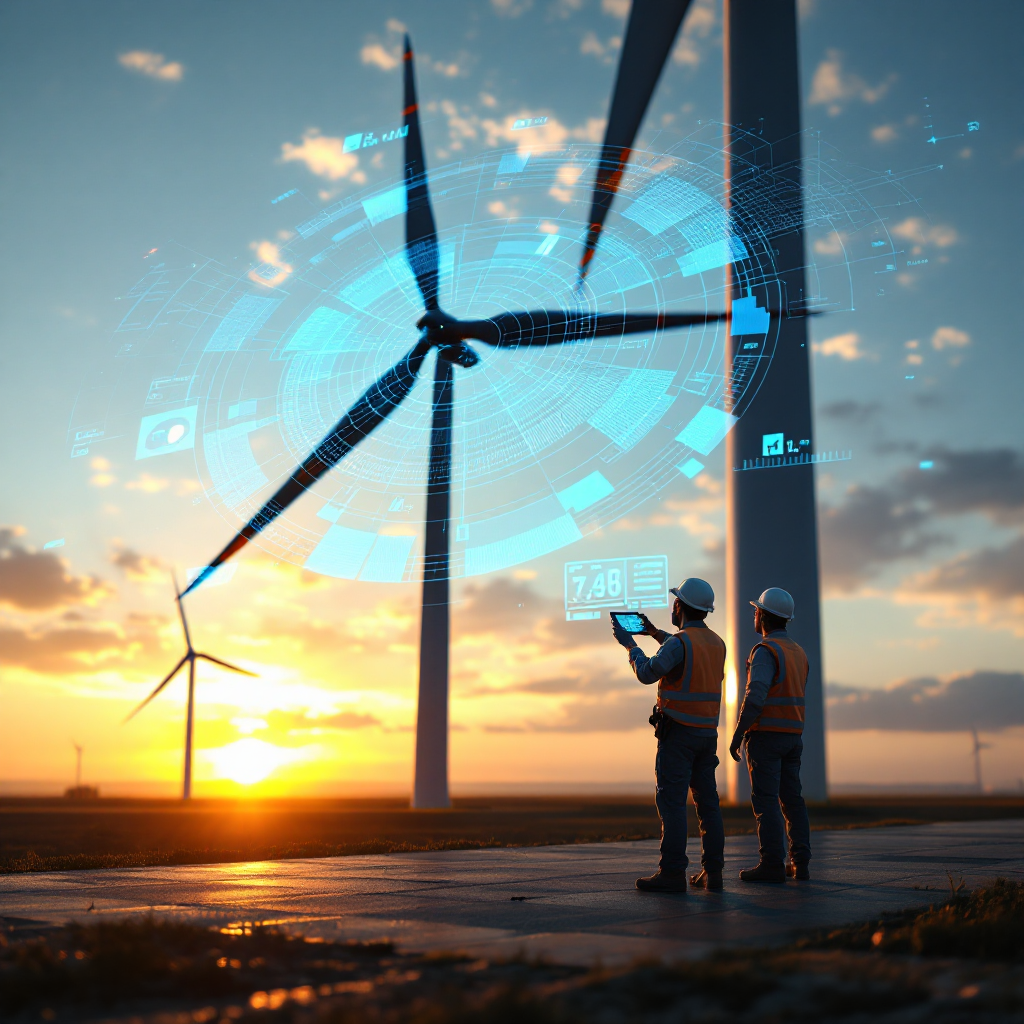
AI assistant technology transforms predictive maintenance for wind turbines and solar arrays. First, AI ingests sensor data, SCADA logs, and weather feeds. Then it fuses these data sources to spot subtle changes. Also, it analyzes vibration, temperature, and electrical signals. As a result, it detects faults long before they trigger shutdowns. Predictive models raise operational accuracy from about 70% to roughly 95% in published reviews. Therefore, teams see fewer surprise trips and fewer emergency repairs. In practice, several case studies report maintenance cost reductions up to 20% and higher availability.
For example, Longyuan Power applied physics‑driven models to turbine control. Consequently, economic performance rose markedly in reported studies, sometimes by 54–109% compared with conventional strategies. Next, the technical pipeline is straightforward. Edge sensors perform initial preprocessing. Then, NODE and gateway logic send compressed telemetry to cloud models. Finally, automated work orders populate maintenance systems and trigger crews. Typical model types include anomaly detection, remaining‑useful‑life (RUL) estimators, and digital twins that simulate loads and wear. Predictive AI models thus translate raw telemetry into scheduled interventions. In addition, an ai system supports prioritisation. It ranks faults by risk and cost impact. This reduces mean time between failures (MTBF) and cuts the false positive rate.
Metrics to track include MTBF, false positive rate, availability, and cost per MWh. Also monitor repair turnaround, spare parts usage, and missed generation hours. Real deployments must integrate with existing ERP and maintenance platforms. For teams that handle many inbound operational emails, virtualworkforce.ai shows how no‑code AI agents can automate correspondence and speed scheduling; see our virtual assistant logistics page for integration patterns virtual assistant logistics. Finally, ensure human escalation paths. In addition, log decisions for audit and continuous retraining to limit model drift.
ai-powered optimization and forecast: improving solar and wind generation accuracy and energy management.
AI improves short‑term generation forecasting and plant optimization. First, AI models combine meteorology, panel or turbine telemetry, and market signals. Then, they produce probabilistic solar irradiance forecasts and wind ramp predictions. As a result, operators can optimize output and storage dispatch. AI forecasting lowers curtailment and helps balance the grid. For example, AI-driven forecasting helps utilities better balance supply and demand and modernize the grid according to a policy report. Next, AI models deliver forecast horizons for minutes, hours, and days. Real-time updates refine decisions. Also, combining ensemble models and continuous retraining improves reliability.
Key model architectures include gradient boosting, deep time‑series networks, and hybrid physics‑AI stacks. Forecast error metrics such as MAE and RMSE quantify performance. In practice, some deployments yield measurable revenue uplift by dispatching batteries to meet peak prices. For instance, battery charge/discharge optimization can store energy when prices are low and release when peak prices appear. Therefore, optimization adds value to both generators and energy companies. Implementation notes include using ensemble forecasts, live telemetry retraining, and clear SLAs for forecast horizons. In addition, define decision thresholds for automatic dispatch.
KPIs to monitor are forecast error, energy saved from optimization, and revenue uplift from improved dispatch. Moreover, integrate forecasts with control systems and market gate timelines. For groups that want to automate market communications and email dispatch for trading or operations, our automated logistics correspondence solutions explain practical automation hooks automated logistics correspondence. Finally, choose explainable AI models where operational teams need to validate decisions. This enhances trust, and therefore adoption, while supporting grid stability.
Drowning in emails?
Here’s your way out
Save hours every day as AI Agents label and draft emails directly in Outlook or Gmail, giving your team more time to focus on high-value work.
automate, automation and ai agents in supply chain: lowering logistics cost and speeding repair cycles.
AI agents automate supply chain tasks for distributed renewable assets. First, predictive spares reorder keeps parts available. Next, route optimization reduces technician drive time and travel cost. Then, agentic AI schedules crews based on severity and ETA. As a result, emergency dispatches fall and mean repair time shortens. AI-driven supply chain optimization reduces stockouts. Also, it lowers logistics cost. For example, predictive spares forecasting links asset health scores to reorder points to prevent downtime. In addition, automated tendering speeds contractor selection.
Practical steps include integrating asset health scores with ERP and TMS. Also, set dynamic reorder points that reflect predicted failure timelines. Use AI agents to automate routine procurement tasks. These agents can assemble bids, schedule shipments, and draft procurement emails. For teams that handle massive email volumes related to parts, virtualworkforce.ai offers no‑code AI email agents that ground replies in ERP and TMS data and cut handling time dramatically; see our page on AI for freight forwarder communication for examples of logistics email automation AI for freight forwarder communication. Furthermore, optimize routing with real-time traffic and technician skill matching to avoid multiple visits.
Success metrics to track include inventory turns, emergency dispatch reduction, and total cost of maintenance. In addition, measure time to repair and percentage of first‑visit fixes. Across the energy industry, optimizing logistics supports improving efficiency and increases equipment uptime. Finally, ensure procurement agents obey approval limits and include audit trails to meet governance requirements. This balances speed with control and delivers reliable outcomes.
ai chatbots and ai tool for customer experience and asset management in the energy sector.
Conversational AI and specialized ai toolkits improve operator and customer workflows. First, ai chatbots speed incident reporting and FAQs for customers and field crews. Second, ai-powered virtual assistants convert unstructured field notes into structured work orders. This reduces manual copy‑paste and lost context in shared mailboxes. For example, computer‑vision tools flag blade cracks or panel soiling, and thermal imaging analysis identifies hot spots. Consequently, inspection throughput rises while detection accuracy improves in industry write‑ups. Also, chatbots can route urgent issues to technicians and create escalation tickets when thresholds are reached.
Integration notes include embedding chatbots in operations platforms and ensuring human escalation. Also, preserve audit logs and model explainability for technicians. Use ai tool suites that combine visual inspection, thermal analytics, and structured diagnostics to assist decision makers. For customers, conversational agents answer billing and outage questions and thus enhance customer experience. In addition, specialized AI tools for diagnostics support operators with probable cause and recommended actions. These capabilities improve time to resolution and user satisfaction.
KPIs include time to resolution, inspection throughput, user satisfaction, and accuracy of automated diagnoses. Additionally, a seamless link between the chatbot and asset management system supports consistent records. If your ops team needs to automate email replies for order updates or ETA queries, our ERP email automation for logistics shows how to connect data sources and keep replies grounded in systems ERP email automation. Finally, ensure that virtual assistants follow role‑based access controls so sensitive data remains protected.

Drowning in emails?
Here’s your way out
Save hours every day as AI Agents label and draft emails directly in Outlook or Gmail, giving your team more time to focus on high-value work.
impact of ai, ai innovation and cost savings versus ai and sustainability: balancing benefits with energy use.
AI delivers clear cost savings and operational gains for renewable deployments. First, predictive maintenance avoids outage losses and increases yield. Second, better forecasting reduces curtailment and market penalties. Case studies show substantial savings in wind and solar maintenance and in parts logistics. At the same time, AI consumes energy. Data centers powering AI used about 4.4% of U.S. electricity in 2023 reported data. Furthermore, some reports estimate data center demand could reach 6–12% of U.S. electricity by 2028, underscoring the trade‑off between compute and benefit according to policy analysis.
To quantify trade‑offs, compare energy saved from avoided downtime and higher capacity factors with energy used for training and inference. In many cases, net energy saved is positive. For example, optimized dispatch and fewer failures often offset AI energy usage within a few years. To reduce AI carbon footprint, favor edge inference, model pruning, mixed‑precision compute, and renewable‑powered data centers. IBM notes that “while AI adoption drives significant energy use, it simultaneously offers unprecedented capabilities to optimize energy systems” IBM observed. Therefore, choose efficient models and run heavy training on renewable energy schedules.
Metrics to monitor include net energy saved, lifecycle carbon balance, and cost savings per year after AI deployment. Also, track model training hours and inference load. In practice, small changes such as pruning models and batching inference reduce energy use without losing accuracy. Finally, align AI innovation with corporate energy goals and sustainable energy commitments. This approach balances efficiency and reliability with a shrinking carbon footprint.
role of ai, agentic ai and ai in the energy sector: governance, standards and scaling deployments in renewable.
The role of AI expands beyond pilots to fleet‑wide adoption. First, define governance, safety, and procurement rules before rollout. Second, set performance thresholds and testing protocols for AI algorithms. Third, require cyber security reviews and audit trails for agentic behaviours. For agentic AI, clear limits on autonomous actions must exist. Also, create operator training and change management plans. A practical roadmap moves from pilot project to validated metrics to ERP integration and then to full fleet rollout.
Policy and standards should align with grid codes, data privacy laws, and industry best practice. Also, document model drift monitoring and retraining schedules. Define success criteria, such as regulatory compliance, demonstrable ROI, and reduced downtime across fleet. In addition, require explainability when AI provides safety‑critical recommendations. When agentic ai performs routine procurement or scheduling, ensure human approvals for high‑impact actions. For teams that want to scale operations without hiring, consider how no‑code AI agents can automate repetitive emails and approvals while preserving control and auditability; our guide on how to scale logistics operations with AI agents outlines these steps how to scale logistics operations with AI agents.
Finally, success depends on measurable KPIs, transparent accountability, and operator trust. Also, include cross‑functional steering groups to oversee safety and performance. By combining standards, tools, and training, energy providers can scale AI safely across renewable energy infrastructure. In turn, this enables smarter asset management, better energy management, and faster progress toward energy goals.
FAQ
What is an AI assistant for renewable energy equipment?
An AI assistant is a software agent that ingests sensor and operational data to support maintenance and operations. It automates alerts, produces forecasts, and can generate work orders or operator guidance.
How does predictive maintenance reduce unplanned downtime?
Predictive models analyze telemetry to detect early signs of failure and estimate remaining useful life. This lets teams schedule repairs on their terms and avoid emergency outages.
What data does an AI system need for accurate forecasts?
AI models use meteorology, panel and turbine telemetry, market signals, and historical performance. Combining these data sources improves forecast accuracy and decision quality.
Are AI-powered systems energy efficient?
AI can both consume and save energy. Data centers use significant electricity, but optimized operations and fewer failures often result in net energy savings.
How do AI agents help supply chain management?
AI agents automate spares forecasting, route planning, and procurement. They reduce emergency dispatches and improve inventory turns while speeding repair cycles.
Can chatbots improve customer experience for utilities?
Yes. AI chatbots speed incident reporting, answer FAQs, and route complex issues to humans. This reduces time to resolution and enhances customer satisfaction.
What governance is needed for agentic AI in energy?
Define testing protocols, approval limits, audit trails, and cyber security requirements. Also provide operator training and continuous monitoring for model drift.
How should I measure the impact of AI on a plant?
Track MTBF, forecast error, availability, cost per MWh, and revenue uplift from better dispatch. Also measure lifecycle carbon balance to assess sustainability.
Do small renewable operators benefit from AI?
Yes. Even small fleets gain from predictive maintenance and better forecasts. No‑code AI email agents can also automate routine communications and reduce administrative load.
Where can I learn more about automating logistics emails for energy operations?
Explore resources on integrating email automation with ERP and TMS systems to ground replies in live data. Virtualworkforce.ai provides guides and examples for logistics and operations teams to automate routine correspondence and improve workflow efficiency.
Drowning in emails?
Here’s your way out
Save hours every day as AI Agents label and draft emails directly in Outlook or Gmail, giving your team more time to focus on high-value work.