


AI and artificial intelligence: why AI phone answering matters for the restaurant business
Problem statement: missed calls and staff stretched at peak hours cost covers and reputation. The restaurant industry is changing fast, and operators must adapt. Two quick metrics show why this matters: 58% of restaurant searches now involve AI and voice assistants, and about 89% of restaurant brands are using or piloting AI tools to improve digital service 58% statistic and 89% adoption. In short, AI answers routine calls reliably, so teams can focus on in-person guests.
Why adopt an AI phone answering solution? First, fewer missed calls lead to more covers and higher customer satisfaction. Second, shorter wait times reduce frustrated callers and increase confirmed bookings. Third, accuracy improves: fewer order errors and clearer reservation details. For example, Google Duplex can book reservations and even update business hours in follow-up systems, acting as a triage and reservation agent Google Duplex example. Voice AI platforms reduce routine call load so human staff answer only the complex cases.
Use cases are direct. AI handles menu questions, opening hours, directions, and basic booking changes. AI can also confirm dietary notes and capture pre-payment links before seating. These capabilities help restaurant owners and restaurant operators to streamline phone workflows. Operators who choose to use ai to streamline their booking process find that time for staff on the floor increases, while time spent on repetitive calls drops. The measurable business outcomes include higher booking conversion, reduced call handle time, and fewer order errors. In practice, this helps restaurateur teams manage peak call times without hiring additional staff members.
As AI and artificial intelligence mature, the value proposition becomes clear: automate routine tasks, never miss a call, and improve the dining experience with consistent responses to customer inquiries. For teams considering next steps, see how AI can be piloted with small scopes and measured KPIs. For related operational automation in back-office workflows, our work at virtualworkforce.ai shows how AI agents remove repetitive email work and free team capacity for guest-facing service learn about AI agents for operations.
ai for restaurants: how AI phone and voice assistant handle customer inquiries
This chapter explains what an AI assistant actually does on the phone. In practice, an AI phone system acts as a first responder. It answers FAQs, manages reservations, takes takeaway orders, and routes complex issues to a human. The system relies on natural language processing and real-time checks to validate availability or menu items. Key capabilities include natural language understanding, multi-turn conversations, context retention across the call, and multilingual handling so callers get accurate replies in multiple languages. The technology stacks often combine ASR, machine learning, and dialog management.
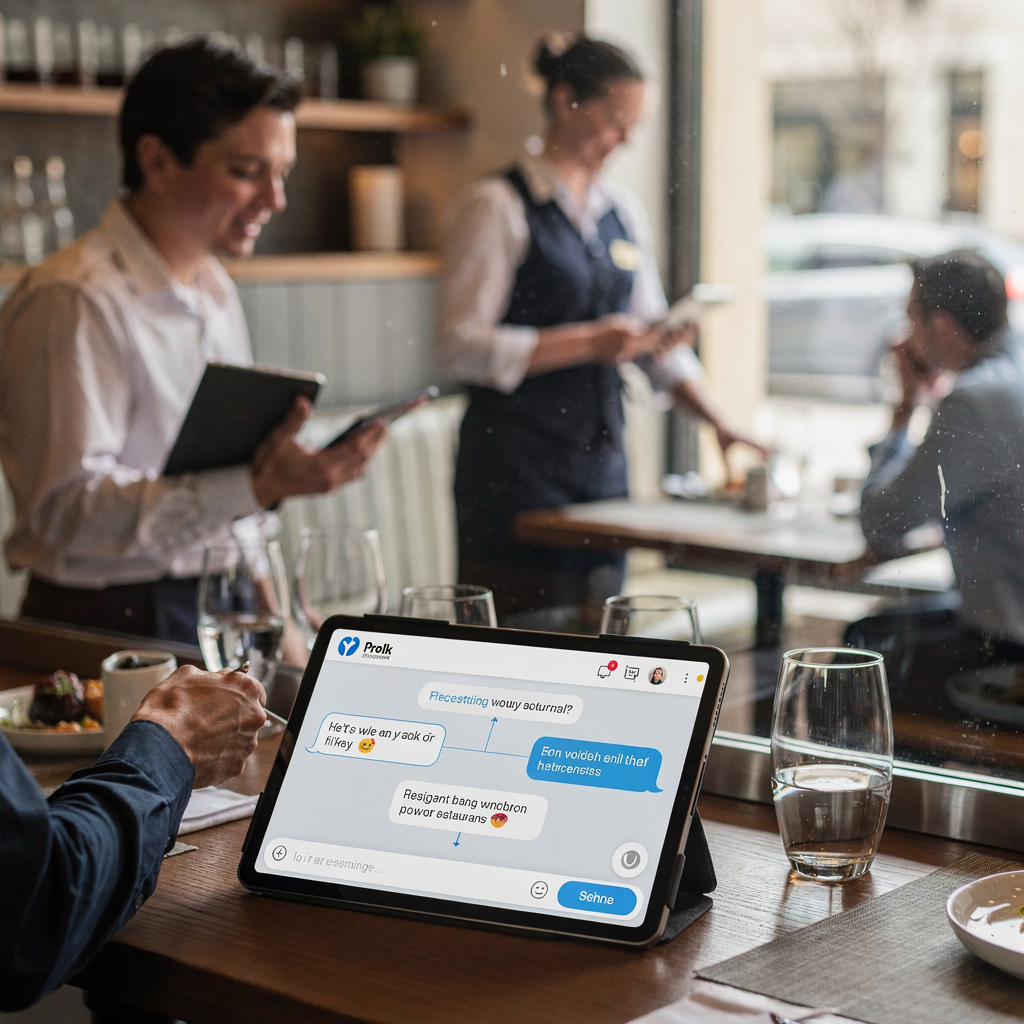
Vendors like PolyAI and Replicant provide conversational voice agents that can book tables and answer FAQs with high accuracy. Google Duplex proved the concept by booking reservations and acting as a triage before escalation. Typical call flows start with intent detection. For a reservation, the AI asks date, time, party size, and contact details. For an order change, it confirms the order number and the requested edit. For a FAQ, it replies with the current opening hours or menu items. These flows rely on real-time API checks to the booking engine and POS to avoid double bookings.
Expected accuracy depends on scope. AI handles routine tasks best. For complex customer interactions such as special event negotiations or large private events, the system escalates to a human staff member. AI voice handles repeated, simultaneous calls so you never miss a call during peak periods. It reduces wait times and repetitive work, improving customer experience while keeping staff focused on the dining floor. If teams want to build an ai for advanced use cases, they should pilot a narrow domain and expand once accuracy metrics meet thresholds. For teams that need operational email automation in parallel, internal integrations with platforms like virtualworkforce.ai can keep back-office tasks efficient see operational automation.
Drowning in emails?
Here’s your way out
Save hours every day as AI Agents label and draft emails directly in Outlook or Gmail, giving your team more time to focus on high-value work.
reservation and booking: automating reservations, orders and asked questions
This chapter offers a practical view of automating reservations and orders by phone. Restaurants can automate table bookings, cancellations, wait-listing, takeaway orders, dietary notes, and pre-payment links. Automate reservations so callers can confirm a slot even outside opening hours. The booking process improves when AI verifies availability via the reservation system API before confirming a time. As a result, confirmed reservations outside business hours increase, while no-shows fall thanks to automated confirmations and reminders.
Before: a staff member answers every call, checks a spreadsheet or POS, and types confirmations. After: an AI assistant handles the first triage, confirms common time slots, and sends confirmation messages automatically. This reduces average handle time and frees time for staff to prepare the dining room. Automation also cuts food waste because time-sensitive takeaway orders are confirmed fast and sent to the kitchen with clear dietary notes. For reservations and orders, the AI verifies payment links or secures deposits when required, reducing last-minute cancellations.
Integration points matter. AI must integrate with reservation platforms like OpenTable or Resy, a POS, and the restaurant calendar. If you integrate the POS and reservation system with the ai solution, orders and reservations flow into kitchen printers and staff dashboards in real-time. The system should fall back to human staff when the caller asks unusual requests or when the API returns errors. Real-world deployments show significant gains: reduced call handle time, increased confirmed covers, and fewer errors in orders and reservations. For restaurant operators evaluating vendors, include a test of real-time API checks and error-handling policies during the pilot phase. Also, operators can combine phone AI with email automation to handle booking confirmations and follow-ups; our work automating operational emails helps restaurants scale communications without hiring extra staff learn about automated ops agents.
integrate with existing restaurant stack: systems, staff and restaurant operators
This chapter outlines a practical integration path and the staff impact. Start with a checklist. Essential integrations are reservation system (OpenTable or Resy), POS, CRM, calendar, kitchen notifications, and your telephony carrier or SIP trunk. Also consider compliance, data retention, and opt-out flows. The AI must synchronize in real-time to avoid double bookings. Integration with existing restaurant tools ensures booking confirmations and order tickets flow to the kitchen without manual steps.
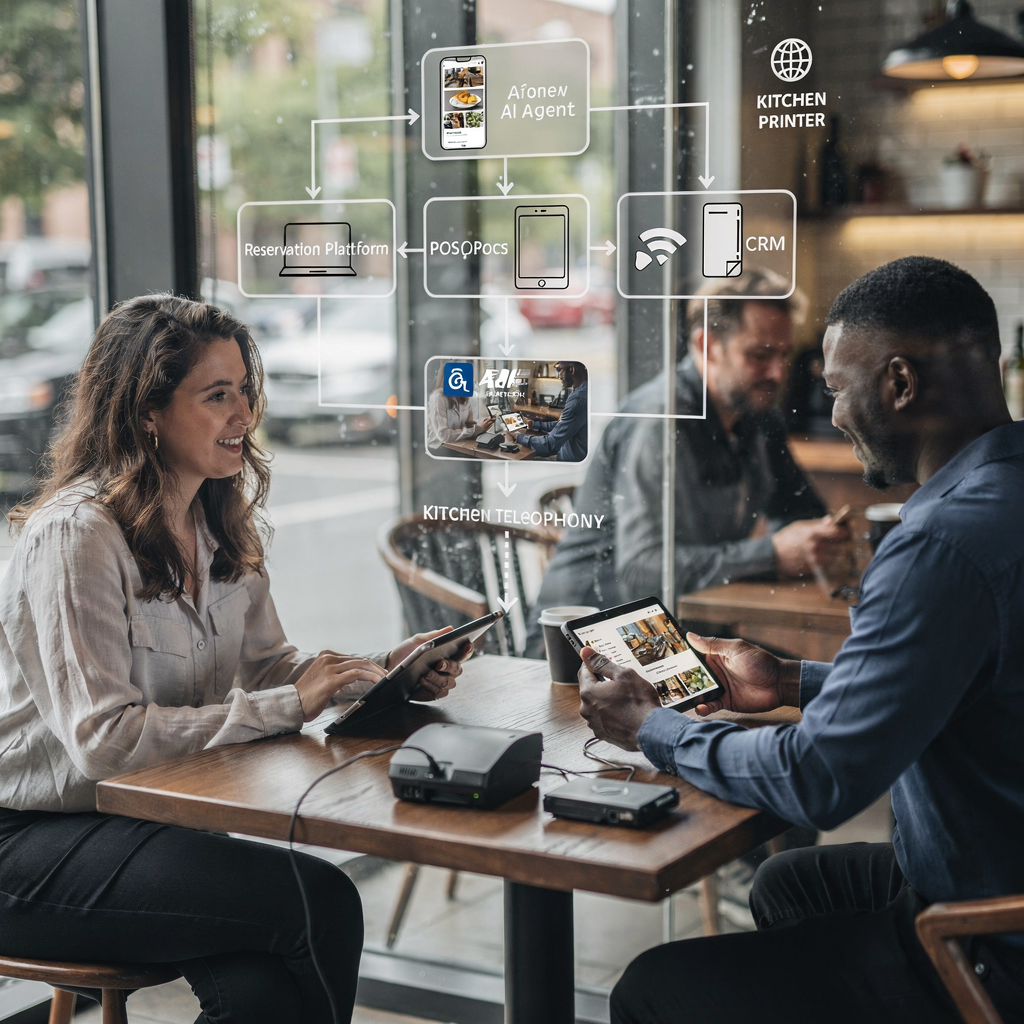
For staff and operators, the change is operational. Routine calls drop and staff focus on service and food quality. Escalation rules must be clear: the AI hands off to a staff member for ambiguous or sensitive inquiries. Train staff on how to accept or override AI confirmations and how to handle escalations. The staff member who handles calls will shift to in-person guest care and complex phone tasks. This change means a different hiring profile; consider fewer front-of-house phone handlers and more skilled floor managers.
Implementation risks include data sync errors and double bookings. Mitigations include real-time checks, optimistic locking on time slots, and a parallel run period where AI runs alongside human receptionists. A phased rollout works best: pilot on low-volume days, then expand to nights and weekends, then full switch. For IT teams, provide a one-page technical appendix that lists API endpoints, webhook behaviors, and failure modes. If you need to integrate AI with operations beyond phone calls, virtualworkforce.ai shows how to reduce manual email triage and route operational requests automatically, so back-office tasks remain aligned with front-of-house changes see related operations automation.
Drowning in emails?
Here’s your way out
Save hours every day as AI Agents label and draft emails directly in Outlook or Gmail, giving your team more time to focus on high-value work.
frequently asked questions and asked questions: handling FAQs, multilingual support and inquiry routing
This chapter demonstrates how AI handles common customer queries and complex requests. The FAQ scope typically covers opening hours, menu items, allergens, parking, private events, delivery zones and prices. AI answers common customer inquiries with concise scripts and can route complex or sensitive questions to human agents. For transparency and trust, tell callers they are speaking with an AI; this practice was observed in public deployments and improves acceptance.
Multilingual support is crucial. AI systems support multiple languages and speech rate control so callers with different accents get accurate responses. If a call becomes unclear or sensitive, the AI escalates automatically. For accessibility, the system offers slower speech rates and repeat prompts. For privacy, implement GDPR-compliant retention and offer opt-out paths.
Sample FAQ scripts work well. For opening hours and hours and directions, the AI replies with the current schedule and suggests nearby parking. For dietary questions, it pulls allergy flags from the menu dataset and confirms with a human if the request is ambiguous. For delivery orders and takeout, the AI checks delivery zones in real-time and provides pricing. For private events, the system collects details and routes the call to an event coordinator.
Use a clear handover script. The AI should say: “I will transfer you to a staff member for this request.” That sets expectations and avoids frustration. For restaurants using ai for complex routing, include escalation rules like maximum transfer depth and timeout values. To further optimize operations, integrate FAQ handling with analytics to track common customer inquiries and then update the menu or website. This helps to optimize messaging and reduce repeated calls. If you want to build an ai that connects phone answering with back-office workflows, contact teams that specialize in operational automation—schedule a free demo to discuss tailored integrations and timelines.
restaurants using ai assistant: case studies, ROI and hospitality outcomes for restaurant operators
This evidence chapter covers ROI, KPIs and lessons from early adopters. KPIs to track include answer rate, reservation conversion, call-to-booking time, average handle time, accuracy (order/reservation errors), and cost per booked cover. Vendors such as PolyAI, Replicant, and Google Duplex have demonstrated improvements: higher answer rates, 24/7 booking, and fewer interruptions to floor service. Case studies report reduced average handle times and increased confirmed bookings outside staffed hours. For a broader view of agentic commerce and future trends, see analysis on agentic commerce and how agents are changing transactions agentic commerce.
Real outcomes include higher customer satisfaction and lower operational costs. For restaurants that automate reservations, confirmed covers rise and food waste drops because the kitchen receives timely orders. AI answers routine calls simultaneously, reducing the need for multiple staff members answering phones during peak call times. Operators should track accuracy metrics: percent of successful bookings without human handover, and percent of calls routed. Where complex scenarios required human intervention, teams still saw net gains in efficiency.
Vendor evaluation should include must-have features: real-time integration with your POS and reservation platform, clear escalation paths, multilingual support, and analytics dashboards that show trends in customer interactions. Ask vendors for accuracy baselines on routine tasks and for examples of escalations. For restaurateurs, the recommended next step is a two-week pilot that tests core flows: reservations and simple order changes. Measure answer rate, booking conversion, and average handle time during the pilot.
Finally, a quick ROI method helps decision-making. Estimate current cost per phone-handled cover, then model a reduced handle time after deployment. Include implementation costs and projected increased covers from reduced missed calls. Many restaurants using ai-powered phone agents see payback within months. If you want to see how AI can also reduce repetitive back-office email work that often accompanies bookings and order changes, explore virtualworkforce.ai services that automate email lifecycle tasks for ops teams operational ROI case studies. The recommended next step is to pilot core flows and decide based on clear KPIs.
FAQ
What is an AI phone answering solution for restaurants?
An AI phone answering solution is an automated system that answers incoming calls, handles routine requests, and routes complex issues to humans. It uses natural language processing and integration with reservation and POS systems to confirm bookings and take orders.
How accurate are AI assistants when they take reservations?
Accuracy is high for routine tasks when the system is integrated with reservation APIs and trained on typical dialogs. However, unusual requests or complex events still require a human handover for full reliability.
Can AI handle delivery orders and takeout?
Yes. AI can check delivery zones, confirm menu availability, and capture takeaway details. For complicated delivery rules or partner networks, the system may route to a human or a specialist workflow.
Do AI voice assistants support multiple languages?
Many systems support multiple languages and speech rate control to improve comprehension. If a language or dialect is not supported, the call should be escalated to a human operator.
Will AI reduce my staff member’s workload?
Yes, AI reduces routine phone traffic so staff can focus on floor service and guest care. The staff member role shifts toward managing escalations and enhancing the in-person dining experience.
How does AI integrate with existing restaurant stack?
Integration requires connectors to the reservation system, POS, CRM, and telephony. Real-time checks and webhooks keep data synchronized and prevent double bookings. A phased rollout reduces risk during integration.
Is it ethical to disclose callers are speaking with AI?
Yes. Transparency builds trust and aligns with privacy expectations. Informing callers that they speak with an AI assistant is recommended and can reduce complaints.
Can AI reduce food waste?
Indirectly, yes. Faster confirmations and accurate takeout orders reduce last-minute cancellations and miscommunication, which can lower food waste. Better forecasting from analytics also helps kitchen planning.
What KPIs should restaurant operators track during a pilot?
Track answer rate, reservation conversion, average handle time, accuracy of bookings, and cost per booked cover. These metrics show whether the phone automation improves efficiency and customer satisfaction.
How do I start a pilot project for phone AI?
Define a narrow scope such as reservations and simple FAQs, integrate with one reservation platform, and run a parallel period where AI and humans both answer calls. Measure KPIs, then expand functions that meet accuracy thresholds.
Drowning in emails?
Here’s your way out
Save hours every day as AI Agents label and draft emails directly in Outlook or Gmail, giving your team more time to focus on high-value work.