


ai — what an AI sports assistant does for sports teams
AI assistants help sports teams collect and interpret vast amounts of information. First, they gather data from wearables and cameras. Then they turn raw streams into coach-ready summaries. For example, GPS and IMU sensors combined with heart-rate wearables track every athlete during training sessions. These systems measure training loads and heart rate variability to warn staff about excessive load and potential injury risks. Teams that use these approaches can reduce the time spent on research dramatically; analysts report a 70% reduction in query time when using AI assistants for statistics and betting analysis.
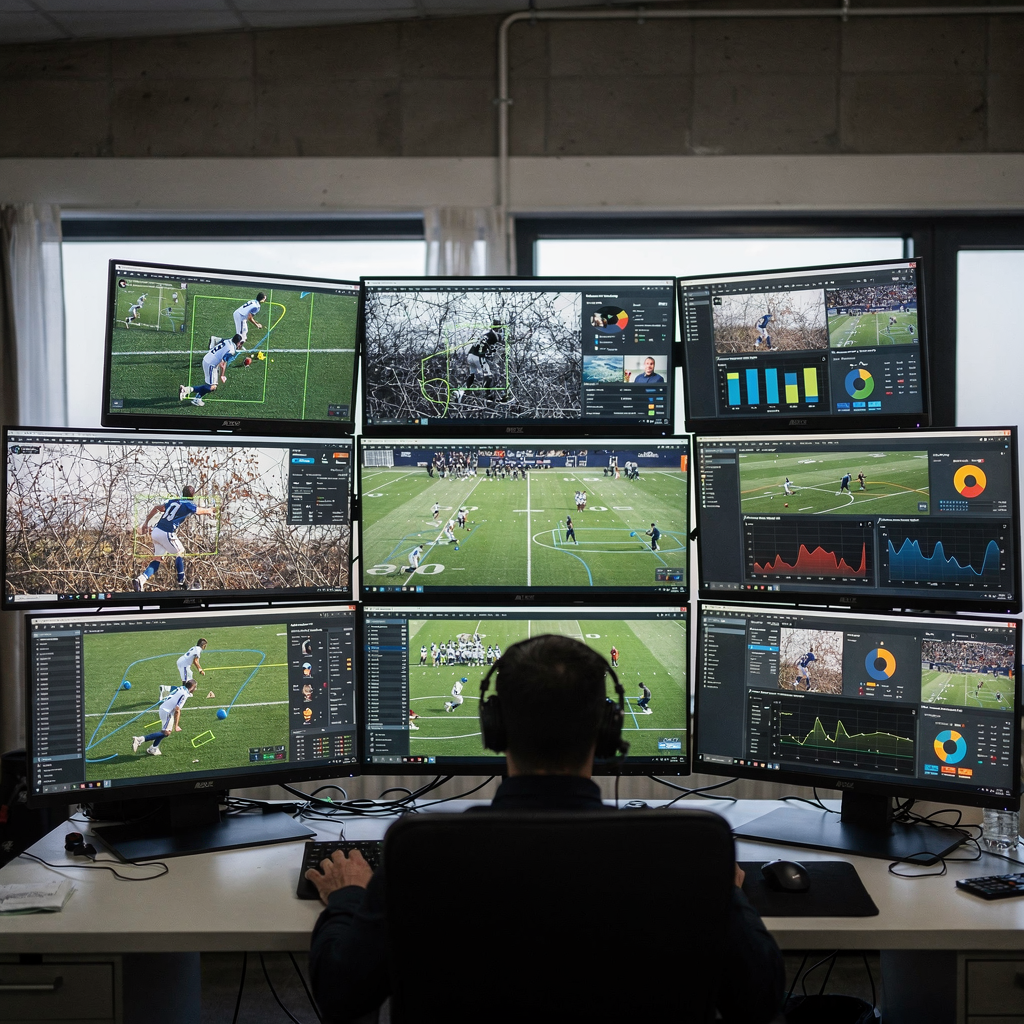
Next, computer vision extracts tactical context from game footage. It tracks player movements and positional data to map formations and counters. Video analysis creates overlays that coaches use to improve positioning and set-piece work. AI also helps turn raw data into actionable insights by flagging fatigue patterns and suggesting personalized training plans. The intelligence platform pieces together biometric data, load metrics, and match events to show who needs rest, who needs conditioning, and who can handle more minutes.
Because these tools feed data into dashboards, coaching staff can receive real-time stats and alerts during training and matches. This reduces guesswork and raises decision accuracy. Coaches and athletes gain clearer views of athlete performance. In practice, an AI assistant can suggest when to substitute a player, recommend a specific drill, or flag a biomechanics concern for review. The result is a more evidence-led approach to training and match day choices, and better outcomes for professional teams and professional clubs across the sports world.
ai sports and ai-powered tools — the technology stack (sensors, models, pipelines)
The technology stack behind AI sports solutions combines hardware and software. It starts with IoT sensors, wearables, cameras, and stadium feed capture. Then the pipeline routes data to cloud processing and machine learning models. Classification models tag events. Forecasting models predict load spikes or likely opponent tendencies. Video analysis systems run computer vision to recognize formations and every movement on the pitch. For club deployments that mirror Second Spectrum–style tracking, teams merge wearable telemetry and high-frame-rate feeds to build one platform for performance tracking and tactical work. You can read applied use cases and examples in an overview of AI in sport here.
Data pipelines include ETL steps, streaming layers, and APIs. A dashboard shows coaches and analysts the most relevant KPIs. An intelligence platform also houses machine learning models used for injury prediction and player ranking. These models use biometric data, historical loads, and video-derived events to forecast downtime. The pipeline often returns real-time insights for substitution timing and tactical switches. Teams usually see much lower latency when they host edge processing near capture systems. At the same time, cloud batches run heavy re-training jobs overnight.
For integration, developers expose clean APIs so training apps and training plans receive the same structured outputs. In practice, clubs use AI-powered features to individualize training and improve performance across every athlete. If you want to explore vendor selection and vendor workflow integration for operations that support sports, consider reading how AI helps logistics teams link data and processes in this practical guide on vendor integration for operations and integration.
Drowning in emails?
Here’s your way out
Save hours every day as AI Agents label and draft emails directly in Outlook or Gmail, giving your team more time to focus on high-value work.
sports ai to automate tasks — automating analysis, reporting and routine coaching work
Sports AI helps teams automate routine tasks so coaches can focus on decisions that matter. First, AI cleans and normalizes data. Next, it clips highlights and tags game footage. Then it assembles scouting reports and packages them for different staff roles. Automation reduces admin hours across the week. Staff who once spent hours on manual clipping now get ready-made scouting reports and session outlines. Teams that adopt AI systems save measurable time, letting coaching staff concentrate on player development and match strategy.
AI can also automate tasks like scheduling, drill selection, and versioning of training plans. It crafts hyper-personalized session notes and suggests custom training progressions. Algorithms can generate opposition tendencies and feed them into a coach assistant interface. In practice, an AI-driven alert warns staff about sudden spikes in workload. Automated injury-risk alerts trigger a follow-up by medical staff. Yet human review remains essential; medical teams and senior coaches validate each automated recommendation.
Operational functions benefit too. Many clubs manage large volumes of inbound communications tied to player logistics, travel, and vendor coordination. Here, solutions like virtualworkforce.ai show how AI agents can reduce handling time for repetitive, data-dependent email workflows. That approach helps coaching and operations teams resolve logistical queries faster and with fewer errors; see a practical walkthrough on automating routine emails and correspondence here. By automating repetitive tasks, clubs free up analyst hours so they can build deeper tactical reports and better scouting reports for each opponent.
sports assistant and sports coaching — linking insights to coaching decisions for match and training
A sports assistant sits at the intersection of analytics and coaching tools. It delivers data-driven suggestions that coaches test in practice. For instance, a coach receives tactical recommendations that propose a formation tweak or timing for a substitution. They then try the tweak in training sessions and assess the outcome. This feedback loop helps teams refine custom training and the broader training approach.
AI coaching tools support session design. They individualize drills to match player needs by using performance data and previous responses. A coach assistant will propose workout routines, then re-score players after each block. Coaches adopt a smart training plan when the metrics show improved execution. The assistant also provides scenario testing. Coaches can simulate game scenarios using historical data and probed opponent tendencies to plan responses.
Teams build workflows that keep human expertise central. Analysts prepare short briefs and the sports assistant supplies supporting charts and video clips. Coaches review those materials and select which drill to use in the next practice. Real-time insights feed into halftime adjustments and substitution choices. As one professional coach put it, “With AI assistants, we can simulate different game scenarios and adjust our tactics on the fly, which has been a game-changer in tight matches” (source). Those simulations create more confidence in coaching decisions and in the final plan applied on match day.
Drowning in emails?
Here’s your way out
Save hours every day as AI Agents label and draft emails directly in Outlook or Gmail, giving your team more time to focus on high-value work.
ai sports coach for american football — specific uses in play prediction, scouting and load management
In American football, an AI sports coach supports play prediction, scout pipelines, and load management. Tracking systems tag formations and recognize routes. Machine learning models then predict opponent plays and likely target reads. Coaches use those predictions to tailor defensive looks and to time substitutions. Scout departments use automated pipelines to rank prospects and to assemble scouting reports faster. This process speeds the draft and free-agent evaluation cycles.
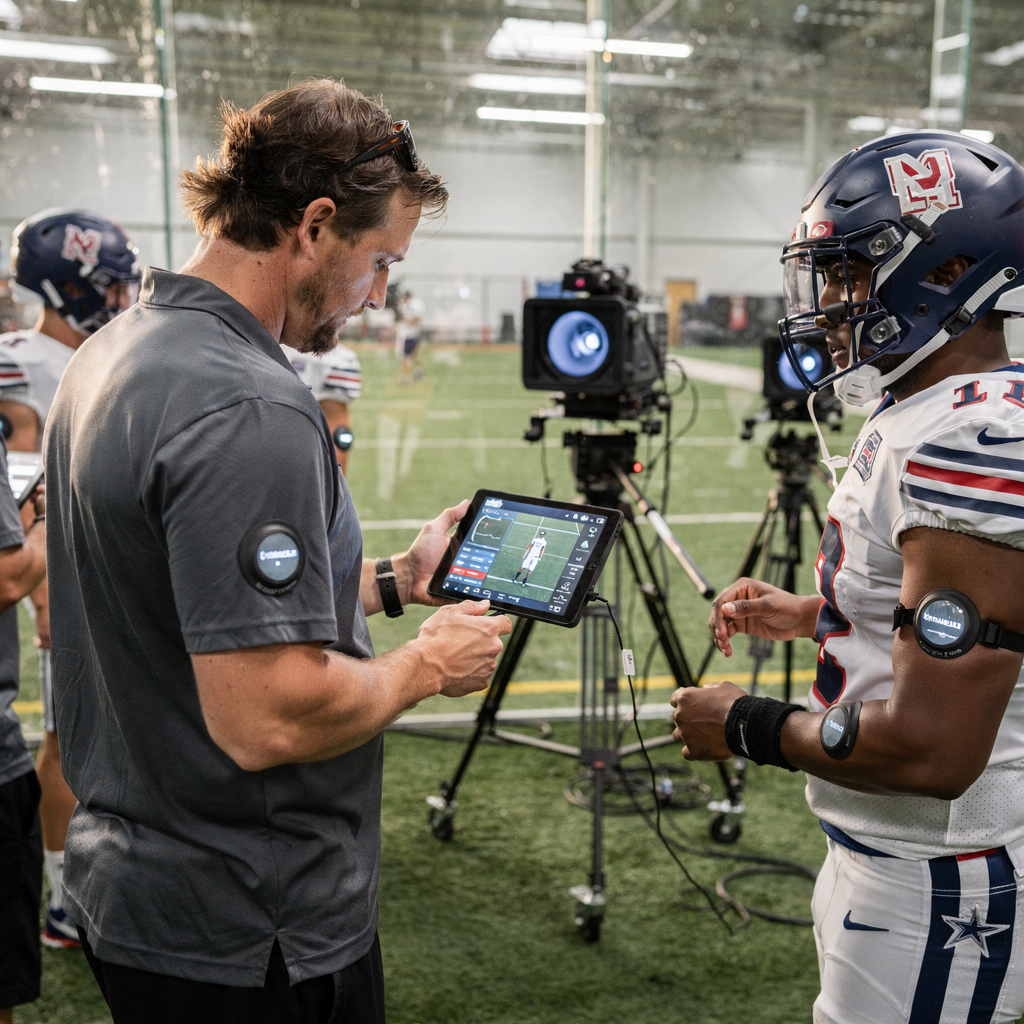
Biomechanics plays a big role for quarterbacks and skill players. Teams monitor throwing mechanics and run gait analysis to limit shoulder or knee risk. Wearable sensors and high-speed cameras feed models that analyze biomechanics and predict fatigue. Coaches use heart rate variability alongside workload metrics to manage minutes. These performance tracking signals feed into injury prediction models so medical staff can intervene early.
Teams leverage predictive outputs in play-calling and rotation decisions. When a model highlights a recurrent weakness, coaches adjust practice focus. Scouts receive prioritized prospect lists that factor in physical metrics and game film. For teams that want to improve cross-department workflow, automated correspondence and data grounding solutions used in other industries can offer ideas for integrating scouting pipelines with operational messaging; read about AI for freight forwarder communication for analogies on structured data and workflow mapping here.
coaches and teams transform — adoption, ethics, data privacy and next steps to adopt ai-powered systems
As coaches and teams transform their workflows, they must address governance and ethics. Sports organizations must define consent, storage, and retention policies for biometric data. They should consider anonymized data flows when sharing datasets for benchmarking. Ethical frameworks also require explainability and fairness checks in machine learning models. Researchers highlight how artificial intelligence in sports raises privacy and transparency issues that clubs cannot ignore; see a systematic review on ethical implications here.
Practically, teams should pilot AI systems on one squad unit. Define KPIs such as minutes saved, reduction in injury days, and accuracy improvements in scouting. Integrate with existing sports technology and ERPs. A clear legal review, vendor vetting, and staff training plan reduce rollout risk. Use anonymized data in initial model training and maintain audit logs for model decisions. Also plan for human-in-the-loop checks for critical choices about player health or contract decisions.
For teams planning procurement, create an internal playbook. The playbook should list data sources, governance rules, and performance thresholds. It should also identify which coaching tools will integrate with the new system. Many organizations find value in one platform that centralizes sports data, video, and dashboards. Finally, evaluate vendors not just on features but on their ability to support operations, traceability, and measurable ROI. If you want an example of ROI-focused adoption for operational AI, review a practical ROI case study for AI-driven operations here. With clear rules and staged adoption, artificial intelligence in sports can boost performance while protecting athlete privacy.
FAQ
What is an AI assistant for sports teams?
An AI assistant is a software system that ingests performance data and provides analysis to coaches. It helps teams by turning sports data into actionable recommendations for training and match decisions.
How does AI collect data from athletes?
AI collects data via wearables, GPS, IMU sensors, and cameras. It also pulls biometric data from heart rate monitors and converts those feeds into structured metrics for analysis.
Can AI reduce the time analysts spend on research?
Yes. Some teams report large reductions in query time. For example, analysts have recorded a 70% reduction in query time when using automated assistants for statistics.
Are AI recommendations fully automatic?
No. AI can automate tasks and suggest actions, but coaches and medical staff must validate critical decisions. Human-in-the-loop review remains essential for player health and selection choices.
How do teams protect athlete privacy?
Teams implement consent procedures, anonymize datasets where possible, and limit access to biometric data. They also log model decisions and apply governance controls to ensure transparency.
What technologies make up a sports AI stack?
Key components include IoT sensors, video capture, cloud processing, dashboards, and machine learning models. This stack supports real-time insights and deeper overnight analysis.
Can AI help with scouting and recruitment?
Yes. AI helps rank prospects and assemble scouting reports by combining physical metrics with game footage. Automated scouting pipelines speed up evaluation and highlight potential fits.
How do smaller clubs start with AI?
Start small: pilot one team unit, define KPIs, and integrate a single data source. Use staged deployment and prioritize features that save staff time or improve player safety.
Will AI replace coaching staff?
No. AI augments coaches by giving better information and automating routine work. It frees coaching staff to focus on tactics, motivation, and individualized player development.
Where can I learn about ethical AI in sport?
Look for systematic reviews and industry guidance on ethics and governance. Academic and industry sources discuss privacy, fairness, and explainability for sports AI systems.
Drowning in emails?
Here’s your way out
Save hours every day as AI Agents label and draft emails directly in Outlook or Gmail, giving your team more time to focus on high-value work.