


ai assistant and management software designed to help student housing operators streamline housing operations.
Purpose-built MANAGEMENT SOFTWARE for student housing brings an AI assistant into everyday housing tasks. The offering is designed to help student housing teams centralize resident communication, automate maintenance triage and manage LEASE workflows from a single pane. It aims to simplify intake, digital check-in, contract management and routine FAQ handling so staff can focus on more complex resident needs. For student housing OPERATORS this package is a unified platform that pairs a conversational AI with property management tools. The core experience includes 24/7 chat support, automated MAINTENANCE REQUESTS routing, and self-service portals that let residents update details or request AMENITY bookings without waiting on an agent.
Fast facts matter. Pilot programmes report chatbots handling more than 60–70% of routine queries and cutting staff response times sharply; one survey shows over 60% of housing departments have started experimenting with AI-driven chatbots (MDPI). Another multi-informant study found roughly 70% of students saw faster replies and higher satisfaction when they interacted with virtual assistants (ScienceDirect). Meanwhile, data-driven pilots report up to a 25% lift in operational efficiency after AI adoption (Taylor & Francis). These results show how a purpose-built AI + management software package actually looks: one platform for chats, tickets, LEASE renewals, and resident records that helps PROPERTY MANAGERS reduce manual triage and reclaim staff hours.
For teams evaluating a platform, ask how the AI agent handles routing and sourcing of operational data. If your ops include heavy email volumes, see how AI agents can automate message lifecycle and draft replies based on ERP or housing records; virtualworkforce.ai automates the full email lifecycle and can cut handling time dramatically, saving staff to focus on higher-value work (see an example integration). Start with high-volume workflows, then expand to lease and AMENITY management so the system proves ROI before rolling out campus-wide.
How ai-powered automation and natural language processing (nlp) improve operational efficiency for property managers.
NLP and AI-powered automation transform how PROPERTY MANAGERS handle questions, tickets and tenant communication. Natural language processing is used for intent detection, automatic ticket categorisation and multilingual replies. For example, intent detection allows the conversational AI to decide whether a message should create a maintenance ticket, answer a FAQ, or trigger a LEASE renewal reminder. When sentiment flags detect frustration, the system escalates to staff so problems do not get worse. These flows reduce manual triage and help staff to focus on more complex issues.
Automation flows run the gamut. The AI can AUTOMATE lease renewals by checking eligibility, sending offers and recording acceptances. It can schedule maintenance, send RENT COLLECTION reminders, and broadcast EMERGENCY ALERTS in real-time. When chat support resolves a question without staff, housing teams reclaim hours each week. Trials commonly report 20–30% efficiency gains in staff time and faster first responses, with measurable reductions in mean time to resolve. One study shows predictive analytics and automation reduced vacancy and improved responsiveness across pilot sites (Grad UW).
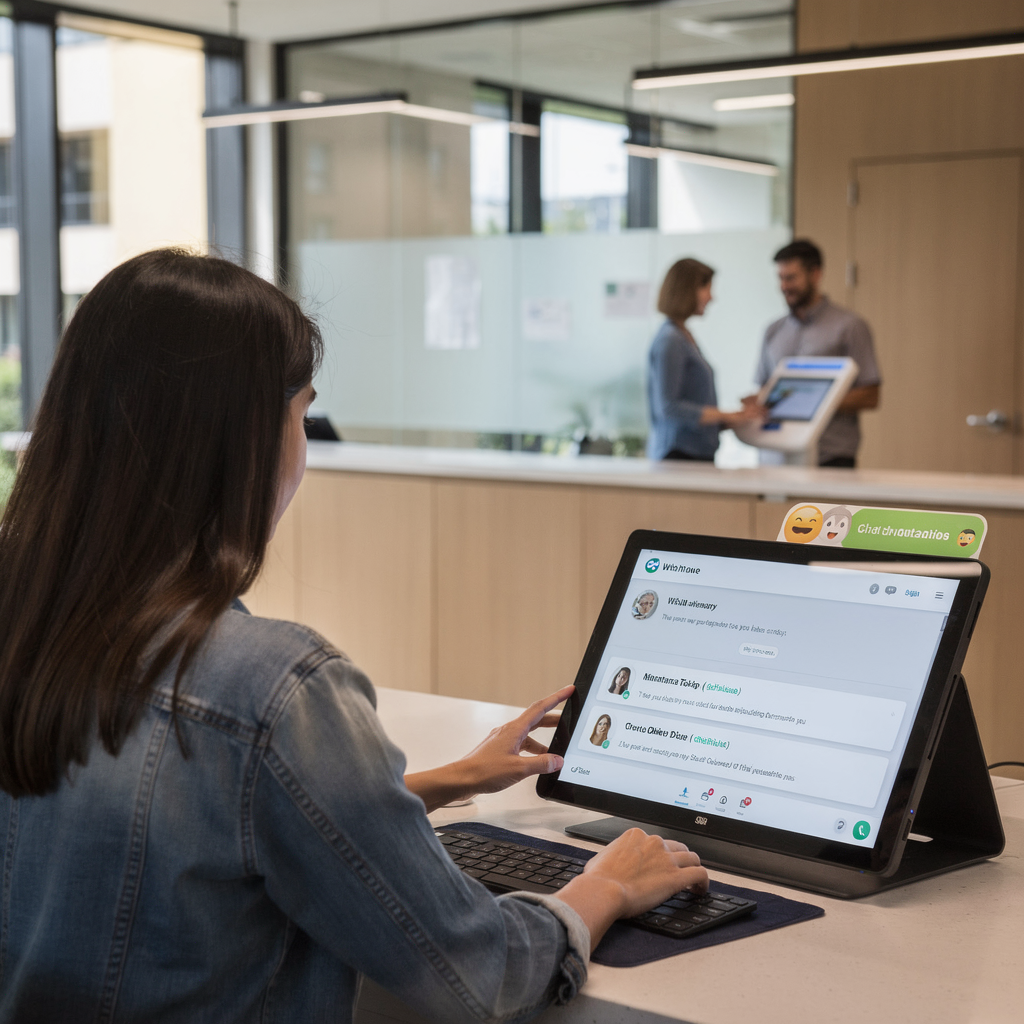
What should PROPERTY MANAGERS measure? First response time, tickets resolved without staff, weekly hours saved, and percentage of MAINTENANCE REQUESTS auto-assigned. Also track resident engagement and satisfaction scores to confirm the AI-powered approach improves service. Use integration with your PMS to ensure records stay current and to feed the AI with accurate context. If your operations include heavy email workflows, consider an AI platform that automates email lifecycle and drafts grounded replies from operational systems; that reduces inefficiency in shared inboxes and saves time (example). By combining NLP with automation you simplify routine tasks and elevate staff capacity to handle the complex cases that truly need human attention.
Drowning in emails?
Here’s your way out
Save hours every day as AI Agents label and draft emails directly in Outlook or Gmail, giving your team more time to focus on high-value work.
Leveraging analytics and advanced ai to unlock insights across the student housing lifecycle.
Analytics turn raw housing data into decisions that improve marketing, maintenance and planning. Occupancy forecasting, demand modelling and churn prediction let teams anticipate vacancies and react sooner. Advanced AI can detect anomalies in utilities to catch leaks before they escalate, and can produce dynamic pricing signals for short-term rental offers. Pilots show vacancy reductions of around 10–15% when predictive analytics are used for demand and promotion timing (Grad UW). These are not hypothetical gains; they stem from integrating lease, maintenance and engagement data into one model.
Advanced AI also supports cohort analysis for resident ENGAGEMENT. By analysing behaviour patterns, managers can suggest AMENITY bookings, community events, and roommate matches tailored to preferences. Data-driven maintenance schedules reduce emergency repairs, since analytics predict equipment failures ahead of time. When property teams leverage analytics, they improve decision-making across the asset lifecycle and boost profitability through lower vacancy and smarter spend.
To implement analytics, you need quality inputs. Clean lease records, accurate maintenance logs, and up-to-date tenant profiles form the foundation. Use an ai platform that supports data ingestion from PMS and access control systems, and that offers dashboarding for trend review. One benefit is improved forecasting accuracy for seasonal demand, which helps with staffing and marketing calendars. For teams wondering how to scale AI use without hiring, our resources on operational automation show step-by-step examples that relate directly to campus housing (scaling without hiring). Analytics let managers proactively allocate resources, oversee capital planning and prioritize upgrades that deliver the most resident satisfaction.
How ai solutions and management software streamline workflow for multifamily and student housing property management.
Student housing and MULTIFAMILY assets share many operational tasks, but student housing has UNIQUE NEEDS like academic calendars, roommate matching and high turnover cycles. AI SOLUTIONS must adapt to those rhythms. A typical automated WORKFLOW covers prospect → application → move-in → in-stay support → move-out. At each stage the AI can assist: qualify prospects, pre-fill application fields, confirm move-in times, handle tenant communication about maintenance, and collect move-out inspections. This kind of automation reduces repetitive work and improves consistency.
Integration points are critical. A good system connects PMS, access control, maintenance systems and finance. Seamless INTEGRATION ensures that a maintenance ticket created by chat also updates the maintenance vendor portal and posts cost to the correct account. Ask vendors for robust APIs and a single source of truth for resident data. Also demand uptime SLAs and clear escalation rules so operations don’t stall. For companies with complex email workflows, AI agents that automate the entire email lifecycle provide thread-aware memory and data grounding that preserve context across teams; learn more about automating logistics correspondence and how it applies to ops teams (relevant example).

Practical checklist: require APIs, insist on a unified platform for records, verify vendor security, and confirm how the AI handles consent and data privacy. Compare single-family and multifamily templates to see how the platform adapts to faster lease churn in student housing. When AI is configured to sync with access control and billing, it helps PROPERTY MANAGERS automate notifications, assign vendors, and reconcile rent collection. This coordinated approach reduces errors and keeps the housing community running smoothly.
Drowning in emails?
Here’s your way out
Save hours every day as AI Agents label and draft emails directly in Outlook or Gmail, giving your team more time to focus on high-value work.
Benefits of ai: case studies showing improved response times, reduced vacancy and better maintenance scheduling.
Case studies reveal tangible BENEFITS OF AI across campuses. In one summary, a chatbot handled routine Q&A for residents at scale, resolving over 70% of first-contact queries and lifting resident satisfaction. In another pilot, PREDICTIVE ANALYTICS increased OCCUPANCY and cut emergency repairs by forecasting failures and scheduling preventive maintenance. When maintenance was scheduled proactively, mean time to resolve fell and repair costs dropped. These are specific KPI wins that translate to better asset returns.
Key KPIs to track include resident satisfaction, occupancy rate, average days vacant, and mean time to resolve maintenance. A quick ROI model shows how recovered staffing hours plus reduced vacancy shorten payback horizons. For example, if AI reclaim 10 staff hours weekly and vacancy falls by 10% on a mid-size portfolio, the operational savings often cover implementation costs within a year. Cite studies that show 20–30% efficiency improvements in trials to justify pilots (study). Also note the ethical lens: “The deployment of AI in student housing must balance efficiency gains with respect for student privacy and transparency in how data is used” (Harvard Gazette).
Risks and mitigations are straightforward. Address data privacy and bias by implementing governance, clear consent and opt-out mechanisms. Ask vendors how models are trained, and require audit logs. Protect resident data to stay compliant with local rules and to keep community trust. For housing teams that want to elevate resident experience while saving hours, purpose-built AI and AI-DRIVEN AUTOMATION can assign work, draft replies, and automate rent collection and move-out checklists. When AI AGENTS operate with clear rules and oversight, they help PROPERTY MANAGERS improve resident experience and profitability.
Seamless integration, free demo and next steps to help student housing teams adopt an ai assistant.
Implementation starts with scoping and ends with measurable outcomes. Begin by mapping current processes and identifying high-volume use cases such as MAINTENANCE REQUESTS and FAQ handling. Then run a small pilot focused on one building or program, and measure FIRST RESPONSE TIME, auto-resolved ticket share, and hours returned to staff. A realistic timeline from pilot to full roll-out is typically 3–6 months depending on data readiness and integrations.
Vendor selection matters. Request a FREE DEMO and ask for integration examples, security certifications, and references from student housing. Confirm the vendor supports a UNIFIED PLATFORM and offers APIs for your PMS and access control. If email is a major channel, evaluate AI agents that automate email lifecycle and reduce triage time; virtualworkforce.ai provides examples of how email automation improves operational response and accuracy (ROI and examples). Also ask how the solution handles consent, audit trails and compliance so your deployment stays COMPLIANT.
Adoption tips: start with the highest volume touchpoints, iterate based on resident feedback, and track lifecycle KPIs to prove value. Train staff on escalation paths so the AI escalates correctly and lets staff focus on community-building. Finally, ensure the vendor provides clear SLAs and uptime guarantees. With the right partner, housing management with AI can streamline communications, automate repetitive tasks and improve operational efficiency while elevating resident experience and boosting profitability.
FAQ
What is an AI assistant for student housing?
An AI assistant is a purpose-built AI agent that handles resident communication, maintenance triage and lease workflows. It automates routine tasks so staff can focus on higher-value activities and improves response speed and consistency.
How does natural language processing help housing teams?
Natural language processing (NLP) recognises user intent, classifies tickets and generates multilingual replies. It reduces manual triage and flags urgent or negative sentiment for faster human escalation.
Can AI reduce vacancy in student housing?
Yes. Analytics and predictive modelling can reduce vacancy by forecasting demand and suggesting targeted promotions. Pilots have reported vacancy reductions of around 10–15% with data-driven approaches.
Will AI replace property managers?
No. AI helps PROPERTY MANAGERS by automating repetitive work and handling tenant communication at scale. It allows staff to focus on more complex issues and community engagement rather than routine triage.
How do I measure success in an AI pilot?
Track first response time, percentage of tickets resolved without staff intervention, hours saved per week and resident satisfaction scores. Monitor occupancy and mean time to resolve for maintenance too.
Is resident data protected when using AI?
Vendors should provide privacy controls, consent flows and audit logs to keep data compliant. Always ask about data governance and how models are trained before deployment.
What integrations are essential for student housing AI?
Integrations with PMS, access control, maintenance systems and finance are essential. APIs and a single source of truth for resident data help the system stay accurate and automated.
How quickly can we roll out an AI assistant?
Small pilots can launch in a few weeks if data is ready; a full roll-out often takes 3–6 months. The timeline depends on integrations, staff training and the scope of automation.
Can AI handle rent collection and move-out processes?
Yes. AI can automate rent collection reminders, payment follow-ups and move-out inspections, as well as update LEASE records and billing. These automations reduce manual errors and save processing time.
Where can I see examples of AI for operations and email automation?
Review vendor demos and case studies that show AI agents automating emails and operational workflows. For an example of email lifecycle automation in operations, see how AI agents draft grounded replies and manage threads across ERP and shared inboxes (demo and examples).
Drowning in emails?
Here’s your way out
Save hours every day as AI Agents label and draft emails directly in Outlook or Gmail, giving your team more time to focus on high-value work.