


How AI assistants transform the textile industry by using generative AI and ai-powered design to shorten product cycles.
Firstly, next, also, then, therefore, finally, additionally, consequently, thus, in addition.
Generative AI speeds concept-to-sample work and helps textile companies cut design cycles. For example, firms report design-cycle reductions of up to 50% on design time. This reduces lead times and allows fast responses to fashion trends. As a result, teams move from mood board to sample much faster. In practice, generative AI can produce mood boards, pattern variants and spec sheets automatically. It can also produce colourways tied to predicted customer preferences. This use of artificial intelligence helps brands reshape their product calendars. For instance, fashion ai workflows generate several pattern options in minutes rather than days. Designers then pick and refine the best versions. This workflow helps minimize waste and cut the number of physical samples. It will also boost speed to market for seasonal lines.
Key facts: generative ai can automate multiple design tasks. It provides rapid iteration and reduces wasted samples. Industry leaders cite faster time-to-market when they deploy these systems in runway and retail workflows. For a practical pilot, start with one product line. First, map current design processes. Second, choose a single style to test. Third, measure time from concept to approved sample. One measurable KPI: time-to-sample in days. One next step: run a 90-day pilot that timestamps each milestone. This pilot will help teams validate generative AI and redefine handoffs between design and production.
Use cases: ai agents, chatbots and analytics that automate supply chain, forecasting and customer service.
Firstly, also, next, then, additionally, consequently, however, thus, therefore.
Concrete use cases show how AI agents combine analytics and conversation to automate tasks. Demand forecasting improves with machine learning models. These models can raise accuracy by about 30–35% for trend forecasts. Better forecasts reduce overproduction and help supply chain decisions. Inventory allocation benefits. Supplier coordination also becomes simpler. Meanwhile, customer service gains from AI chatbots that answer order and sizing queries. A mixed-methods study found response times fall by 40% and satisfaction rises with AI-based services. This offers clear savings for textile businesses that handle many routine inquiries.
Use cases include demand forecasting, inventory optimisation, supplier alerts, multilingual customer support and trend listening. Pair analytics with conversational tools for on-demand answers. For example, a buyer can ask, “What’s the stock level for SKU X?” and receive an instant answer from a connected ai chatbot. This approach helps teams streamline everyday inquiries and focus on exceptions. For textile retail, personalised recommendations lift click-through rates by about 20–25% in e-commerce. That metric matters when teams aim to convert browsers to buyers.
One measurable KPI: forecast error rate. One next step: pilot a paired analytics plus bot flow for a high-volume SKU. If you want to automate email triage and replies, read about how to link operational systems to drafting tools using specialised platforms.

Drowning in emails?
Here’s your way out
Save hours every day as AI Agents label and draft emails directly in Outlook or Gmail, giving your team more time to focus on high-value work.
How ai-enhanced automation and robotic systems enhance quality control and detect fabric defects on-demand.
Firstly, next, also, then, in addition, consequently, thus.
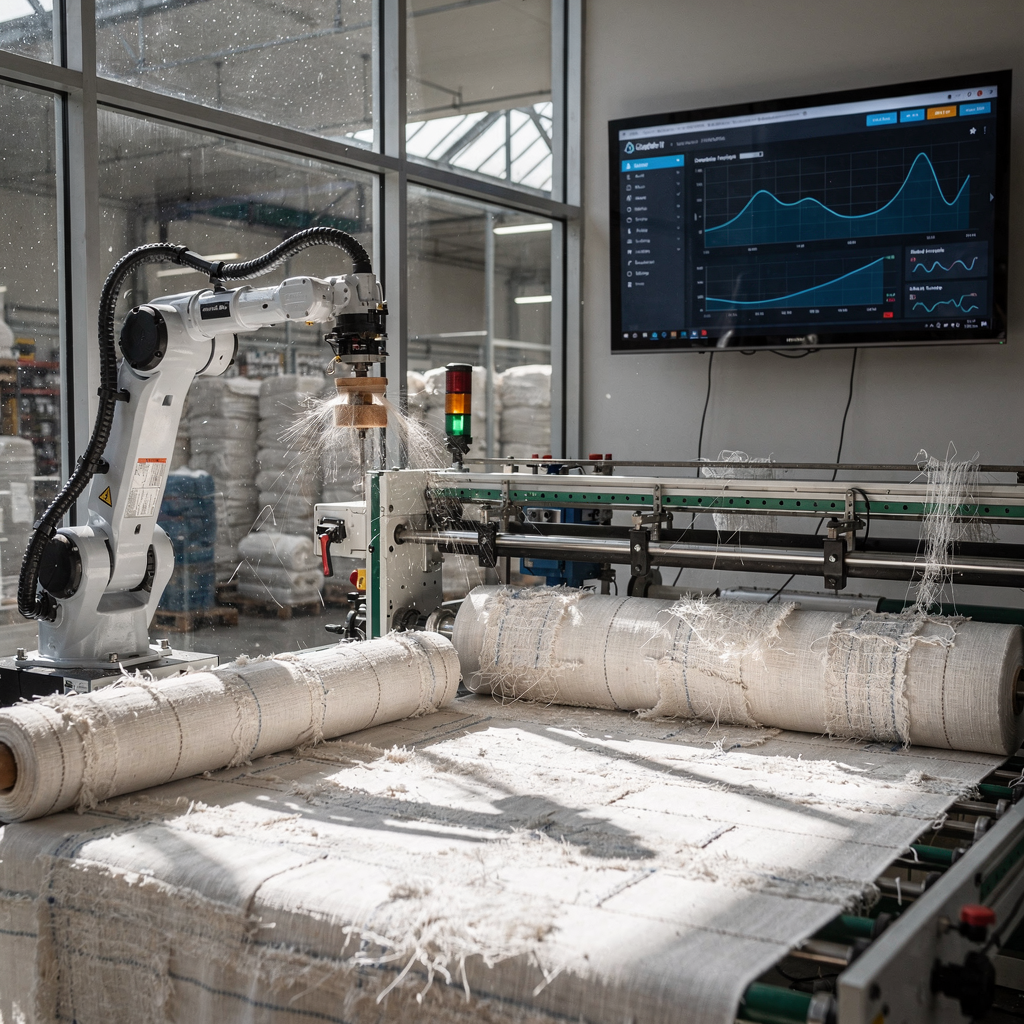
Computer vision and sensors detect weave faults, colour deviations and yarn tension problems. These systems scan rolls of fabric on the line and flag defects in real-time. Automated inspection systems outperform manual checks on speed and consistency. They can spot small defects that humans miss and help reduce wastage. For example, smart cameras detect color mismatches and uneven dye penetration before rolls move to cutting. Robotic and robotic-assisted feeders correct stretch and tension. This preserves fabric yield and lowers scrap rates. Smart textiles production benefits from continuous monitoring. Sensors monitor yarn tension and weave patterns, while AI models suggest immediate parameter changes. That saves material and time.
Key facts: automated defect detection is faster and more reliable than manual inspection. Predictive adjustments cut scrap and rework. In advanced plants, vision plus sensors control machines to limit defects. Practical KPIs include defect rate per 10,000 metres, scrap weight and mean time between failures (MTBF). One next step: install a single camera and run a side-by-side test with human inspection for 30 days. Use that trial to quantify improvements and to validate the output of ai-enhanced inspection systems. Note that fabric types and dye chemistry influence detection rules, so incorporate diverse samples into the test set. Finally, track environmental impact and water usage to support sustainable practices.
How to deploy ai agents to automate production monitoring, predictive maintenance and to empower floor teams.
Firstly, then, also, next, additionally, therefore, consequently.
Deploy ai agents in small, controlled steps. Start with sensors on a few machines. Build telemetry dashboards and connect alerts to operators. An ai agent can watch vibration, temperature and cycle counts. Then it predicts failures and suggests maintenance. This reduces unplanned downtime and lowers maintenance costs. Keep human oversight for high-risk decisions. Train floor teams to trust agent suggestions and to supervise interventions. Agentic AI must not override safety or process limits. Use a phased rollout that adds supervised automation over time.
Implementation steps: (1) instrument machines with sensors, (2) build a basic telemetry dashboard, (3) deploy an ai agent to issue alerts, (4) iterate with operator feedback. This approach supports smart manufacturing and helps empower technicians with context. virtualworkforce.ai illustrates how to route complex operational emails. Linking agent alerts to email workflows reduces admin time and speeds escalation when needed for logistics and ops teams. Combine predictive maintenance with a maintenance management system to create repair tickets and to record interventions. One measurable KPI: reduction in unplanned downtime. One next step: run a 60-day pilot on a single production cell and log MTBF improvements.
Drowning in emails?
Here’s your way out
Save hours every day as AI Agents label and draft emails directly in Outlook or Gmail, giving your team more time to focus on high-value work.
AI-powered analytics to seamlessly transform inventory, trend forecasting and procurement with instant answers.
Firstly, next, also, then, additionally, therefore, thus.
Real-time analytics combine sales, social and production data to produce actionable forecasts and reorder suggestions. Integrate POS, e‑commerce and social listening to reduce lead times and minimize waste. An ai platform can score supplier risk and trigger automated reorder rules. This supports just-in-time production and helps wholesalers and buyers manage stock. Social signals give early alerts on rising fashion trends. Use these signals to adjust colour runs or to alter shipment priorities.
Key facts: better integration reduces forecast error and stockouts while improving inventory turnover. Automated reorder triggers and colour-demand alerts from social listening keep assortments up-to-date. A practical flow: signal → forecast → reorder → supplier confirmation → shipment. For textile businesses, tracking supplier lead times, defect rates and reliability matters. You will also want instant answers to queries such as “What is the supplier lead time for SKU Y?” An ai platform that connects ERP, WMS and TMS provides those instant answers. For teams that handle large volumes of operational email, automated email drafting linked to inventory status reduces manual work and keeps replies grounded in ERP data.
Required data: sales history, lead times, supplier reliability and production capacity. KPIs: forecast error, stockouts and inventory turnover. One measurable KPI: reduction in days of inventory. One next step: map data feeds and run a 90-day integration pilot to generate automated reorder suggestions.
Frequently asked questions: costs, data quality, privacy, ROI and steps to implement an AI assistant in a textile company.
Firstly, next, also, then, additionally, therefore, finally.
What are typical costs? Upfront costs vary with scope. A focused pilot costs much less than enterprise-wide rollouts. Expect ROI on targeted pilots within 6–18 months. What data do you need? Sales, lead times, supplier reliability and sample images are essential. Data quality is the most common blocker. How do I handle privacy? Use access controls and audit trails to ensure compliance. Should I build or buy? Vendors reduce time-to-value, while in-house teams offer control. Consider a hybrid model and include governance from day one.
Common blockers include unclear KPIs and low-quality data. Use a minimal dataset for a pilot. Define KPIs such as time-to-sample, forecast error and unplanned downtime. Include human validation layers to avoid sourcing errors. A recent study warned that some AI outputs can contain sourcing errors, so always validate external facts before acting. For tailored operational email automation, virtualworkforce.ai shows how to cut handling time while keeping full traceability for logistics and customer teams. One measurable KPI: pilot ROI within 6–18 months. One next step: create a one-page data readiness checklist and start a 90-day pilot that focuses on a single product line, a single supplier and a single communication channel. This keeps things simple and measurable.
FAQ
What is an AI assistant for textile teams?
An AI assistant helps automate information tasks and routine decisions. It can draft responses, answer queries and surface data from ERP or WMS systems.
How much time can AI save in design processes?
Design-cycle time can fall substantially with generative tools. Case studies report reductions up to 50% in certain workflows, depending on scope and integration.
Will AI reduce fabric wastage?
Yes. Better forecast accuracy and defect detection reduce overproduction and scrap. These systems also support sustainable practices by lowering water usage and wastage.
Do I need clean data to start?
Yes. Good data increases model accuracy. Start with a minimal dataset and expand rather than trying to fix every historical issue first.
Is predictive maintenance risky to deploy?
Not if you keep humans in the loop. Start with alerts and recommendations, and let operators supervise final actions.
What ROI can a textile company expect?
Targeted pilots often show ROI in 6–18 months. Metrics include reduced handling time, fewer stockouts and lower defect rates.
How do AI chatbots help customer service?
Chatbots cut response time and handle routine inquiries. They free agents for complex problems and improve consistency across channels.
Are there privacy concerns?
Yes. Use role-based access, audit trails and vendor contracts that meet legal requirements. Protect customer and supplier data at every step.
Should we buy or build AI tools?
Buy for speed and build for control. Many teams combine vendor solutions with bespoke integrations to fit existing ERP and WMS systems.
What is a sensible first pilot?
Run a 90-day pilot focused on a single product line or SKU. Define one KPI, collect required data and measure before scaling.
Drowning in emails?
Here’s your way out
Save hours every day as AI Agents label and draft emails directly in Outlook or Gmail, giving your team more time to focus on high-value work.