


Trade, AI and AI trading — why firms adopt AI for trade
Firms adopt AI for trade because it speeds decisions, scales workflows, and improves accuracy. First, AI reduces manual overhead. For example, one deployment cut processing time by about 90% after integrating an AI assistant across operations here. Second, AI systems handle volume and complexity that humans cannot. Algorithmic trading already accounts for a large share of volume, and AI methods are a growing component. In fact, algorithmic and automated systems drive roughly 60–75% of volume in major markets, with AI-driven approaches increasing that share here.
This chapter covers where AI adds most value. Order routing, market scanning, research and client emails benefit from AI. Metrics to track include latency, hit rate, time saved and slippage. Reasonable KPIs for a trading desk start with latency measured in milliseconds, a hit rate improvement target, and minutes saved per research task. Quick ROI checks look at time to recover implementation cost versus time saved in human hours. If an ops team cuts four minutes per trade email, the math is straightforward. virtualworkforce.ai offers no-code AI agents that cut handling time, and teams can see typical reductions from ~4.5 minutes to ~1.5 minutes per email when they automate email workflows here.
Where does AI add the most measurable value? In order routing it lowers latency and avoids manual errors. In market scanning it finds patterns in ticks and fundamentals. In research it synthesizes news, filings and historical data. Traders who want high-confidence signals use AI to combine technical and fundamental inputs. The approach reduces false positives and raises execution quality. For teams trading forex, equities and derivatives, using AI in production requires robust monitoring and a governance model. Firms without a clear AI strategy risk falling behind. The Thomson Reuters survey notes that “firms with AI strategies are twice as likely to see significant time savings and operational improvements” here. Therefore, set measurable goals, instrument the stack, and iterate. Trade teams that measure latency, hit rate and error rate will reach ROI faster.
Trade ideas, stock analysis, trading signals and trade alerts in real-time
AI creates trade ideas by scanning markets, then scoring them by probability and risk. Real-time scanners combine technical indicators with fundamentals and pattern recognition to produce ranked lists of opportunities. Platforms like HOLLY AI show how probabilistic signals work in a live feed. An AI scanner can produce many ideas per minute and then reduce the stream to a handful of high-probability picks. Trade ideas that score highly move to the execution pipeline. This flow lowers noise and improves focus for the trader team.
The signal generation pipeline starts with raw real-time data and ends with actionable trading signals. First, ingest price feeds, news, and market sentiment. Next, apply AI algorithms and technical analysis to detect chart patterns and shifts in momentum. Then, rank signals by expected return and risk. Finally, deliver trade alerts to dashboards, chat channels, or an alert feed. Reducing false alerts requires calibration, thresholds, and continuous retraining. A well-tuned scanner improves hit rates and reduces wasted attention.
Stock analysis benefits when AI combines technical and fundamental views. A good system pairs chart-based signals with balance-sheet flags. AI-powered scorecards offer context and explainability for each idea. For teams that need speed, real-time alert delivery matters. Alerts can go to mobile push, chat, or a trading platform dashboard. Trade ideas and trade alerts should include a recommended size, risk limits, and entry and exit suggestions. For research workflows, generative AI speeds report drafts, while rule checks ensure accuracy. The HOLLY AI example highlights a scanner that ranks and filters ideas and issues probabilistic alerts; it serves as a model for best practice in signal design here. Finally, use a staged rollout to move from paper to live: backtest, paper trade, then small live bets to validate signals under real market conditions.
Drowning in emails?
Here’s your way out
Save hours every day as AI Agents label and draft emails directly in Outlook or Gmail, giving your team more time to focus on high-value work.
Trading bot, bot, automate trading and automated execution
The bot layer converts signals into orders. A trading bot receives validated signals, applies risk rules, and sends orders to a brokerage API. Modern trading bots integrate pre-trade checks, position limits, and cooldown periods. They also include emergency kill switches to stop automated execution if conditions deviate from expectations. A clear architecture is signal → risk → execution. This pattern helps teams maintain control while they scale automation.
Bots must connect securely to brokerage accounts and enforce compliance. A trading bot often includes slippage limits and time-in-force directives to avoid unintended fills. To automate trading safely, add circuit breakers and thresholds that suspend activity during severe market stress or when latency spikes. Automated execution should log every decision and produce an auditable trail. For teams that automate, metrics to monitor include fill rate, slippage, error rate and the percentage of signals converted into executed orders. Tracking these KPIs helps refine rules and improve profitability.
Fully automated trading requires extra care. For example, automated trading bots must reject orders that breach risk limits. AI trading agents can adapt to market microstructure, but they must not override compliance rules. Use staged deployments to limit exposure. Begin with small position sizes and tight controls. Copy trading and managed strategies can let less experienced traders mirror proven bot strategies while retaining oversight. AI robots and ai bots should always expose human override options. In practice, automated execution improves speed and consistency, and it reduces manual errors. When teams design a bot, build clear telemetry, dashboards and alerting so traders and risk managers can act fast if issues arise.
Backtest, trading strategies, live strategy, technical indicators and advanced trading tools
Strategy development follows a strict path: idea, backtest, validate and deploy live. Backtesting uses historical data to estimate how a strategy might have performed. A robust backtest avoids look-ahead bias and includes transaction costs. Walk-forward testing and out-of-sample validation reduce overfitting. Do not confuse a single strong backtest with enduring edge; markets change and performance can decay.
Technical indicators remain useful when combined with ML features. A hybrid approach blends moving averages, RSI and MACD with machine learning models trained on pattern recognition and alternative features. Use chart-based signals and chart patterns to detect setups. Then, feed those signals into an ai-driven model that scores probability. For rigorous validation, run backtesting and backtesting with multiple market regimes. Include stress tests for low-liquidity periods and flash crashes.
Tools for strategy development include strategy frameworks, analysis tools and backtest engines. Many platforms provide analysis software that supports walk-forward tests. A live strategy should start small in live trading and then scale as metrics stabilize. Essential best practices include logging, out-of-sample testing, and version-controlled model deployments. For teams building systems, keep a clean separation between signal creation and execution to avoid accidental leaks. Also, implement continuous monitoring and re-training cadence so AI algorithms adapt to new market conditions. Document assumptions and keep human oversight; good governance reduces operational risk and helps teams move from prototype to repeatable edge.
Drowning in emails?
Here’s your way out
Save hours every day as AI Agents label and draft emails directly in Outlook or Gmail, giving your team more time to focus on high-value work.
Market data, AI-powered, ai stock trading, best AI trading platforms and HOLLY AI example
Market data is the foundation of any ai-powered system. Reliable feeds, historical ticks and clean reference data are non-negotiable. Low-latency access matters for high-frequency work. When you choose a market data vendor, validate availability, latency and historical depth. Different trading platform vendors target different asset classes; some excel at equities while others specialize in crypto or forex.
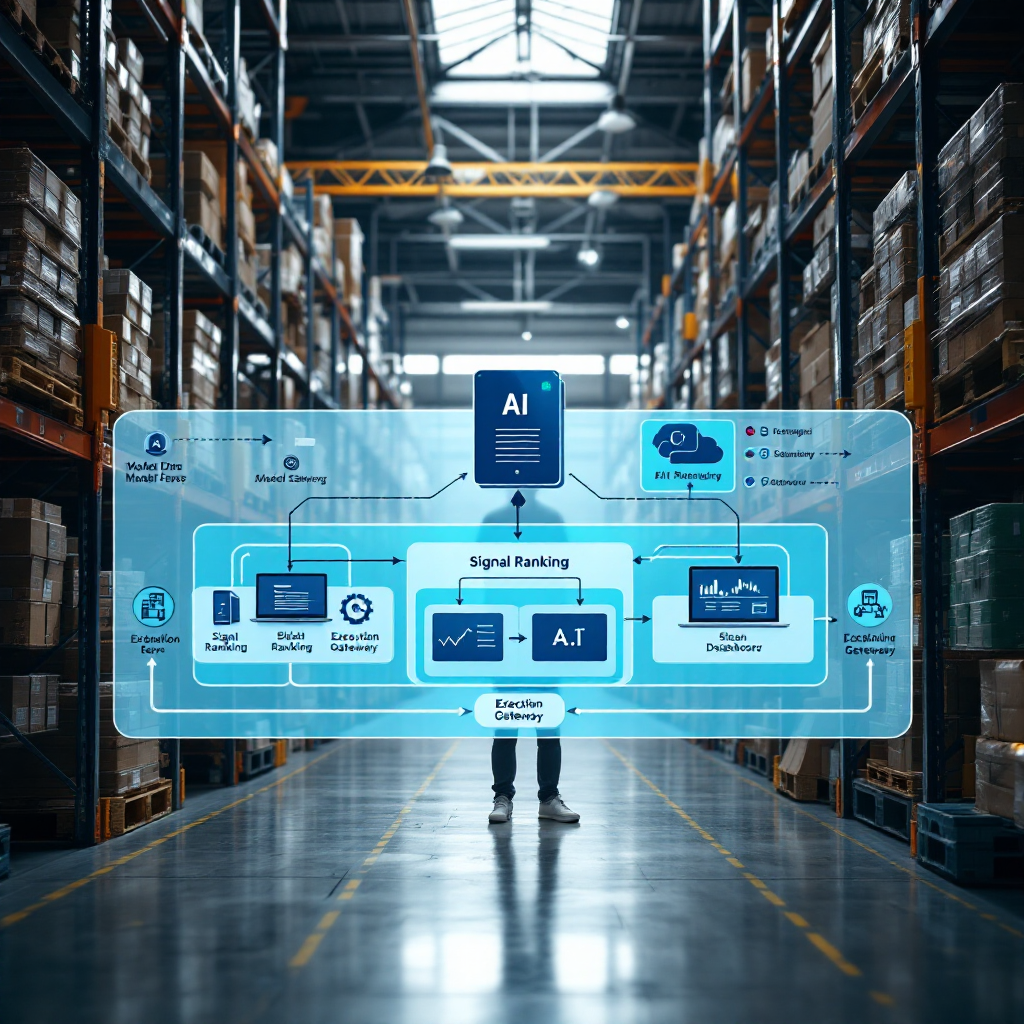
Off-the-shelf solutions lower the barrier to entry. Platforms like Trade Ideas with HOLLY AI offer scanners tuned to equities. A HOLLY AI–style scanner produces scored ideas and can act as a high-probability filter that a desk uses to identify potential trading opportunities. The practical stack typically includes a real-time feed, a model server, and an execution gateway. Integration via APIs keeps workflows flexible. For teams that need end-to-end solutions, evaluate ai platform features, access to analysis tools, and how the platform exposes natural language queries. Examples of integration work include connecting signals to a brokerage account and then using a trading bot to execute trades. When selecting a trading platform, check if it offers a free trial or an annual subscription, and whether it provides full access to backtest and analysis software.
When comparing best ai trading offerings, look for platforms that let you backtest and backtest live scenarios, provide advanced tools for feature engineering, and support both stock and options strategies. If you run ai stock trading or ai options trading, ensure data quality and model explainability. The best ai trading platforms include telemetry, audit logs and mechanisms for manual overrides. For teams focused on adoption, a staged approach helps: prototype on a paper account, then move to small live positions. A real-world HOLLY AI example shows how careful tuning and conservative sizing can deliver a steady stream of actionable ideas without generating overload. Finally, consider vendor lock-in and API openness before you commit.
Use AI, trader workflows, generative AI, automation and trading opportunities — risk, compliance and how AI helps
Use AI responsibly to scale trading workflows. Start with a pilot that focuses on a narrow use case. Then move to governance and finally to scale. Only about 25% of financial organizations have a visible AI strategy today, which means many firms can gain an edge by formalizing their approach here. Key governance items include model explainability, version control, and audit trails. Compliance teams must approve data sources and testing plans before live deployment.
AI helps traders by automating repetitive work and surfacing high-value opportunities. Generative AI accelerates research and the creation of trade summaries, but outputs need validation. AI is augmentation; it improves trader judgment rather than replacing it. For ops teams, tools like virtualworkforce.ai reduce email friction by grounding replies in ERP and TMS data and by drafting consistent responses, which indirectly helps trading desks by speeding communication with counterparties and brokers here. When you integrate AI into trading workflows, also integrate risk controls. Use pre-trade gates, slippage limits, and periodic re-performance tests.
Regulators will ask for documentation. Keep records of training data, model changes and performance drift. Use monitoring to detect model degradation as market conditions shift. If you design ai-driven trading, be explicit about fallback behavior: what the system does when data quality drops or latency increases. Practical next steps include a pilot, a governance board, and a scaling plan that maps to your technology stack. For teams that need help with integration and automation, check resources about scaling operations with AI agents to reduce manual tasks and to maintain auditability here. With clear controls, AI helps firms seize trading opportunities while managing risk and regulatory obligations.
FAQ
What is an AI assistant for trading companies?
An AI assistant for trading companies is software that uses AI algorithms to support trading workflows. It can generate trade ideas, help with research, draft email replies, and automate routine tasks for traders and operations staff.
How do trading bots connect to brokerages?
Trading bots connect to brokerages via secure APIs. They authenticate with keys, enforce pre-trade checks, and then execute orders while logging every action for audit and compliance.
Can AI improve stock analysis?
Yes. AI enhances stock analysis by combining technical indicators with fundamental signals and alternative data. This combination can surface opportunities that manual analysis might miss.
What is the role of backtesting in strategy development?
Backtesting simulates how a strategy would have performed on historical data. It helps identify robustness and reveals overfitting risks before moving to live trading.
Are AI trading systems suitable for forex?
AI trading systems can work for forex if they use high-quality market data and account for liquidity and volatility. Many AI models adapt to forex market dynamics with proper calibration.
How do firms reduce false trade alerts?
They reduce false trade alerts by tuning thresholds, applying ensemble models, and combining technical and fundamental filters. Continuous retraining and human review of high-confidence alerts also help.
What safeguards protect fully automated trading?
Safeguards include kill switches, slippage limits, pre-trade compliance gates, and monitoring dashboards. These controls prevent runaway execution during market anomalies.
How does generative AI support trader workflows?
Generative AI drafts research notes, summarizes news, and creates email replies. Traders then validate outputs, which speeds the workflow while maintaining oversight.
What metrics should a trading team monitor?
Monitor latency, fill rate, slippage, hit rate, and time saved on tasks. These KPIs reveal execution quality and the operational impact of AI components.
How do I start a pilot for AI in trading?
Start with a narrow use case, such as signal ranking or email automation. Define success metrics, use high-quality data, and run a staged rollout from paper trading to small live positions.
Drowning in emails?
Here’s your way out
Save hours every day as AI Agents label and draft emails directly in Outlook or Gmail, giving your team more time to focus on high-value work.