


ai travel: ai assistant as partner for planning a trip
AI transforms how a travel agent designs and delivers a perfect trip. First, an AI assistant automates research, filters options, and checks availability across systems. Then it personalizes results, so agents can offer faster, smarter service. Travel teams feed preferences, budgets, and dates. Next the system scans flights, hotel inventories, car rentals, and local tours to build a tailored itinerary. For example, agencies use AI to analyse millions of data points across suppliers to compose options that match client budgets and travel style. In practice, that speeds planning and raises conversion.
For concrete evidence, airlines already use conversational assistants to handle routine booking questions and status checks. KLM’s BlueBot shows how a conversational assistant handles bookings and routine queries, doubling handled requests in trials (source). Also, industry research shows widespread adoption. Market forecasts note strong investment in AI tools across tourism, and some reports estimate segments of the AI tourism market could reach $1.2 billion by 2026 (source). That growth matters for agencies that want to compete.
Agencies that add an AI travel assistant reduce manual lookups and rework. Staff then focus on complex sales, and they nurture loyalty and high-value customers. In addition, agents see faster planning cycles, clearer task ownership, and higher personalization. Also, AI can surface add-ons such as transfers, tickets, and lodging recommendations that boost margin. To explore how AI agents automate routine correspondence and replies, see a detailed implementation for operations teams here: automated logistics correspondence. Finally, when you pair conversational AI with CRM and booking APIs, the combined system delivers faster turnarounds and a more consistent travel experience.
discover traveller needs with chatbot and chatgpt in real time
Discovering real preferences can make or break a booking. Conversational AI and chat models like chatgpt capture tone, budget, timing, and stated likes. First, a chatbot asks targeted questions to qualify intent and to identify family, business, or solo requirements. Then it suggests options and upsells relevant add‑ons. For example, a chat flow might ask, “Do you prefer beaches or cities?” and then present curated hotels and attractions. Chat models read subtle cues in text, and they can detect urgency or hesitation. As they do, agents gain context and the system can escalate tough inquiries to a human.
Practical scripts help. For a family trip the bot prompts for ages, sleeping needs, and preferred accommodation. For business travel it asks meeting locations, preferred airlines, and loyalty numbers. The chatbot follows simple fallback rules: if intent recognition confidence falls below a threshold, it routes to an agent with the transcript and recommendations. Those rules cut average handle time and reduce transfers. You can measure success by intent recognition, conversion rate, and time to resolution. Also, track satisfaction scores after chat handoffs.
ChatGPT and similar models power richer, conversational replies. For example, you can use a prompt that summarizes preferences and then asks the traveller to confirm; that yields get personalized choices fast. Scripts may include explicit escalation phrases such as “I will pass this to an agent” to keep expectations clear. For support teams that face high email volumes, virtualworkforce.ai automates the full email lifecycle and drafts grounded replies using operational data, which complements chat flows and reduces triage time learn more about automating inboxes. Also, adding an in‑app chat or a bot on the website makes it easy to recommend the right hotel, the right ticket type, or the right transfer at the right time. Finally, measure improvements in lead qualification and conversion, and iterate prompts for better accuracy.

Drowning in emails?
Here’s your way out
Save hours every day as AI Agents label and draft emails directly in Outlook or Gmail, giving your team more time to focus on high-value work.
ai trip optimisation: pricing, upsell and revenue worldwide
AI trip optimisation drives revenue and smarter offers. AI forecasts price moves, spots demand windows, and recommends upsell opportunities. Agencies use models to set dynamic offers and to tailor bundles based on seasonality and tone. For instance, mid‑sized firms that read client tone and seasonal patterns can suggest room upgrades or excursions at the right moment, which lifts average transaction value (source). These systems also compare fare feeds and supplier deals to recommend the best time to book or to wait for a price dip.
Market research emphasizes scale and adoption. A report found that only 24% of companies remain in experimentation while most move to active implementations, which shows momentum for revenue‑focused AI uses (source). Also, analysts note that AI is reshaping commerce in travel by enabling more agentic, predictive commerce between brands and buyers (source). These shifts mean agencies can use pricing prediction to protect margins and to package offers that appeal to specific traveler profiles.
Operational KPIs matter. Track uplift per booking, margin on add‑ons, and forecast accuracy. Use A/B testing to compare static pricing versus AI‑driven offers. In addition, integrate fare and hotel feeds with your CRM so the AI has access to booking history and loyalty status. For agencies that want to scale without raising overhead, consider how email automation and intent parsing free agents to focus on revenue tasks; virtualworkforce.ai shows how to reduce manual triage and to surface upsell chances inside inbox workflows scale operations without hiring. Finally, by combining predictive pricing with clear agent prompts, teams increase conversion and keep offers affordable for clients.
mindtrip and personalised itineraries: combining data, context and assistant conversations
The mindtrip idea gives you a single view of a traveller that an AI uses to craft an itinerary. First, the profile history records past bookings, travel style, loyalty tiers, and stated preferences. Then real‑time signals — weather, flight status, and local supplier availability — refine options. The assistant uses that context to tailor suggestions, so itineraries feel custom and timely. For example, if rain arrives, the system swaps an outdoor attraction for a museum or an indoor cooking class.
Components of mindtrip include profile history, real‑time signals, supplier offers, and local experiences. Together they let the agent or assistant present an itinerary that matches mood, timing, and budget. The system can recommend accommodation and lodging, and it can suggest a local attraction or a transfer option based on proximity. Also, the assistant surfaces ticket and booking details and can push reminders to email or to an app. When travellers see options that match their tastes they book faster, so conversion rates and repeat business rise.
Privacy and control matter. Implement data minimisation, consent capture, and clear edit controls for agents and travellers. Let users see and change preferences and to opt out of profiling. Use audit trails and explainable prompts so an agent can justify recommendations. For teams that rely heavily on email, integrating an AI that understands inbound requests and drafts grounded replies keeps context in the thread; learn how such systems automate email lifecycles and create structured data from messages at this resource: ERP email automation for operations. Finally, a mindtrip that respects consent increases trust and drives more frequent bookings because travellers feel understood and safe.
Drowning in emails?
Here’s your way out
Save hours every day as AI Agents label and draft emails directly in Outlook or Gmail, giving your team more time to focus on high-value work.
google gemini, architecture and selecting the right ai assistant stack
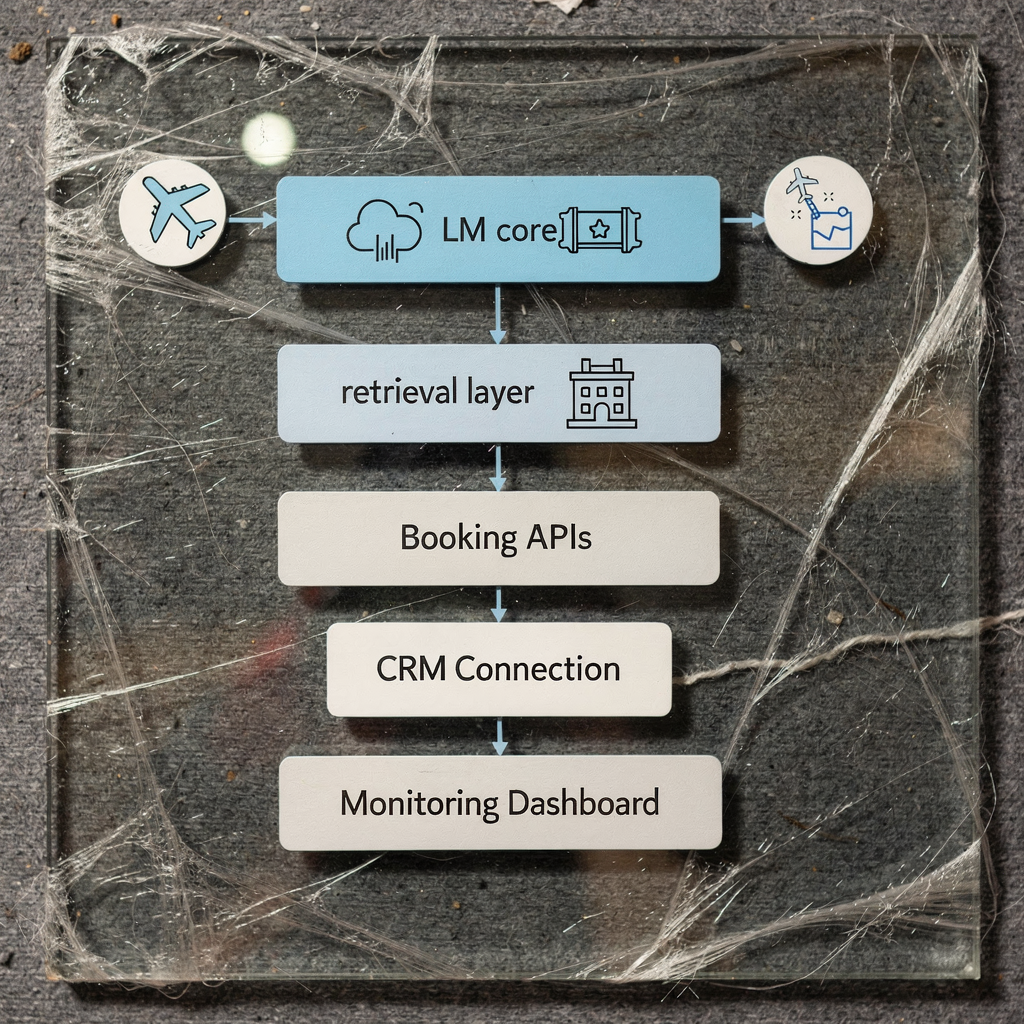
Selecting the right architecture keeps your AI travel project reliable and scalable. Start with core components: a robust LLM such as google gemini, a retrieval system, booking APIs, and agent orchestration. Then evaluate model capability, latency, cost per request, fine‑tuning needs, and vendor SLAs. Also test hallucination controls and safety filters. For example, deploy a retrieval-augmented generation layer so the model answers with grounding from supplier feeds and contracts.
Integration is essential. Connect GDS or NDC feeds, hotel APIs, payment processors, and your CRM. Ensure the system can book a ticket, update a reservation, and confirm loyalty numbers. Test end‑to‑end booking scenarios and run A/B tests on responses and price offers. Also include interactive maps and real‑time flight status feeds so itineraries update automatically. When you implement a pilot, prioritize a single product line and expand after you validate KPIs.
Checklist for selection: model capability, API reliability, cost per call, fine‑tuning support, and vendor security practices. Also confirm data retention rules and auditability. Use prompt libraries and fallback rules to avoid errors, and run continuous monitoring for accuracy. If you need email automation that is thread‑aware and grounded in operational data, virtualworkforce.ai can integrate with booking systems and keep email workflows consistent while reducing handling time; see how end-to-end agents automate inboxes for operations in logistics use cases here: AI in logistics communication. Finally, pick tools that allow you to customize tone and to fine‑tune with your proprietary data so recommendations stay tailored to your brand.
worldwide rollout: compliance, staffing and practical steps to deploy a travel chatbot
Rolling out an AI travel assistant worldwide requires a stepwise plan. First run a pilot in one market or product line to test the booking flow and to validate KPIs. Then expand regionally while tracking legal and commercial constraints. Define KPIs upfront: conversion lift, intent accuracy, time to resolution, and average uplift per booking. Train agents to use the assistant, and set clear escalation rules that route complex cases to humans. Also set SLAs for response times so customers know what to expect.
Compliance and risk are non‑negotiable. Respect GDPR and local privacy laws, set consent capture in dialogs, and log decisions for audit. Update supplier contracts to reflect automated booking actions and changes in commission models. Also maintain an audit trail for every action the assistant takes. When teams handle high email volumes, an AI that automates the email lifecycle reduces manual triage, and it keeps traceability for compliance; virtualworkforce.ai shows how end‑to‑end email agents create structured data and escalate only when needed automate correspondence.
Practical rollout steps: pilot, define KPIs, train staff, add monitoring dashboards, and run continuous model updates. Implement local language support and test fallbacks for poor intent scores. Finally, maintain a governance rhythm to review model outputs and to update supplier feeds. This approach helps you scale an AI travel agent while keeping customer trust high and operational risk low. As agencies prepare for 2025, they should focus on automation that increases consistency and that keeps teams focused on high‑value customer work (source).
FAQ
What is an AI assistant for travel agencies?
An AI assistant is software that helps research, plan, and often book travel. It uses models and supplier data to present tailored itineraries and to automate routine communication.
How does a chatbot capture traveller preferences?
Chatbots ask targeted questions and analyse responses for tone and intent. They store preferences in profiles so future recommendations feel more relevant.
Can AI predict flight or hotel price changes?
Yes, AI models forecast likely price moves by analysing historical and real‑time data. Agencies use those predictions to advise clients on when to book and to create dynamic offers.
Is it safe to let an assistant book tickets automatically?
It can be safe when you implement clear permissions, audit logs, and human review for high‑risk actions. Also ensure supplier rules and payment flows integrate securely.
How do agencies measure ROI from an AI travel tool?
Common KPIs include conversion uplift, average uplift per booking, time to resolution, and forecast accuracy. Track these over pilots and at scale.
What is a mindtrip in travel tech?
Mindtrip is a single, unified traveller profile that combines history, real‑time signals, and preferences. It helps create personalised itineraries that convert better.
Which models should agencies evaluate first?
Consider LLMs like google gemini for natural language and models that support retrieval augmentation for factual answers. Evaluate latency, cost, and fine‑tuning options.
How do I handle compliance across multiple countries?
Implement consent capture, data minimisation, and local data residency where required. Maintain audit trails and update supplier contracts to reflect automated actions.
Can email automation work with a travel chatbot?
Yes. Email automation tools that understand intent and ground replies in operational data complement chatbots by reducing triage. For examples of inbox automation applied to operations, see virtualworkforce.ai resources on automating email workflows.
How should small agencies start with AI?
Begin with a pilot for a single product line and define KPIs. Train staff, connect a few key feeds, and scale after you see measurable improvements in booking rates and handling time. For guidance on scaling operations without hiring, review relevant implementation resources.
Drowning in emails?
Here’s your way out
Save hours every day as AI Agents label and draft emails directly in Outlook or Gmail, giving your team more time to focus on high-value work.