


AI assistant for warehouse — what it does and who benefits
An AI assistant for warehouse teams is a software agent that gives real-time alerts, answers chat or voice queries, and suggests tasks to workers and managers. It reads scan events, telescope logs, and shipment notes to draft recommended actions. It can also surface insights into inventory levels and propose replenishment. For teams that need faster replies to customer questions, an AI assistant links ERP, WMS, email threads, and calendar data so that replies become accurate and fast. virtualworkforce.ai builds no-code agents that draft context-aware replies inside Outlook and Gmail and ground every answer in your ERP/TMS/TOS/WMS to cut handling time dramatically; this approach is useful when you need to automate email-led workflows and reduce manual copy-paste across systems (see a practical example).
Market drivers for adoption include labour pressure, e-commerce peaks, and the rapid rise of AI in logistics. The global AI in logistics market reached roughly $20.8 billion in 2025, which helps explain why firms invest in visibility and decision support. Analysts note that AI-powered systems now provide continuous operational visibility for many warehouses.
Who benefits? Inventory clerks get faster answers to “where is this SKU” questions. A shift manager receives an alert when a conveyor needs inspection. A customer-service agent can send a confident update backed by system data. For smaller operations, a smart assistant can reduce the need to hire senior coordinators. For large 3PLs, integrating with your warehouse management system and AMRs improves throughput. You can also combine an AI assistant with barcode/RFID readers and robotic conveyors to streamline warehouse tasks and reduce errors.
When you procure an assistant for warehouse use, check for connectors, audit logs, and no-code control so business users can set escalation rules. A short procurement checklist: data sources, service-level guarantees, role-based access, and training support. For deeper context on AI email automation in logistics, read about automated logistics correspondence (how it works).

ai in warehouse management — real-time inventory, tracking and control
AI in warehouse management gives continuous stock visibility and automates replenishment. Systems ingest scan events, ERP syncs, and IoT feeds to build a live model of the floor. This supports real-time inventory decisions that reduce stockouts and lower carrying costs. Research shows AI adoption can reduce logistics costs by about 15% and raise service levels by up to 65% thanks to faster, data-driven choices (research summary and market data).
Operationally, the assistant monitors bins and pallets, tracks exceptions, and can auto-create replenishment orders. Use of a warehouse management system remains central. Integration is easiest if you map input data and agree SLAs for syncs. Common machine learning uses include demand forecasting and anomaly detection. Typical models include time-series forecast models and classification models that spot missing scans or abnormal temperature trends. Those ai models learn from historical data and ongoing events to improve suggestions over time.
Start small. Pilot on one SKU family and measure fill rate, cycle-count variance, and pick accuracy. This pilot lets you validate the model, tune thresholds, and prove the benefits of stabilize replenishment routines. Practical tips: ensure barcode coverage, confirm ERP SKU mapping, and maintain a human-in-the-loop review for the first months. Train warehouse workers on natural language queries so they can ask the assistant for stock counts without navigating screens. As you scale, connect IoT sensors for temperature and humidity control to reduce spoilage.
Good metrics to track during the rollout include on-time fulfillment, order accuracy, and reduced emergency transfers. For teams that want to learn how to extend email automation into operational messaging, explore how to scale logistics operations without hiring (internal guide).
Drowning in emails?
Here’s your way out
Save hours every day as AI Agents label and draft emails directly in Outlook or Gmail, giving your team more time to focus on high-value work.
ai-powered warehouse operations — predictive maintenance and space optimisation
AI-powered systems reduce downtime and improve how you use your warehouse space. Predictive maintenance forecasts failures for robotics, conveyors, and HVAC before they interrupt throughput. By combining AMR telemetry, vibration sensors, and maintenance logs, AI flags components that need attention. Many warehouses have reported significant uptime improvements after implementing predictive alerts that replace calendar-based checks.
Space optimisation is another area where AI excels. Algorithms analyze order profiles, pick density, and warehouse layouts to suggest slotting changes. These suggestions reduce travel time and increase picks per hour. Models can recommend moving fast-moving SKUs closer to packing, or grouping items by order affinity to compress routes across the warehouse floor. Try improving throughput per m2 by measuring before-and-after metrics for a single zone.
Implementation requires combining sensor telemetry, AMR logs, and maintenance history. The assistant integrates smoothly with maintenance workflows to create tickets and schedule technicians. It can also propose temporary re-routing plans when an aisle or conveyor goes offline, helping keep operations running smoothly.
Measure success using equipment uptime, mean time between failures, and throughput per square metre. For an ai-driven warehouse shift, combine predictive models with simple automation to trigger part orders and technician alerts. Teams should keep clear audit trails that record why a maintenance action was suggested. If you want a template for automating logistics emails tied to maintenance and exceptions, see our guide on automated logistics correspondence (read more).
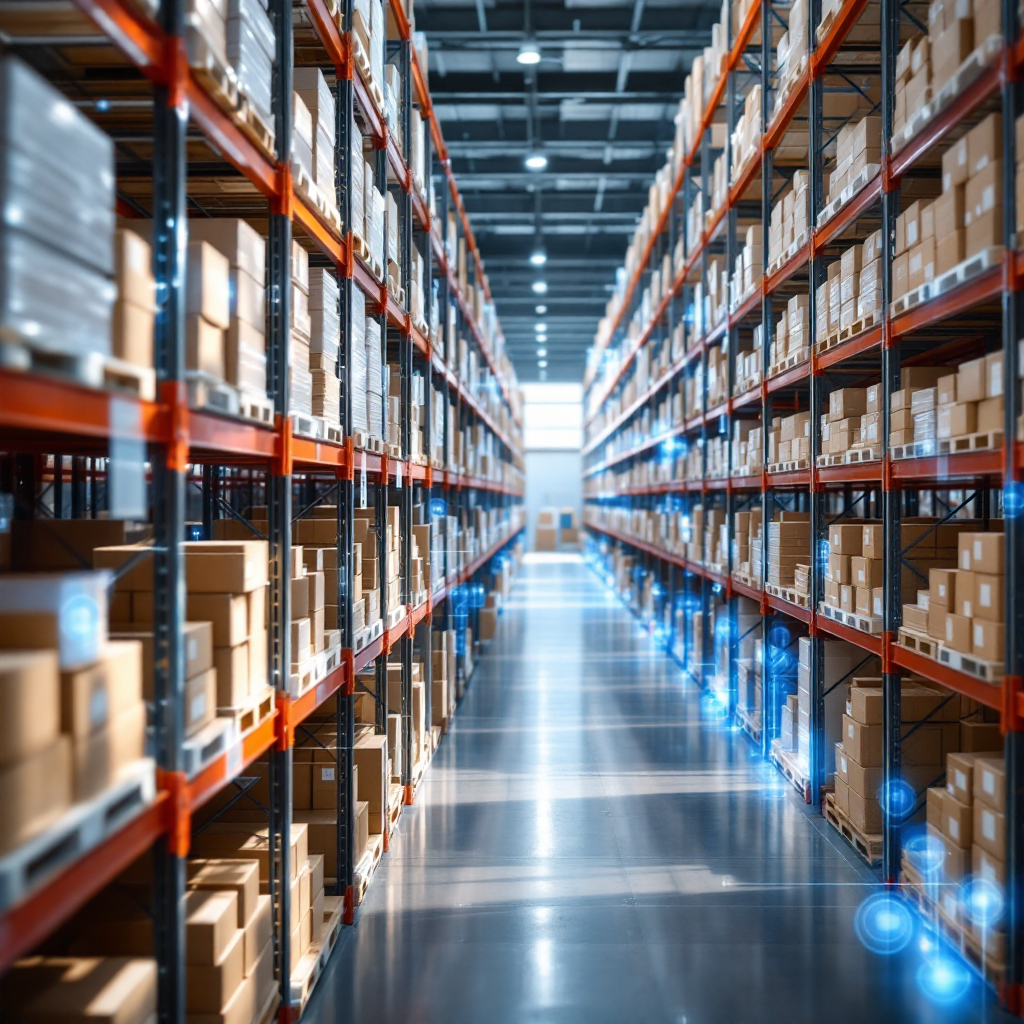
benefits of ai and benefits of ai assistants for supply chain management and productivity
AI delivers direct business gains: faster decisions, higher accuracy, and better resource use. Benefits of ai include reduced labour costs, improved order accuracy, and lower inventory holding costs. An ai-powered virtual assistant helps teams by drafting replies, creating tickets, and suggesting next actions. When you combine AI with automation, you increase throughput and reduce error rates. For many logistics companies the results include measurable improvements in customer satisfaction and reduced exception handling time.
Quantified results from recent studies show that AI adoption can cut logistics costs by about 15% and lift service levels by up to 65% through faster decision-making and improved visibility (see ROI cases and market data). Use those numbers to build a business case. Set KPIs such as order accuracy, pick rate, OTIF, and labour productivity before you start. A practical goal is to improve pick rate by 10–20% in the first year and to reduce email handling time by over 50% when using an AI assistant to draft status updates or schedule pickups.
To adopt AI, define an approach to AI that focuses on high-value pain points first. Train warehouse managers and operators on intent-based queries so they can ask for “shortage reports” or “pick exceptions” and get precise responses. This lowers the barrier to live use and accelerates learning. A smart assistant also stores audit trails so teams can review why a decision was recommended, which supports compliance and trust.
For teams that want to transform your logistics communications, check our logistics email drafting and automation pages. For example, see best tools for logistics communication (tool guide).
Drowning in emails?
Here’s your way out
Save hours every day as AI Agents label and draft emails directly in Outlook or Gmail, giving your team more time to focus on high-value work.
challenges of ai — integration, data quality and how an assistant for warehouse adapts to your business
Challenges of AI include data quality, legacy systems, and change management. Poor input data leads to bad outputs. If your SKU master has duplicates or missing attributes, models will struggle. Integration with an old warehouse management system can also slow adoption. To mitigate risk, use phased integration and begin with a single site or SKU family. Clean historical data before training models, and keep a human-in-the-loop for the first months so staff can validate recommendations.
An assistant for warehouse must learn local rules and seasonal demand patterns. The assistant adapts to your business by ingesting maintenance logs, order history, and pick paths. It should allow users to define local exceptions and escalation paths without code. That way the assistant integrates with existing workflows and gains acceptance among warehouse workers and supervisors. Provide clear SLAs and audit trails to support audits and to explain why a reallocation or shipment hold was recommended.
Mitigations include routine data-cleaning processes, role-based access controls, and staged rollouts. Train teams on common queries and on how to verify suggested actions. For email-led tasks, a no-code AI agent can draft replies and cite sources so operators trust its statements. virtualworkforce.ai supports this with connectors that read your ERP/TMS/WMS and maintain email memory so context stays consistent (learn more).
Always plan for fallback: if a suggestion looks risky, require manual approval. Combine explainable AI with clear logging so stakeholders can trace decisions back to input data. This reduces friction and speeds acceptance on the warehouse floor.
future of ai in logistics — the power of ai for businesses of all sizes and building an ai-powered warehouse
The future of AI in logistics will move from pilots to wide enterprise rollouts. Businesses of all sizes can adopt modular AI modules for tracking, inventory, and communication. Short-term gains focus on real-time tracking and exception handling. Mid-term benefits will come from cross-site orchestration and smarter labour planning. Long-term outcomes include autonomous fulfilment cells and tighter integration across the supply chain.
The power of AI lies in combining pattern recognition, forecasting, and automation to reduce waste and speed response. As the market grows — the AI logistics sector expanded rapidly to over $20 billion recently — vendors will offer off-the-shelf components so SMEs can join the trend without heavy custom work (market forecast). To build an ai-powered warehouse, start with clear goals: reduce emergency transfers, improve inventory control, or increase pick throughput. Then choose partners who provide connectors, auditability, and no-code controls so your operations teams can tune behavior.
A short roadmap: first deploy real-time inventory and alerts; next orchestrate across sites and carriers; finally automate end-to-end workflows including booking, documentation, and returns. For freight teams, our guide on ai for freight forwarder communication explains how agents can automate routine status updates and cut manual work (read the guide).
Decision checklist for executives: estimate the ROI window, test integration readiness, and pick partners with logistics domain experience and strong security. Choose solutions that are designed to streamline operations and that provide clear ways to measure benefits. With careful planning, the future of AI in logistics will bring more resilient supply chains and a clear return on investment.
FAQ
What is an AI assistant for warehouse teams?
An AI assistant for warehouse teams is a software agent that helps with alerts, task suggestions, and message drafting. It connects to operational systems and provides context-aware recommendations to staff and managers.
How does AI improve real-time inventory visibility?
AI aggregates scan events, ERP syncs, and IoT signals to present a live picture of stock. This helps teams spot shortages and automate replenishment so stockouts occur less often.
Can small businesses benefit from AI in logistics?
Yes. Businesses of all sizes can use modular AI modules to automate high-impact tasks. Modular approaches reduce upfront cost and let you scale as confidence grows.
What data do I need to start a pilot?
Start with clean SKU masters, scan event logs, and a history of orders. Include maintenance logs if you plan to test predictive maintenance. Good input data makes models useful sooner.
How do AI assistants handle change management on the warehouse floor?
They provide human-in-the-loop reviews and allow supervisors to set business rules. Auditable logs and user controls reduce resistance and increase trust among warehouse workers.
Are AI recommendations explainable?
Many systems include explainability features that show which inputs drove a decision. Keeping clear records enables audits and helps operators understand suggested actions.
What KPIs should we track when deploying AI?
Track order accuracy, pick rate, OTIF, equipment uptime, and cycle-count variance. These KPIs show both operational and financial impact.
How fast can we expect ROI from an AI pilot?
ROI depends on scope, but many teams see improvements within months for targeted pilots. Email and exception automation often show quick wins across handling time and error rates.
Will AI replace warehouse staff?
AI augments staff by removing repetitive tasks and improving decision speed. Staff can focus on higher-value activities while routine work becomes more reliable.
How do we choose an AI partner for logistics?
Choose a partner that understands logistics processes, offers integration connectors, and provides no-code controls so business users can set rules. Look for audit logs, role-based access, and strong domain knowledge in orders and ETAs.
Drowning in emails?
Here’s your way out
Save hours every day as AI Agents label and draft emails directly in Outlook or Gmail, giving your team more time to focus on high-value work.