


ai and ai assistants in wind energy transform energy operations
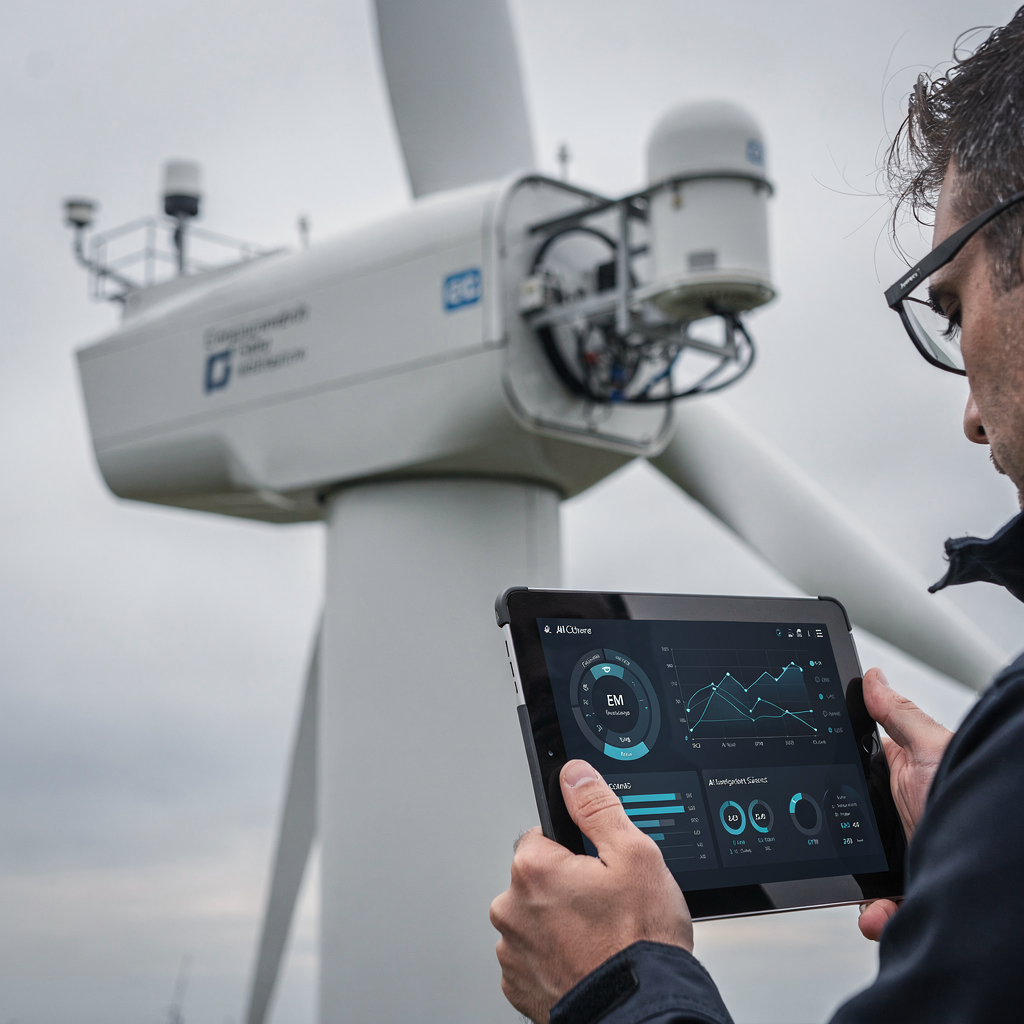
This chapter explains how AI and AI assistants change control rooms and operations teams in the wind energy sector. It shows how assistants turn sensor streams into clear actions for operators and dispatch teams. Wind farms generate vast sensor outputs. The pressure on humans to read and act on that data grows daily. AI systems help by reducing overload and by surfacing only the highest‑priority events, so teams can focus on safety and uptime. For example, dashboard assistants flag alarms, draft reports and answer operator queries. They also provide context about past faults and maintenance history. In practice, a dashboard may aggregate SCADA, SCADA‑plus, and meteorological feeds and present a short list of recommended actions. This reduces time spent on triage and raises operational efficiency for the whole utility.
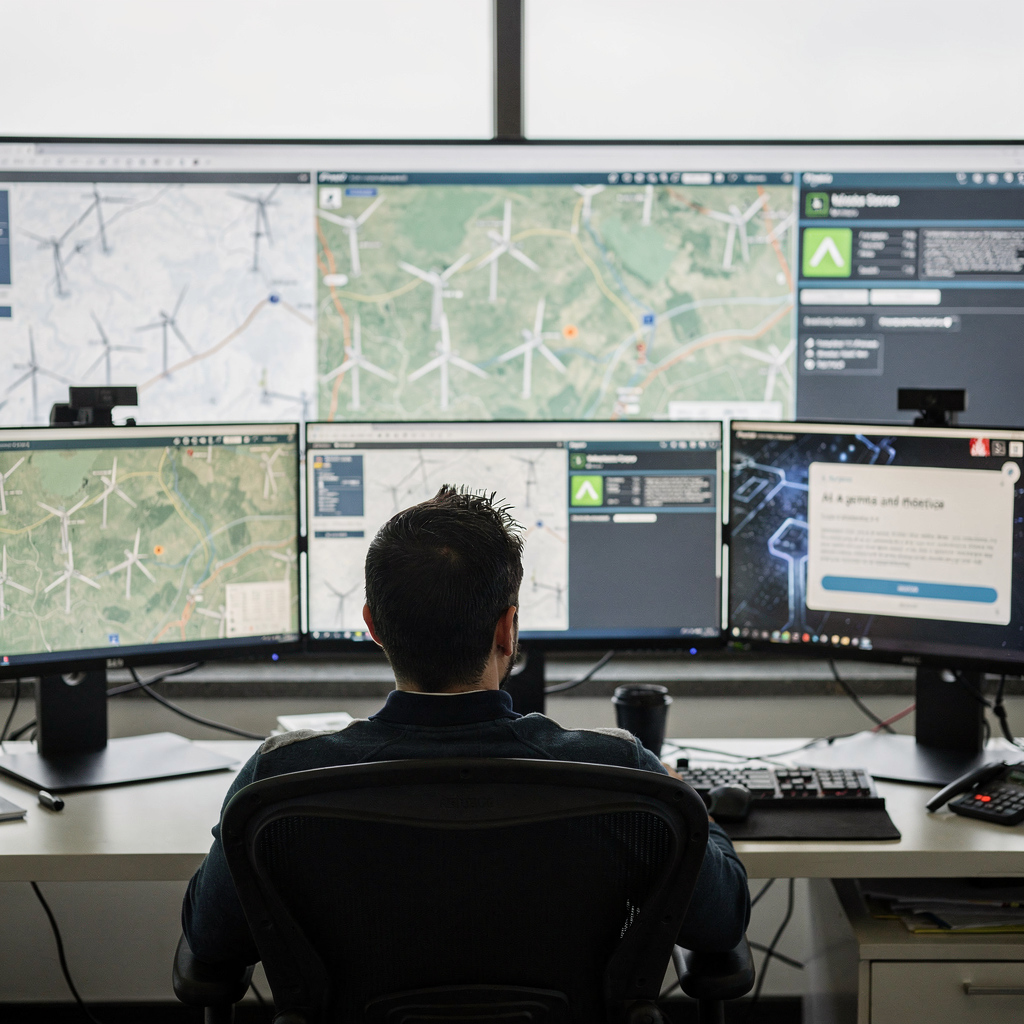
Control rooms use conversational interfaces, virtual assistants and chatbots to keep teams informed. These interfaces let staff query live metrics, check maintenance backlogs and request crew assignments without leaving the control screen. They free engineers from repetitive reporting tasks and reduce email overhead. At virtualworkforce.ai we see similar patterns in logistics, where automating email triage cuts manual work and speeds response. Learn how a virtual assistant for logistics handles structured operational messages on our logistics page virtual assistant for logistics. This same approach applies to wind turbine monitoring and to whole wind farm operations. Operators gain clearer situational awareness and can prioritize interventions faster, which helps optimise asset life and energy production.
Key facts support these ideas. Wind farms can output terabytes daily, and humans cannot process that volume without automation. AI tools reduce noise and surface anomalies that need human review. For instance, an operator dashboard may summarise dozen sensor clusters and propose a course of action. This approach cuts the cognitive load on teams. It also supports compliance with safety regulations and with grid codes. Finally, by linking monitoring to maintenance workflows, teams shorten the path from detection to repair. That improves availability and supports better risk management for energy providers and for grid operators.
ai-powered ai agents use real-time data to optimize predictive maintenance
This chapter covers real‑time monitoring, anomaly detection models and predictive maintenance pipelines. It explains how ai-powered agents feed sensor data into models that detect early signs of mechanical wear. For example, vibration signatures and gearbox temperature trends often precede failures. Machine learning algorithms can classify those signatures and flag likely faults. Studies show predictive maintenance driven by advanced models can cut unexpected turbine downtime by around 30% (Springer review). NREL and industry studies report similar figures for reduced unplanned repairs and lost production.
In practice, teams deploy edge computing for low latency and cloud for model retraining. Edge nodes perform initial anomaly detection, while cloud systems run deeper analytics and coordinate fleet learning. This balance reduces sensor-to-action latency and keeps bandwidth costs down. When a model raises a high‑confidence anomaly, the system issues an automated alert and creates a suggested work order. That alert includes probable cause, affected components and historical precedents. It also ranks urgency so technicians can schedule work efficiently.
Model lifecycle matters. Teams must retrain ai models as conditions change. That includes seasonal wind patterns, turbine upgrades, and component replacements. Continuous feedback from field technicians improves model precision. For example, labeled vibration events from a recent gearbox repair feed back into training data. Over time the model grows more accurate. The energy utilities that adopt this pattern see fewer false positives and faster root‑cause diagnosis. A recent review of AI applications notes these benefits and highlights the need for robust data pipelines (MDPI). For companies aiming to optimise maintenance, combining edge detection, cloud retraining, and human verification creates a resilient predictive maintenance pipeline.
Drowning in emails?
Here’s your way out
Save hours every day as AI Agents label and draft emails directly in Outlook or Gmail, giving your team more time to focus on high-value work.
automate workflows and streamline inspections to cut costs and raise energy yield
This chapter explains how automation of inspection, scheduling and work orders reduces cost and raises availability. Wind energy teams use drones and robots to gather high-resolution imagery, and then they feed those images into computer vision pipelines. The pipelines classify blade erosion, lightning strikes and surface defects. Anomaly detections generate structured work items that integrate with CMMS. That integration removes manual data entry and speeds crew mobilisation. For operator teams, automation translates into faster triage, better resource allocation and reduced mean time to repair.
AI tools typically reduce maintenance costs by around 20–25%, partly by avoiding unnecessary inspections and by prioritising critical repairs (Agileful review). Teams also report improved energy yield because turbines spend more time online at rated performance. Automated triage assigns severity scores and routes work to field technicians. It also attaches imagery, sensor logs and prior repair notes. That context shortens job time while improving repair quality. The result is measurable. Energy operators see fewer repeat visits and lower cost per MWh.
Automation must connect to human workflows. For example, a generated work order should include escalation rules, tone guidelines and expected SLAs. For logistics and ops teams that face heavy email loads, similar automation reduces handling time from roughly 4.5 minutes to about 1.5 minutes per message. See a practical example of automated logistics correspondence and how it ties into operations automated logistics correspondence. That same philosophy applies to maintenance emails and crew coordination on the wind farm.
Finally, governance matters. Systems must record who authorised a dispatch and why. They must also respect safety regulations and permit checks. By combining automated inspection with rules‑based escalation, teams achieve both speed and traceability. This improves risk management for owners and for grid operators alike. It also supports longer asset life and higher overall energy yield.
renewable energy companies deploy ai solutions for energy management in renewable fleets that are scalable across sites
This chapter covers fleet-level energy management, forecasting and dispatch. It explains how ai solutions scale from a single farm to many sites. At scale, models learn from diverse turbine types, local wind regimes and maintenance histories. That cross-farm learning improves forecasting accuracy and smooths dispatch decisions. Scalable architecture centralises model training while pushing inference to site‑level controllers. That lowers cloud costs and improves fault tolerance for the fleet.
Effective scaling depends on data standardisation. Teams must adopt consistent naming, timestamping and telemetry schemas. They also need robust data management and a secure ingestion pipeline. Once in place, the same ai models handle forecasting and balancing across multiple wind farms. This helps utilities and energy providers optimise energy production and market participation. Market reports forecast strong growth in generative AI and optimisation tools across the renewable energy market by 2034 (Precedence Research). That trend reflects higher adoption of AI across the renewable energy sector and across the global energy landscape.
Scalability also touches costs. Cloud providers offer tiered compute, and teams must decide when to run large retraining jobs. A hybrid strategy usually wins: light inference at sites, heavy training in centralised GPU pools. For energy companies that need help with operational messaging during rollouts, see how to scale logistics operations without hiring extra staff scale logistics operations without hiring. The same automation pattern helps energy teams deploy consistent workflows across many sites.
Finally, governance and security remain essential. Scalable solutions should enforce access controls, audit trails and encryption. They should also include a pilot project phase that validates performance before full fleet rollout. This staged approach reduces risk and improves buy-in from operators and from senior leaders such as an avangrid ceo or similar executive overseeing large portfolios.
Drowning in emails?
Here’s your way out
Save hours every day as AI Agents label and draft emails directly in Outlook or Gmail, giving your team more time to focus on high-value work.
real-time alerts and ai agents transform outage response and predictive maintenance workflows
This chapter explains how ai agents create outage scenarios, automate root‑cause suggestions and speed response. Real-time alerts from turbines trigger agent workflows that gather logs, compare event signatures and produce likely fault trees. AI agents then propose action steps and a recommended crew response. They can also simulate outage impact on grid dispatch and on market bids. That helps energy operators decide whether to dispatch repair crews or to manage turbine curtailment.
A central benefit is reduced lost production. Faster response shortens outage duration and improves energy yield. Generative AI can simulate failure chains for tabletop exercises and train teams on outage playbooks. As the IEA states, “There is no AI without energy – specifically electricity for data centres,” and it underlines the need to balance compute demand with system efficiencies IEA analysis. Dr Elena Martinez also observes that AI assistants turn raw sensor data into predictive insights that prevent failures before they occur, keeping turbines at peak efficiency Dr Elena Martinez quote. These expert views support the operational case for agentic AI in outage response.
Operational KPIs matter. Teams track mean time to repair, number of prevented outages and cost per MWh lost. AI agents can auto‑populate incident playbooks and assemble diagnostic evidence. They can also suggest spare parts and estimate crew hours. When integrated with a CMMS, agents create and close work orders, while maintaining a clear audit trail for compliance and risk management. This reduces administrative load and improves customer experience for utilities and for energy providers.
automation and ai assistants optimize asset life and streamline energy operations to maximise energy yield
This chapter covers ROI, governance, data quality and the energy cost of AI. It shows how to balance data‑centre energy use with emissions savings from fewer repairs and higher uptime. Net benefits depend on data quality and on integration with existing energy infrastructure. The IEA notes that AI’s growing energy demand must be balanced with the efficiency gains it enables IEA analysis. That balance should form part of any deployment roadmap.
Start with a pilot project. Define measurable KPIs such as availability, MTTR and cost per MWh. Use those metrics to assess ROI. For example, if predictive maintenance reduces downtime and prevents a major gearbox failure, the avoided cost and recovered energy often justify the initial investment. Be sure to include governance steps. Define roles for data owners, model stewards and field technicians. Also include safety regulations and cybersecurity checks in every deployment phase.
Data quality underpins value. Machines learn from accurate labels and from consistent timestamps. Teams must establish QA controls and a data management plan. At the same time, architects should design scalable systems that let ai models improve across the fleet. That makes solutions more resilient and more cost‑effective. Consider energy market rules and grid integration when you optimise forecasting and dispatch. For practical help with operational messaging and ROI in automation projects, see how virtualworkforce.ai frames ROI for logistics, a useful analogue for energy operators virtualworkforce.ai ROI for logistics.
Finally, deployment should include training for operators and field crews. Clear procedures, incident playbooks and audit logs drive adoption. When AI solutions are well governed, they increase asset life, lower maintenance costs, and maximise energy yield. That outcome supports the broader goals of sustainable energy and secures long‑term value for energy utilities and for energy providers.
FAQ
What is an AI assistant in the context of wind energy?
An AI assistant helps operations teams by interpreting sensor data, drafting reports and suggesting actions. It reduces manual triage and speeds decision making while keeping humans in control.
How much downtime can predictive maintenance reduce?
Industry and laboratory studies report reductions in unexpected downtime of about 30% when predictive maintenance models run well (Springer review). Results depend on data quality and on integration with maintenance workflows.
Can AI automate turbine inspections?
Yes. Drones and computer vision automate image analysis and flag defects automatically. This automation reduces crew time, lowers inspection cost and improves availability.
Do AI solutions work across multiple wind farms?
They do when you standardise telemetry and adopt a scalable architecture. Centralised training and site-level inference allow models to generalise across turbines and regions.
How do AI agents help with outage response?
AI agents aggregate logs, propose root causes and suggest corrective actions. They can also auto-create work orders and simulate outage scenarios for training.
Will AI increase energy consumption in data centres?
Yes, AI workloads use compute and electricity, so energy demand rises. The IEA advises balancing that cost with emissions savings achieved through higher uptime and fewer repairs IEA analysis.
How do I measure ROI for AI in wind energy?
Measure availability, MTTR, maintenance cost per MWh and avoided failures. Pilot projects with clear KPIs give realistic ROI estimates before full rollout.
Can AI integrate with existing CMMS and ERP systems?
Yes. AI workflows can create structured work orders and push records back into CMMS and ERP systems. This integration reduces manual entry and improves traceability.
What role do field technicians play after AI deployment?
Field technicians validate alerts, perform repairs and label events to improve models. Their feedback is crucial for model retraining and for continuous improvement.
How can wind energy companies get started with AI?
Begin with a pilot project focused on a single use case such as predictive maintenance or automated inspections. Use standard data schemas, involve field teams early, and measure results against clear KPIs. For guidance on scaling operations and automating messaging during rollouts, see our guide on scaling logistics operations how to scale logistics operations without hiring.
Drowning in emails?
Here’s your way out
Save hours every day as AI Agents label and draft emails directly in Outlook or Gmail, giving your team more time to focus on high-value work.