


ai — the strategic case for housing association leaders
AI can cut operating costs, speed services and improve tenant experience; evidence from pilots and industry reports shows clear ROI. First, leaders must see the hard metrics. For example, pilot programmes in 2024 cut placement times by up to 30% (2024 pilot data). Second, predictive maintenance programmes reduce repair bills by roughly 20–25% and cut emergency incidents by nearly 40% (industry data). These two facts alone make a strong business case for investment.
To press the point, senior teams need clear KPIs. Track cost per unit, mean time to repair, placement time and first-contact resolution. Then, benchmark against current figures and set staged targets. A measurable target helps get buy-in from finance and the executive team. Also, link the work to core mission goals so the case reads as both strategic and operational.
Leaders must weigh risk and reward. Use a governance framework that clarifies roles, data access and audit trails. The governance term matters because it keeps projects aligned to sector values and to public policy. For housing association executives, the ask is pragmatic: fund a small portfolio of pilots, measure impact and scale proven ideas.
Performance reporting should run monthly during pilots, with clear escalation rules. Senior teams can pair KPI dashboards with qualitative measures, such as tenant satisfaction and feedback. This lets boards see both numbers and lived experience. Finally, a quote from a sector leader drives the point home: “AI allows us to proactively manage our properties, ensuring better living conditions and cost savings” (industry quote). That sums up why the business case now looks compelling for the largest housing associations and smaller providers alike.
housing association tenant services — automate routine contact and allocation
Use AI to automate enquiries, triage repairs and speed tenant allocation while freeing frontline staff. First, start with high-volume channels. Chatbots reduce simple calls and free staff for complex cases. For example, chatbots can provide 24/7 answers to basic questions and lower call-centre load, while a bot hands complex queries to staff with context attached. This approach improves tenant experience and reduces the time staff spend on repetitive work.
Next, combine conversational AI with eligibility scoring to speed allocations. A pilot using tenant data and matching algorithms reduced placement time by about 30% (pilot evidence). First-contact resolution increases when staff get clean, pre-populated case information. Second, use AI to triage maintenance requests and classify urgency. That reduces emergency repairs and improves health and safety outcomes.
Practical use cases include chatbots for common questions, form automation to gather required documents, and eligibility scoring that ranks applications fairly. Also, organisations should set clear rules for data minimisation and tenant consent. A governance check at design stage helps reduce bias and ensures compliance with housing fairness rules. For housing providers, the result is faster offers and better information flow for tenants.
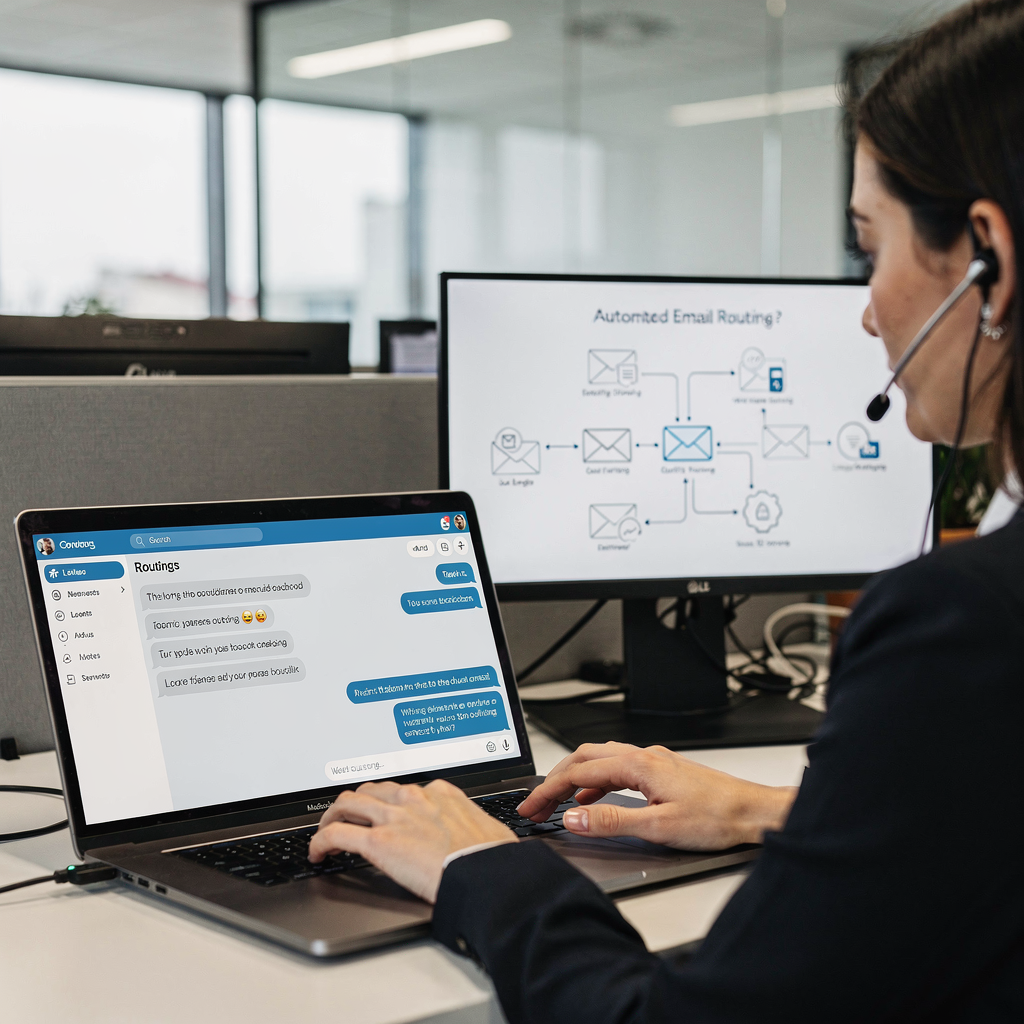
virtualworkforce.ai offers a practical, low‑code option that automates much of the email lifecycle. By routing and drafting replies automatically, the platform helps reduce the workload on front-line teams and increase consistency. See a related case for automating correspondence and improving response times in operations (automated logistics correspondence). Finally, track service-level metrics like time-to-offer, first-contact resolution and tenant satisfaction to prove ROI.
Drowning in emails?
Here’s your way out
Save hours every day as AI Agents label and draft emails directly in Outlook or Gmail, giving your team more time to focus on high-value work.
ai in housing — predictive maintenance and asset optimisation
AI models predict faults, optimise maintenance schedules and cut unplanned repairs and energy waste. First, integrate data from sensors, historical work orders, and energy meters. Then train models to flag likely failures and recommend actions. This predictable, data-driven approach moves teams from reactive to proactive. In pilots, predictive maintenance has cut maintenance costs and emergency calls substantially (predictive maintenance figures).
Data sources matter. Use sensor feeds for humidity, temperature and vibration. Add work-order histories and contractor performance logs. Also, include energy usage and occupancy patterns. Together, these inputs let AI find early warning signs. For social housing stock, even simple rule-based pilots deliver quick wins. Advanced models then refine accuracy when they get more data.
KPIs should include proactive repair rate, average cost per repair, and asset life extension. Track emergency call frequency and energy consumption too. Where sensor coverage is sparse, a hybrid approach can work: supplement limited sensors with structured email data. For example, virtualworkforce.ai can extract structured data from maintenance emails and push it back into asset management systems, helping teams act faster (ERP email automation case).
Maintenance programmes show clear ROI when teams pair AI with sensible interventions. For example, reducing maintenance costs by 20–25% and emergency incidents by ~40% translates to measurable savings and better living conditions. Also, improved reporting supports building safety and health and safety goals. For asset managers, the message is simple: start small, measure results and scale proven approaches to protect stock and reduce total cost of ownership.
state of ai in housing — adoption, evidence and measurable outcomes
Adoption is rising; expect higher uptake and measurable efficiency gains over the next 3–5 years. First, industry forecasts show strong growth in AI asset-management adoption and related services (industry forecast). Second, recent reports note a 12% improvement in complaint resolution efficiency where AI tools supported casework (2025 Fair Housing Trends Report). These figures point to practical gains that housing leaders can expect.
Who is adopting? Both small and large social housing providers test pilots. Some run sensor-backed predictive maintenance pilots. Others focus on tenant services and automating routine emails. For organisations that handle large volumes of email, automation delivers quick wins. For example, automating email triage and reply drafting reduces handling time and increases consistency. A relevant resource on scaling operations without hiring shows similar benefits in other sectors (how to scale without hiring).
Realistic timelines matter. Expect a 3–6 month pilot to show operational signals and a 9–18 month window for broader roll-out. Quick wins include automated triage, self-service portals, and targeted maintenance scheduling. Longer-term projects include portfolio-wide asset optimisation and algorithmic planning for new developments. Also, a 2024 study found improved transport and placement planning using algorithmic models, which supports integrated planning for new affordable housing near transit (algorithmic urban planning study).
Finally, housing associations across the UK are testing tools. To support readiness, make procurement conscious of sector values and governance needs. Track both quantitative outcomes and the overall experience. That helps teams stay ahead and keep systems up-to-date with policy and tenant expectations.

Drowning in emails?
Here’s your way out
Save hours every day as AI Agents label and draft emails directly in Outlook or Gmail, giving your team more time to focus on high-value work.
ai and fairness — ethics, bias mitigation and regulation for housing association use
AI brings efficiency but can reproduce bias; transparency and oversight are non-negotiable. First, systems trained on historical tenant data may mirror past inequalities. As one ethicist warned, “Without careful oversight, AI can reinforce systemic biases, making it harder for marginalized groups to secure housing” (ethics source). That risk means teams must design audit trails and fairness checks into every deployment.
Practical steps include bias testing, explainability tools and clear complaint routes. Also, involve tenant representatives in model design to ensure that models reflect tenant needs. Create a governance framework that requires regular audits and public summaries of algorithmic behaviour. This supports transparency and helps align AI use with public policy and sector-wide fairness standards.
Use data minimisation and limit sensitive attributes in models. Offer human review for borderline decisions and publish model performance metrics. A robust appeal route reassures tenants and improves trust. Also, train staff about algorithm limits and about how to interpret model recommendations. That improves frontline decision-making and reduces over-reliance on opaque outputs.
Regulation is evolving, so align projects with the national housing federation guidance and with data protection rules. For clarity, include a plain-language summary for tenants that explains what data is used and why. This builds trust and helps ensure homes remain safe and fairly allocated while teams capture the potential of AI to improve services.
ai rollout plan for housing association — pilots, KPIs and scaling
Start small, measure hard, scale what delivers value. First, choose a focused pilot such as heating-fault triage or a single-estate allocation process. Set a 3–6 month pilot window and pick clear KPIs: placement time, repair costs, tenant satisfaction and first-contact resolution. Then define data sources and run a privacy review before any model training.
Next, create a short checklist for scaling. Include procurement checks, vendor due diligence and staff training. Also, draft tenant communication templates so people know how systems work and how to appeal decisions. Add monitoring processes to measure maintenance requests, response times and cost changes. virtualworkforce.ai can help by automating the email lifecycle, reducing handling time and creating structured records from unstructured email. That often reduces effort on repetitive correspondence and supports faster case resolution (virtual assistant example).
Include a governance plan with roles, thresholds and escalation paths. Test integration points with your management systems and ERP so outputs flow into one place. For procurement, insist on traceability and a right to audit. Also, include a tenant feedback loop as a KPI to monitor experience for tenants and overall trust levels.
Finally, plan for organisational change. Train teams on new processes and create champions to drive adoption. For casework heavy teams, automation reduces the pressure of large volumes and helps staff focus on complex work. For boards, present a phased ROI that shows both cost savings and improved outcomes. That way, housing associations improve services while staying aligned to mission and to regulatory requirements.
FAQ
What is AI and how does it help housing associations?
AI, or artificial intelligence, uses data and models to make predictions or automate tasks. It helps housing associations speed allocations, predict maintenance, and automate routine communications, which frees staff to focus on complex cases.
Can AI reduce maintenance costs in social housing?
Yes. Predictive maintenance pilots have shown reductions in maintenance costs and emergency incidents when combined with sensors and historic logs (industry data). That leads to better asset life and fewer reactive repairs.
Are chatbots safe to use for tenant enquiries?
Chatbots can handle common enquiries safely if they route complex or sensitive issues to humans. Use clear notices and escalation rules so tenants get the right level of support and information and support to tenants is preserved.
How should housing associations start an AI pilot?
Start small with a single estate or service, set 3–6 month goals and fixed KPIs like placement time and repair costs. Include a privacy review and tenant engagement so the pilot remains transparent.
Will AI reproduce existing bias in allocation models?
AI can reproduce bias when trained on historical data. To prevent that, include fairness testing, human-in-the-loop review and clear appeal routes so tenants can challenge decisions.
How do we measure success for AI projects?
Use quantitative KPIs such as mean time to repair, cost per repair and placement time. Also measure tenant satisfaction and first-contact resolution to capture the overall experience for tenants.
What governance is needed for AI in housing?
Create a governance framework that defines roles, audit rights, data minimisation and model explainability. Regular audits and tenant representative involvement make governance credible and aligned to sector values.
Can email automation help housing operations?
Yes. Automating the email lifecycle reduces manual triage and improves consistency. Solutions that draft replies and push structured data back into ERP help teams handle large volumes and reduce the workload on staff (related automation use).
What are quick wins for AI adoption?
Quick wins include self-service portals, chatbots for routine enquiries, automated triage of maintenance requests and email automation for common workflows. These improve CX and reduce routine tasks for front-line teams.
How do we keep tenants informed about AI decisions?
Publish plain-language summaries of how models work and what data you use. Offer appeal routes and clear contact points so tenants can access information and support if they have questions.
Drowning in emails?
Here’s your way out
Save hours every day as AI Agents label and draft emails directly in Outlook or Gmail, giving your team more time to focus on high-value work.