


ai and property management: role of ai in property and ai in property management today
AI is already changing how property management teams work. A 2025 snapshot shows that AI is in active use across residential operators and multifamily managers. For example, a survey of 280 industry leaders notes that “AI is not the future of property management. It’s the present.” This survey found rapid adoption. PwC also reports that many real estate firms now explore AI, with early gains among residential operators according to PwC.
The core capability is clear. AI can analyse very large data sets and turn them into actions. That helps with leasing, maintenance and finance. AI can speed tenant screening by up to 50% and cut emergency repair burdens with predictive maintenance savings of roughly 25% in some cases (Showdigs). These are headline numbers, but they show the power of applied AI.
Below are short facts to share with owners and managers. First, AI speeds screening and reduces vacancy. Second, AI helps predict failures and avoid costly emergency work. Third, AI improves staff efficiency and tenant satisfaction. Fourth, AI supports data-driven pricing and forecasting, which optimizes revenue.
- Tenant screening time cut by up to 50% (Showdigs).
- Predictive maintenance can reduce emergency repairs by ~25% (Buildium).
- Most residential operators report measurable success with AI (PwC).
For property owners and a property manager, these facts make a simple point. The role of AI in property is now practical. If you want to explore further, virtualworkforce.ai automates the full email lifecycle for ops teams and shows how email automation fits into larger management systems (end-to-end email automation). AI in property management today helps teams save time and reduce errors. It also helps managers make better operational choices.
property manager tasks AI can automate: property manager, automate, use ai, applications of ai
Property managers handle many repeat actions every day. AI can automate those tasks so staff can focus on higher-value work. Routine workflows that AI can automate include maintenance intake and scheduling, rent reminders, lease renewals, viewings and paperwork. These are the exact property management tasks that slow teams down.
Automation reduces repetitive work. It speeds responses. It also improves employee experience, which AppFolio highlights as the most valuable benefit of AI in property management (AppFolio). When a property manager can automate routine tasks, they handle complex cases faster. Meanwhile, property management staff spend less time on simple chores and more time on tenant relationships. This leads to higher tenant satisfaction.
AI helps with compliance and record keeping as well. For example, automated logging of repairs keeps a clear audit trail. An AI system will tag each maintenance request and record dates, costs and vendor actions. That supports regulatory needs and helps managers when they need records for audits or disputes.
Practical results to aim for are clear. Faster leasing cycles. Fewer missed rent payments. Time saved per week by staff. You can reasonably expect a reduction in email handling time if you leverage AI agents. Our team at virtualworkforce.ai automates the full email lifecycle for operations teams, reducing handling time from ~4.5 minutes to ~1.5 minutes per email in many deployments (virtualworkforce.ai ROI study). That example shows how a management company can recover staff hours and reduce errors.
Use AI in these ways to automate the flow from tenant query to resolution. For maintenance requests, AI can triage incoming reports, check warranties, and schedule a vendor. AI chatbots can manage basic queries and booking viewings. For lease renewals, AI can flag expiring leases and draft renewal offers. All of this helps property owners and property managers to operate more efficiently.

Drowning in emails?
Here’s your way out
Save hours every day as AI Agents label and draft emails directly in Outlook or Gmail, giving your team more time to focus on high-value work.
use case — predictive maintenance systems and ai-powered security systems
Predictive maintenance systems and AI-powered security systems are two high-impact use cases. Each saves money and reduces risk. Predictive maintenance uses sensors plus machine learning. These systems watch HVAC, lifts and plumbing for early signs of failure. They then predict faults before they become emergencies. This approach can reduce emergency repairs by roughly 25–30% in practice (Buildium). Predictive maintenance systems extend equipment life and lower total repair costs.
Technical note: machine learning models spot patterns in sensor data. In plain terms, they learn what normal looks like. Then they flag anything unusual. For a property manager, that means fewer surprise breakdowns and smoother service calls.
AI-powered security systems combine smart cameras with anomaly detection. These tools can recognise unusual movement, loitering or unauthorised access and send automated alerts. They cut response times and help with incident logging. However, managers must weigh privacy and false-positive trade-offs. A clear policy on camera use and data retention is essential.
Short case examples. First, a mid-size block used predictive models and cut emergency HVAC incidents by 28% in six months. Second, a management company deployed smart cameras and reduced night-time incidents while improving response times.
Predictive maintenance pilot checklist:
- Data sources: metering, thermostats, lift logs, vendor invoices.
- Integrations: connect to existing property management software and building management systems.
- Pilot metrics: emergency repairs, mean time to repair, cost per repair, downtime.
- Vendor vs build: assess model transparency, support, and data ownership.
Deployment tips: start small, measure quickly, and iterate. Use a pilot on a small set of assets. Track savings and tenant experience. If your management systems lack sensor inputs, work with vendors who offer simple retrofit sensors. For security systems, test detection settings to reduce false alarms. Also, ensure compliance with local data laws and tenant privacy rules.
tenant experience and tenant screening with ai agents: tenant, tenant screening, ai agents, ai agent template
AI agents reshape how tenants find and live in homes. They help with tenant screening, 24/7 enquiries, and maintenance reporting. Predictive models speed tenant screening by up to 50%, which shortens vacancy time and helps managers fill units faster (Showdigs). AI can quickly rank potential tenants based on income, rental history and risk signals. This reduces bias when models are transparent and well-tested.
AI agents and chatbots handle routine tenant questions. They schedule viewings, run interactive tours, and accept maintenance requests. AI chatbots can provide immediate answers. A virtual assistant can triage a maintenance request, gather photos, and schedule a technician. That saves time and improves tenant satisfaction.
Here is a simple ai agent template for tenant intake:
- Intake: greet the tenant, collect contact details and address of interest.
- Verify: request proof of income and run tenant screening checks.
- Schedule: offer viewing slots and confirm appointments.
- Escalate: if risk flags appear or complex queries arise, route to a human agent.
Use AI to improve tenant experience in measurable ways. Faster responses mean fewer complaints. Better screening means fewer late payments. Higher renewal rates follow better communication. For managers and tenants, these gains matter. Also, integrating AI with your existing property management software makes the handoff seamless. If you want to see how AI agents handle operational emails and tenant messages, review our guide on scaling logistics operations with AI agents for comparable workflows (scaling operations with AI agents). It shows how to set rules, route messages and escalate when needed.
Remember: ai isn’t only about automation. It also supports better judgement by human property managers. AI can surface risks and suggest options, while human property managers make the final calls. This balance keeps screening fair and compliant. Using AI solutions well improves tenant satisfaction and reduces staff burnout.
Drowning in emails?
Here’s your way out
Save hours every day as AI Agents label and draft emails directly in Outlook or Gmail, giving your team more time to focus on high-value work.
property management ai tools, management systems and property management tools: property management ai, management systems, property management tools, property management ai agent
Choosing the right tools matters. Tool categories include tenant portals and chatbots, predictive maintenance platforms, screening engines, pricing models and analytics suites. Each category serves a different part of the workflow. The right mix will link to your property management software and accounting systems. Integration with vendor APIs is crucial.
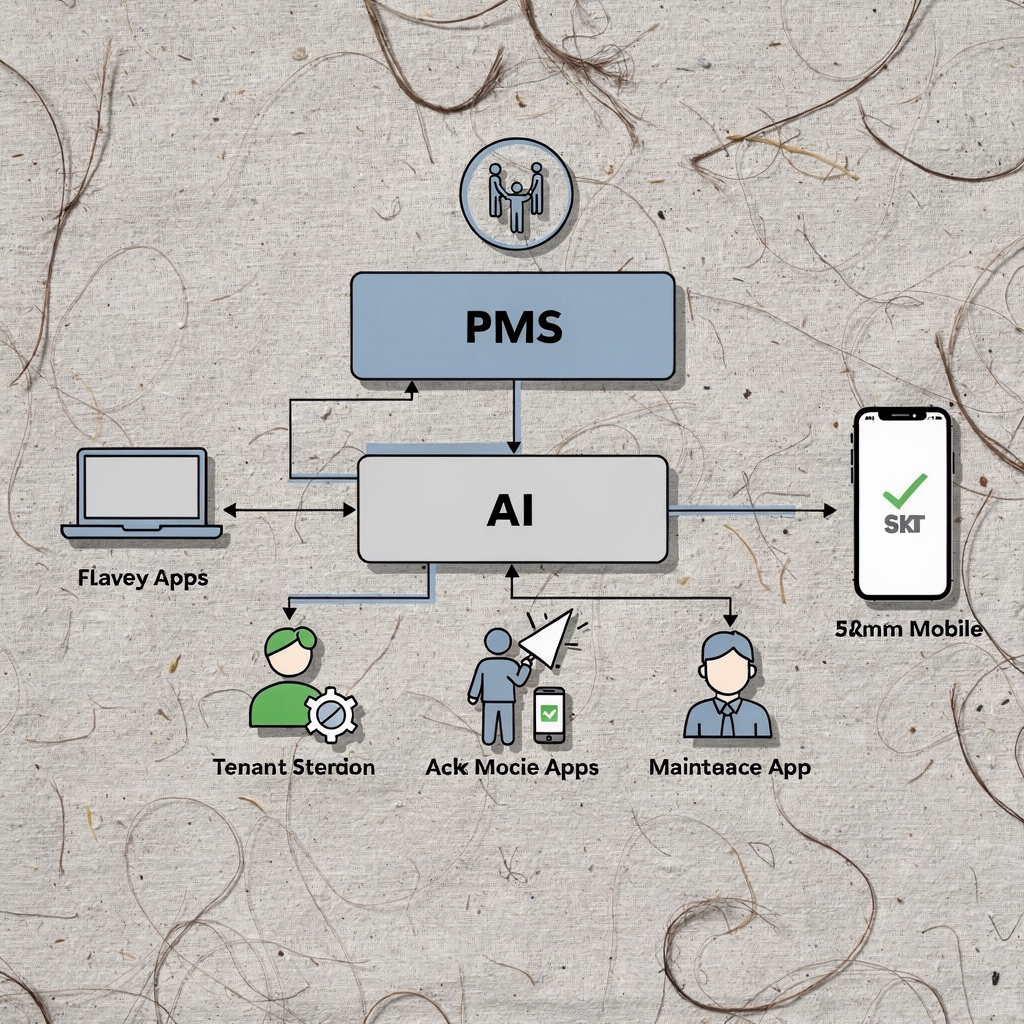
Start by mapping your systems. You will typically have a PMS, accounting platform and a CRM. An AI layer sits above these systems to add intelligence and automation. For example, a property management AI agent can draft emails, route maintenance requests and extract structured data from tenant messages. Our platform automates email lifecycles and connects with ERPs and document systems to keep data grounded and accurate (ERP email automation).
How to evaluate vendors:
- Data access and ownership: who owns the tenant data?
- Model transparency: can they explain decisions?
- Security: encryption, access controls and compliance.
- Support and ROI timeline: clear pilots and payback metrics.
Example architecture: PMS + AI layer + mobile tenant app + maintenance partners. That setup allows automated triage, faster maintenance scheduling, and a single source of truth for property details. When integrating AI, choose vendors that offer connectors to existing property management software. Check whether built-in AI features match your needs or if you should adopt AI tools for property that plug into your systems.
Practical note: property management companies should avoid vendor lock-in. Prefer modular solutions that allow swapping components. Also, confirm the vendor can work with commercial properties as well as residential portfolios. Finally, evaluate whether generative AI tools are needed for drafting complex messages, or if rule-based agents will suffice.
benefits of ai, ROI and the future of property management: benefits of ai, ai use, future of property management, true ai, modern property
The benefits of AI are tangible. Cost reduction, higher occupancy and improved employee experience appear quickly. AI can reduce staff hours spent on emails and scheduling. It can also lower repair costs through predictive maintenance. For property management business leaders, measure payback signals such as turnover, repair cost and staff hours recovered.
ROI realities are straightforward. There are upfront costs. There are measurable gains later. Track pilots carefully. Typical payback comes from shorter vacancy periods and fewer emergency repairs. Also, improved tenant satisfaction increases renewals and reduces marketing spend. For a management company, those gains compound across portfolios.
Risks and governance deserve attention. Data privacy, bias in screening models and vendor lock-in are real concerns. Address these with clear data policies and vendor contracts. For security systems, maintain strict access controls and retention rules. Use independent audits when possible.
Looking ahead, AI is shaping more autonomous, multi-agent workflows. Expect AI agents to handle large parts of the email lifecycle and routine operations, while human property managers focus on complex decisions and relationship work. For practical next steps, start small, define pilot metrics, and involve IT early. If you want examples of how automation reduces email load in operations teams, see our research on automating logistics email drafting and how that applies to property ops (email drafting automation).
Final thought: true AI will keep improving, but human oversight remains essential. Embracing AI now gives property owners and managers a competitive edge. It allows property managers to focus on strategy, tenant care and portfolio growth. The future of property management will combine smart automation with skilled people to run modern property portfolios efficiently.
FAQ
What is AI and how does it apply to property management?
AI refers to software that can learn patterns and make predictions. In property management it analyses tenant data, predicts maintenance issues and automates communications.
How quickly can a property management company see ROI from AI?
ROI timing varies by use case. Many firms report measurable gains within six to twelve months after piloting predictive maintenance or tenant screening systems.
Can AI replace a property manager?
No. AI automates routine tasks and supports decisions, but human property managers remain essential for complex judgement and tenant relationships.
Is tenant data safe with AI systems?
Data safety depends on vendor controls. Always check encryption, access policies and compliance measures before integrating an AI system.
What is a predictive maintenance system?
Predictive maintenance systems use sensors and ML models to forecast equipment faults. They flag likely failures early so teams can schedule repairs before emergencies.
Do AI chatbots really help tenant experience?
Yes. AI chatbots provide instant replies to common queries, schedule viewings and accept maintenance requests. That reduces wait times and increases tenant satisfaction.
How does tenant screening with AI reduce risk?
AI speeds screening and highlights patterns across credit, rental history and income. Properly tested models identify higher-risk applications while keeping processes fair.
Should a small management company adopt AI?
Small firms can benefit from targeted pilots like screening engines or simple chatbots. Start with low-cost pilots and scale as you measure gains.
How do I choose between building an AI solution or buying one?
Consider data access, speed to market and total cost. Buying typically delivers faster results, while building gives full control over models and data ownership.
What first steps should managers take to start integrating AI?
Map your current workflows, identify high-volume tasks and run a small pilot with clear metrics. Include IT early and set data governance rules. For email-heavy workflows, explore end-to-end email automation options to reduce load and improve response times (improve customer service with AI).
Drowning in emails?
Here’s your way out
Save hours every day as AI Agents label and draft emails directly in Outlook or Gmail, giving your team more time to focus on high-value work.