


AI in real estate: what brokers and real estate agents must know now
First, a few quick facts. AI is reshaping the market fast. For example, the AI real estate market rose from about $163 billion in 2022 to roughly $226 billion in 2023, which shows rapid growth and broad adoption (Forbes). Next, investment into real‑estate AI topped US$3.5bn by October 2023, signaling strong commitment from investors and firms.
Also, adoption matters because AI delivers clear efficiency gains. AI-powered conversational agents have boosted lead generation by as much as 62% in real estate, which reduces time spent on scheduling and back‑and‑forth with clients (Master of Code). Therefore, brokers and real estate agents who integrate AI into daily work free time for closing deals and serving clients.
Next, AI helps with valuations and market research. AI algorithms process MLS, transaction history, and local economic indicators in minutes. Then brokers get actionable estimates and scenario analyses. For example, AI can track visitor behavior on property websites and send personalised recommendations that raise conversion rates (The Intellify). Also, CBRE highlights that they “leverage AI to power our solutions with advanced analytics and automated workflows,” which gives brokers scalable, real‑time insights (CBRE).
Because results must be measurable, set clear KPIs before you test tools. First track time saved on admin and scheduling. Next measure lead conversion and lead response time. Finally check valuation accuracy versus sales price. Also, track client satisfaction scores and repeat business. These are the KPIs that show real ROI.
In addition, responsible AI matters. Train models on clean data. Also set guardrails for Fair Housing compliance and privacy. Remember that AI cannot replace human judgement. Therefore combine automated insights with expert review. If you want to see an example of how AI agents automate email workflows and reduce handling time, read about virtualworkforce.ai’s approach to end‑to‑end email automation and operational grounding (virtualworkforce.ai case).
AI tools for real estate: market research, valuations and deal sourcing
First, this chapter covers practical workflows for analyzing MLS records, pricing homes, and spotting investments. For example, AVMs mimic Zillow’s Zestimate and Redfin algorithms. Next, commercial tools such as HouseCanary and CanaryAI provide advanced valuations. Also, Reonomy helps for property-level ownership and debt records. In addition, CBRE’s Ellis AI supports commercial listings and large-portfolio screening (CBRE).
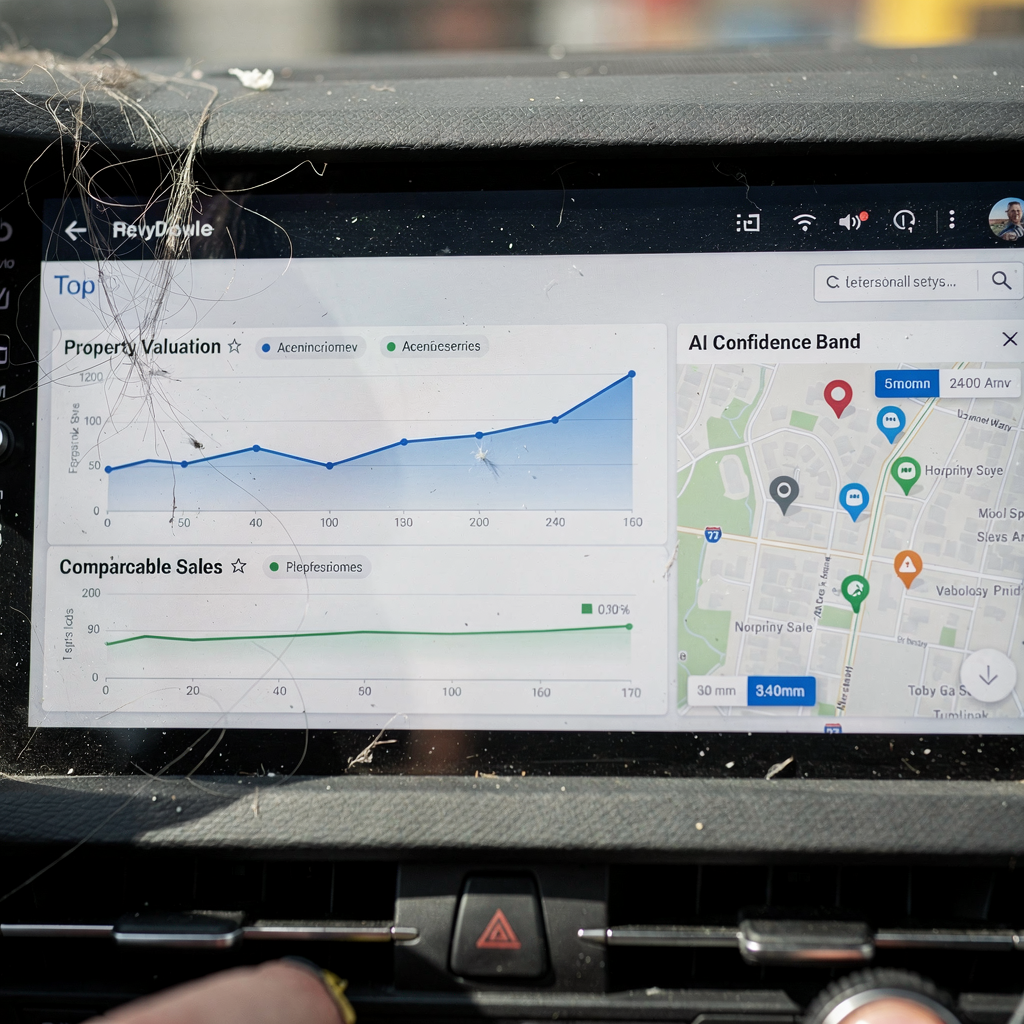
Then follow a step‑by‑step workflow for one property. First, run an AVM to get a baseline price. Next, pull recent comparables within a defined radius and time window. Then layer in local indicators such as job growth, rent trends, and new permits. Also adjust for condition and known upgrades. Finally document adjustments and create a confidence band for the estimate. This workflow uses AI to analyze MLS and public data and then relies on a broker’s local knowledge.
Also know the accuracy limits. Typical AVMs return within 5–10% of final sale price in stable markets. However, in micro‑markets and unusual homes, error widens. Therefore override algorithmic valuations for unique properties. Also look for data gaps, input errors, and recent local events that models may miss. For example, AI tools can process title and deed records quickly, but only a human can spot nearby zoning changes that affect value.
Next, consider deal sourcing. AI can scan transaction feeds and flag properties with motivated sellers or distressed indicators. Also tools for real estate agents include Reonomy and CanaryAI for prospect lists and outreach prioritisation. In addition, tools designed for real estate like listedkit ai can speed listing prep. If you need to automate repetitive email outreach tied to sourcing, consider platforms that automate email lifecycle using operational data and threads, such as virtualworkforce.ai’s enterprise agents (virtualworkforce.ai). Also remember to check vendor support and data refresh cadence when you choose an AI tool.
Drowning in emails?
Here’s your way out
Save hours every day as AI Agents label and draft emails directly in Outlook or Gmail, giving your team more time to focus on high-value work.
AI marketing tools: faster listings, targeted ads and personalised outreach
First, AI marketing tools speed listing production and boost targeting. Also, agents and brokers can generate better listing copy, social posts, and email nurture sequences in minutes. For example, ChatGPT and Epique AI help produce listing descriptions and scripts. In addition, virtual staging tools such as REimagineHome support photo upgrades and visual assets. Then ad automation platforms like Ylopo handle targeting and lead scoring.
Next, use practical templates. For a listing description, start with a 2‑line hook, list top three features, add neighbourhood benefits, and finish with a call to action. Also for a social post, use a single image, a 15–30 word caption that includes price range and neighborhood draw, and a link to schedule viewings. Then for nurture emails, create a three‑message sequence: welcome, tailored recommendation, and market update with CTA. These steps help agents use AI without losing brand voice.
Also measure gains. AI-driven personalization raises engagement and conversion. For instance, conversational AI reportedly increases lead capture by up to 62% when used for lead handling and scheduling (Master of Code). Next, many brokers see faster time‑to‑appointment and higher show rates. In addition, AI tools for marketing let teams A/B test creative and automate scale.
Then choose the right mix. Use an ai tool for first drafts, then edit for local accuracy and compliance. Also adopt tools that integrate with your CRM. Real estate content must follow Fair Housing rules, so add compliance checks. In addition, when you automate ad spend and creative, monitor conversion cost per lead closely. If you want to improve email reply accuracy in high‑volume outreach, virtualworkforce.ai shows how AI agents can draft and route messages grounded in operational data and inbox history (virtualworkforce.ai guide). Finally, know that AI virtual staging and automated copy reduce time and cost, but human review keeps listings accurate and compelling.
AI-powered real estate workflows: automate scheduling, lead qualification and transactions
First, this chapter covers end‑to‑end use of AI in daily workflows. Also, chatbots and virtual assistants handle 24/7 enquiries. Next, AI can triage leads, schedule viewings, and prepare documents. For example, CRM automation reduces manual data entry and follow‑up. Also ai-powered tools help agents score leads and route hot prospects to an available broker.
Then follow a simple rollout. First map your current workflow and identify bottlenecks. Next pick one bottleneck and pilot an ai tool for 30–90 days. Then measure time saved and quality of replies. Also scale to adjacent processes when metrics improve. For instance, many operations teams face high email volume. virtualworkforce.ai automates the full email lifecycle, which reduces handling time from about 4.5 to 1.5 minutes per email while keeping replies grounded in ERP and document data (virtualworkforce.ai ROI).
Also pay attention to compliance. Automated outreach must avoid discriminatory language and respect privacy laws. Therefore include Fair Housing checks. In addition, store audit trails for decisions and escalations. Next, choose vendors that provide explainability for important AI outputs such as credit assessments or tenant screening.
Then handle transactions. AI drafts standard documents and pre‑fills data. Also contract‑prep helpers speed closings. Next ensure final review by a licensed professional. For example, a broker should sign off on any listing and key contract clauses. Moreover, agentic ai workflows can automate multi-step tasks but need rules for escalation. Finally, integrate automation into your existing MLS and CRM. Consider technical integration guides and choose tools that sync contact and transaction records reliably. If you want to automate email drafting tied to operational systems, see how virtualworkforce.ai connects to enterprise data and creates structured outputs from emails (virtualworkforce.ai integration).
Drowning in emails?
Here’s your way out
Save hours every day as AI Agents label and draft emails directly in Outlook or Gmail, giving your team more time to focus on high-value work.
Generative AI and tools for agents: listings, staging and client conversation
First, generative AI creates text, images, and video scripts for listings and outreach. Also agents use generative ai tools to produce first drafts quickly. For example, ChatGPT can write listing descriptions and appointment scripts. In addition, NotebookLM helps agents retrieve local knowledge and bundle research for client meetings. Next, CubiCasa generates floor plans and REimagineHome supports virtual staging.
Then apply a safe workflow. First prompt the model with structured property facts. Next ask for three variant descriptions: concise, narrative, and luxury. Also include brand tone and compliance prompts. Then review each description and edit for accuracy. Use a human reviewer before publishing. Also apply the same process to virtual staging assets and video scripts.
Also get templates. For listing descriptions, require a hook, three features, a neighbourhood line, and a call to action. Next, for video scripts, keep intros at 20 seconds and property highlights at 40 seconds. Then use AI to auto‑generate personalised follow‑ups after showings. In addition, an ai assistant can summarise buyer preferences gathered from chat and email.
Next, manage risks and quality. Prompt templates and human review are best practices. Also train the model on approved language and local data. Then set regular checks for model drift. In addition, guard against hallucinations by requiring source citations for market claims. Remember that ai cannot replace client empathy, negotiaton skill, and local judgement. Finally, if you want to speed repetitive email replies that reference operational records, virtualworkforce.ai shows how agents can ground drafts in ERP and inbox memory to reduce errors (virtualworkforce.ai example).

Choosing and training the best AI tools for real: adoption, risks and AI models
First, choose the right AI by matching capabilities to use case. Also define required data, integration needs, and trial period. Next build a practical checklist: define the use case, list the data sources, set a pilot length, check APIs, and confirm compliance features. Then include staff training and a rollback plan.
Also manage risk. Check for bias and model drift. Next demand explainability for valuation and lead‑scoring outputs. Then monitor performance and switch vendors if quality drops. Also mind vendor lock‑in and have exportable data policies. For example, a simple audit once a quarter helps catch bias early. In addition include a governance policy that logs decisions and human sign‑offs.
Next, train AI responsibly. First create high‑quality labelled data. Then run short training cycles and validate on holdout sets. Also test for edge cases and common mislabels. Next document prompt templates and provide guardrails. Then set KPIs for the pilot. Typical metrics include time saved, lead conversion lift, and valuation error rates. Also report ROI to partners on a 90‑day cadence. For a repeatable rollout, run a pilot in one office, measure results, then scale across your brokerage.
Also note vendor selection criteria. Choose vendors that secure data, offer enterprise integration, and support traceability. Then ensure that the vendor provides clear SLAs and model update policies. Next, align staff training with best practices in AI, including prompt hygiene and human review. Finally, remember the broader context: adoption of AI is high across the industry, and many real estate companies now run pilots or live deployments. If you want to understand how AI agents can scale operations without hiring, review virtualworkforce.ai’s guidance on scaling operations with AI agents (virtualworkforce.ai). Also track the power of AI, but keep human oversight central to your rollouts.
FAQ
What are the top AI tools for real estate brokers?
Top tools include AVMs such as those from HouseCanary, Reonomy for property data, and conversational platforms used for lead capture. Also many brokers combine ChatGPT for copy, REimagineHome for staging, and specialised commercial tools like CBRE’s Ellis AI.
How accurate are AVM valuations?
AVMs typically hit within 5–10% of sale price in stable markets. However, accuracy falls for unique homes and thinly traded micro‑markets, so human overrides are often needed.
Can AI handle scheduling and email for my team?
Yes. AI virtual assistants and email automation agents can triage and draft replies, schedule viewings, and reduce handling time significantly. For enterprise email automation grounded in systems, see virtualworkforce.ai’s end‑to‑end approach.
Are there compliance risks with AI in listings?
Yes. Automated copy and targeting can accidentally breach Fair Housing rules or privacy laws. Therefore add compliance checks and human review steps before publishing listings or running ads.
How should a small brokerage start with AI?
Start with one pilot use case such as lead qualification or listing descriptions. Then measure time saved, conversion lift, and client feedback. Scale after you prove the ROI and refine processes.
What is agentic AI and is it ready for brokerage tasks?
Agentic AI refers to systems that carry out multi‑step tasks with goals and escalation rules. They can automate workflows, but they require careful rules and human oversight before being trusted with high‑risk tasks.
Can generative AI write all my listing descriptions?
Generative AI can draft listing descriptions quickly and help maintain brand voice with templates. However, a human must verify accuracy, local facts, and compliance before publishing.
How do I evaluate an AI vendor?
Use a checklist: fit to use case, data security, integration, trial period, vendor support, and exit/export policies. Also check explainability and auditing options for model outputs.
Will AI replace brokers?
No. AI cannot replace relationship work, negotiation, and local insight. Instead, AI helps real estate professionals capture more leads, reduce admin, and focus on high‑value client service.
Where can I learn about automating email workflows in operations?
Explore guides that show how AI agents reduce handling time and increase accuracy. For an operational example focused on inbox automation and data grounding, see virtualworkforce.ai’s resources on automated logistics correspondence and email lifecycle automation.
Drowning in emails?
Here’s your way out
Save hours every day as AI Agents label and draft emails directly in Outlook or Gmail, giving your team more time to focus on high-value work.