


How AI and AI chatbots revolutionise tenant communication and tenant interactions in property management.
First, AI reshapes how landlords and property managers respond to routine questions. For example, AI chatbots give tenants immediate answers. They run 24/7. They route complex items to a human. They create tickets and update a management system automatically. In practice, chatbots handle common tasks such as viewing bookings, rent queries, FAQ responses, and initial rental inquiries. They also schedule viewings and sync calendars. As a result, leasing agents spend less time on triage and more time on leases and relationships.
Second, data shows clear benefits. Industry reports note a 64% adoption rate among UK property managers by 2025, with tenant communication as a leading use case. Also, studies report AI-assisted tools shorten response times by about 30–40%. For example, conversational systems can resolve roughly 80% of routine tenant questions. These gains help reduce tenant turnover by getting issues fixed faster and improving tenant satisfaction.
Third, map the tenant journey before you implement an AI system. Start by listing common tenant questions. Next, map the handoffs that happen when an issue needs a technician or a leasing agent. Then, check integration points: calendar, property management software, tenant records, and payment portals. Finally, pilot the chatbot on a small portfolio and measure results. You can also compare outcomes against baseline response times and tenant feedback.
Also, modern AI uses natural language processing and machine learning to match tenant phrasing to the right intent. It can recognise tenant names, rental listing IDs, and lease clauses. It can flag sensitive issues that should always go to a human. So, while AI handles most routine tenant interactions, human oversight remains essential for disputes and complex lease amendments.
For teams that want hands-off email and message automation, our company solves similar challenges for operations teams. Learn how our approach automates the lifecycle of data-driven messages and routes them with full context at how to scale operations without hiring. That model applies to property management too, where a smart inbox prevents lost tenant requests and repeated work.
Why a property manager should use AI-powered tools to automate maintenance request workflow.
First, intake matters. Tenants report maintenance issues by chat, SMS, email, or portal. An AI-powered intake captures the problem, tags urgency, and creates a maintenance request. Next, an automated triage engine prioritises work by severity and tenant impact. Then, the system routes the work to preferred vendors or an internal technician. Finally, it pushes status updates back to the tenant and to the property manager. That closed-loop approach keeps every stakeholder informed and reduces back-and-forth.
Second, automate ticketing to reduce backlog. Case studies show automated maintenance routing can cut backlog by about 30% and speed resolution. This happens because the AI system ensures that the right information arrives with the ticket. It attaches photos, tenant availability, and the lease or unit history. Moreover, it applies SLA rules and escalation paths so urgent items get attention fast.

Third, implementation matters. Define SLA rules, human-handoff triggers, and escalation paths up front. Also, document which maintenance categories the AI will auto-resolve versus which ones always escalate. For example, lockouts or water leaks might trigger immediate human intervention. In contrast, lightbulb replacement or thermostat adjustments can use automated scheduling workflows.
Fourth, integration with vendors and accounting reduces admin time. An AI system can send work orders, collect vendor confirmations, and update purchase orders in the ERP. That saves the property manager time on approvals and reconciliations. It also reduces errors when the AI drafts emails and fills forms from lease data.
Finally, track metrics. Monitor average time-to-resolution, maintenance request reopen rates, and cost-per-ticket. These KPIs show where to optimise the maintenance request workflow. If you want a model for enterprise email automation and rules-based routing, see our resource on automated correspondence and how it reduces handling time at automated logistics correspondence. The same principles apply to maintenance and tenant communications.
Drowning in emails?
Here’s your way out
Save hours every day as AI Agents label and draft emails directly in Outlook or Gmail, giving your team more time to focus on high-value work.
Improving tenant satisfaction, tenant engagement and understanding tenant behaviour with AI-powered tenant screening and consistent communication.
First, consistent communication builds trust. Tenants expect fast answers about rent, repairs, lease terms, and community rules. An AI assistant can send personalised reminders about upcoming rent, renewals, or building notices. It can surface relevant lease clauses when a tenant asks. It can also pull tenant data to personalise messages. As a result, property owners often see improved tenant engagement and loyalty.
Second, use AI-powered tenant screening to speed leasing decisions. Automated scoring checks identity, rental history, and credit where allowed. That process reduces bias from inconsistent manual checks and delivers a consistent baseline for leasing agents. Also, it shortens the time between initial contact and move-in, which improves conversion from viewing to signed lease.
Third, predictive models can help manage churn. Machine learning flags warning signs from tenant interactions, maintenance frequency, or payment lateness. When the AI spots a higher churn risk, a property manager can reach out with tailored offers or fixes. That targeted outreach helps reduce tenant turnover and protects rental income.
Fourth, measure the right KPIs. Track NPS or a tenant satisfaction score. Also measure renewal rate and average time-to-resolution for maintenance request tickets. These metrics correlate with retention and long-term revenue. Some firms report up to 25% lower admin costs after automating communication and screening. For evidence on how conversational AI boosts leads and viewings, see research that shows a 62% increase in leads from conversational tools conversational AI for real estate.
Finally, ensure a balanced approach. Use AI to automate tenant responses and screening. At the same time, keep humans for complex disputes and sensitive conversations. For example, an AI can draft a renewal offer, but a property manager may customise tone for a high-value tenant. Also, maintain clear records so you can audit decisions and address tenant concerns fairly. If you want to explore how email and message automation reduce handling time, review our material on drafting AI for logistics email tasks at logistics email drafting AI. The patterns translate well to rental operations.
Integrating AI solutions, property management software and a management system for communication at scale in AI property management.
First, integration creates a single source of truth. Connect your property management software, CRM, payment gateway, and maintenance platform. That sync ensures each tenant interaction is attached to the right lease and unit. APIs are key. They let conversational AI read lease dates, tenant status, and past tenant inquiries so responses stay accurate.
Second, plan for channels. Good AI supports SMS, WhatsApp, email, and portal messages. It should also sync calendar bookings for viewings and vendor visits. Supporting multiple channels lets every tenant pick their preference and still keeps records central. This avoids duplicated work and supports reporting on tenant interactions across the portfolio.
Third, security and compliance matter. Implement GDPR-style controls, role-based access, and secure data stores so tenant data stays safe. Configure the AI system to redact sensitive fields where needed. Also, keep audit trails for any automated decision that affects a lease or tenant status.
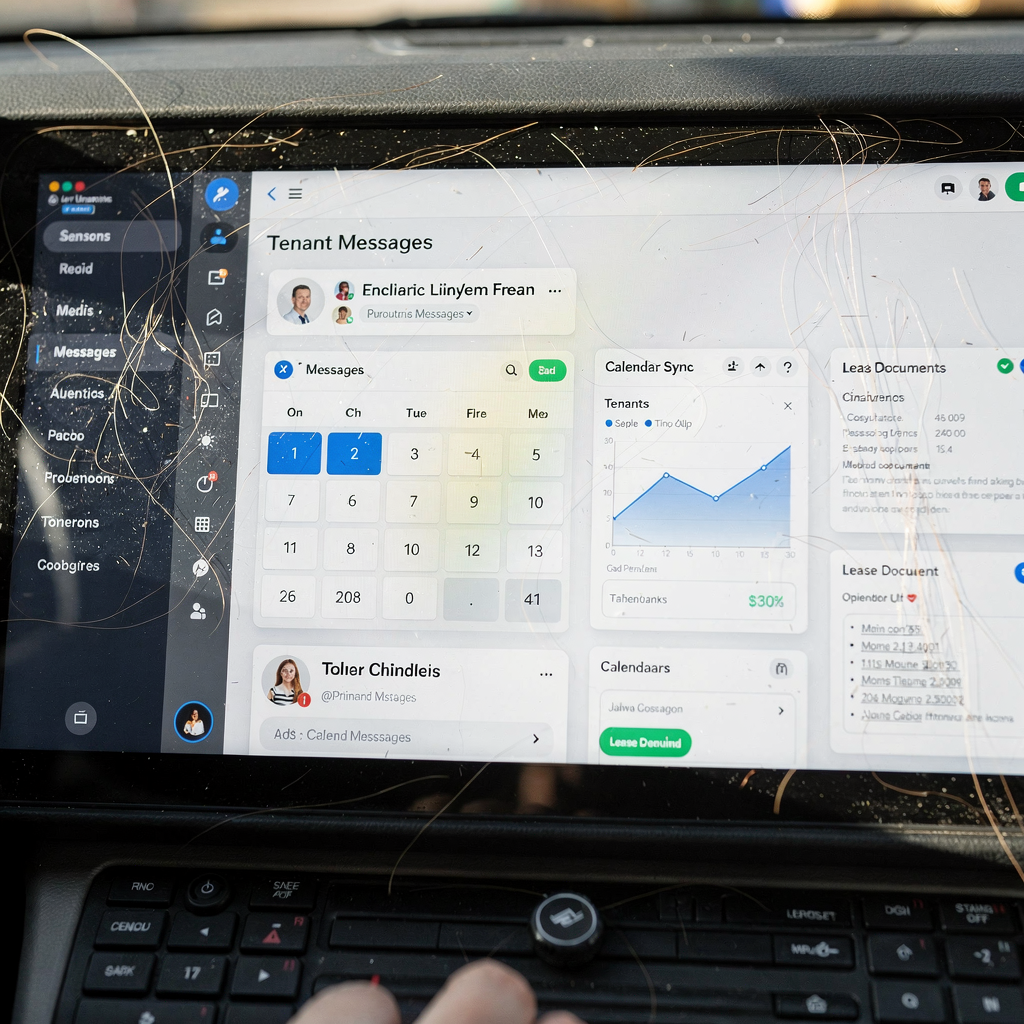
Fourth, choose a management system that supports thread-aware history and long conversations. Systems that remember past tenant names and past issues reduce repetition. That improves tenant experience and helps servicing teams respond faster. Conversational AI can boost initial rental inquiries and viewing bookings, which increases lead volume. Research reports a large lift in leads when conversational AI handles initial outreach conversational AI for real estate.
Finally, prepare a tech checklist. Include SMS and WhatsApp channels, calendar sync, document access for leases, and secure data stores. Also verify API endpoints and create mapping rules for lease fields. If you need examples of automating document-based messages, see our guide on automating customs and documentation emails; the same principles apply to lease and tenant documents at AI for customs documentation emails. These integrations let AI systems route tenant questions correctly and keep every tenant interaction traceable.
Drowning in emails?
Here’s your way out
Save hours every day as AI Agents label and draft emails directly in Outlook or Gmail, giving your team more time to focus on high-value work.
Measuring impact: response times, lease outcomes and ROI from AI in property management and AI in property management applications.
First, pick the KPIs you will track. Start with response times, cost per query, maintenance turnaround, and lease conversion. Then add tenant satisfaction score and renewal rate. These metrics show how AI affects both operations and revenue. For example, studies report a 30–40% reduction in response times after chatbot adoption and automation AI in property management statistics. Use those baselines to set targets.
Second, measure lead and booking impacts. Conversational AI often increases leads and viewing bookings by a large margin. One report shows a 62% rise in leads after adopting conversational AI tools. Track conversion from initial rental inquiries to signed lease for each channel. That gives you a direct view of ROI.
Third, quantify cost savings. Automating routine messages and email workflows reduces administrative hours. Some firms report up to 25% savings in admin costs when they implement automation across tenant communications and operations AI in the rental industry statistics. Combine that with lower tenant turnover to calculate lifetime value improvements.
Fourth, run a pilot and compare to baseline. Run a three-month pilot on a subset of units. Track response times, time-to-resolution, and renewal rates. Also include tenant feedback surveys. If you want a model for how to reduce handling time across long email threads, our platform shows how reducing per-email handling time boosts throughput and consistency. For context on how AI is already changing leasing communications, see the industry view that “AI is already leaving its mark on leasing operations by automating routine communications, allowing property teams to focus on delivering better tenant experiences” State of AI in Property Management Report.
Finally, calculate ROI. Compare labour savings, reduced vacancy days, and increased renewals against implementation costs. Include softer benefits too, such as improved tenant relationships and faster dispute resolution. These gains help justify continued investment in AI applications for the rental market and property management business.
Frequently asked questions for landlords and property managers about artificial intelligence, AI assistant use and the future of property management.
First, address common concerns simply. Landlords and property managers ask about privacy, accuracy, and job impact. Provide clear rules for human oversight, access control, and audit trails. That reduces risk and keeps tenants comfortable with automation.
FAQ
What is AI for tenant communication in property management?
AI for tenant communication describes systems that automate responses, routing, and ticketing for tenant messages. These systems use AI to understand tenant intent and either reply automatically or pass the issue to a property manager with full context.
How do AI chatbots handle maintenance request intake?
AI chatbots gather information, attach photos, prioritise by severity, and create a maintenance request in the management system. They can also schedule vendor visits and send status updates to tenants automatically.
Can AI help screen rental applications and speed leasing?
Yes. AI-powered tenant screening can run automated checks, score applications, and flag issues for human review. This shortens time-to-lease while keeping consistent criteria for every applicant.
Will AI replace property managers?
No. AI automates repetitive tasks and helps property managers focus on higher-value work. Humans remain critical for complex disputes, sensitive tenant concerns, and final lease approvals.
How do you measure tenant satisfaction after implementing AI?
Track tenant satisfaction using NPS or custom tenant satisfaction surveys, renewal rates, and time-to-resolution for maintenance request tickets. Combine these with tenant feedback to refine automated responses.
Is tenant data safe when using AI systems?
Effective deployments include secure data stores, role-based access, and compliance with GDPR where applicable. Always verify encryption and retention policies before you integrate tenant data.
How quickly can a property manager implement AI to automate tenant emails?
Small pilots can run in a few weeks, depending on integrations and data access. For full rollouts, plan for a phased approach with SLA rules, human-handoff triggers, and training for staff.
What KPIs should a property management company track with AI?
Key KPIs include response times, maintenance turnaround, lease conversion rate, cost per query, and tenant satisfaction score. These metrics show operational and financial impact.
How do AI systems improve tenant engagement?
AI sends timely, personalised messages based on tenant data, reminds tenants about lease milestones, and resolves routine tenant questions quickly. This improves tenant engagement and lowers tenant turnover.
What are quick wins when implementing AI for rental properties?
Start with FAQ automation, booking automation for viewings, and automated maintenance request intake. These quick wins reduce workload fast and provide measurable improvements in response times and tenant relationships.
Drowning in emails?
Here’s your way out
Save hours every day as AI Agents label and draft emails directly in Outlook or Gmail, giving your team more time to focus on high-value work.