


AI recruitment, recruitment and talent acquisition — why AI matters now
AI recruitment sits inside modern talent acquisition as a set of technologies that speed sourcing, screening and communication. First, artificial intelligence brought algorithmic matching and automation to hiring. Next, AI adds scale so teams can process more candidates without raising headcount. Also, businesses report strong savings: AI tools can cut cost-per-hire by roughly 30% on average when screening and matching improve (source). In addition, some studies show time-to-hire falls by about half when you automate screening and scheduling. Therefore, companies use AI to cut cycle time and to improve candidate experience at scale (source). Also, LinkedIn finds that recruiters who adopt AI-assisted messaging are about 9% more likely to make a quality hire, which matters for retention and cost control (source).
AI works across sourcing, screening, assessment and outreach. Also, it supports data-driven hiring decisions and rapid scaling for high-volume hiring. Next, business drivers are clear: speed, scale, candidate experience and measurable hiring outcomes. In addition, AI helps hiring managers focus on interviews and final hiring decisions rather than on admin. However, teams must map current processes first. Also, they should list bottlenecks and measure current metrics before adopting an AI solution.
AI recruitment matters now because adoption and trust have accelerated. Also, benchmark studies show HR professionals use AI daily or weekly, which signals maturity and predictable ROI (source). Next, responsible adoption reduces repetitive work and raises recruiter capacity. Also, virtualworkforce.ai shows how AI agents can automate message-heavy workflows in operations; teams reduce handling time and free staff for higher-value work, and similar gains apply to candidate email traffic virtualworkforce.ai pilot. Therefore, start by mapping your biggest delays and then test a targeted AI pilot.
Action item: Map your main recruitment bottlenecks, measure time-to-hire and cost-per-hire, and then select one low-risk step to pilot with AI.
AI in recruiting workflow and recruitment workflow — where AI best adds value
First, break the recruitment workflow into clear stages: sourcing, screening, assessment, interviewing and onboarding. Also, AI adds value at each stage. For sourcing, AI-driven recruitment platforms and sourcing engines scan public profiles and job boards to build candidate lists. Next, automated resume screening ranks applicants and flags best fits. Then, predictive analytics score job fit and retention likelihood so hiring managers focus on higher-probability candidates. Also, AI-assisted interview scheduling and automated interview reminders shrink coordination time. Finally, AI can streamline onboarding by preparing forms and routing tasks.
Also, evidence shows screening and scheduling deliver the biggest time savings. For example, automated screening reduces initial review time dramatically, and scheduling tools can halve admin work. Next, prioritize low-risk automation first: resume parsing, calendar coordination and templated outreach. Then, leave high-stakes judgement calls—final interviews and final hiring decisions—to humans. Also, keep human review where bias risk is high or where cultural fit matters.
Here is a quick checklist in one line: automate resume parsing and scheduling first; pilot predictive analytics on a single role; keep interviews human-led; use chatbots for FAQs; audit results weekly. Also, choose recruiting software that integrates with your ATS. Next, evaluate recruiting platform vendors on data sources, bias mitigation and traceability. Also, for teams that handle lots of candidate email, consider solutions that automate the message lifecycle; virtualworkforce.ai offers examples of ground-truth data grounding and thread-aware memory that help reduce response time in high-volume communication virtualworkforce.ai use case.
Action item: Run a 4–6 week pilot that automates screening and interview scheduling for one role type and measure time-to-hire, cost-per-hire and candidate experience.

Drowning in emails?
Here’s your way out
Save hours every day as AI Agents label and draft emails directly in Outlook or Gmail, giving your team more time to focus on high-value work.
AI agents, agentic AI and AI recruiter — practical uses of AI agents in recruitment automation
AI agents, also called agentic AI, perform autonomous tasks across the hiring workflow. First, explain what agentic AI does: it runs repeatable tasks end-to-end, from outreach to scheduling to triage. Also, an AI recruiter can send tailored messages, book interviews, answer candidate questions and push structured data back into your ATS. Next, conversational AI chatbots can handle 24/7 candidate Q&A, freeing recruiters to focus on interviews and on refining hiring decisions. Also, AI scheduling tools sync calendars and reduce back-and-forth, which shortens the hiring process.
Also, concrete examples help. One AI agent can scan inbound candidate emails, label intent and draft replies grounded in job data. Next, another agent can run a short skills quiz and pass scores to the hiring manager. Then, a final agent can coordinate offers and onboarding tasks. Also, virtualworkforce.ai demonstrates how agents automate full email lifecycles for operational teams; the same principle applies to candidate communications where context, data and traceability matter virtualworkforce.ai example. Therefore, AI agents let recruiters scale outreach without sacrificing personalized messages.
Risk control matters. Also, set clear human hand-off points: after shortlist, before offer and for any ambiguous case. Next, monitor agent performance with weekly audits and bias checks. Also, pilot an AI agent on a single, repeatable role to measure conversion and quality. Then, escalate when model drift or false positives grow. Also, ensure your ATS integrates with the agent and that you record decisions for compliance.
Action item: Pilot an AI recruiter agent on one role, define hand-off points, and measure candidate conversion and quality over four weeks.
AI recruitment tools, recruitment platform, best AI and ai hiring tool — choosing and integrating tools
First, classify tool categories: sourcing platforms, ATS-integrated AI, candidate engagement/chatbot tools, assessment suites and talent intelligence platforms. Also, compare vendors on data sources, model explainability and ATS integration. Next, demand vendor transparency about training data and bias mitigation. Also, test an ai hiring tool on a limited dataset before full deployment. Then, check integration with your interview process and with calendar tools to ensure seamless scheduling and data flow.
Also, practical guidance helps. Shortlist three vendors. Next, run a 4–6 week pilot. Then, use defined KPIs such as time-to-hire, cost-per-hire and candidate NPS. Also, remember generative AI can help craft job adverts and outreach but needs guardrails to prevent misleading claims. Furthermore, require version logging and audit trails for all content generated. Also, include recruitment platform fit and the depth of ATS integration when you evaluate ROI. Next, look for recruiting software that supports enrichment and talent pools so you can reuse candidate data across roles.
Here is a short vendor-selection checklist: 1) Confirm ATS integration and data flows; 2) Ask for bias mitigation evidence and model audits; 3) Verify training data sources and privacy controls; 4) Test candidate experience with a mock outreach; 5) Check pricing, SLA and support. Also, when selecting ai recruiting software or an intelligence platform, prefer vendors that let you keep control of tone and escalation rules. Next, consider virtualworkforce.ai where AI agents automate email lifecycles and ground replies in operational systems; this reduces human triage and keeps context across long candidate exchanges virtualworkforce.ai communication.
Action item: Shortlist three vendors, run a 4–6 week pilot with clear KPIs, and require model transparency and ATS integration before scaling.
Drowning in emails?
Here’s your way out
Save hours every day as AI Agents label and draft emails directly in Outlook or Gmail, giving your team more time to focus on high-value work.
Benefits of AI, talent intelligence and AI excels — measuring impact and ROI
First, measurable benefits of AI in recruiting include lower cost-per-hire, faster hires and better quality. Also, use data: AI tools can reduce hiring costs by about 30% and in some studies time-to-hire fell by ~50% when screening and scheduling were automated (cost) (time). Next, LinkedIn quantifies a roughly 9% uplift in quality-of-hire for recruiters using AI-assisted messaging (quality). Also, talent intelligence platforms turn historical hiring data into predictive hiring signals that rank candidates by likely success and retention. Then, tracking the right metrics makes ROI visible.
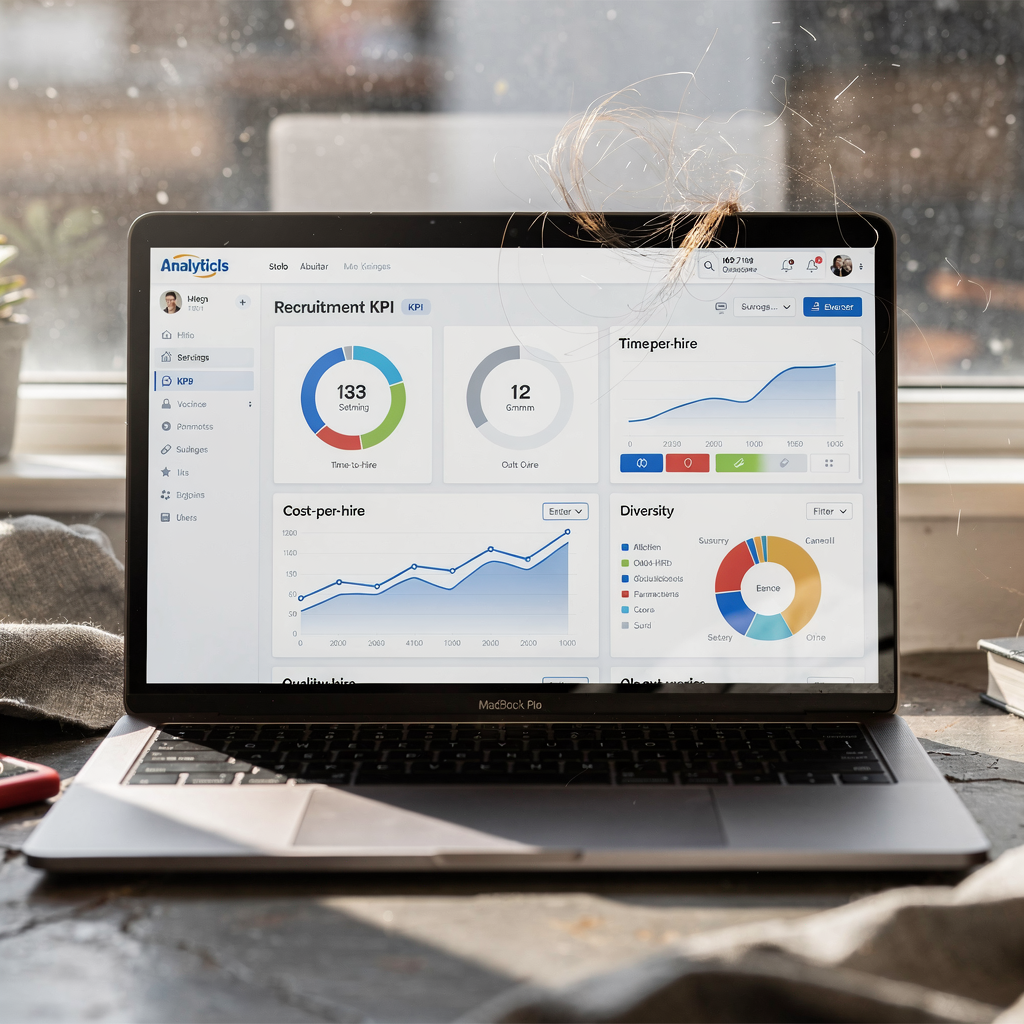
Also, core metrics to track include time-to-fill, cost-per-hire, quality-of-hire, candidate experience and pipeline diversity. Next, run A/B tests: compare AI-assisted outreach versus human-only outreach to measure conversion and long-term performance. Also, use talent intelligence to identify gaps and to forecast hiring needs. Then, integrate results into recruiting dashboards and share findings with recruiters and hiring managers. Furthermore, ensure you measure adverse impact and monitor bias metrics regularly.
Quick experiment idea: run an A/B test on outreach for a single role. Also, measure response rate, interview rate, offer rate and quality-of-hire at three months. Then, use those numbers to calculate cost-per-hire and to validate the ai hiring tool ROI. Also, virtualworkforce.ai’s approach to grounding responses in operational data shows that agents can reduce handling time and increase consistency; apply the same principle to candidate email threads to protect context and reduce errors virtualworkforce.ai ROI.
Action item: Set up an A/B test for AI-assisted outreach, measure conversion and quality metrics for one role over 8–12 weeks, and calculate ROI.
Responsible AI, HR governance, use of AI and the future of AI for recruitment
First, risks include biased models, poor transparency and candidate privacy issues. Also, regulation and scrutiny are rising, so governance matters. Next, take concrete steps: vendor due diligence, model validation and logging of automated decisions. Also, give candidates notice when you use AI and provide appeal routes for adverse outcomes. Furthermore, monitor model performance and re-train where drift appears. Also, ensure all data handling follows data protection laws in your jurisdictions.
Here is a five-point governance checklist in one line: 1) conduct vendor due diligence and privacy assessment; 2) validate models for disparate impact; 3) log automated decisions and maintain audit trails; 4) provide candidate notice and appeal paths; 5) schedule regular reviews and human oversight. Also, require hiring managers to sign off on AI-assisted shortlists, and keep humans in the loop for final hiring decisions. Next, include HR teams in policy setting so hiring practices remain fair and defensible. Also, use responsible AI principles to preserve trust and to protect candidates.
Also, future trends point to more generative AI for assessments and to richer personalization across candidate journeys. Next, agentic AI and conversational AI will make candidate experience faster and more responsive. Then, regulators will demand clearer logs and actionable appeal channels. Also, ethical AI and transparency will be a competitive advantage that improves long-term adoption. Finally, pair AI with clear HR oversight and with hiring manager involvement so the technology supports better hiring practices and sustainable hiring decisions.
Action item: Implement the five-point governance checklist, assign an owner in HR, and schedule monthly audits for the first six months of AI deployment.
FAQ
What is AI recruitment and how does it differ from traditional recruitment?
AI recruitment uses automated systems, machine learning and agents to support sourcing, screening and candidate engagement. Also, it differs from traditional recruitment by scaling tasks, reducing manual screening and producing data-driven recommendations for hiring decisions.
Can AI really reduce cost-per-hire by 30%?
Yes, multiple studies report cost reductions near 30% when teams automate screening and matching; however, results vary by use case and implementation quality (source). Also, effective pilots and clear KPIs help validate savings before full rollout.
How does AI affect time-to-hire?
AI often reduces time-to-hire substantially because automated screening and interview scheduling eliminate manual steps. Next, some organizations report roughly 50% reductions in early stages of the hiring process when they automate screening and scheduling (source).
Are AI chatbots safe to use with candidates?
Yes, when configured with clear guardrails and when conversations are logged for review. Also, chatbots can improve candidate experience by answering FAQs 24/7; however, you should audit outputs and provide easy hand-offs to human recruiters.
What should HR teams measure to track AI impact?
Measure time-to-fill, cost-per-hire, quality-of-hire, candidate experience (NPS) and pipeline diversity. Also, track bias metrics and maintain logs of automated decisions to ensure governance and compliance.
How do I choose the best AI recruitment tools?
Shortlist three vendors, test ATS integration, require bias mitigation evidence and run a 4–6 week pilot with clear KPIs. Also, test candidate experience and the vendor’s transparency about training data.
Can AI replace recruiters and hiring managers?
No. AI frees recruiters from repetitive tasks and scales outreach, but final interviews and hiring decisions should remain human-led. Also, pairing AI with human oversight produces better outcomes and preserves fairness.
What governance steps should we take when using AI?
Conduct vendor due diligence, validate models, log decisions, provide candidate notice and schedule regular audits. Also, assign an HR owner to maintain oversight and to act on audit findings.
How do AI agents improve candidate communication?
AI agents handle routing, timely replies and context-aware follow-ups, which reduces response time and maintains thread memory. Also, agents can ground replies in job data and escalate only when needed.
Where can I learn more about automating candidate emails and operational messages?
Explore resources that show how agents automate full message lifecycles and connect to operational systems. Also, see virtualworkforce.ai case studies on automating email workflows and on scaling operations without hiring for practical examples virtualworkforce.ai operations.
Drowning in emails?
Here’s your way out
Save hours every day as AI Agents label and draft emails directly in Outlook or Gmail, giving your team more time to focus on high-value work.