


ai recruiting software can automate resume screening and candidate sourcing to hire faster
AI can automate CV parsing and keyword matching, and it can present initial scoring so recruiters see top matches first. AI recruiting software uses a resume parser to extract candidate information, and then it applies keyword matching to align resumes with the job description. As a result, teams can screen candidates much faster and focus on the best fit rather than on clicking through stacks of files. Studies show that AI screening can cut early-stage review time substantially, with reported average reductions in time-to-hire of about 18% and, in many high-volume roles, up to 50% The Application of Artificial Intelligence in Recruitment and Selection.
Practical use begins with clear job descriptions and consistent job titles so the algorithm matches the right skills. Then, you should configure the resume parser to prioritise the skills and experience that define a best fit. To measure impact, track time saved at each stage — sourcing, candidate screening, and interview scheduling — and compare hiring software metrics like source quality and time-to-hire. Also, measure quality-of-hire, because a faster recruit is not valuable unless it lasts. HR teams and hiring managers should keep human oversight over shortlists, and they should validate algorithm outputs with real outcomes.
For teams that source high volumes, AI-powered sourcing and candidate sourcing features reduce repetitive work and help recruiting teams focus on outreach and candidate engagement. In fact, organisations using ATS plus AI report improved large-scale hiring efficiency, which shows how applicant tracking system integration works in practice 44 Statistics on AI in Recruitment for 2024. Use the data to fine-tune your screening process and to refine candidate matching rules. Also, keep an eye on bias by monitoring how the system ranks different demographic groups, and then adjust the scoring rubric if patterns appear.
When you implement AI, set clear goals for time-to-hire with AI and for candidate pipeline health. Use simple dashboards that show how many candidate profiles pass the first screen and how many reach interviews. This helps teams spot bottlenecks and improve the sourcing process. Finally, keep templates lean and review keyword matching rules regularly so the system stays aligned with changing hiring needs.
ai recruiting tools and ats integration build a stronger pipeline for recruit and recruiter review
AI recruiting tools that integrate with an ATS can populate and qualify a talent pipeline automatically. Integration between sourcing tools and the applicant tracking system reduces manual data entry, reduces duplicate workflows, and improves the handoff between sourcing and recruiter review. Organisations that combine ATS with AI report better outcomes for high-volume hiring and for complex talent sourcing. For example, a recent stat shows that 42% of companies using ATS plus AI recruiting software report improved hiring processes for large-scale recruitment SmartRecruiters.
Start by mapping the data that flows between your sourcing tools and ATS. Then, choose a vendor with open APIs or native connectors so the integration behaves reliably. Test for deduplication and for the tracking system’s ability to merge candidate profiles and to keep a clean candidate pipeline. Also, confirm that the system preserves notes and scorecards so recruiters can review context without hunting across systems. Integration reduces repetitive admin work, and it lets the recruiting team spend time on outreach, candidate engagement, and on decisions.
Use the applicant tracking system to keep an audit trail for automated actions. That supports compliance and helps HR leaders see who approved what and when. Meanwhile, integrate CRM functionality where nurturing matters, and watch the funnel conversion rates. A unified pipeline that combines CRM, ATS, and AI features speeds movement through stages, and it improves candidate sourcing quality. You can find examples of how automation helps shared inboxes and document grounding in operations work; for related ideas on automating email workloads that often touch recruiting communications, see our guide on how to scale logistics operations with AI agents how to scale logistics operations with AI agents.
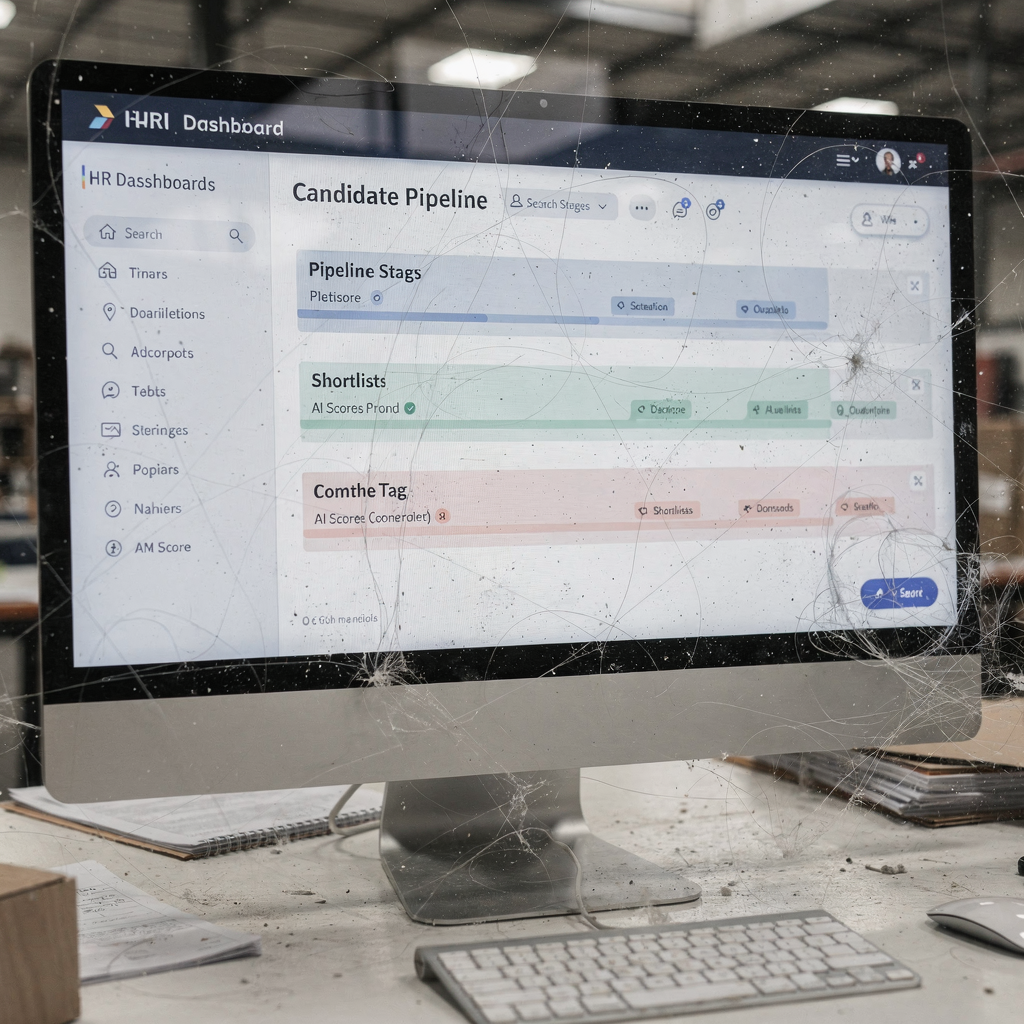
Before full rollout, pilot the integration on one team so you can validate data flows and refine automation rules. Prioritise vendors that let you configure workflow approvals and that provide visibility into every automated match. Finally, make sure your recruiting analytics track both speed and the quality of hires so you can demonstrate ROI to hiring managers and to talent acquisition leaders.
Drowning in emails?
Here’s your way out
Save hours every day as AI Agents label and draft emails directly in Outlook or Gmail, giving your team more time to focus on high-value work.
ai recruiter and ai assistant free the recruiting team to focus on outreach and candidate experience
AI recruiter and AI assistant tools handle repetitive outreach, schedule interviews, and surface candidate insights for human recruiters. They draft personalised outreach messages, manage followup sequences, and operate at scale so recruiters can do high-value work. For example, LinkedIn data shows that AI-assisted messaging increases the likelihood of securing higher-quality candidates by about 9% The Future of Recruiting 2025. Use that uplift to prioritise outreach to passive candidates and to expand outbound sourcing.
AI assistants can manage calendar availability, send reminders, and reduce no-shows. They also capture candidate responses and update the tracking system in real-time. This reduces the time recruiters spend on triage emails and on manual scheduling, and it improves the candidate experience. A better candidate experience helps you hire better and to keep top talent engaged. To keep messages authentic, use templates but require human review for tone and for sensitive roles.
When you implement an AI-powered recruiting assistant, track metrics such as response rate, interview show-up rate, and candidate satisfaction. Then, compare those metrics to historic baselines. Also, keep an eye on the quality of matches that result from AI outreach. Use a feedback loop so recruiters can flag messages that need to change, and so the assistant can learn faster. Our company focuses on automating the full email lifecycle for ops teams, and similar patterns apply to recruitment emails; see how email automation increases consistency and reduces manual lookup in operations for ideas on streamlining candidate emails automated logistics correspondence.
AI recruiters and assistants do not replace human judgement. They augment it. Recruiters still lead hiring decisions and they still assess culture fit. However, AI frees them to spend more time on candidate engagement, on interviewing, and on the strategic sourcing that finds the best candidates. Also, use AI dashboards to surface candidate profiles with highlighted skill gaps, so hiring teams can prepare targeted interview guides and improve the screening process.
ai interviewer and ai agents standardise skills assessment and speed recruitment decisions
An AI interviewer automates structured assessments, transcribes responses, and scores answers against predetermined rubrics. AI agents can run coding tests, role-play scenarios, or behavioural questions, and they can flag skill gaps so teams decide faster. Standardised assessments reduce variability between interviewers, and they help lower unconscious bias when you use clear rubrics. For validation, compare assessment scores to on-the-job performance before you rely on them for hiring decisions. A practitioner quote captures the balance: “AI in recruiting allows human recruiters to spend more time on candidate engagement and less on manual screening, which ultimately leads to better hiring decisions” The Ultimate Guide to AI for Recruitment Agencies (2025).
AI interviewers also generate structured candidate profiles and searchable transcripts so hiring managers and interview panels can review the same information. That reduces repetitive note-taking and improves handoffs. Use the AI-driven scoring to highlight where candidates excel and where coaching or training might be required. Also, combine automated interviews with a human-led touchpoint to assess cultural fit.
When integrating AI agents for interviews, validate the tools on a representative sample of hires. Track how well the scores predict performance, and refine the assessment criteria accordingly. Also, keep an audit log for each automated decision so you can explain why a candidate advanced. This supports compliance and builds trust with HR leaders. If you manage large interview volumes, consider pairing AI interviewers with an applicant tracking system that records each stage, and with CRM features for ongoing candidate nurture. For teams still handling many inbound messages tied to candidate logistics, operational email automation approaches offer lessons on reducing handling time while keeping traceability; for comparisons of automation versus manual outsourcing see our ROI and ops scaling resources virtualworkforce.ai ROI and operations.
Drowning in emails?
Here’s your way out
Save hours every day as AI Agents label and draft emails directly in Outlook or Gmail, giving your team more time to focus on high-value work.
ai-driven recruiting ai recruiting platform plus crm integration automate hiring workflows and workflow steps for talent acquisition
An AI recruiting platform that connects to CRM and ATS systems can automate hiring workflows end-to-end. That includes talent sourcing, nurture sequences, interview scheduling, offer workflows, and candidate onboarding communications. When wrapped into a single system, these features reduce handoffs and keep approvals visible. Integration streamlines the flow from candidate sourcing to offer and reduces time spent on routine tasks. Organisations that integrate CRM, ATS and AI report better funnel conversion and faster stage movement. In practice, you should map existing hiring workflows before you automate them so no approval or compliance step is missed.
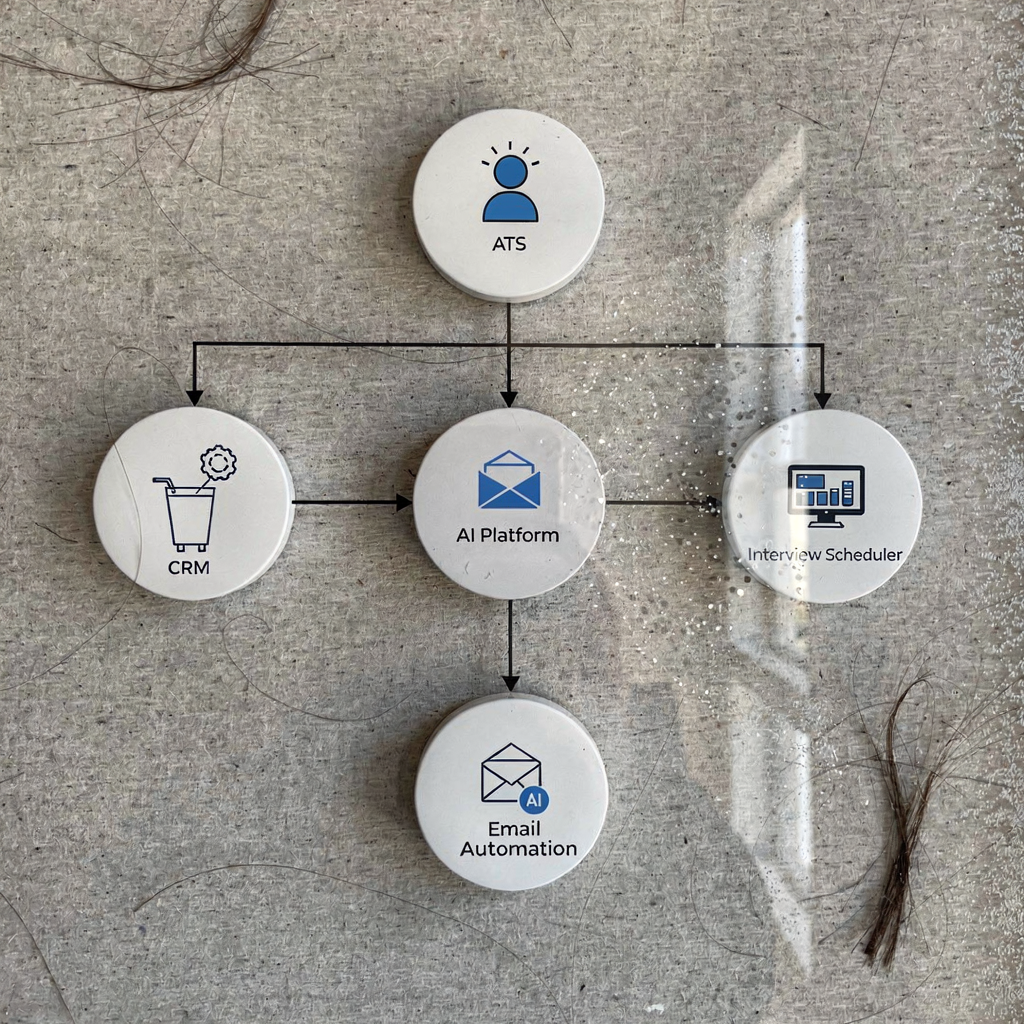
Start small with a pilot that automates one set of steps, such as outbound sourcing and first-round scheduling. Define who approves what and when, and then set automation rules accordingly. Use real-time notifications to keep hiring managers informed, and let recruiters override automations easily when needed. Carefully test data flows and deduplication between the ATS and CRM so candidate profiles remain clean. Also, ensure that the platform can push structured candidate information back into downstream systems. That reduces manual data entry and improves reporting.
AI-powered sourcing and automation reduce cycle time so teams can hire faster without sacrificing quality. To validate results, track time-to-hire, cost-per-hire, and source quality. Additionally, keep human oversight at key decision points and maintain an audit trail for AI actions. For organisations operating large shared inboxes and heavy email traffic, our virtualworkforce.ai agents demonstrate how end-to-end automation can reduce handling time and improve consistency, which applies to candidate and vendor communications alike — see our resources on automating logistics emails with Google Workspace for practical setup tips automate logistics emails with Google Workspace and virtualworkforce.ai.
ai recruiting and ai-driven analytics reduce time-to-hire and help hire quality candidates across the recruitment pipeline
AI recruiting combined with predictive analytics gives talent teams visibility into bottlenecks, and it helps them optimise the candidate pipeline. Dashboards show conversion at each stage, and they surface where candidates stall. With these insights, you can prioritise actions to improve hiring outcomes. The adoption of AI in talent acquisition rose sharply through 2024–25, and most talent teams now use AI daily or weekly to speed tasks and to improve sourcing AI in Talent Acquisition 2025. Also, businesses increasingly view AI as productivity-enhancing across operations and recruiting Forbes on AI trends.
To benefit, define a small set of KPIs such as time-to-hire, source quality, interview-to-offer ratio, and candidate satisfaction. Then use AI analytics to attribute hires to sources and to spot where recruiting spend delivers return. Keep an eye on data gaps and on potential bias in models, and maintain audit logs for decisions made by AI so you can explain and adjust outcomes. Use a mix of automated alerts and manual reviews so no single signal drives a hiring decision.
AI is changing how teams source candidates, and it improves the consistency of candidate matching when paired with clear evaluation rubrics. For high-volume hiring, AI-powered sourcing can populate a large candidate pipeline and then triage it for recruiter review. To ensure quality, validate automated matches against actual performance, and then refine the ai recruitment platform rules. Use generative AI carefully for communication, and prefer grounded, data-driven replies for offer and onboarding emails. Also, protect candidate data and follow privacy best practices. Finally, combine AI outputs with recruiter judgement, and you will improve hiring speed and long-term fit.
FAQ
What is AI recruitment software and how does it help hiring?
AI recruitment software uses artificial intelligence to automate tasks like candidate sourcing, resume parsing, and outreach. It speeds the hiring process and helps recruiters focus on interviews and strategy while reducing administrative effort.
Can AI really reduce time-to-hire?
Yes. Studies show AI screening can reduce early-stage review time and overall time-to-hire, with average improvements reported around 18% and larger gains in high-volume hiring roles research source. Results vary by workflow and implementation.
How do AI recruiters and AI assistants improve outreach?
AI assistants automate personalised outreach, schedule interviews, and manage followup sequences so recruiters can engage candidates more effectively. LinkedIn data shows AI-assisted messaging can increase the chance of hiring quality candidates LinkedIn report.
Are AI interviewers reliable for skills assessment?
AI interviewers standardise assessments and score responses against predefined rubrics, which improves consistency. However, you should validate those assessments against job performance and keep human oversight for final hiring decisions.
How important is ATS and CRM integration with AI platforms?
Very important. Integration between the applicant tracking system and AI recruiting platforms reduces manual data entry and keeps the candidate pipeline clean. Organisations that use such integrations report better large-scale hiring efficiency SmartRecruiters.
Can AI help reduce unconscious bias in recruitment?
AI can reduce some forms of bias when it enforces standardised evaluation criteria, and when teams audit models for disparate impact. Still, human oversight remains essential to catch subtle or systemic issues.
How do I measure the ROI of AI in recruitment?
Track time-to-hire, cost-per-hire, source quality, and interview-to-offer ratios. Also, measure candidate satisfaction and retention to ensure faster hire translates into quality hires.
Is generative AI safe to use for candidate communications?
Generative AI can draft messages and speed communications, but you should ground messages in facts and data. Use human review for tone and for messages involving offers or sensitive details.
What are best practices for rolling out AI recruiting tools?
Pilot on one team, map hiring workflows, and define automation rules and approvals. Test integrations with ATS and CRM and keep audit logs for automated decisions. Start small and scale once you validate results.
How does virtualworkforce.ai relate to recruitment automation?
virtualworkforce.ai automates the lifecycle of operational emails, and many of the same principles apply to recruitment emails and to candidate logistics. For teams that handle large volumes of candidate or operations emails, our approaches reduce handling time and increase consistency; see our guide on automating logistics correspondence for practical insights automated logistics correspondence.
Drowning in emails?
Here’s your way out
Save hours every day as AI Agents label and draft emails directly in Outlook or Gmail, giving your team more time to focus on high-value work.