


AI: state of adoption in schools (2024–25)
By 2025 many studies show rapid adoption of AI across classrooms and campuses. For example, a 2024 poll reported that about 68% of students and 72% of teachers used AI tools regularly, and district surveys in early 2025 report institutional integration in a majority of schools. First, school leaders should understand scale: teacher use of AI rose steeply within two years, while student access expanded through both school and home channels. Second, the effects appear concrete. Schools that integrate AI into routine tasks report that automated grading and admin support reduced teacher workload by up to 30%. Third, daily teacher use of AI reached roughly 47% in some samples and student use exceeded 90% in high-adoption regions, showing strong diffusion across K-12 and higher education.
AI is now part of planning for learning management and for classroom schedules. Districts track student data to manage interventions and to design personalized learning paths. As educators and education leaders plan, they face key decisions about procurement, governance, and staff development. For instance, schools and universities must decide whether to integrate AI into core platforms or to adopt point solutions that support specific learning activities. At the same time, teacher use of AI often focuses on content curation, quick formative checks, and instant feedback for homework. This trend shows how AI systems can streamline administrative load while also supporting individual learning.
However, scale brings risk. Policymakers and teachers and administrators now ask for clearer ai use policy and for audits of ai to confirm fairness and privacy. Stakeholders cite concerns about opaque decision-making, consent for student data, and how to maintain student agency. Therefore districts are drafting policies and piloting small deployments to test impacts. For a practical example of operational automation in another sector, see how virtualworkforce.ai uses AI agents to automate email workflows, which offers parallels for school operations and parental communications (how to scale logistics operations with AI agents).
To help schools move from intention to action, the next chapters describe how AI agent technology personalizes instruction, cuts teacher workload, and what governance steps will protect learners while transforming learning at scale.
How ai agents in education and ai agent tools personalise learning
An AI agent is autonomous software that interacts, adapts, and gives feedback. Classroom AI agent designs differ from generic chatbots because they align to pedagogy, track progress, and adapt learning paths across time. In practice, an AI tutor or an ai agent used in a learning management system diagnoses misconceptions, paces content, and offers scaffolding tailored to a student’s learning style. These capabilities produce personalized learning experiences for varied learners. For example, adaptive learning engines linked to course content deliver practice targeted by skill gaps and produce measurable gains in learning outcomes. Research shows adaptive tutoring systems often lift performance by mid‑teens percentage points on standardized measures (research on AI impact).
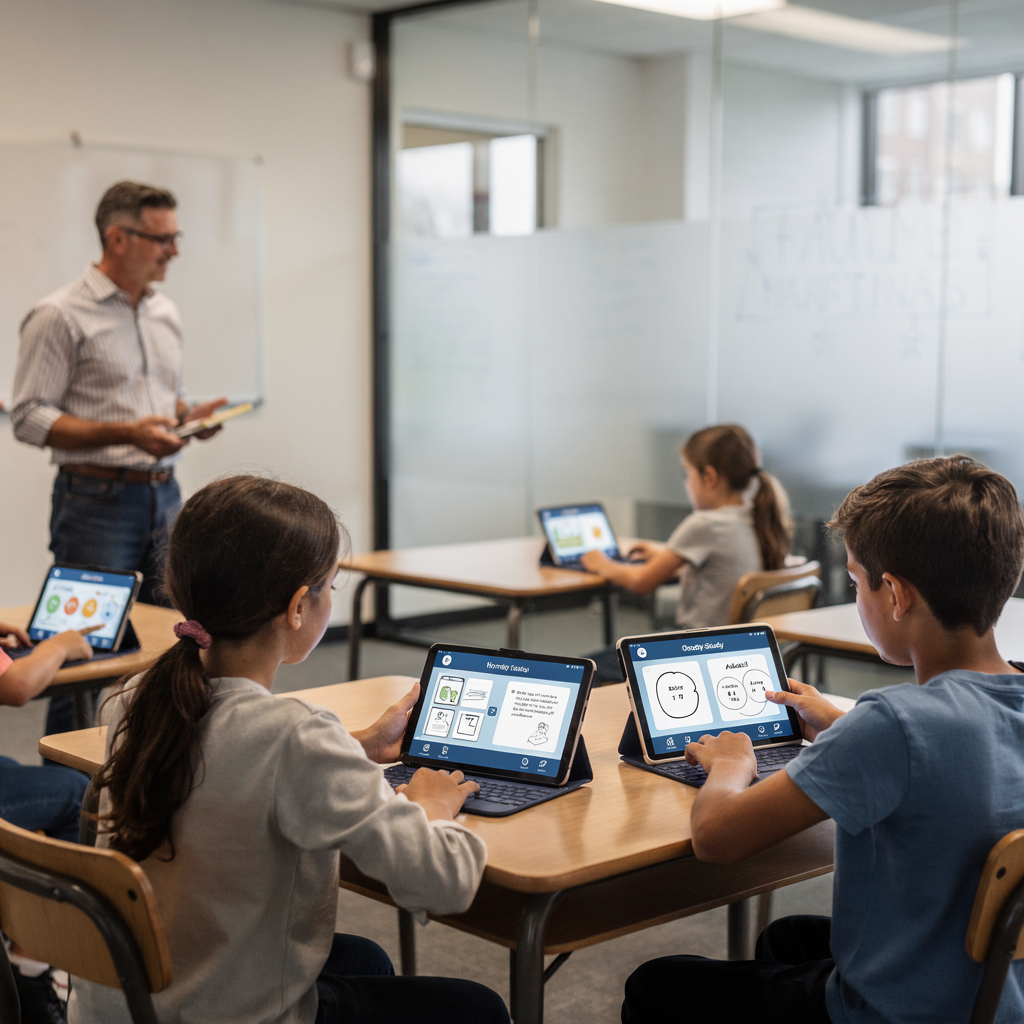
Classroom versions of AI agent tools connect to assessments and to daily learning activities. They differ from simple question‑answer chatbots like chatgpt because they maintain structured student models, recommend next steps, and generate personalized learning paths that respect curricular goals. An ai agent integrates diagnostics, a feedback engine, and content alignment so each learner receives sequences that fit ability and interests. In one pilot, an ai tutor identified common misconceptions in algebra, then created targeted practice items. Students who followed the recommended exercises improved their subsequent quiz scores and reported higher confidence.
Importantly, these systems must respect student data and privacy. Integration of ai agents requires clear data plans and consent processes so that student records remain protected. Schools also need teacher training so staff can interpret recommendations and decide when to override automated suggestions. Educational ai that supports teachers acts as a learning companion rather than as a substitute, and AI assistants should actively collaborate with teachers to design lessons. For a quote that captures the educator perspective, “AI tools have transformed how we approach differentiated instruction, enabling us to meet each student where they are without overwhelming our resources” (Stanford HAI).
To deploy safely, schools should run pilots with defined metrics and measure both cognitive gains and engagement. Lessons learned from digital learning initiatives show that success depends on alignment to standards, teacher coaching, and on tools that support diverse learning styles and lifelong learning. These steps make adaptive learning systems practical and useful in everyday classrooms.
Drowning in emails?
Here’s your way out
Save hours every day as AI Agents label and draft emails directly in Outlook or Gmail, giving your team more time to focus on high-value work.
Use case: AI agents for education that cut teacher workload and boost outcomes
One clear use case shows how AI agents can free teachers to focus on small‑group instruction. In several pilots, AI‑driven grading and feedback reduced teacher time spent on marking. Specifically, when schools used AI to automate routine grading and to create formative quizzes, teachers reported up to a third less time on marking and planning tasks (APA report). At the same time, student outcomes improved thanks to more targeted revision and faster feedback. Teachers and administrators saw higher completion rates for formative tasks and better alignment between learning activities and standards.
Concrete functions include automated marking for objective items, draft feedback for essays that teachers moderate, and AI‑generated personalized revision plans. AI can also automate attendance follow‑ups and streamline administrative notes for parents. These automation features reduce friction in daily routines. For example, an AI agent that drafts messages to caregivers or to other staff can reduce time lost to email triage; operations teams in other sectors show large gains when they adopt email automation tools, which offers a model for school office automation (automated logistics correspondence).
A short case sketch: a middle school pilot used an AI agent to generate formative quizzes after lessons. The ai agent analysed student responses, flagged common errors, and created targeted practice packets. Teachers used the saved time to run focused interventions for struggling learners. The pilot reported measurable gains in exam scores and higher student confidence. A similar approach applied to English classes used an AI tutor to suggest sentence-level revisions, then asked the teacher to review edits before final grading. This human‑in‑the‑loop process ensured quality control and preserved assessment integrity.
Human oversight remains essential. Teachers must review high‑stakes grading. Pastoral care, behavioural issues, and social‑emotional learning need human judgment. Schools should set clear rules for when AI can auto‑grade and when human moderation must occur. For planning and procurement, education leaders should look for vendors offering transparent model documentation and the ability to perform audits of ai. Finally, pilot metrics should include teacher workload, student progress, and equity indicators so schools can scale with confidence.
From traditional AI to educational AI: technology and deployment
Traditional AI used rule‑based systems that followed fixed decision trees. Educational AI now uses adaptive models, LLMs, and data‑driven recommenders that learn from interaction. This shift changes how schools architect systems. Modern ai systems combine diagnostic modules, curricular mapping, and content generation engines. They can power tailored learning paths that respect curriculum standards, while maintaining logs for review. When schools integrate ai they must consider inputs such as assessment scores, engagement logs, and teacher annotations. These inputs feed models that recommend next lessons, scaffold tasks, or prompt interventions.
Key technical essentials include secure data storage, integration with learning management and information systems, and model transparency. Schools should prefer vendors that publish model descriptions and that support third‑party audits of bias. Procurement teams must weigh tradeoffs between on‑premise data controls and cloud speed. For many districts, starting with a small pilot on a single grade or subject reduces risk and clarifies infrastructure needs. A checklist for pilots should include a defined learning goal, measurable metrics, a data plan that specifies student data retention, teacher training modules, and a clear timeline for evaluation.
Vendor selection matters. Schools should ask whether a vendor can integrate AI into their LMS, whether the vendor supports data export, and whether the vendor will share model evaluation metrics. Vendors that offer granular control over student records and consent options reduce legal risk. Schools should also confirm the vendor’s capability to perform audits of ai and to support staff as they adapt to new workflows. For an operational example outside education that shows rigorous integration and governance, consider how virtualworkforce.ai grounds replies in enterprise systems and keeps full context for audits (virtual assistant logistics).
Finally, technical teams must plan for scale: security reviews, bandwidth for online learning, and long‑term model monitoring. With these foundations, educational deployments can move from one‑off pilots to district‑wide adoption while preserving safety and educational integrity.
Drowning in emails?
Here’s your way out
Save hours every day as AI Agents label and draft emails directly in Outlook or Gmail, giving your team more time to focus on high-value work.
Applications of AI agents and practical steps for schools to adopt safely
Core applications of AI agents span personalized tutoring, admin automation, content generation, formative assessment, and accessibility supports. In classrooms, AI agents act as learning companions that deliver just‑in‑time hints and scaffold complex tasks. In offices, AI assistants streamline parental messaging and manage scheduling. Schools should evaluate each application against benefits and risks. For instance, AI that supports accessibility can convert text to speech and adapt interfaces for diverse learning styles; these features improve inclusion and provide support to students with special needs.
Safe adoption requires policies and controls. Data privacy rules must align with regional laws such as GDPR or FERPA, and schools should implement data minimisation, secure storage, and clear consent workflows. Districts should draft an ai use policy that specifies permitted applications, retention periods for student data, and human‑in‑the‑loop requirements for assessment. Bias mitigation steps include running bias audits, using diverse training datasets, and involving parents and staff in periodic reviews. Schools should also demand vendor transparency and the right to conduct audits of ai models.
An implementation roadmap starts with a tightly scoped pilot, clear KPIs, and teacher training. Measure learning outcomes, teacher workload, and student engagement. Then evaluate equity impacts and accessibility. Scale only after demonstrating consistent benefits and establishing governance. Practical steps include a data protection impact assessment, staff professional development that builds ai literacy, and a communication plan for families. For teams managing heavy communications, email automation examples from industry show that streamlining inbox workflows can free staff time for direct student support (how to improve logistics customer service with AI)—a concept transferable to school administrative tasks.
Finally, set rules for content generation. Use human review for curriculum materials and for any high‑stakes feedback. For teaching and learning, keep humans in control of grading judgments and of social‑emotional interventions. With these safeguards, schools can leverage ai to enhance education while protecting learners and staff.

Future of AI: ethical safeguards, policy and next steps for classrooms
The future of AI in schools depends on ethics, transparency, and on robust governance. Surveys show roughly 45% of educators worry about opaque decision‑making in AI systems (promises and risks of AI). Key ethical challenges include algorithmic bias, consent for student data, and the risk that students may rely too much on assistants instead of developing independent judgment. To address these concerns, education leaders must require model explainability, demand audits of ai, and set rules that keep teachers central to assessment decisions. Policymakers are already moving: several districts and national bodies publish guidance on responsible AI use and data protection, and federal reports outline steps for equitable deployment (U.S. Department of Education).
Forward actions for schools include mandating AI literacy for staff and pupils, embedding continuous evaluation, funding secure infrastructure, and clarifying human‑in‑the‑loop rules. Education leaders should require vendors to document model training data and to support audits of ai. District governance structures must assign clear roles for oversight, and teachers and administrators should get training that covers both practical use and ethical safeguards. The advent of ai agents in classrooms will be more acceptable when stakeholders see transparent reporting and when families understand how student data will be used.
For leaders planning next steps, start with small pilots that include diverse student groups and clear KPIs. Evaluate whether tools enhance learning and whether they improve teacher capacity to empower teachers and to provide learning support. Pair deployments with professional development and with channels for parent feedback. In doing so, schools can reduce risk while fostering innovation. The future of ai in education will look strongest when systems enhance learning, support to students, and when they strengthen human relationships in classrooms. Thoughtful ai implementation can transform teaching and keep human judgment at the heart of learning and teaching.
FAQ
What is an AI agent and how does it differ from a chatbot?
An AI agent is autonomous software that can interact, adapt, and give feedback over time, often maintaining a model of learner progress. Unlike a basic chatbot, an AI agent aligns to pedagogy, tracks learning paths, and can generate tailored formative tasks.
How widely are AI tools used by students and teachers?
Use has risen rapidly: a 2024 poll found about 68% of students and 72% of teachers used AI regularly, and later 2025 surveys show most schools report some institutional integration. Adoption varies by region and by resource access.
Can AI reduce teacher workloads?
Yes. In studied deployments, automated grading and administrative AI features reduced teacher workload by up to 30%. However, human oversight remains necessary for high‑stakes assessment and pastoral care.
Are AI agents safe for student privacy?
They can be, if schools enforce protections such as data minimisation, secure storage, consent, and third‑party audits. Districts should adopt an ai use policy and require vendors to document data practices.
What is a good first pilot for schools?
Start with a narrowly scoped pilot like formative assessments or an ai tutor for one grade and measure clear KPIs. Include a data plan, teacher training, and a timeline for evaluation before scaling.
Will AI replace teachers?
No. AI is best used to augment teachers by automating routine tasks and by supporting personalized learning paths. Teachers remain central for judgement, social‑emotional learning, and for designing instruction.
How should schools handle bias in AI?
Run audits of ai, insist on diverse training data, and involve staff and parents in review panels. Vendors should allow external evaluation and explain their mitigation steps.
Can small schools afford AI systems?
Yes, if they start with targeted tools and cloud services, and if they plan for teacher time and professional development. Grants and pooled procurement across schools can reduce costs.
What skills do teachers need for AI adoption?
Teachers need AI literacy to interpret recommendations, to validate feedback, and to design human‑centric interventions. Ongoing professional development helps teachers actively collaborate with teachers and to integrate tools into daily practice.
Where can I learn more about operational automation that informs school practice?
Examples from operations show how automation improves workflows. For instance, virtualworkforce.ai documents end‑to‑end email automation that reduces handling time and improves consistency; this model can inspire school office automation strategies (virtualworkforce.ai ROI).
Drowning in emails?
Here’s your way out
Save hours every day as AI Agents label and draft emails directly in Outlook or Gmail, giving your team more time to focus on high-value work.