


How automotive suppliers use AI to automate email marketing and improve workflow
Automotive suppliers face heavy volumes of inbound email every day. Also, teams must sort urgent parts orders, technical queries and logistics updates. AI helps by classifying each message by intent and urgency, and by routing it to the right person or system. For example, suppliers report up to ~30% administrative time saved after deploying AI assistants; this improves responsiveness across the supply chain MarkLines Automotive Industry Portal – Services overview. Therefore, AI reduces repetitive triage and frees staff for higher-value work.
In practice, an AI agent tags emails, links them to customer records and pulls data from ERP or CRM so replies are accurate. This level of grounding matters because operations teams must resolve order inquiries with precise part numbers, shipment ETAs and warranty terms. Also, routing rules and tag-based workflows ensure that the correct team handles escalation. To support ERP integration and email-to-system updates, teams can follow implementation patterns from ERP email automation guides such as those for logistics-focused deployments (ERP email automation for logistics).
Response times fall sharply when AI drafts replies and schedules followups automatically. Industry surveys show response-time improvements in the 40–50% range after introducing AI assistants, boosting partner satisfaction and reducing delays Vehicle Owners’ Experiences with Advanced …. Teams that use AI also gain better thread-aware memory for long email exchanges, which prevents repeated requests for the same data. In short, automation and automated drafting shorten cycles and increase consistency.
To adopt these tools, a supplier should map key use cases first: triage, contextual drafting, scheduled service reminders and followup. Next, connect the assistant to CRM and ERP systems, design tag taxonomies and define escalation rules. Finally, pilot on a single shared inbox and measure handling time, reply accuracy and the number of resolved inquiries without human touch. This phased approach keeps risk low while delivering quick wins in the operational email workflow.
Automation and analytics: optimise email campaigns, targeted email and predictive reminders for dealerships
Analytics and automation combine to make email campaigns smarter for dealerships and suppliers. First, AI-driven segmentation separates customers by vehicle model, last service date and purchase behaviour. Then, targeted email content and timing align with each segment’s needs. As a result, open rates and conversion rates improve versus untargeted mailings. In some case studies, predictive reminders raised service bookings by about 20–25%, a clear lift for service lanes and parts departments.
Automotive marketing teams can link CRM records to analytics models that predict when a vehicle will need service. Predictive timing means reminders arrive just before a customer expects maintenance. Consequently, service appointments are easier to book and follow-up messages can be automated. For a practical implementation, teams often combine marketing automation with operations-grade email drafting so that each automated email remains accurate and grounded in service history.
Key performance indicators to track include open rate, click-through, conversion to booking or sale, and reduced manual handling time per message. To measure these, use cohort analysis and A/B tests. Also, integrate weekly dashboards to monitor campaign health and operational load. If you want an example of how to automate logistics and email drafting for operational teams, see the logistics email drafting guides (logistics email drafting AI).
Analytics also help optimise subject lines, send windows and follow-up cadence. The assistant can test variations automatically and learn which timing and wording produce the best responses. This approach reduces wasted sends and increases customer engagement. Finally, ensure consent and opt-in records are checked before sending. That protects compliance and maintains trust across the automotive sector.
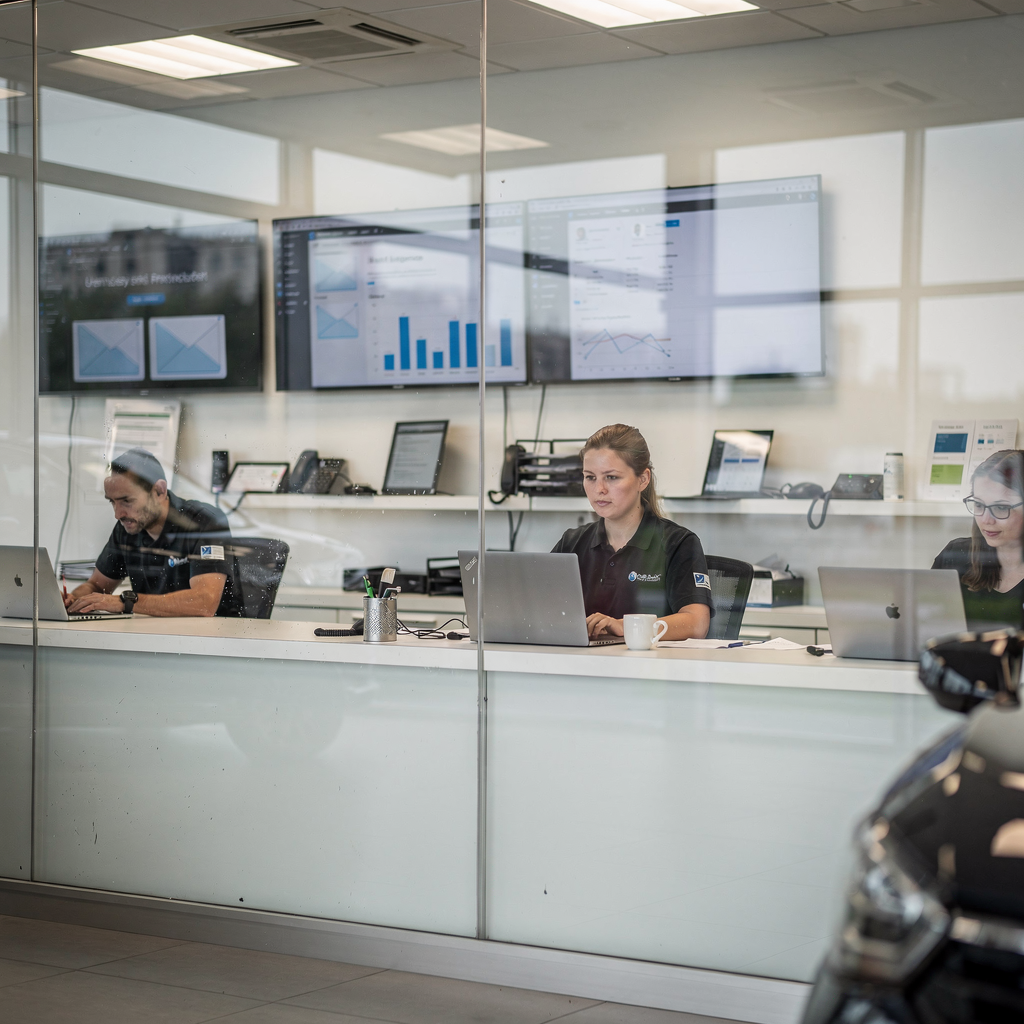
Drowning in emails?
Here’s your way out
Save hours every day as AI Agents label and draft emails directly in Outlook or Gmail, giving your team more time to focus on high-value work.
Personalise customer experience: benefits of AI for automotive sales, service reminders and customer engagement
Personalisation increases relevance, and AI helps personalise at scale for automotive sales and service. By analysing past purchases, service history and communication preference, AI creates personalised email content that fits each customer’s lifecycle. For example, personalised subject lines and dynamic service reminders raise engagement and improve conversion for service bookings and accessory sales. Measured customer satisfaction often improves by around 20–30% where personalisation is applied in support and marketing channels Artificial intelligence in customer relationship management.
To personalise correctly, systems must connect to CRM so the assistant can read vehicle and owner history. Then, the AI selects tone and content based on customer value and previous responses. This keeps messages helpful and not intrusive. When a customer receives an automated email that references their exact service date and recommended parts, they respond more readily. The assistant can also suggest cross-sell items, tailored offers and time slots for service appointments.
Practically, teams should use modular email templates that the AI fills with contextual data. A simple email template for a service reminder can include vehicle make, last service date and a suggested booking slot. Below the service reminder, a short personalised offer can appear for common replacement parts. That mix increases conversion without adding manual work.
AI also helps maintain stronger customer relationships by keeping records of every interaction in the CRM. This avoids repeating the same questions across channels and speeds up resolution. For supplier and dealership teams that need to maintain consistent tone and accuracy, an end-to-end email assistant that integrates with CRM is essential. For logistics-aligned email automation patterns, consider the virtualworkforce.ai guides on how to scale operations without hiring (how to scale logistics operations with AI agents).
Seamlessly integrate AI agent workflows to automate service reminders across the automotive industry and automotive retail
AI agent workflows can trigger service reminders, book appointments and send follow-up confirmations across channels. First, a trigger might be mileage thresholds, warranty expiry or a scheduled recall. Then, the AI agent composes a personalized message, checks calendar availability and offers booking options. This process is seamless when calendar sync and service history access are in place, and when consent is recorded for market communications.
Integration checklist items include calendar sync, access to service history in CRM or ERP, consent and opt-in management, fallback human handover and audit logs for traceability. Also, thread-aware memory helps the agent understand long-running inquiries and prevents repeated information requests. For operators, these controls reduce errors and support compliance with data-protection rules.
Risk controls matter. Keep an audit trail of each automated message and record customer consent. Also, define clear escalation paths so that complex technical inquiries route to a human technician. This hybrid approach keeps response quality high and allows the AI to handle routine followup while humans handle exceptions.
Dealerships and suppliers that adopt these workflows often see faster booking cycles and higher showroom or workshop utilisation. For a real-world frame of reference, virtualworkforce.ai offers an example of full lifecycle email automation for operations teams where the agent resolves or routes email with ERP-grounded answers. That system reduces handling time per email substantially and improves response consistency across the automotive retail and aftermarket channels.
Drowning in emails?
Here’s your way out
Save hours every day as AI Agents label and draft emails directly in Outlook or Gmail, giving your team more time to focus on high-value work.
Measuring ROI and analytics: how automotive companies use AI to optimise marketing campaigns and email marketing campaigns
Measuring ROI begins with a baseline. Record current open rates, response times, conversion to service appointments and manual handling hours per message. Then run a pilot that splits traffic between the AI-driven workflow and the legacy approach. Use A/B testing and cohort analysis to attribute additional bookings and parts sales to each campaign variation.
Automotive companies often measure short-term gains such as a drop in response time and increased booking rate. For example, organisations using AI email tools report measurable increases in campaign efficiency and customer retention. In procurement and supplier communication, growth projections for AI in procurement support continued investment; the market is forecast to expand rapidly through 2028 AI in Procurement: Exploring its Growing Impact – Coupa. Therefore, track campaign conversion rates and cost per booking to calculate payback period and ROI.
Use weekly operational dashboards and monthly ROI reviews to maintain momentum. Also, schedule quarterly strategic audits to validate that customer data remains accurate and consent records are current. Practical KPIs include open rate, click-through rate, conversion to service appointment, reduction in manual handling time and changes in customer retention. Analytics should also help you analyse which subject lines, send windows and followup sequences work best.
Finally, make sure reporting links back to your CRM and accounting systems so revenue impacts are visible. That closed-loop measurement shows how email marketing, automated email workflow and AI support the sales funnel, the service lane and aftermarket parts revenue. For teams interested in logistics email automation patterns that tie operational ROI to service outcomes, review the virtualworkforce.ai ROI examples for logistics (virtualworkforce.ai ROI logistics).
Frequently asked questions
How does AI handle customer data and GDPR compliance?
AI systems must be configured to respect consent and data minimisation rules from the start. Also, keep audit logs and allow customers to opt out easily; this supports GDPR and other regional laws. Ensure that your vendor can demonstrate data access controls and deletion workflows when required.
What is the typical deployment timeline for an AI email assistant?
Deployment usually follows proof of concept, pilot and scale phases and can take 6–12 weeks for a focused pilot. After a successful pilot, scaling across shared inboxes and integrating with CRM and ERP may take several months depending on system complexity. Ongoing tuning and staff training continue after launch.
Can AI automate both marketing and operational emails?
Yes, AI can automate marketing email campaigns and operational correspondence such as order confirmations and service reminders. However, maintain separate rules for promotional sends and transactional emails to ensure compliance and appropriate tone. The assistant should route complex inquiries to humans.
How do I measure ROI for an AI email assistant?
Start with baseline metrics for response time, booking conversion and manual handling hours. Then run A/B tests and track attributable bookings, parts sales and time savings to compute ROI. Regular dashboards and quarterly audits help sustain measurable gains.
What integrations are essential for successful automation?
Key integrations include CRM, ERP, calendar systems and document stores such as SharePoint. These connections let the AI ground replies in operational data and push structured results back into systems. Integration also enables seamless appointment booking and inventory checks.
How are follow-up emails and reminders managed?
The AI schedules and sends follow-up emails automatically based on triggers like mileage, warranty dates or service windows. It also records consent and offers opt-out links. If a customer requests more detail, the assistant can escalate the inquiry to the appropriate human.
What are common pitfalls to avoid during rollout?
Poor data quality, missing consent records and lack of an escalation path are common issues. Also, avoid sending automated messages without testing subject lines and timing; run A/B tests to reduce errors. Plan staff training so teams trust the assistant.
Can small dealerships benefit from this technology?
Yes, small dealerships can benefit immediately through saved administrative time and improved booking rates. Even modest automation can increase workshop utilisation and free staff for sales and customer support activities. Choose a phased pilot to show results quickly.
Do AI agents replace human staff?
AI agents are designed to handle routine, data-dependent messages and reduce repetitive work, not to replace humans. They free staff to focus on complex customer relationships and high-value tasks. A controlled human handover ensures quality and trust.
Where can I learn more about operational email automation patterns?
Technical guides and case studies on ERP-linked email automation and logistics drafting show practical patterns for operations. For example, explore resources on ERP email automation for logistics and logistics email drafting to see how ground-truth data can be used to compose accurate replies and maintain traceability (ERP email automation for logistics, logistics email drafting AI).
Drowning in emails?
Here’s your way out
Save hours every day as AI Agents label and draft emails directly in Outlook or Gmail, giving your team more time to focus on high-value work.