


ai and hospitality: why an email assistant matters
AI has moved from experiment to everyday tool in the hospitality sector. It helps hotels and small to medium properties handle repetitive messages, and it helps staff focus on guest service. Transactional emails in hospitality have an average unique open rate of 47.1%, which highlights where timely info matters most. This Cvent stat shows that messages with booking details reach guests more reliably than many marketing messages.
An email assistant can automate confirmations, pre‑arrival information, and followups so teams save time. It can also draft error‑free replies and route complex issues to reservation teams. Staff see reduced inbox load and gain time to create memorable guest moments. virtualworkforce.ai provides AI agents that automate the full email lifecycle for ops teams, and it shows how an AI solution reduces handling time from about 4.5 minutes to 1.5 minutes per message. This kind of result helps hotels manage workload and save time.
Measured gains appear in speed, consistency, and guest satisfaction. Hotels using AI-driven agents report faster reply times and fewer mistakes. The assistant can tag messages, attach context, and present the correct guest record to the sender so human agents resolve exceptions quickly. This smooths hotel operations and helps hotels keep responses on-brand.
Staff need clear SLAs and simple rules, and they must test templates so the sender sees the right tone. Use email automation for routine flows and reserve human time for nuance. That approach reduces shared inbox confusion, increases clarity, and moves teams closer to inbox zero. For more on how to scale email-driven workflows without adding headcount, see a practical operations example on virtualworkforce.ai that explains how email becomes a structured operational workflow: how to scale operations without hiring.
automation and ai email: what to automate and what to personalise
Deciding what to automate and what to personalise is a core operational choice for any hotelier. Automate booking confirmations, modification notices, cancellation receipts, pre-arrival checklists, and post‑stay surveys. Automating these items frees staff time and cuts human error. An AI email assistant can label intent and then either resolve the message or route it to the right human. This reduces triage work and speeds outcomes.
Personalise upsell offers, room upgrades, and local recommendations based on guest profile and previous stays. Use profile data from PMS and CRM so offers match guest preferences. If a guest has dined at the hotel before, present a restaurant incentive. If they have stayed in a suite previously, offer a targeted upgrade. Those personal touches help increase direct bookings when the message arrives at the right moment.
Track KPI guidance closely. Monitor open rates, click‑throughs on offers, time‑to‑first‑reply, conversion to direct booking, and email performance. Use analytics to test templates and to refine subject lines. The AI engine should retain context across a thread and use a knowledge base to ground replies. That reduces the need for repeated lookups and prevents inconsistent answers.
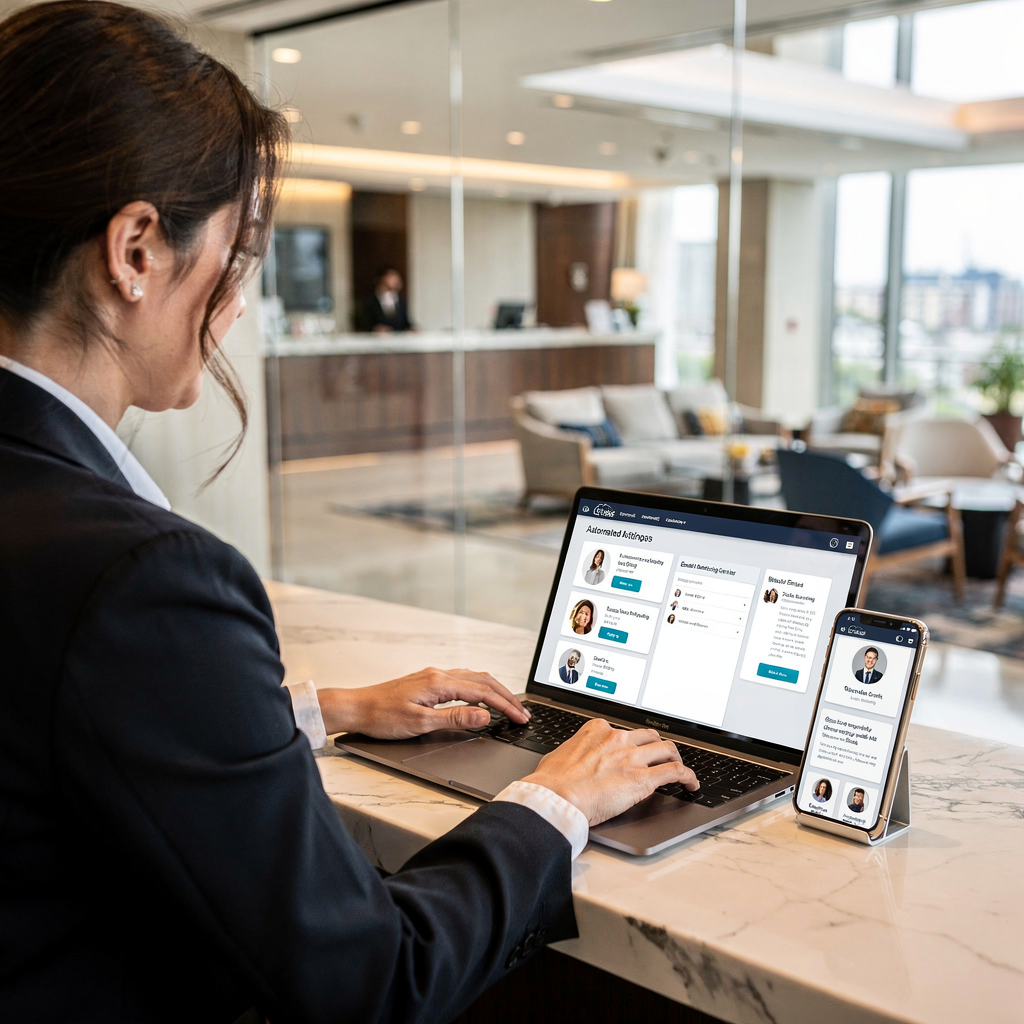
Integrate with PMS, booking engine, and CRM so real‑time data informs each message. When a modification occurs, an automated notice should update the guest immediately and log the change in reservation teams’ records. A smooth integration makes sure the guest sees accurate details and the hotel keeps control of the booking funnel.
Drowning in emails?
Here’s your way out
Save hours every day as AI Agents label and draft emails directly in Outlook or Gmail, giving your team more time to focus on high-value work.
email automation, email marketing and newsletter: turn transactional opens into direct bookings
Transactional emails already earn high engagement. Use that attention to invite direct booking with subtle, personalised offers. Include a loyalty prompt, a limited-time upgrade, or a bundled experience link in confirmations and pre-arrival messages. The aim is to move guests from OTA pages to the hotel’s direct channel without aggressive selling.
Keep newsletter frequency low and segment by guest behaviour. Send newsletters that matter to the recipient. Use an email list that targets only guests who opted in. Design campaigns that drive conversions, and place a clear CTA to book direct. Track direct booking uplift, unsubscribe rate, revenue per email, and ancillary spend from email offers to measure success.
Combine email marketing and transactional flows so every transactional message can carry a tested upsell. A single confirmation can include a short, contextual offer to upgrade a room or add breakfast. That small tactic can improve direct booking rates over time. If you want examples of tools that streamline message drafting and routing, see how operations teams use automated logistics correspondence in related workflows at virtualworkforce.ai: automated logistics correspondence.
Make sure the email platform preserves brand voice in every message. Use templates that read human and that adapt to guest data. Keep CTAs prominent and simple. And measure email open rates and conversion. If you pair strong analytics with AI features like sentiment detection and context retention, you can turn high transactional opens into bookings without raising unsubscribe rates. For more on tools designed to integrate email and operations, check a comparative resource about AI solutions for freight and logistics communications, which shares lessons applicable to hotel workflows: AI for freight forwarder communication.
integration, crm, hubspot and api: connect the ai email assistant to reservation teams
Integration is the backbone of reliable guest communication. Sync PMS, booking engine, and CRM so emails reflect real‑time reservation status and guest data. A two‑way API connection means that when a guest changes a booking, the assistant updates the record automatically. That prevents duplicate work for reservation teams and reduces disputes.
HubSpot can act as a marketing CRM and workflow engine for guest messaging. Use HubSpot to trigger email flows, capture replies, and log outcomes. Use workflows to push a guest through pre‑arrival steps and to escalate exceptions to front desk staff. When HubSpot holds the campaign state, reservation teams gain visibility into followup tasks and revenue opportunities.
Open APIs allow two‑way updates so the assistant can auto‑reply or escalate when needed. That integration lets the AI agent read booking notes in real‑time and use them to craft accurate messages. A tight link between systems reduces manual lookup and saves time. Teams can automate email drafting and then review only where escalation rules apply.
virtualworkforce.ai focuses on end‑to‑end email automation for ops teams and can integrate ERP, PMS, and other systems to provide a unified platform of truth. That approach creates structured data from emails and pushes it back into operational systems. If your hotel wants to integrate with existing systems and preserve governance, evaluate an AI solution that supports zero-code setup and business-level configuration. Also, make sure your integration plan includes data privacy checks and clear handover rules for exceptions, because those steps protect guest data and streamline hotel operations.
Drowning in emails?
Here’s your way out
Save hours every day as AI Agents label and draft emails directly in Outlook or Gmail, giving your team more time to focus on high-value work.
ai agents, ai models, best ai and ai features: practical use cases for the hotelier
AI agents offer a mix of speed and accuracy. Use AI agents for 24/7 email support, automated upsell journeys, review solicitation, group booking handling, and loyalty retention. These use cases reduce repetitive work and increase conversion where the guest is most likely to act. Hotels using AI agents often report measurable improvements in direct booking rates and faster handling of routine requests. For proof points, see research on how AI drives direct bookings in practice: how hotels use AI agents to increase direct bookings.
Choose AI features carefully. Look for natural language reply, sentiment detection, context retention across threads, multilingual support, and clear handover rules. The system should also include a knowledge base and templates so the sender receives a consistent answer. A well‑designed ai chatbot or ai-powered reply flow decreases human errors in long email threads and keeps the guest experience moving forward.
When evaluating best ai options, test practical scenarios. Confirm the platform can read booking engine data and update booking status. Verify it records every interaction in CRM and that it supports audit trails. Also assess how it handles edge cases like group booking amendments and last‑minute cancellations. The system should escalate only when human input adds value. That keeps teams focused on high impact work.
Use generative AI and reliable ai models for drafting, but ground replies in operational data. That balance reduces hallucinations and secures trust. For an operations-oriented implementation that values accuracy as much as language finesse, consider solutions that automate the full email lifecycle and create structured outputs, because those systems deliver traceability and faster resolution across every channel.
reply, email support, best practices and frequently asked questions for the hospitality business
Set clear escalation rules and test templates before rollout. Define SLAs for AI replies versus human reply so guests know what to expect. Preserve brand tone and log all interactions in CRM. That helps reservation teams track unresolved issues and to follow up. Use knowledge base articles to improve the assistant’s accuracy and to speed training.
Best practices include monitoring KPIs weekly, testing personalisation rules, and keeping templates concise and human. Enable multilingual support and fallback to human agents for ambiguous cases. Also ensure data privacy and consent are handled correctly. Those steps protect guests and keep error rates low.
Before you launch, answer frequently asked questions about API compatibility, multilingual capability, fallback processes, and measurable ROI. Establish what counts as a successful followup and which message types should always go to a human. Check your email service provider settings, test sender domains, and verify you can reach every guest email address you store. This avoids bounced messages and keeps email performance healthy.
Document every decision and include training materials for staff. Train the AI on past threads and on templates that represent your tone. If you want to explore similar automation for logistics and operations emails, virtualworkforce.ai offers case studies that show how AI drafts and routes messages using real operational data: how to improve operations communication with AI. Finally, plan for iterative improvement. Start small, measure outcomes, and expand flows that drive revenue and reduce workload. That approach helps hotels increase direct bookings while keeping teams focused on guest experience and operational excellence.
FAQ
What is an AI email assistant and how does it help hotels?
An AI email assistant is an automated system that reads and responds to messages, and that routes complex cases to humans. It reduces manual triage, speeds replies, and helps hotels maintain consistent guest communication across every channel.
Which emails should I automate first?
Begin with transactional flows such as confirmations, modification notices, and cancellation receipts. Those messages are frequent and predictable, so automating them quickly reduces inbox volume and saves time.
Can automation handle personalised upsells and offers?
Yes, automation can personalise offers by using guest data from PMS and CRM. That approach increases conversion while keeping messages timely and relevant.
How do I measure success after implementing an email assistant?
Track open rates, click-throughs, time‑to‑first‑reply, conversion to direct booking, and revenue per email. Also monitor unsubscribe rates and qualitative guest feedback to measure customer experience.
Do AI agents reduce the need for staff?
AI agents reduce manual workload and free staff for higher value work, but they do not replace roles that require human judgment. They let teams scale without adding headcount while improving consistency.
How does integration with PMS and CRM work?
Integration uses APIs to sync booking status, guest preferences, and reservation notes. That real‑time data ensures messages reflect accurate booking information and that reservation teams can follow up when needed.
What about data privacy and consent?
You must secure guest consent and follow local regulations such as data retention rules. Include privacy checks in your integration plan and document consent handling so guest data remains protected.
How do I handle multilingual guest communication?
Choose an assistant with multilingual support and test translations before full rollout. Always include a fallback to human agents for nuanced or sensitive conversations.
Will automating email affect my email marketing and newsletter strategy?
Automation complements email marketing by using transactional opens to promote direct booking offers. Keep newsletters targeted and low in frequency to avoid fatigue.
How long does it take to see ROI from an AI email assistant?
Many teams see measurable gains within weeks for handling time and response speed. For revenue metrics like increase direct bookings, expect to measure changes over months as offers and templates iterate.
Drowning in emails?
Here’s your way out
Save hours every day as AI Agents label and draft emails directly in Outlook or Gmail, giving your team more time to focus on high-value work.