


Why AI (ai) is changing mining (mining) and the mining industry (mining industry): a concise business case for digital transformation (digital transformation) and AI-driven (ai-driven) change
Mining supply chains are complex and slow. Email is one of the richest, underused data sources in these chains. For many mining organisations, inbound messages carry purchase orders, delivery RTTs, shipment updates and commercial terms. For that reason, organisations must treat email as structured input, not noise. Early adopters report strong efficiency improvements. For example, companies that add email mining and AI assistants can cut manual processing time by roughly 30% (Achilles). Research also shows a 25% lift in risk detection accuracy when text mining is applied to communication data (ScienceDirect). These figures matter for procurement teams, who often chase late confirmations and missing invoices. They also matter for health and safety, because faster alerts reduce exposure to on-site risks.
Digital transformation starts with practical wins. First, reduce manual copy-paste across ERP systems and email threads. Second, improve auditability by creating an audit trail for every exception and invoice. virtualworkforce.ai solves these specific problems by grounding replies in ERP/TMS/TOS/WMS sources, then logging actions centrally. The platform turns long threads into a single source of truth and improves team productivity by shortening handling time from about 4.5 minutes to 1.5 minutes per email.
Security and governance must lead the design. Email often carries sensitive information and PII. Organisations must enforce data privacy and comply with GDPR and ISO standards. Use role-based access, redaction and audit logs, and ensure any AI solution supports enterprise grade controls. Finally, operators should prioritise low-risk pilots that show immediate ROI and create confidence in the technology.
What an AI agent (ai agent) and assistant (assistant) do in email flows — how an AI assistant (ai assistant), ai-powered (ai-powered) chatbot (chatbot) handles common tasks
An AI agent applied to email acts like an expert clerk. It reads message headers and body text, recognises intents, and extracts fields such as PO numbers, shipment ETAs and invoice amounts. Then it suggests or sends auto-replies, updates ERP records, and flags exceptions for human review. The assistant helps reduce manual entry and avoid repeated context searches across multiple systems. In practice, a virtual assistant can auto-draft supplier replies and propose escalation steps when a shipment is late.
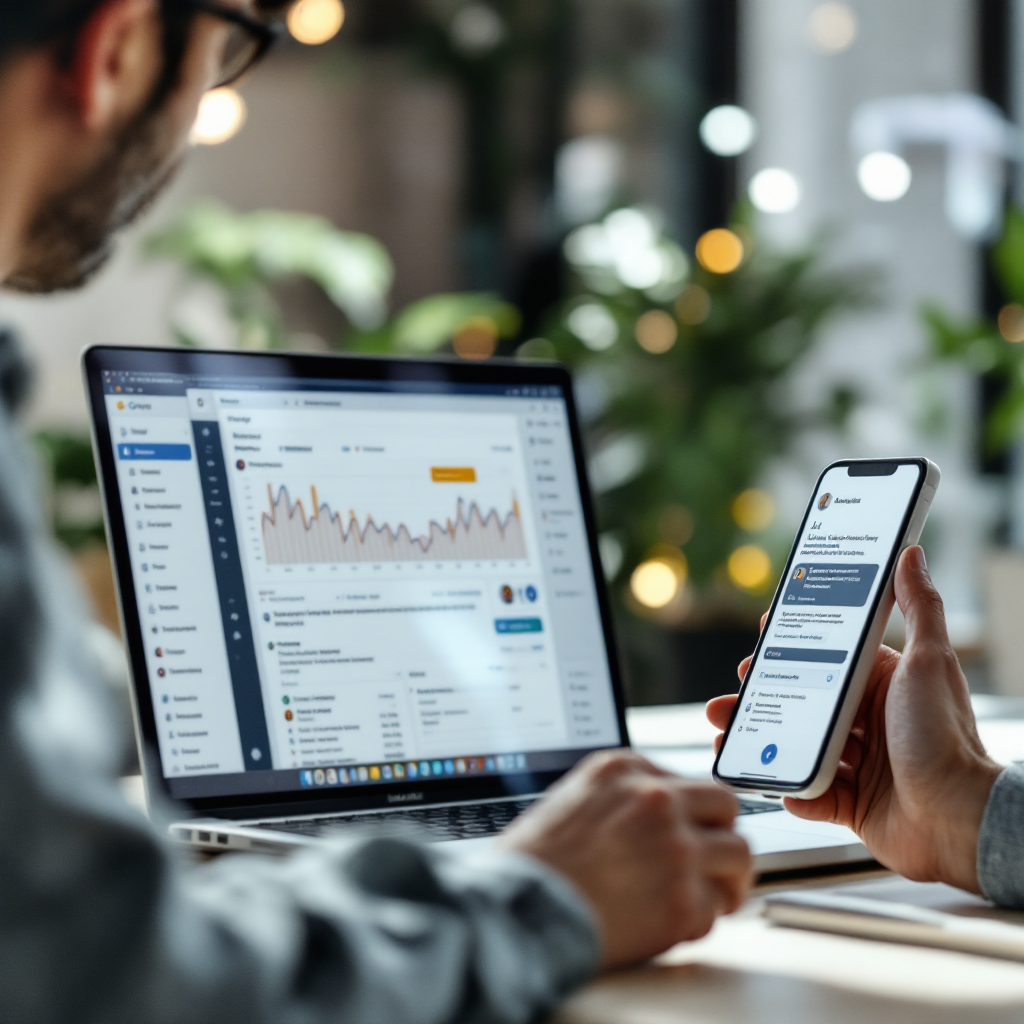
Core capabilities include natural language understanding, entity extraction, intent detection and thread-aware context. The AI-powered assistant can tag messages, produce structured outputs for ERP systems, and generate an audit trail for compliance. Teams see fewer human entry errors and faster responses. For example, procurement staff report that an assistant helps them handle more supplier messages per hour. The assistant also supports multilingual replies for global B2B suppliers and can draft emails that match SOP tone and legal constraints.
Design choices matter. Use a human like conversational tone when appropriate, but restrict automated actions for high-risk messages. The assistant helps with routine RFQs, invoice queries and shipment confirmations, and it can simulate a human reply for review. It decreases time spent on repetitive tasks and increases team productivity.
Drowning in emails?
Here’s your way out
Save hours every day as AI Agents label and draft emails directly in Outlook or Gmail, giving your team more time to focus on high-value work.
Use cases (use cases) and workflow (workflow) patterns to automate (automate) email management (email management) and boost automation (automation)
Start with clear, repeatable use cases. Common areas in mining operations include procurement, inventory management, maintenance notifications and customs correspondence. A typical flow is: receive an email, classify it, extract key fields, update ERP or CMMS, then trigger a follow-up or escalation. That workflow reduces hand-offs and creates a verifiable audit trail for every exception.
Quick wins come from inbox triage and template-based replies. For instance, auto-replies can confirm receipt of an RFQ, ask for missing documentation, or acknowledge a late shipment. These auto-replies improve supplier responsiveness and reduce the number of unanswered messages in shared inboxes. For purchase-to-pay, an automation that extracts PO numbers and matches them to invoices cuts reconciliation time and reduces duplicate payments.
Concrete use cases include: automated acknowledgement for shipment ETA changes, invoice match and exception creation, proactive supplier alerts, and maintenance part re-ordering via email triggers. Each automation can update ERP systems and produce compliance documentation. To scale, design a single source of truth for email content and meta-data, and connect it to erp systems. Acceptance rules should be simple at first, then refined using email analytics. This approach yields faster cycle times and fewer manual interventions.
To learn more about ready-made templates for logistics and email drafting, review our guide on logistics email drafting and automated correspondence, which explains how an AI assistant integrates email automation into existing operations Logistics email drafting and Automated logistics correspondence.
How to integrate (integrate) and deploy (deploy) — integrating ai email assistant (integrating ai email assistant) with microsoft copilot studio (microsoft copilot studio) and gpt on azure (gpt on azure)
Technical integration begins with secure mailbox access. Use Microsoft 365 or Exchange connectors and configure least-privilege API keys. For language intelligence, enterprise teams can use Azure-hosted models such as GPT, or other advanced AI models, while recording prompts and outputs for governance. Microsoft Copilot Studio offers a visual design layer for agents and supports integration with Exchange, SharePoint and downstream ERP systems. This path reduces custom code and speeds deployment.
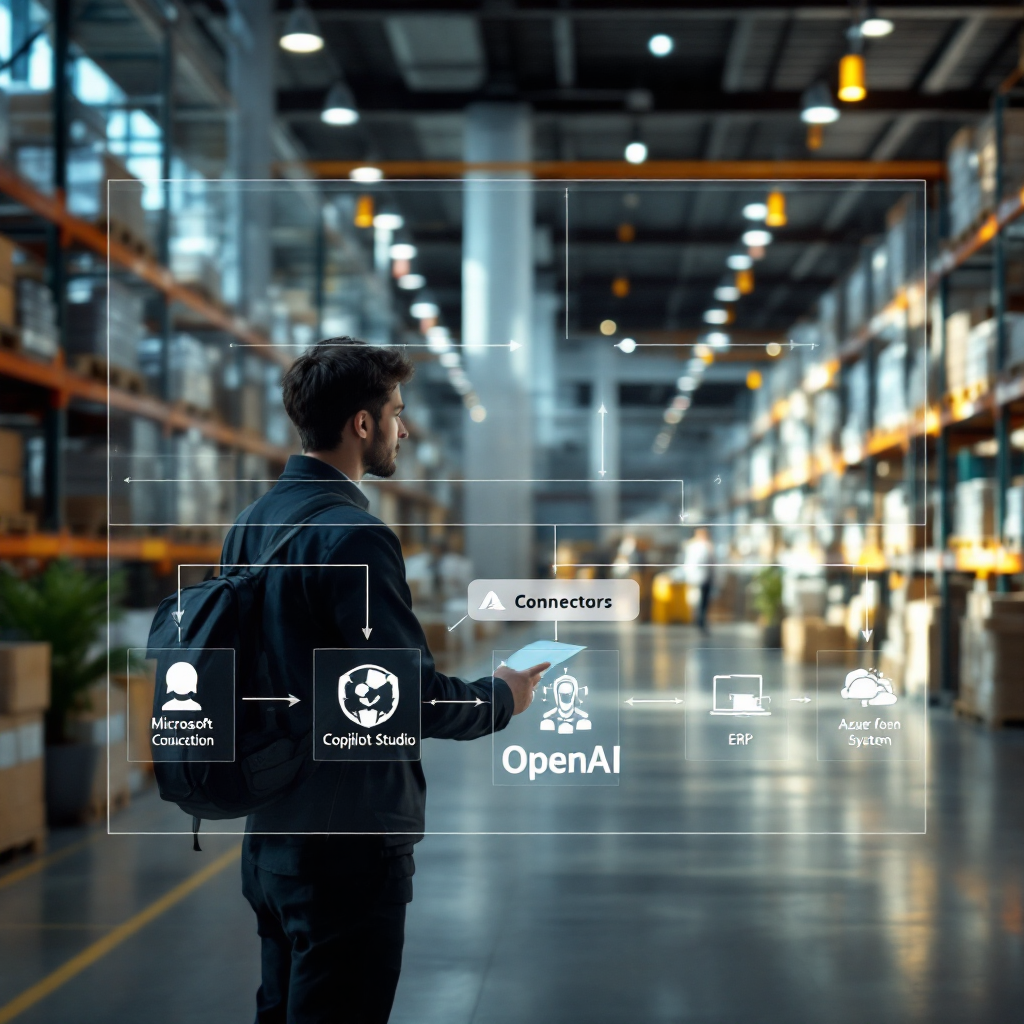
Design principles: keep sensitive data on-prem when needed, enforce data residency, and use redaction for PII. Implement role-based controls and audit logging to meet GDPR and ISO requirements. For practical deployment, follow a phased approach: pilot, expand, then standardise. Pilot with a small supplier set and a single mailbox, then scale to shared inboxes and multi-site operations.
Integration options include direct connectors to common ERPs or lightweight middleware that maps extracted fields into ERP or CRM endpoints. The integration should support update transactions back to the system of record and preserve an audit trail for compliance. For those focused on logistics, our virtual assistant for logistics page explains how an assistant integrates email with operational systems and cuts handling time Virtual assistant logistics. If you use Google Workspace, see our article on automating logistics emails with Google Workspace and virtualworkforce.ai for connector patterns Automate logistics emails with Google Workspace.
Drowning in emails?
Here’s your way out
Save hours every day as AI Agents label and draft emails directly in Outlook or Gmail, giving your team more time to focus on high-value work.
Streamline the inbox (inbox) with email analytics (email analytics) to identify the best ai email (best ai email) patterns and streamline (streamline) response
Analytics turn email traffic into operational KPIs. Start by tracking average reply time, SLA breaches and supplier responsiveness. Then add counts of automated versus manual replies and rates of correct extraction. Those metrics show where to apply additional automation. For example, email analytics can reveal which suppliers require multilingual support and which send frequent non-standard attachments.
Use dashboards to detect patterns. For instance, monitor the share of emails that contain PO numbers, the frequency of invoice disputes, and the proportion of messages requiring escalation. Apply filters to spot persistent issues with a shipping line or customs delays. This visibility supports risk management and helps mining companies prioritise interventions.
Continuous improvement is simple. Use analytics to refine templates, prompt engineering and escalation thresholds. Track precision and recall for entity extraction, then retrain models or tweak rules. A/B test alternate templates to improve user experience and supplier engagements. Also, keep the analytics feed connected to a single source of truth so updates in ERP or TMS reduce false alerts.
For teams wanting to scale operationally, our guide on how to scale logistics operations without hiring explains ways to measure and improve team productivity and to keep inboxes tidy as volumes grow How to scale logistics operations without hiring. Start small, measure often, then broaden the set of automated flows.
Measuring ROI (roi) and publishing real results (real results): productivity, downtime reduction and audit-ready trails from an ai email assistant (ai email assistant)
Build a clear pilot with measurable KPIs. Track hours saved, mean time to respond, downtime avoided and error rates. Use the research benchmarks when estimating impact. For example, studies indicate up to a 30% reduction in manual data processing time and a roughly 25% improvement in risk detection when text mining is applied to emails (Achilles) (ScienceDirect). Another case study shows improved customer satisfaction and transparency by over 20% when communication mining is used (WKU). Use those numbers to build conservative projections and to set a short pilot ROI target.
90-day pilot checklist: – Scope a single mailbox and up to five suppliers. – Secure data access: Exchange or Gmail API, SharePoint and ERP connectors. – Define success metrics: hours saved, SLA reduction, accuracy of extraction. – Create escalation and SOP rules for exceptions. – Run weekly reviews of email analytics and update templates. – Handover plan to operations with training and governance documentation.
Quantify results after 90 days. Typical wins include faster invoice matching, fewer late shipment surprises, and an audit trail suitable for compliance documentation. Teams often report handling time falling from about 4.5 minutes to roughly 1.5 minutes per email, which supports faster procurement cycles and lower cost per ticket. That 1.5 minute figure demonstrates how an ai-powered email assistant can boost productivity and reduce downtime in complex mining contexts.
Finally, document processes so that ERPs and communication tools remain synchronized. Use a gradual rollout to larger inboxes and more suppliers. For more on ROI in logistics contexts, see our ROI page written for operations teams virtualworkforce.ai ROI for logistics. When you publish real results, include the audit trail and compliance evidence to satisfy legal, ISO and ESG review.
FAQ
What is an AI email assistant for mining supply chains?
An AI email assistant is an automated tool that reads and acts on emails. It extracts key data, drafts replies and updates backend systems to reduce manual work.
How does email mining improve procurement?
Email mining automates extraction of PO numbers and delivery dates. That speeds reconciliation and helps procurement teams respond faster to suppliers.
Is data privacy a big concern with email assistants?
Yes. Email often contains sensitive information and PII. Organisations must enforce data privacy, use redaction, and comply with GDPR and ISO standards.
What technical stack is needed to deploy an assistant?
Typical stacks include Microsoft 365 for mail, Copilot Studio for agent design, Azure OpenAI for language models and connectors to ERP systems. Secure connectors and audit logs are essential.
Can an assistant handle multilingual emails?
Yes. Advanced AI models support multilingual parsing and replies. That helps B2B suppliers across different regions and reduces turnaround times.
How quickly can teams see ROI?
Pilots often show measurable gains within 90 days. Use a small supplier set and track hours saved, SLA breaches and extraction accuracy.
Will the assistant create an audit trail?
Yes. Properly configured assistants log actions and store citations to source systems. This supports compliance documentation and internal audits.
Can the assistant integrate with our ERP?
Yes. The assistant can integrate with ERP or CRM endpoints, and it can update records automatically when confident. Middleware may be used for mapping fields.
What use cases work best first?
Start with invoice matching, shipment confirmations and RFQ acknowledgements. These are repetitive and have clear ROI.
How does analytics improve the assistant over time?
Email analytics reveal patterns and underperforming templates. Use that insight to refine prompts, rules and escalation thresholds, which improves accuracy and efficiency.
Drowning in emails?
Here’s your way out
Save hours every day as AI Agents label and draft emails directly in Outlook or Gmail, giving your team more time to focus on high-value work.