


Why private equity and venture capital need an assistant to streamline inbox and deal flow
Private markets move fast. Teams miss opportunities when email slows them down. Investment teams in VC and private equity face high volumes of incoming messages. On average, operations staff see more than 100 inbound emails per employee per day, which drives time spent on email triage and manual lookup. For firms using AI, adoption is rising: reports show over 70% of firms are testing or deploying AI tools to manage communication and data across industries. For venture capital and private equity the practical impact is clear. Firms using automation report a 30–40% reduction in time spent on emails and scheduling in trials with generative AI. That can translate to roughly ~500 hours saved per adviser per year in some case studies. First, slow inbox workflows delay responses to LPs, advisors and portfolio companies. Next, they hamper deal sourcing and initial screening. A missed reply can lose an investment opportunity. As a result, firms must make a clear business case to explore an assistant for private equity firms and venture capital teams now.
Why choose an assistant? Short answer: to free people for high-value work. The assistant reduces time spent on manual processes and improves speed in outreach and follow-up. Second, faster reply times improve relationship management. Third, a structured inbox aids due diligence and recordkeeping. For example, a small VC firm that deployed a virtual assistant saw response times halve for inbound founder emails. That improved early-stage deal sourcing and the quality of conversations. Finally, the trend is backed by capital: venture investment in generative AI exceeds $1.7 billion over recent years, which supports dedicated solutions for inbox automation for investment use.
Quick takeaway: the case for an AI email assistant is measurable. Start by benchmarking time on email and calendar tasks. Then test a virtual assistant in one deal team. If you want a logistics-focused example of how AI automates email lifecycles, read the ERP email automation case studies at virtualworkforce.ai ERP email automation. This provides a model for private equity teams that need to focus on building relationships and faster deal flow.
What a virtual assistant for private equity teams does: email management, scheduling and portfolio management
A virtual assistant handles repetitive email workflows. It prioritises the inbox, drafts context-aware replies, extracts deal metadata, schedules meetings and surfaces portfolio updates. For private equity teams the list of tasks is clear. First, it performs email triage. Next, it tags messages for diligence, fundraising, investor relations or operational issues. Then it drafts replies grounded in firm research and authorised data. Harvard research highlights that generative systems trained on capital markets data improve contextual accuracy when grounded in firm sources. That reduces error rates.
Examples make this concrete. One mid-market private equity team used a virtual assistant to triage LP queries and schedule quarterly calls. The assistant created structured data from inbound emails and pushed it back into the CRM. As a result, partners spent more time on deal sourcing and less on calendar management. Another example: a VC firm used a virtual assistant to monitor portfolio companies for KPI changes. The assistant flagged revenue dips and sent summaries to the investment team. This allowed quicker decisions on follow-on investment or operational intervention.

Security and contextual accuracy matter. Assistants trained on authorised datasets reduce mistakes. FINRA-style guidance emphasises approved data use and supervision for AI in securities work for regulated firms. In practice, the assistant for private equity teams is configured to respect role-based access, redact confidential fields and follow archival rules. That keeps data safe while the assistant automates document lookups and basic data entry tasks. Finally, virtual assistant services can be combined with managed virtual agents to cover both inbox automation and calendar and email workflows. This helps professionals in private equity free up your time and concentrate on investment decisions and relationship building.
Drowning in emails?
Here’s your way out
Save hours every day as AI Agents label and draft emails directly in Outlook or Gmail, giving your team more time to focus on high-value work.
How AI tools and virtual executive assistants integrate with CRM and email platform in the investment firms tech stack
Integration is essential. An AI assistant sits between the inbox, CRM and management systems. Typical patterns include two-way CRM sync, connectors to common email platforms and calendar automation. For instance, a connector updates contact records when an advisor replies. Another writes meeting outcomes back into a deal-tracking record. This creates one platform of truth. Integration reduces duplicate data entry and supports cleaner due diligence records. Consider using a tested connector such as virtualworkforce.ai’s approach to syncing email and ERP records; it shows how operational email can be pushed into structured systems automated logistics correspondence.
Practical notes matter. First, map your tech stack and identify authoritative sources: CRM, document management, fund accounting and deal pipeline. Second, set governance rules for which source wins when conflicts appear. Third, automate calendar and email updates so that internal and external participants see the same status. A clear example: a VC firm integrated calendar and email updates with their CRM so that founder replies created a task for follow-up and updated the opportunity stage. That improved tracking for deal sourcing and investment decisions.
Risks exist. If integration grants excessive access, sensitive data can leak. Mitigations include access controls, audit logs and retention policies. For regulated firms, implement FINRA-style supervision and recordkeeping. Also, train staff on what the tool can and cannot access. Use a phased rollout so the assistant has narrow permissions initially. Tools built for operations — like virtualworkforce.ai — show how zero-code setup and IT-managed connectors can limit risk while enabling automation. For more on how to scale operations without hiring, see an example implementation at virtualworkforce.ai scale operations.
Measuring ROI: how to delegate tasks, boost productivity and quantify time saved for vc and private equity firms
ROI is straightforward to measure. Start with a baseline. Track time spent on inbox, scheduling and administrative tasks. Use a simple formula. Multiply hours saved by the average hourly cost of senior staff. Then compare that saving to the cost of the solution. Conservative and optimistic scenarios help. Conservatively, assume a 10% time reduction. Optimistically, use 30–40% based on industry trials that show large reductions in email handling time with generative AI. For example, if a partner spends 8 hours weekly on emails and meetings, a 30% reduction frees 2.4 hours. At a senior rate, that quickly offsets subscription or implementation fees.
Include non-monetary gains. Faster responses improve deal flow and LP relationships. Better preparation increases the quality of meetings. An assistant reduces repetitive data entry and speeds investor relations reporting. Use metrics such as time-to-response, number of automated tasks and reduction in overhead costs. A measurable KPI: decrease in time spent on manual processes and administrative tasks. Another KPI: number of tasks the assistant completes per week without escalation.
Provide scenarios. Scenario A (conservative): a small VC firm achieves 10% time saved and a three‑month payback on the tool. Scenario B (optimistic): a mid-market private equity team saves 30–40% and recoups costs within weeks. Include hidden savings: lower need for hiring a full-time coordinator and fewer travel and expense management errors. When building a business case, factor in improved deal sourcing rates. Faster outreach boosts the chance of winning competitive investment opportunities. Finally, use vendor metrics. For example, virtualworkforce.ai shows typical handling time falling from ~4.5 minutes to ~1.5 minutes per email in operational settings, which can translate to significant annual savings for busy teams.
Drowning in emails?
Here’s your way out
Save hours every day as AI Agents label and draft emails directly in Outlook or Gmail, giving your team more time to focus on high-value work.
Best practices and governance for vas: data authorisation, GDPR, FINRA and secure deployment for private equity and venture capital
Governance must come first. Start with a Data Protection Impact Assessment and establish clear rules for authorised datasets. For EU firms, GDPR requires lawful basis, data minimisation and DPIAs for automated processing. For US-registered advisers, look to FINRA-style guidance on supervision and recordkeeping for AI use. Define retention rules, audit trails and incident response procedures. In practice, role-based access and encryption are a must. Also include periodic compliance audits and model performance reviews.
Operational controls help. First, limit model inputs to approved research and firm data. Second, require human approval for sensitive replies and outbound fundraising outreach. Third, train staff on what to input and how to use templates. A practical rule: set escalation paths for any automated email the assistant drafts that mentions material non-public information. That preserves supervision and reduces legal risk.
Technical safeguards include access controls, immutable audit logs and versioning for templates. Use strong encryption for email storage and transit. Also, implement retention rules that mirror your fund and custodian records. For help with secure deployment in operational contexts, see case examples of email lifecycle automation in logistics and operations at virtualworkforce.ai secure operational examples. Finally, document best practices and governance in a playbook. This should cover onboarding, approval workflows and periodic testing. Such diligence keeps the assistant useful and compliant for professionals in private equity and VC.
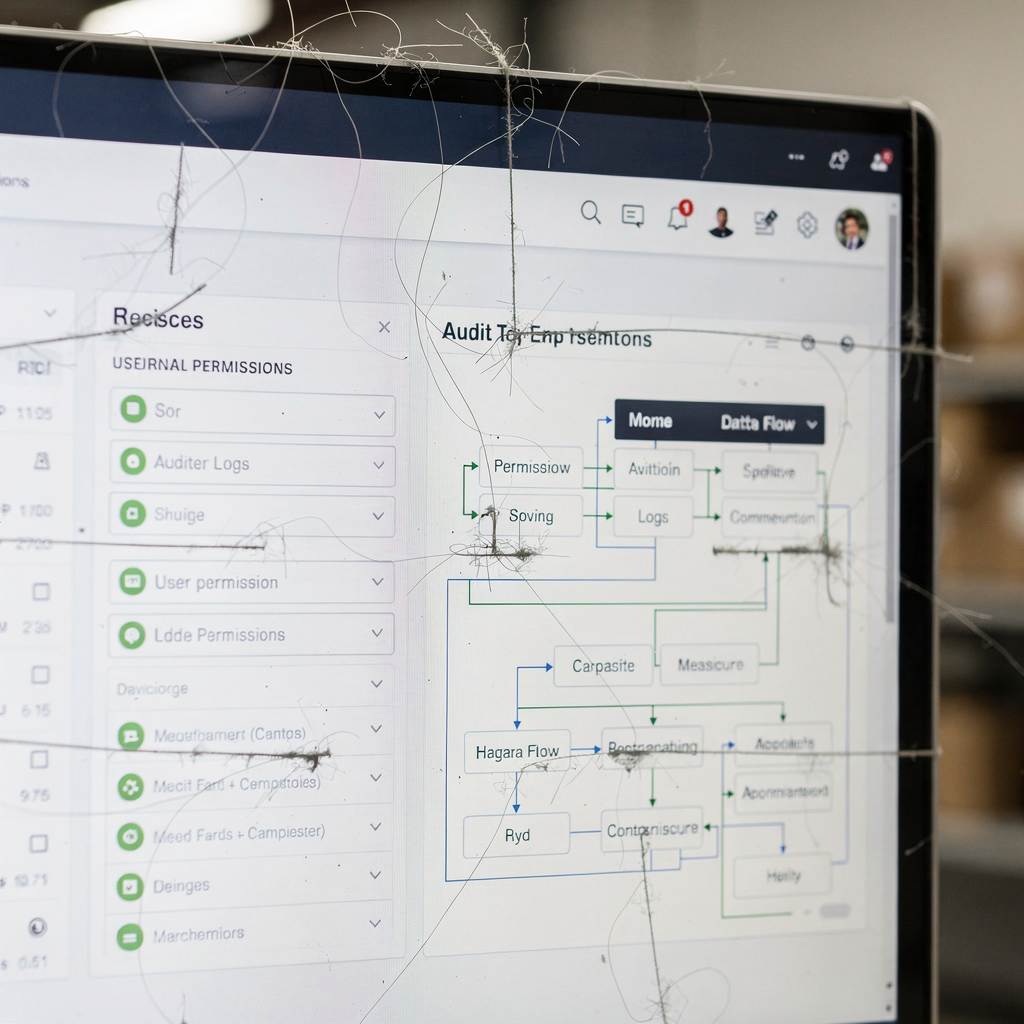
How to streamline operations and workflow: an implementation plan for deal flow, crm syncing and executive assistant handover
Plan a phased rollout. Phase 1: pilot with one deal team. Phase 2: integrate with CRM and email platform. Phase 3: expand to portfolio management and administrative tasks. Start small. Choose a team that has repeated inbox patterns and clear metrics. Set up milestones and KPIs. Measure time saved, response times and number of automated tasks. Also track any compliance incidents. A 90‑day pilot review should decide whether to expand.
Key steps in the pilot. First, map the tech stack and define data owners. Include CRM, document stores and management systems. Second, configure role-based access and templates. Third, train staff on new processes and approval flows. Fourth, monitor outcomes and adjust rules. Use the executive assistant role to take over calendar and email handover tasks while the team adapts. For example, a VC firm assigned a virtual executive assistant to handle founder outreach templates and meeting prep. This reduced calendar conflicts and improved meeting readiness.
Checklist for buy-in: identify stakeholders (partners, operations, compliance), list tech requirements, and document data governance. Also include onboarding tasks and project management responsibilities. Keep the pilot narrow: focus on triage, calendar management and email triage for one set of inbound threads. Then expand to portfolio management and travel and expense management automation. Consider whether hiring a va or adopting a new ai assistant better meets needs. Many firms find a cost-effective solution in virtual assistant offers that automate email and CRM tasks without hiring a full-time coordinator. Finally, run a vendor RFP that includes security questions, references and a clear ROI model. If you want to discover how virtual assistants manage operational emails at scale, the virtualworkforce.ai ROI study is a useful reference ROI study.
FAQ
What is an AI email assistant and how does it differ from a virtual assistant?
An AI email assistant is software that automates parts of the email lifecycle, such as triage, drafting and routing. A virtual assistant often refers to a human or managed service. The AI version scales repetitive tasks with automation and integrates with systems like CRM.
Can a virtual assistant reduce time spent on manual processes?
Yes. Case studies show reductions in time spent on emails and scheduling of between 30–40% in trials with generative AI. This frees senior staff to focus on higher-value activities.
How does integration with CRM work?
Integration usually uses two-way sync so that emails update contact records and meeting outcomes are written back into deal-tracking. Connectors and secure APIs keep a single source of truth in the tech stack.
What governance is required for deployment in Europe?
EU deployments need GDPR compliance, including lawful basis, data minimisation and DPIAs. You should run a Data Protection Impact Assessment before full rollout and log processing activities.
Will an ai email assistant help with due diligence?
It can accelerate administrative parts of due diligence by extracting and structuring data from emails and documents. Human oversight remains essential for material investment decisions and legal review.
How do we measure ROI for an email automation project?
Measure baseline hours on email and calendar, estimate hours saved, multiply by staff cost and compare to vendor fees. Also capture non-financial gains such as faster deal sourcing and improved investor relations.
Are there risks when connecting AI tools to sensitive systems?
Yes. Risks include over‑permissioned access and weak audit trails. Use access controls, encryption and regular compliance audits to mitigate these risks.
Should we hire a full-time coordinator or use virtual assistant services?
Many firms choose a hybrid approach. Virtual assistant services provide a cost-effective solution for repetitive tasks. Hiring a full-time coordinator may still be needed for high-touch relationship work.
How quickly can a pilot show results?
A focused 90‑day pilot typically shows measurable time savings and clearer workflows. Start with one deal team and narrow task scope for faster insight.
What questions should we ask vendors during procurement?
Ask about data authorisation, audit logs, integration patterns with CRM and email platform, and proof points for ROI. Also request references from similar investment firms and security documentation.
Drowning in emails?
Here’s your way out
Save hours every day as AI Agents label and draft emails directly in Outlook or Gmail, giving your team more time to focus on high-value work.