


How an assistant, ai and email assistant for property management manage your inbox and simplify tenant communication
An AI email assistant for property management can transform how teams manage an inbox and handle tenant communication. First, the assistant identifies intent, sorts messages, and prioritises urgent maintenance requests. Then it sends instant acknowledgements so tenants know their message landed. Next, the tool logs thread history directly in the property file so every followup is traceable. As a result, property teams spend less time on repetitive email tasks and more time on oversight and strategy.
Core roles include automatic sorting, priority tagging, and routing to the right resource. The assistant drafts replies for common inquiries and inserts lease-specific legal disclaimers when needed. For example, instant replies to rent arrears questions or a heating fault update can free staff to focus on complex cases. Also, the assistant keeps a clear work order record when it escalates a maintenance request to a technician and updates the tenant with scheduling details.
Quantified impact matters. Industry reports show AI tools can cut administrative workload by up to ~40% and reduce missed communications by ~30% (VA Talks). In practice, track key metrics like average response time, percent of emails auto-handled, and tenant satisfaction. For example, improved response time correlates strongly with higher tenant satisfaction scores and fewer disputes.
Operationally, set simple KPIs: measure response time, monitor how many messages the assistant resolves without human input, and survey tenants about clarity and timeliness. A good management virtual assistant integrates with your property management software and flags exceptions to human teams. Finally, use clear templates and escalation rules so the assistant maintains consistency and compliance across all property management communications.

Use cases: virtual assistants, virtual assistance and virtual assistants handle maintenance request, lease and tenant queries
Virtual assistants streamline common flows in property management. For maintenance, the path is simple: intake a maintenance request, prioritise by severity, schedule trades, and update the tenant. The AI captures photos or descriptions, creates a work order, and proposes time slots to both vendor and tenant. Then the assistant issues confirmations and followup reminders so the repair cycle closes faster.
For lease activity, virtual assistants manage reminders, renewal offers, and record outcomes automatically. A template-driven renewal sequence sends timed notices, personalises offers, and captures tenant responses. Consequently, management teams report a 25% improvement in lease renewal rates when AI routes and schedules outreach and followup (Appinventiv). Also, property managers and staff see fewer missed deadlines and clearer audit trails.
HOAs and management company operations benefit too. Routine notices, amenity bookings, and covenant enforcement messages can be automated while preserving legal language. That protects compliance and maintains resident communication standards. Practical steps include preparing a set of email templates and legal disclaimers for lease-related messages so every automated email meets policy requirements.
Virtual assistance extends to screening tenant inquiries, triaging maintenance request photos, and handing off complex cases to humans. For busy property management companies, these flows reduce time on admin tasks and improve resident experiences. Additionally, tools that support multi-site portfolios and integrate with scheduling systems will scale better as your portfolio grows. Consider piloting on high-volume inbound streams like repairs and lettings to measure uplift quickly.
Drowning in emails?
Here’s your way out
Save hours every day as AI Agents label and draft emails directly in Outlook or Gmail, giving your team more time to focus on high-value work.
Integration: how an ai agent for property management links with property management software to automate workflow
Integration is the backbone of useful email automation. An AI agent for property management works best when it connects to property management software through secure APIs. Two-way email logging, automatic work-order creation, calendar sync, and tenant record updates form the core capabilities. Once connected, the AI can write structured data back into management systems and keep your operations team aligned.
Integration priorities include mapping tenant contact fields, vendor lists, and escalation rules. For example, the agent should create a work order when a maintenance request exceeds a severity threshold and then sync status updates to the tenant record. Case studies show embedding AI agents in PM platforms reduces manual data entry and shortens response times. For operational teams that use platforms like AppFolio or Buildium, this tight coupling preserves context and reduces duplicate effort (Pearl Lemon Properties).
An IT checklist helps: ensure API access, define data mapping for tenant records, set vendor contact fields, and verify escalation logic. Also, confirm security controls for email retention and access meet compliance policies. In practice, work with your provider to set role-based access, encryption, and auditing. virtualworkforce.ai, for instance, emphasises full data grounding so replies are accurate and traceable across ERP and SharePoint sources, which cuts handling time substantially.
Finally, test the integration in a sandbox. Then run a staged rollout that captures errors and refines routing rules. This reduces surprises and helps your property management teams adopt the new workflow with confidence. For further reading on automated correspondence and email drafting in operations, see resources on automated logistics correspondence and email drafting that show similar integration patterns across industries (automated logistics correspondence).
Business case: ai-powered automation to streamline operations, cut operational costs and meet management needs
Building a business case for AI requires measurable outcomes and a simple cost model. Start by quantifying current time spent on email triage. Many operations see more than 100 inbound emails per employee per day, which translates to large time drains and inconsistent replies. AI-powered automation reduces handling time and raises consistency, producing clear operational savings.
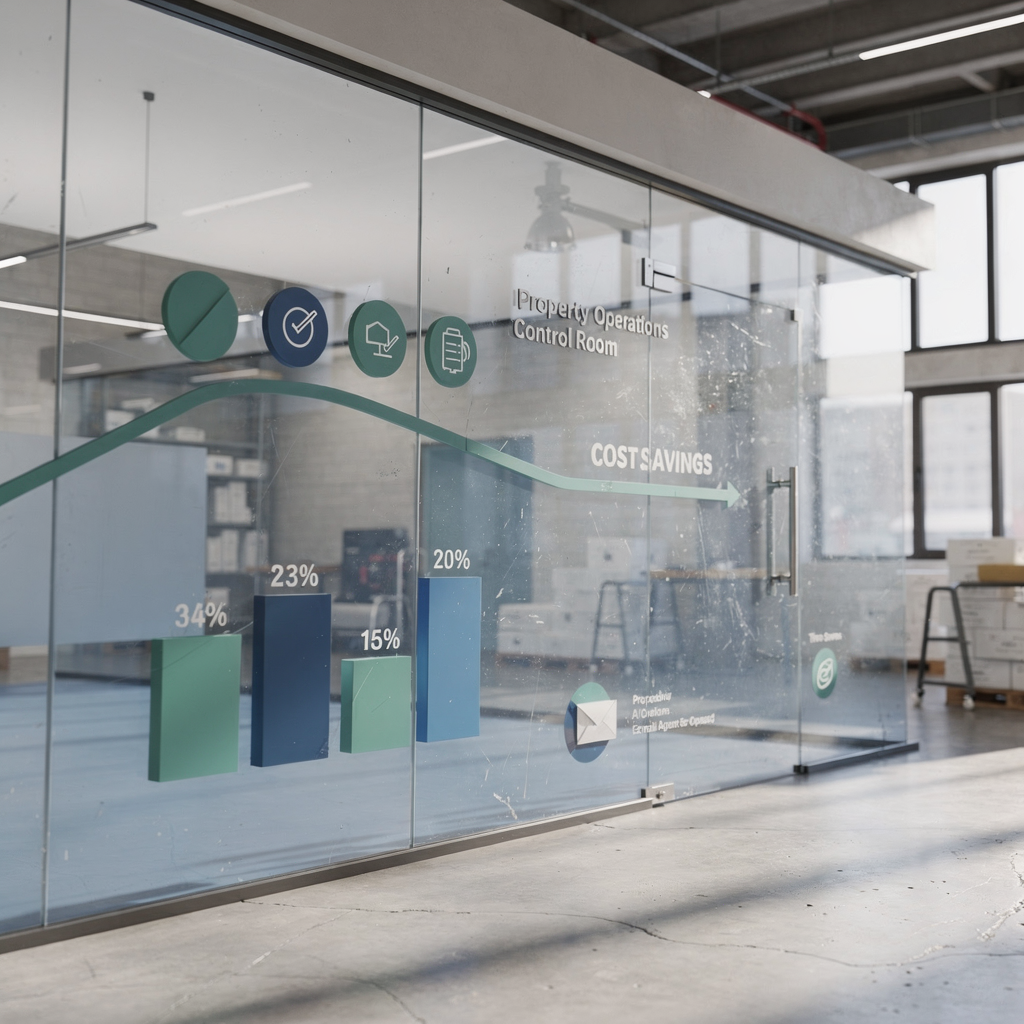
Measure benefits in three buckets: time saved, fewer missed communications, and revenue retention. Industry figures show a 45% uplift in tenant satisfaction for companies reporting faster response times after AI adoption, and AI-driven tools grow fast in the market (Forbes Advisor). In addition, property management firms report a 30% reduction in missed communications when they automate standard workflows (VA Talks).
Compare licence and integration costs against savings from fewer late payments, reduced time on email triage, and higher lease renewal rates. For a management virtual assistant pilot, target high-volume inboxes like repairs and leasing and measure response time, followup completion, and tenant satisfaction after 90 days. Also include operational costs saved when staff move from repetitive tasks to strategic work that improves resident experiences.
Who benefits? Property managers, back-office operations teams, and small property management businesses scaling portfolios. An ROI playbook includes a pilot scope, chosen KPIs, and a plan to scale when thresholds are met. For practical scoring of ROI in operations, check case references on how to scale operations with AI agents and the role of email automation in logistics—many principles translate directly to property management (how to scale logistics operations with AI agents).
Drowning in emails?
Here’s your way out
Save hours every day as AI Agents label and draft emails directly in Outlook or Gmail, giving your team more time to focus on high-value work.
How property managers make practical use of ai tools and ai assistant: workflows, templates and governance
Property managers make AI useful by designing simple, repeatable workflows. First, classify incoming mail. Then decide whether to auto-respond or escalate. Next, create or close a maintenance request and set followup reminders. This structured approach keeps the full email lifecycle auditable and fast. Use email templates for common messages and keep humans in the loop for sensitive or legal cases.
Recommended templates include maintenance updates, rent reminders, lease renewal offers, and neighbour complaint responses. Also, build templates that include the required legal language for lease documents so every automated email remains compliant. For onboarding new buildings or sites, prepare a template library and configure tone, routing rules, and escalation thresholds.
Governance is essential. Set escalation thresholds, define human review for contested issues, and keep an audit trail for disputes. Also, train your assistant using the actual email history so language and tone match your brand. Evaluate vendors on how they support multi-site portfolios, language accuracy, and ease of training. virtualworkforce.ai’s zero-code setup and thread-aware memory can accelerate onboarding and reduce time on admin work across shared inboxes.
Finally, monitor performance with a dashboard that tracks response time, percent of auto-handled emails, and tenant satisfaction. If you use property management software like AppFolio or Buildium, confirm templates and routing rules map to those systems to avoid duplicate data entry. Also, ensure management systems retain email history for regulatory and legal needs. With clear governance and templates in place, AI solutions let property managers focus on relationship-building and complex issues rather than repetitive email chores.
Frequently asked questions about ai for property management, ai agents and the future of property management
Below are common questions and direct answers to help your team evaluate AI adoption.
What accuracy can I expect from automated email replies?
AI accuracy depends on the quality of training data and integrations. With connected operational data and clear templates, most systems achieve high accuracy for routine inquiries, and escalation rules catch edge cases. For sensitive matters, configure human review to ensure correctness.
How does data privacy work when using AI agents?
Data privacy requires secure API connections and role-based access controls. Work with your vendor to ensure encryption in transit and at rest, and confirm retention policies meet legal requirements. Also, document tenant consent where required.
Will AI handle maintenance requests end-to-end?
Yes. An AI agent can intake a maintenance request, prioritise it, create a work order, and schedule vendors when integrated with scheduling and vendor systems. However, complex repairs may require human coordination, so set escalation paths.
How quickly can I see ROI from an AI assistant?
Pilots often show measurable time saved within 60–90 days on high-volume inboxes. Track response time, auto-handled rates, and tenant satisfaction to build your business case. Savings come from reduced time on admin tasks and improved lease renewals.
Are legal lease communications safe to automate?
Yes, if you prepare approved templates and legal disclaimers. An AI assistant can insert required language and log all communications for audit. Always include a human review for contract-signing or disputed cases.
How do AI agents integrate with existing property management software?
Integration requires API access and data mapping for tenant records, vendors, and calendars. Many platforms support two-way logging so the AI can create work orders and update tenant files. Test in a sandbox before full rollout.
Can small property management companies benefit from AI?
Absolutely. Small teams see disproportionate gains because automation reduces time on repetitive email triage. That allows them to scale portfolios without hiring equivalent staff and improves resident communication.
What about multilingual tenant support?
Modern AI tools support multiple languages and can draft messages in the tenant’s preferred language. Ensure translation quality by training on your organisation’s phrasing and have human review for critical interactions.
How do I prepare my team for using AI?
Start with a pilot, provide clear templates, and train staff on escalation rules and governance. Also, monitor performance via a dashboard and share results regularly to build trust and adoption.
What trends will shape the future of property management?
Expect tighter integrations between AI agents and property management systems, more predictive maintenance using combined comms and sensor data, and broader AI solutions for tenant retention. These shifts will let property managers focus on strategic work and tenant relationships rather than repetitive emails.
FAQ
How does an email assistant reduce response time?
An email assistant automates triage and sends instant acknowledgements, which reduces the initial wait for tenants. It also drafts replies and routes complex issues to humans, cutting overall response time and improving tenant satisfaction.
What is the difference between virtual assistants and management virtual assistant?
Virtual assistants is a broad term for tools that help with tasks, while a management virtual assistant focuses on property operations and tenant support workflows. The management variant usually integrates with operational systems and enforces compliance rules.
Can AI improve lease renewal rates?
Yes. By automating timed outreach, personalised renewal offers, and followup reminders, AI can increase lease renewal rates. Industry reports show significant improvements when teams add proactive, automated communication.
Do AI tools replace property managers?
No. AI replaces repetitive tasks and improves efficiency so property managers can focus on complex and strategic work. It helps staff handle higher volumes without sacrificing service quality.
Is integration with AppFolio or Buildium possible?
Many AI solutions integrate with AppFolio and Buildium through APIs for two-way logging and work order creation. Confirm integration capabilities with your vendor and test mapping before deployment.
How do I maintain compliance with automated emails?
Use pre-approved templates that include legal language and disclaimers. Keep an audit trail for all automated communications and include human review for sensitive cases to maintain compliance.
What KPIs should I track during a pilot?
Track average response time, percent of emails auto-handled, tenant satisfaction scores, and reduction in missed communications. These metrics demonstrate operational impact and support scaling decisions.
How are maintenance scheduling and vendor coordination handled?
AI can propose vendor time slots, create a work order, and sync calendars, which speeds up maintenance coordination. Set escalation paths for high-severity issues to ensure prompt human intervention when needed.
Can AI draft emails for complex tenant inquiries?
AI excels at drafting responses for common or data-driven inquiries, and it can assemble context from prior threads and systems. For complex or disputed matters, a human review step keeps communication accurate and sensitive.
What should be included in a vendor evaluation checklist?
Assess ease of training, integration depth, accuracy in language, multi-site support, governance tools, and uptime SLAs. Also review how the vendor handles data grounding and traceability for operations-sensitive replies.
Drowning in emails?
Here’s your way out
Save hours every day as AI Agents label and draft emails directly in Outlook or Gmail, giving your team more time to focus on high-value work.