


property management and AI: email assistant for property management — the business case
Property management teams face a high volume of email, and that load costs time and money. Property managers spend large shares of their workday triaging tenant messages, answering lease and rent questions, and handling maintenance and vendor coordination. As a result, routine admin slows response times, increases liability for delayed repairs, and raises overhead. For that reason, many operators now evaluate an email assistant for property management to help them save time and cut costs.
Data supports the business case. For example, a 2025 survey found that 68% of firms using AI email tools reported up to a 40% faster response time on tenant inquiries (2025 survey). Separately, property management companies report roughly a 25% productivity gain when they apply AI to repetitive email tasks (productivity data). Finally, AI-driven communication has increased lease renewal rates in some tests by up to 15%, which directly improves cash flow and reduces turnover costs (renewal statistic).
ROI drivers are straightforward. First, saved labour hours from automated triage and reply drafting reduce headcount pressure when portfolios grow. Second, fewer missed maintenance request items and faster vendor dispatch lower liability and improve tenant satisfaction, which supports higher renewal rates. Third, consistent messaging reduces disputes about lease terms and late fees, and that saves legal time. In practice, teams track payback through reduced email handling time and improved first-response SLAs; many see payback within months for mid-sized portfolios.
Who gains most? Small portfolios gain by saving workload and improving tenant support. Large portfolios gain by scaling consistent tenant and owner communication without hiring many more staff. For procurement, ask vendors about accuracy, integration with your property management software like AppFolio or Buildium, and audit logs for compliance. Quick takeaways: measure current email handling time, set response-time goals, and run a short pilot. Also, consider vendor demos that show draft emails ready to send and the ability to route urgent issues to on-call staff.
Action checklist:
1. Measure baseline email handling minutes per day. 2. Set target response times. 3. Pilot with a focused use case like maintenance requests. 4. Track renewal uplift and tenant satisfaction. 5. Validate integration with tools you use and your HOA or owner reporting needs.
assistant for property management: core features to automate inbox and workflow
An assistant for property management should do more than draft replies. It must classify messages, extract data, route tasks, and close loops. Key features include automated categorisation and prioritisation, template-based replies, follow-up scheduling, extraction of dates and addresses, and maintenance request triage. Together, these capabilities automate the repetitive email lifecycle and let property teams focus on higher-value work.
Feature breakdown and impact:
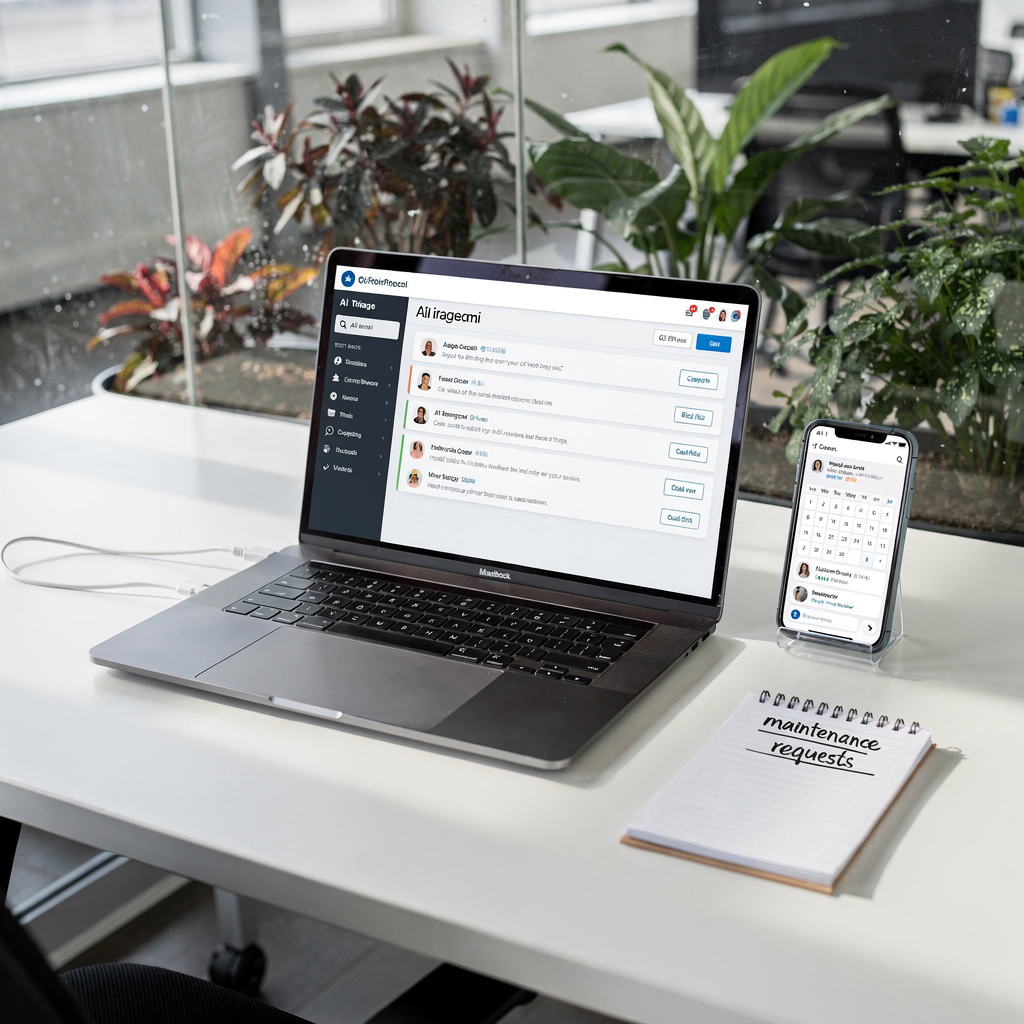
• Automated categorisation and prioritisation: The AI labels messages as maintenance, lease inquiry, payment confirmation, or vendor communication. Then, it flags urgent water or safety issues and routes them to maintenance staff. This reduces missed emergencies and improves first-response performance. For example, an AI can auto-acknowledge a maintenance request and create a work order, which speeds vendor dispatch.
• Template-based replies: The assistant pulls tenant and lease data, then drafts ready-to-send replies for rent reminders, renewal invites, or move-in instructions. That reduces repetitive email writing, and increases consistency across your portfolio. It also lets you maintain tone and legal clauses while remaining fast.
• Follow-up scheduling and followup automation: The system schedules reminders for late payments and lease renewals. As a result, teams see fewer missed renewals and better cash collection. Also, automated followups preserve audit trails for owner reporting.
• Data extraction and integration: The assistant extracts payment confirmations, dates, and incident details and pushes structured data into property management systems or management systems used by your team. This both cuts manual entry and keeps reports current.
Short examples: auto-acknowledge a tenant maintenance request, extract the unit number and preferred access time, route urgent leaks to on-call maintenance, and draft a vendor scope for dispatch. Practical vendor checklist: accuracy of classification, integration options (APIs and connectors), SLA customisation, audit trails, and secure data handling. Also, test a vendor’s handling of complex lease clauses and legal inquiries before full rollout.
Drowning in emails?
Here’s your way out
Save hours every day as AI Agents label and draft emails directly in Outlook or Gmail, giving your team more time to focus on high-value work.
property manager toolkit: templates, maintenance request handling and lease draft templates that streamline tenant communication
Practical templates shorten response times and improve consistency. Property managers need a library of ready-to-send email templates for rent reminders, late payment notices, lease renewal invites, and move-in checklists. Use templates to automate routine tenant messages while keeping legal clauses and tone consistent. You can auto-fill tenant and lease fields so that drafts include name, address, unit, and rent dates.
Template examples and use cases:
• Rent reminder template: A short, polite reminder with invoice link and late-fee clause. The assistant populates amount due and due date from the lease. This reduces billing questions and speeds collections.
• Late payment notice: A staged sequence — first a reminder, then a formal notice. The system triggers a followup automatically if payment does not arrive. That lowers delinquency and reduces manual chasing.
• Lease renewal invite: A personalized invite with dates and an easy signature link for renewal. Automated renewals increase renewal rates. For instance, teams using AI-driven outreach have reported up to a 15% uplift in renewals in some cases (renewal uplift).
Maintenance workflow via email:
1. Tenant submits maintenance request. 2. The AI auto-acknowledges and extracts address, issue, and urgency. 3. It triages and creates a work order for vendors or maintenance staff. 4. The assistant sends status updates to the tenant until closure. 5. On completion, it requests feedback.
This sequence shortens repair times and reduces repeat messages. Lease handling and drafting: the AI can auto-draft clauses and populate them from tenant data, then send secure signature links. Still, a human should review new or unusual lease terms. Action checklist: create standard templates, map auto-fill fields, test the maintenance triage on several scenarios, and set escalation rules for complex legal questions. That approach saves time, improves tenant satisfaction, and lets property managers focus on relationship building.
Scaling and automation: how property management companies and property teams use AI-powered email to simplify portfolio growth
Scaling a portfolio without multiplying headcount is a central goal for property management companies. AI-powered email and basic automation let teams standardise communication and maintain service levels as properties increase. For instance, shared inboxes can use AI triage to route messages to the right property manager or vendor, which reduces confusion and lost threads.
Benefits for scaling:
• Standardised messages across properties make owner reporting simpler. • Consistent tenant support improves resident experiences, which raises renewal probability. • Automation reduces hiring pressure and supports portfolio expansion without large operational cost increases.
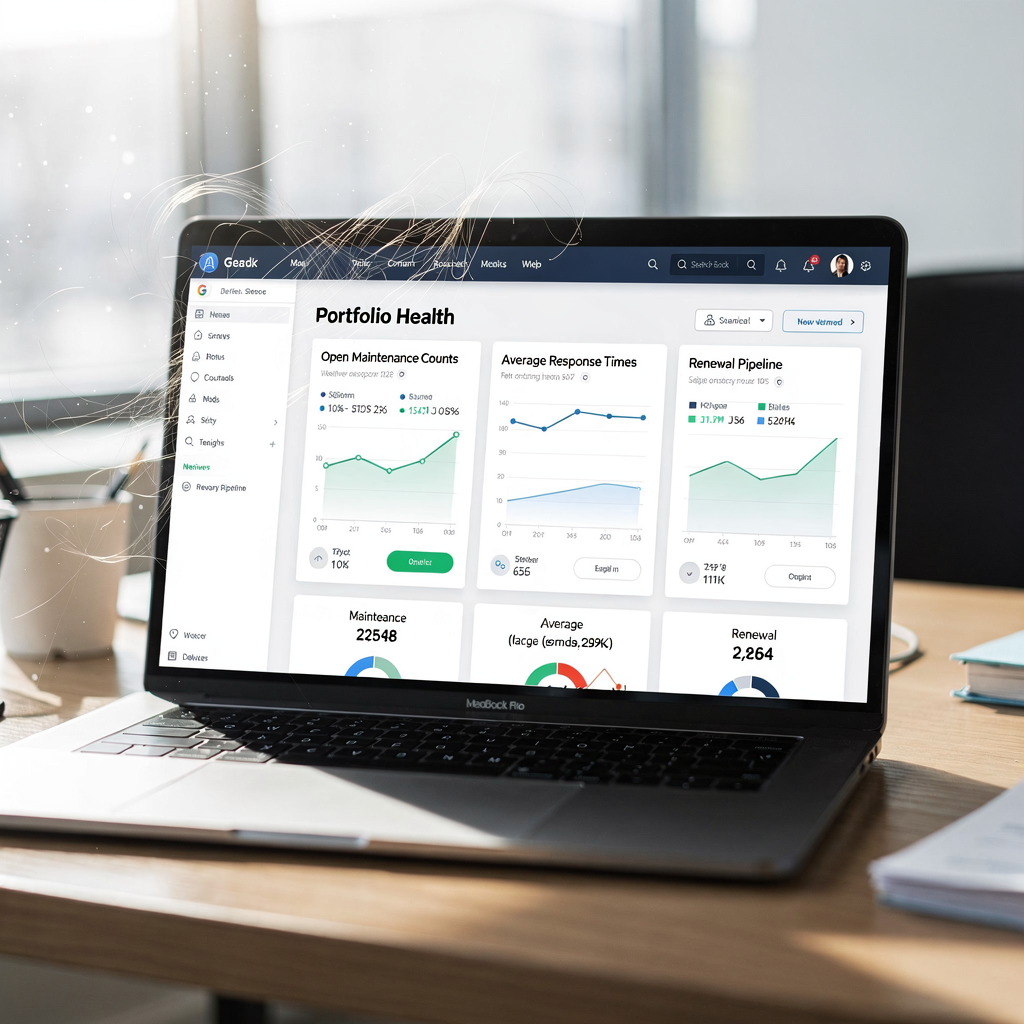
Adoption trends show rapid growth. Forecasts project mid-30% annual growth in AI adoption across real estate, reflecting broader AI uptake in operations (market growth). Property teams often start with a phased approach: pilot on a subset of properties, measure metrics, then expand. Typical operational models include shared inboxes with AI triage, role-based routing for property teams, and dashboards that surface portfolio health and pending maintenance counts.
Operational model examples:
• Shared inbox with AI labels and routing to on-call staff. • Role-based routing: leasing inquiries to leasing agents, maintenance to facilities, and owner inquiries to portfolio managers. • Dashboards for KPIs: open maintenance request counts, average response times, and renewal pipeline.
Implementations succeed when change management includes clear rules and training. Start small, then add properties. For those looking for technical guides on scaling email operations without hiring, see a practical playbook such as our resource on scaling logistics operations with AI agents (scaling playbook). Action checklist: pick pilot properties, set KPIs (response times, renewal uplift), run a 60‑90 day pilot, and expand with training and documentation.
Drowning in emails?
Here’s your way out
Save hours every day as AI Agents label and draft emails directly in Outlook or Gmail, giving your team more time to focus on high-value work.
AI agent and property management virtual assistant: integration with property management software and best virtual workflows
Integrations make an AI agent effective. A property management virtual assistant works best when it syncs tenancy, payment, and maintenance records with your property management software. Connectors to systems like AppFolio or Buildium keep tenant data current. That way, the assistant drafts accurate replies and creates tracked work orders in your management stack.
Integration points to prioritise:
• PMS sync for tenancy and payment status so replies reflect real-time balances. • Calendar and contractor systems for scheduling vendor visits. • Ticketing and CRM for audit trails and owner reporting. For advanced operational teams, integrations with ERP or document stores offer deeper grounding for replies (integration examples).
Compare agent types. An AI email assistant for property automates drafting and classification. A full property management virtual assistant can also open work orders, pull documents, and complete end-to-end ticket workflows. Use an AI assistant to handle high-volume, repetitive emails and to automate simple decisions. Then, escalate complex or legal issues to humans. Also, evaluate whether a vendor offers an ai agent that can ground replies in operational data rather than only generating language.
Best-practice workflows:
• 24/7 auto-responses for common inquiries and after-hours emergencies. • Escalation rules for safety or legal issues. • Vendor hand-off templates with scope and pricing fields. • Owner reporting templates that summarise tenant and maintenance trends.
Vendor evaluation checklist: API availability, security and data export, live-agent fallback, and clear data governance. For teams exploring technical implementation, our guide on automating logistics correspondence highlights parallels in onboarding and API-first approaches (implementation guide). Action checklist: map required integrations, test data syncs, validate signature links for lease documents, and confirm audit logging.
Smarter operations, faq and risks: privacy, hoas, frequently asked questions and valuable insights for property managers make better choices
Smart operations combine AI, policy, and human oversight. Compliance and privacy matter. For EU or GDPR contexts, ensure tenant consent, secure storage, and retention policies. Also, HOA and HOAs communications often require specific records; define retention and audit rules up front. Address data access controls when integrating with payment platforms or resident portals.
Common FAQs and answers:
• Accuracy concerns: AI classification improves with training and feedback. Always run a review cycle during the pilot and log corrections. • Sensitive issues: Escalate legal or safety matters to humans by default. • Language and tone: Configure templates and tone settings to match your brand and legal needs.
Risks and mitigations:
• Over-automation: Keep safeguards so the system cannot send legally binding notices without review. • False positives in triage: Monitor errors and retrain models. • Vendor lock-in: Require data portability and export options. • Loss of human touch: Reserve personal outreach for complex or relationship-critical cases.
Action plan and checklist:
1. Define a pilot scope and sample size. 2. Set KPIs: response times, renewal rate uplift, and average handling time. 3. Assign owners and reporting cadence. 4. Validate security and export requirements. 5. Train staff and set escalation paths. Also, consider tools and comparisons for email automation in operations; see our guide to automating emails with Google Workspace and AI for practical setup tips (setup guide).
Finally, remember that AI is a tool to help property managers make better choices. Where high accuracy and traceability matter, choose platforms that ground replies in operational data and keep humans in the loop. That way, teams can work smarter, maintain tenant satisfaction, and scale without sacrificing quality.
FAQ
What is an email assistant for property management and how does it help?
An email assistant for property management automates incoming email triage, drafts replies, and routes tasks to staff or vendors. It helps by reducing repetitive email work, speeding response times, and creating structured records from unstructured messages.
How accurate are AI email assistants at handling maintenance request messages?
Accuracy varies by vendor and training, but modern systems extract key fields like unit, issue type, and urgency reliably after a short training phase. Always start with a pilot and review corrections so the model improves quickly.
Can an AI assistant integrate with property management software like AppFolio or Buildium?
Yes. Many assistants offer connectors to popular property management software like AppFolio and Buildium so they can pull tenancy and payment data. Confirm API availability and data mapping during vendor selection.
How do AI tools affect lease renewals and tenant satisfaction?
Automated, timely, and personalised renewal outreach boosts renewal rates. Some firms report renewal uplifts of up to 15% when using AI-driven communication. Consistent status updates and faster repairs also improve tenant satisfaction.
What privacy rules should I consider when using an AI assistant?
Follow GDPR and local privacy laws, obtain tenant consent where required, and set retention policies for email data. Require vendors to offer exportable logs and secure storage to meet compliance demands.
Will AI replace property managers?
No. AI automates repetitive tasks so property managers can focus on relationship work and complex decisions. It allows property managers to focus on higher-value activities while the assistant handles routine correspondence.
How do AI assistants handle after-hours emergencies?
Set escalation rules so the assistant auto-acknowledges messages and routes urgent issues to on-call staff. For life-safety or legal matters, configure immediate escalation to humans rather than automated responses.
What should I measure in a pilot of an ai assistant?
Track first-response time, average email handling time, renewal rate, and tenant satisfaction scores. Also measure error rates in classification and the volume of escalations to ensure quality control.
Are there risks of vendor lock-in with AI solutions?
Yes. To avoid lock-in, require data export, clear API documentation, and the ability to retrieve training logs. Test data portability before committing to a long-term contract.
How do I choose between an ai assistant and a full property management virtual assistant?
Choose an ai assistant if you need high-volume email triage and draft automation. Opt for a property management virtual assistant when you want end-to-end automation that opens work orders and manages more complex workflows. Evaluate integration needs and the level of human fallback required.
Drowning in emails?
Here’s your way out
Save hours every day as AI Agents label and draft emails directly in Outlook or Gmail, giving your team more time to focus on high-value work.