


ai email automation and ai agents that automate replies to boost direct bookings
AI email automation is changing how resorts convert interest into stays. Smart AI agents read incoming messages, classify intent, and draft or send the right reply. This reduces manual handling and helps resorts increase direct by delivering timely offers and confirmations. For example, a resort that personalises post-enquiry sequences can see a 10–15% uplift in direct booking revenue when targeted offers reach warm prospects; this is supported by industry analysis showing measurable revenue gains from personalised email programmes (Cvent). A faster first reply also matters: properties that respond quickly record up to a 40% faster response time to guest enquiries, which increases the chance that guests will choose to book directly (Cvent).
Practical sequences include booking confirmations, pre-arrival upsells and abandoned-booking recovery emails. A reservation assistant can trigger an automatic upsell email offering a room upgrade and a spa voucher 72 hours after a tentative reservation; this single workflow lifts conversion and direct revenue while reducing workload for reservation teams. Use triggers like new booking, cancellation, no-show risk or post-stay review to map messages across the guest journey. Below is a short CTA email example reservation teams can send after a tentative hold:
“Confirm your stay today and get 10% off a room upgrade. Reply to this email or click the link to secure your rate.”
Before implementing, measure baseline metrics such as average time to first reply, conversion from email sequences and conversion rates for upsells. After automation, compare these to post-launch metrics to prove ROI. AI-powered drafting works inside corporate inboxes and can generate personalised CTAs grounded in CRM profiles and past stays. For technical teams, connect triggers via webhook events from the PMS to a reservation assistant so that replies can update bookings and tag guest records automatically. This keeps the manual triage low and frees hotel staff for higher-value guest interactions. Case studies show that well-mapped triggers plus concise, personalised replies lift click-through rates by roughly 14% and help resorts boost direct bookings when paired with clear offers (ResearchGate).
hospitality integration: link PMS, booking engines, crm and api so a reservation assistant helps reservation teams
Integration is the backbone of reliable guest communication. When the PMS, booking engine and CRM share data, a reservation assistant can draft accurate replies and update guest records automatically. The data flows that matter include rates and availability, loyalty status, guest preferences and booking metadata. With these inputs, AI agents can confidently confirm a booking, add a room upgrade, or apply loyalty points without human correction. A typical integrated rollout across systems can produce ~15% growth in direct-booking revenue within months when combined with email sequencing and targeted offers (Cvent).
Architecturally, a common pattern is: trigger → AI reply → PMS update → CRM tag. Triggers may come from the booking engine or a webhook from the PMS. The reservation assistant reads the booking event, composes an appropriate email reservation or booking confirmations message, and writes structured data back to the CRM. To keep the system reliable, implement authentication, idempotent updates and audit logs so that every automated reply has a traceable record. These safeguards prevent duplicate bookings and ensure staff can hand over to a human agent when a conversation needs nuance.
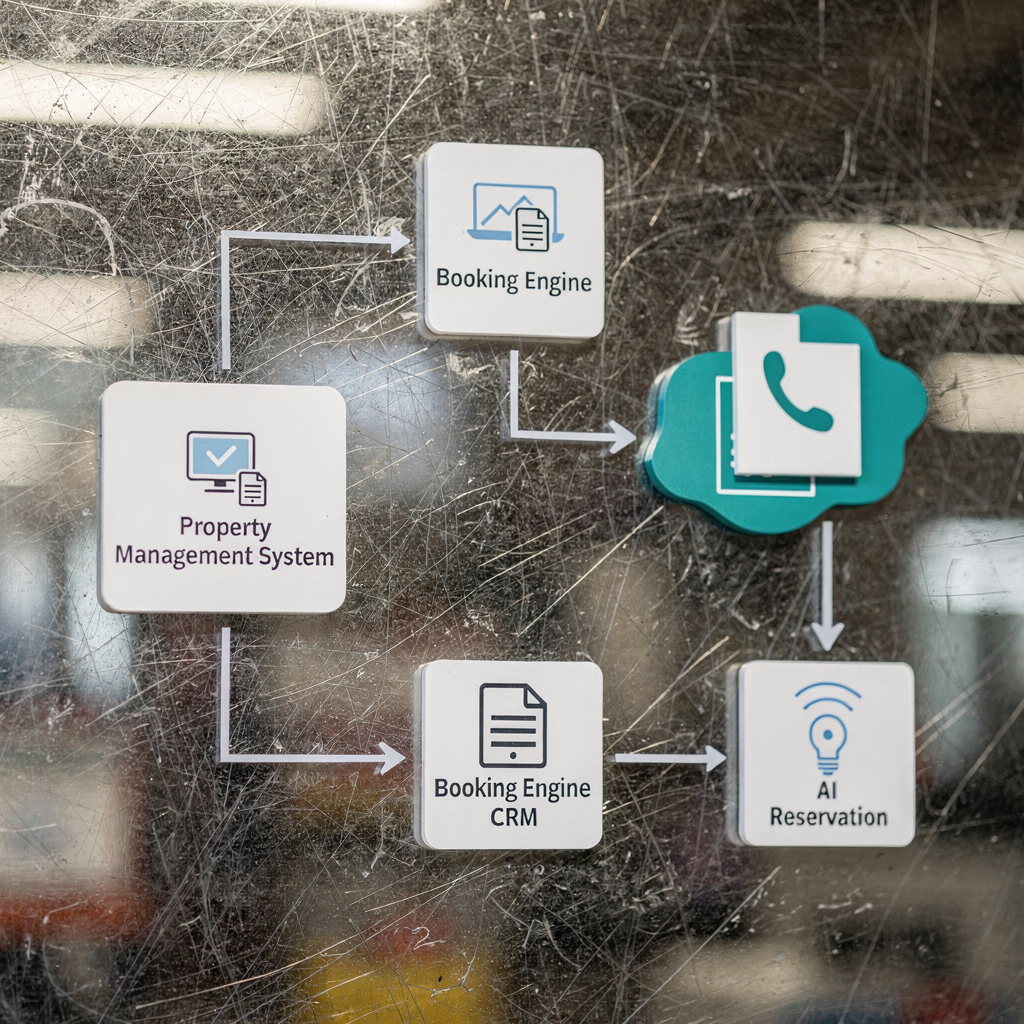
For implementers, start with a minimal set of webhook events: new reservation, modification, cancellation and payment confirmation. Map each event to a reply template and to the data fields needed in the CRM. Test end-to-end with a staging PMS to validate that the AI reply contains correct dates and room types before going live. Teams often centralise logs in a dashboard and use analytics to monitor reply accuracy and time to resolve. If your IT team needs reference patterns, vendor API docs for major PMS providers usually include webhook examples; this reduces development time and simplifies the initial setup. For deeper operational email automation in logistics and enterprise workflows, explore examples from virtualworkforce.ai that show how AI agents reduce handling time and produce structured data from messages (automated logistics correspondence).
Drowning in emails?
Here’s your way out
Save hours every day as AI Agents label and draft emails directly in Outlook or Gmail, giving your team more time to focus on high-value work.
email automation, omnichannel bot and whatsapp: combine chatbot, whatsapp and ai email automation for an intelligent ai reservation assistant
An omnichannel approach reduces friction and keeps the guest journey cohesive across channels. Start leads in a hotel chatbot on the website, then follow up with a tailored email and a WhatsApp confirmation if the guest opts in. This flow captures guest intent early, reduces abandonment and increases the likelihood that guests to book directly with the property instead of via an OTA. Guests increasingly expect online self-service and the ability to complete bookings digitally; enabling that sequence lets resorts convert more enquiries into bookings and improves guest experience. Integrating chatbots, email and WhatsApp keeps conversation history in the CRM so messages remain personalised across touchpoints.
Practical flow: a website chatbot collects dates and room preference, a reservation assistant emails a summary and a secure link, then a WhatsApp message confirms the booking with quick reply buttons. Use message templates and opt-in consent to comply with messaging rules. Keep the CRM updated with consent flags and channel preferences so future messages follow guest wishes. The conversational bot hands off to a human agent when the guest request is complex or when a payment issue appears. That handover must include the full thread, the booking state and any tags added by the AI so the human agent has context immediately.
For WhatsApp flows, implement explicit opt-in and store the preferred language to support international guests. A short sample WhatsApp booking flow could be: “We saw you selected 2 nights. Confirm with YES to hold the room. Reply HELP for options.” Then follow with a confirmation via email reservation and booking confirmations that contains the invoice and special requests. Combining these channels can reduce resolution time and capture bookings that would otherwise be abandoned. For examples of chat-driven booking confirmation and how AI can draft messages directly in shared inboxes, see virtualworkforce.ai’s case studies on scaling operations without hiring (how to scale logistics operations).
reply, ai models and multilingual support: use ai models to handle common questions and frequently asked questions at scale
AI models power accurate, context-aware replies and make it viable to support many languages. Trained intent classifiers and entity extractors identify whether a guest asks about rates, cancellation policy, late check-in or amenities. The AI then fills structured data like dates and room types and composes a reply in the guest’s preferred language. Multilingual support reduces manual workload and raises guest satisfaction for international guests. Research shows a large share of travellers want to manage trips online; meeting that expectation through multilingual automation strengthens trust and eases the path to booking (HospitalityNet).
Use a staged approach for implementing AI models. First, collect a knowledge base of common questions and the correct answers. Next, train intent models for those frequent queries. Then, set soft fallbacks so that a human agent takes over if confidence is low. Typical flows include answers for rates, cancellation policy, breakfast hours and amenity requests. Include tone controls so messages align with the resort’s brand voice and guest experience expectations. For quality assurance, run A/B tests comparing AI replies to human responses and track guest satisfaction, conversion from email threads and the share of issues resolved without escalation.
Keep privacy and logging rules clear. Store only the structured data needed for the reply and ensure logs used to improve models are anonymised to meet GDPR requirements. For technical teams, track intent classification accuracy and the rate of handovers to human agent. Include a short testing checklist: validate date extraction, confirm room-type matching against the PMS, test tone across three languages, and verify that fallbacks route smoothly to a human. For further reading on how AI can draft operational messages and push structured data back into systems, review virtualworkforce.ai’s examples of ERP-grounded drafting (ERP email automation for logistics).
Drowning in emails?
Here’s your way out
Save hours every day as AI Agents label and draft emails directly in Outlook or Gmail, giving your team more time to focus on high-value work.
crm, newsletter and agents work: how ai email automation helps hotelier teams, reservation teams and increases guest satisfaction
AI assistants free hotelier staff from repetitive email tasks so reservation teams can concentrate on complex requests and high-value service. By centralising guest data in the CRM, hotels can send targeted newsletters, personalised offers and timely post-stay requests that improve retention. A well-designed sequence includes a post-stay NPS and a promotional newsletter that invites repeat visits with a limited-time offer. Automated campaigns that use guest segmentation tend to have higher conversion rates and better direct revenue performance than generic blasts. Use CRM profiles to identify loyalty tiers and past spend so the message feels relevant.
Operationally, AI agents label incoming messages, route them and draft replies directly in Outlook or Gmail. This reduces the inbox overload that many teams face and creates structured data that feeds dashboards and analytics. Teams typically see dramatic reductions in handling time per email when AI does triage and drafting; this improves SLA adherence and guest satisfaction. Define guardrails for automated messages: escalation rules, tone limits and checks for complex requests. Train staff to review a sample of automated replies daily at launch, then move to weekly audits once quality stabilises.
Below is a short post-stay NPS + promotional newsletter sequence that reservation teams can adapt: Day 1 post-stay, send an NPS survey and a thank-you note. Day 7, send a personalised promotional newsletter with a returning-guest voucher. Day 30, follow up with a reminder and targeted upsell for a seasonal package. Track response and redemption to measure direct revenue per campaign. If you want examples of end-to-end automated message drafting in an operational setting, explore virtualworkforce.ai resources on how to improve customer service with AI (how to improve logistics customer service with AI).
integration, booking and measurement: KPIs to prove ai assistants, chatgpt agents and bots help hotels and boost direct booking
Measuring impact is essential to justify investment. Core KPIs to track include direct booking lift (%), time to first reply, conversion rate from email replies, unsubscribe rates and incremental direct revenue per campaign. Attribute bookings using UTM tags, unique booking codes and CRM tags so you can tie a reservation to a specific email or chat interaction. For example, a campaign that uses personalised links and CRM tagging can show a clear conversion path from email to confirmed booking, helping teams quantify the value of the reservation assistant.
Set up an analytics dashboard that shows bookings and guest metrics alongside communication metrics. Monitor the share of incoming requests resolved without escalation and the rate at which human agents must step in for complex requests. Compliance metrics matter too: capture consent for marketing and store audit trails to meet GDPR and data privacy requirements. Keep an eye on conversion rates and the ROI of marketing campaigns so that the program scales only where it drives direct revenue.
Rollout checklist (six steps): 1) Pilot on a subset of days or room types, 2) Integrate PMS and booking engine via API and webhooks, 3) Train the AI on a knowledge base, 4) Monitor replies and escalate rules, 5) Scale to all channels, and 6) Report and optimise using analytics. A short pilot of 30–90 days often provides enough data to prove uplift in conversion. If you need technical examples of zero-code integration patterns and enterprise-grade audit logs, consult virtualworkforce.ai materials on automating emails and scaling operations without hiring (scale operations without hiring).
FAQ
What is an AI email assistant for hotels and resorts?
An AI email assistant automates the lifecycle of incoming guest messages, from intent detection to drafting replies and updating records. It helps hotels respond faster, reduce manual work and keep guest data consistent across systems.
Can AI increase direct bookings for my resort?
Yes. Personalised email sequences and faster replies can increase direct booking revenue; studies show a 10–15% uplift when emails are targeted and timed correctly (ResearchGate). Tracking attribution with CRM tags proves the link between messages and bookings.
How does the reservation assistant link with my PMS and CRM?
The reservation assistant connects via API and webhooks to receive booking events and to push updates back to the CRM and PMS. This ensures replies contain accurate dates, rates and loyalty information and that records stay in sync.
What channels should we include in an omnichannel strategy?
Core channels are email, website chatbot and WhatsApp, plus phone as a fallback. Combining these channels captures preferences and reduces abandonment by keeping the guest journey continuous across channels.
Is multilingual support necessary for resorts?
For international properties, multilingual support is important because it reduces friction for international guests and increases bookings. AI models can detect preferred language and reply in that language while preserving brand voice.
How do we measure the success of AI assistants?
Track KPIs such as time to first reply, direct booking lift, conversion from email campaigns and incremental direct revenue. Use UTM links and CRM tags to attribute bookings to specific messages.
What about data privacy and GDPR compliance?
Ensure consent for marketing and limit stored data to what you need for replies. Maintain audit trails and anonymise logs used to train models to comply with GDPR and broader data privacy requirements.
When should a human agent take over a conversation?
Design fallbacks for low-confidence AI replies, payment issues or complex requests such as group bookings. Handover should include the full thread and structured data so the human agent can act quickly.
Can AI handle upselling and post-stay marketing?
Yes. Automated sequences can promote upgrades, add-ons and seasonal offers, and post-stay messages can gather NPS and invite repeat stays. These actions help drive incremental direct revenue and loyalty.
How long does initial setup take?
Initial setup varies, but pilots can run for 30–90 days to show value. Steps include connecting the PMS and CRM via API, training models with common questions and configuring escalation paths so the system is safe and effective.
Drowning in emails?
Here’s your way out
Save hours every day as AI Agents label and draft emails directly in Outlook or Gmail, giving your team more time to focus on high-value work.