


hospitality: why resorts adopt ai agent to automate booking and improve guest experience
First, define what an AI agent means in a resort context. An AI agent includes chatbots, an AI concierge, and recommendation engines that connect to property management systems. In practice, these tools answer guest inquiries, suggest travel recommendations, and link directly into booking workflows. For example, chatbots reduced response time by about 80% in a major hotel group, and guest satisfaction rose roughly 15% after deployment (Cas du chatbot Hilton).
Additionally, research shows chatbots can handle up to 70% of routine queries, which lets hotel staff shift focus to curated guest journeys and more complex tasks (chatbots hôteliers & IA conversationnelle). As a result, hospitality businesses often aim to automate repetitive tasks, to reduce front desk pressure and to speed service. Furthermore, resorts using recommendation engines report 20–30% uplift in ancillary revenue from spa and dining upsells (étude sur les ventes incitatives pilotées par l’IA).
Moreover, personalization drives repeat stays. One study found personalization lifts loyalty and repeat bookings by about 35% because agents analyze guest preferences and past booking patterns (impact de la personnalisation). Therefore, resorts adopt AI to improve operational efficiency while they enhance guest experience. The core goals are speed, personalization, revenue uplift and 24/7 support. In short, AI agents are transforming guest support across hotels and resorts and reshaping expectations in the hospitality industry.
Finally, operational teams also face heavy email and reservation workloads. Our company, virtualworkforce.ai, helps operations teams by automating inbound messages and by rooting replies in ERP or PMS sources to cut handling time and maintain accuracy. For teams that need to connect operations with AI, see our virtual assistant for operations and how to improve logistics customer service with AI for background on data-grounded automation (assistant virtuel pour les opérations).
ai agent for hotels: core components, integrations and real-time operations
AI agent for hotels requires several technical components to operate well. First, natural language understanding and intent detection parse guest inquiries. Next, booking engines and property management systems sync inventory. Then, a CRM or profile store keeps individual preferences and guest data. Finally, payment connectors, an upsell engine, and analytics complete the stack. These pieces let an AI-powered assistant update pricing and push personalized recommendations in minutes. For integration patterns and data grounding, teams often link ERP and PMS data; see our ERP and email automation resources for an operations-first approach (ERP et ancrage des données PMS).
Real-time inventory synchronisation matters. For that reason, systems must reflect availability across booking platforms and channel managers. Also, dynamic offers must be created and retracted based on demand signals. Real-time messaging should run across web, mobile and voice agents and integrate with hotel systems. In practice, a resort may use voice agents at check-in, chatbots for pre-arrival questions, and an ai concierge in-room to handle room service.
Key operational KPIs include response time, resolution rate, conversion-to-booking, ancillary revenue per guest, and guest satisfaction. Case data supports tracking ancillaries since businesses report 20–30% uplift when AI suggests relevant extras (cas d’augmentation des revenus annexes). Implementation steps follow a clear path: proof of concept, data mapping, integration with hotel management systems and hotel management systems, staff handover rules, and a phased rollout. During rollout, ensure hotel staff receive training and know when to take over complex guest requests.

Drowning in emails?
Here’s your way out
Save hours every day as AI Agents label and draft emails directly in Outlook or Gmail, giving your team more time to focus on high-value work.
ai agents for hospitality: use cases for automation and ai-driven revenue
Use cases show why resorts invest in AI. Primary use cases include direct booking, pre‑stay planning, check-in automation, and in‑stay requests. For instance, guests can request room service or maintenance via chat. In addition, AI delivers personalized recommendations for dining and activities. Personalized recommendations and tailored offers increase ancillary spend and raise guest reviews.
Revenue use cases focus on targeted upsells, dynamic ancillaries, and package customisation. Data shows AI upsell engines can increase ancillary sales by 20–30% (résultats des moteurs de recommandation). Service use cases include 24/7 guest support, FAQ automation, multilingual support and bookings with local partners. These features let international guests feel supported and reduce the need for extra shifts.
However, AI has limits. Complex guest situations still need human escalation. Therefore, hotels set clear handover rules. Systems also require continual retraining to reflect seasonal inventory and local events. AI models depend on fresh guest data and accurate property feeds. Agents streamline repetitive workflows, while staff to focus on bespoke experiences.
Operationally, resorts that automate hotel messaging also must manage consent and data protection. Teams should map guest segments and individual preferences to avoid irrelevant offers. Those who plan pilots will measure conversion, ancillaries and workload reduction. For illustration of automation across operations, read how to improve logistics customer service with AI for techniques on routing and triage that apply to hotel back offices (comment améliorer le service client logistique grâce à l’IA).
case studies: global hospitality examples of agentic ai and lessons for hospitality professionals
Case studies illustrate outcomes and provide lessons. First, the Hilton chatbot showed faster responses and higher satisfaction; operations teams reported response times falling sharply when the chatbot handled routine inquiries (cas Hilton IA). Second, studies of Airbnb hosts show AI lets hosts provide 24/7 service, anticipate guest needs, and improve guest reviews (IA pour les hôtes). Third, PwC warns that agentic AI requires up-to-date content, or agents risk delivering outdated information (PwC agentic commerce).
Measurable results often include response time drops, uplift in guest satisfaction, cost reductions and ancillary revenue increases. For example, some hotel groups reported operational costs fell by roughly 25% after automating front desk and concierge tasks (analyse de la réduction des coûts). In short, AI agents are transforming how global hotel and resort teams operate and how they measure service delivery.
Lessons for hospitality professionals are clear. Governance matters. Teams must maintain content and decide escalation paths. Staff training ensures that complex guest issues reach people fast. Poor integration, stale content, or over-automation harm service quality. Therefore, hospitality with agentic AI needs governance, robust hotel systems integration, and active monitoring of guest feedback and guest reviews.
Finally, practical takeaways include applying scalable AI where it reduces workload, keeping hotel management systems current, and combining human touch with automated responses. Teams should examine examples and adapt proven patterns. For operational email and triage patterns that support hotel back offices, virtualworkforce.ai demonstrates how to automate the full email lifecycle so staff can focus on higher-value work (cycle de vie des e-mails automatisé).
Drowning in emails?
Here’s your way out
Save hours every day as AI Agents label and draft emails directly in Outlook or Gmail, giving your team more time to focus on high-value work.
future of hospitality: how agentic ai will change guest expectations and hospitality businesses
The future of hospitality points to agentic AI that anticipates needs and orchestrates multi-step services. Mary Meeker notes AI reshapes how resorts engage with guests, enabling hyper-personalized experiences at scale (rapport de Mary Meeker sur les tendances IA). Consequently, guest expectations will demand instant, personalized, and consistent interactions across channels.
Strategically, hotels and resorts will tighten tech stacks and integrate IoT for in-room controls. Real-time analytics and demand signals will power dynamic offers and smarter revenue management. As a result, property management systems and hotel systems must feed clean data into AI models. Teams will adopt scalable AI that maintains explainability and reduces bias.
Regulation and ethics also shape the path forward. Resorts must obey data protection rules in the EU and elsewhere. They must implement consent, encryption, and audit trails. Additionally, businesses should document how models act to reduce risk and to preserve guest trust. The american hotel and lodging sector and the wider global hospitality landscape will watch compliance play out.
Furthermore, customer expectations will include transparent data use and control over individual preferences. Hospitality professionals who plan for privacy, consent and explainability will retain higher trust. Finally, as AI agents help with bookings and with service delivery, hotels will need stronger analytics teams and clearer roles so staff to focus on curated, human-first moments. For deeper operational automation examples, teams can study our work on scaling operations without hiring and automation patterns that apply across industries (comment faire évoluer les opérations logistiques avec des agents IA).
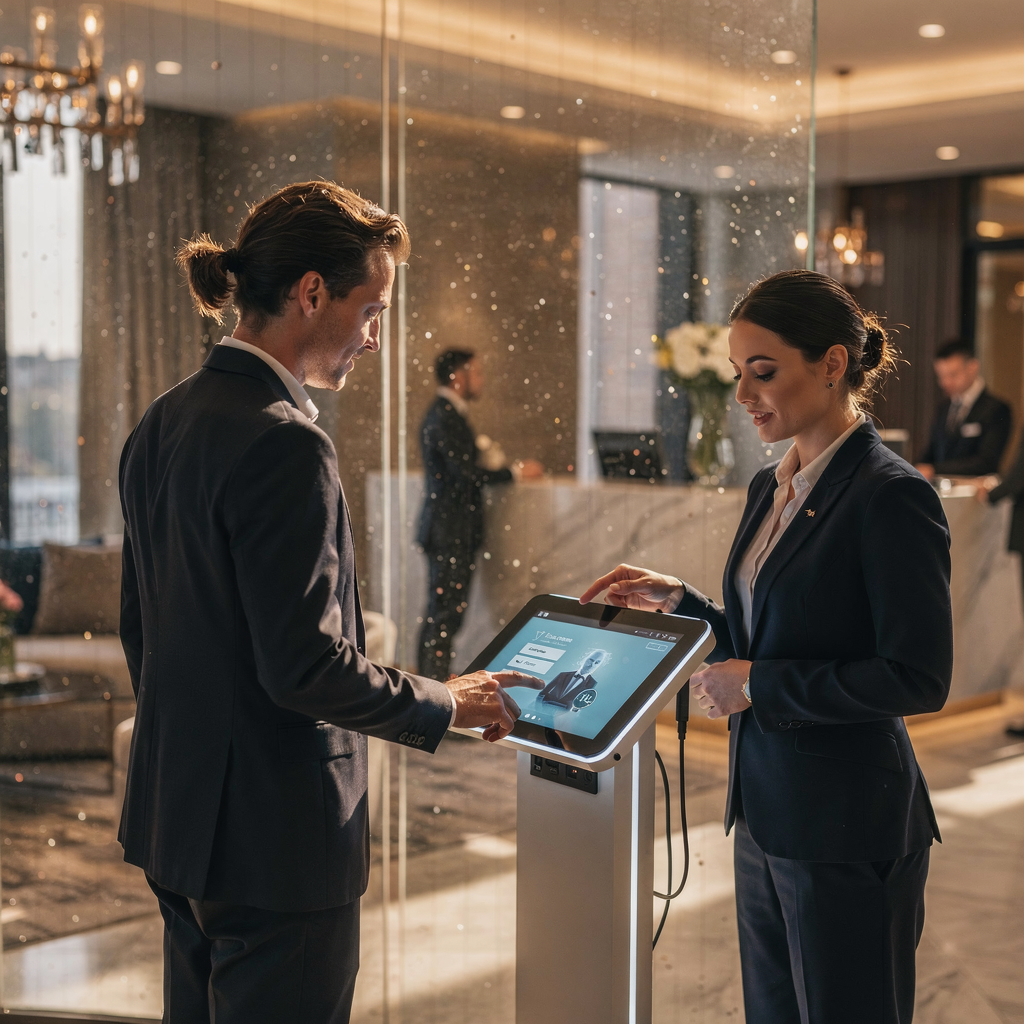
frequently asked questions: deployment, privacy, ROI and responsibilities for hospitality professionals
Below are practical FAQs that hospitality professionals ask when planning AI pilots. Each answer is short and action oriented, so teams can act quickly. The frequently asked questions cover timelines, integration, privacy, and measurable ROI.
How long does a typical AI pilot take?
Most pilots run 8–12 weeks from scoping to live trial. First, map core integrations and data flows. Then, run a constrained pilot that focuses on a single use case such as direct booking or FAQ automation.
What are realistic ROI targets for a pilot?
Set pilot KPIs like response time reduction, conversion lift and ancillary revenue per guest. Many pilots aim for a 20–30% uplift in ancillaries and a 50% faster response time on handled inquiries.
Should hotels build AI in-house or buy a vendor solution?
Vendors accelerate time to value and provide managed updates. In-house work gives more control. Choose based on data maturity, staff availability and long-term governance needs.
How do we protect guest privacy?
Implement data minimisation, consent mechanisms and encryption. Also maintain audit trails and provide guests with data access and deletion options to meet regulatory standards.
What systems must integrate with AI agents?
Key systems include property management systems, booking platforms, CRM and payment gateways. Also integrate with back-office ERPs where operational emails and invoices live.
How will staff roles change after automation?
Staff will shift from routine replies to high-touch guest interactions. Teams can reassign hotel staff to focus on experience design and handling complex guest issues.
How do we measure guest satisfaction and feedback?
Track NPS, CSAT and direct guest feedback after interactions. Also monitor guest reviews and sentiment tied to resolved issues to track service quality gains.
What are common failure points to avoid?
Poor data integration, stale content, and excessive automation without escalation paths cause failure. Ensure refresh cycles for offers and clear handoffs to humans for complex guest requests.
Can AI handle multilingual guests?
Yes. Multilingual support can scale service for international guests. However, you must localize offers and maintain cultural context for personalized service.
What are the next steps for hospitality teams?
Start by scoping priority use cases, run a POC, map integrations and prepare change management for staff. Then measure against baseline metrics and iterate quickly.
Drowning in emails?
Here’s your way out
Save hours every day as AI Agents label and draft emails directly in Outlook or Gmail, giving your team more time to focus on high-value work.