


How AI and property management agents automate tenant communication
First, AI transforms how teams automate tenant communication. AI reads incoming messages, classifies intent, and routes them. Next, the system logs maintenance requests, schedules tradespeople, and sends status updates. For example, an AI agent can turn a text about a leaking tap into a logged maintenance request, a vendor dispatch and several tenant updates. This workflow reduces manual triage and helps property teams meet service-level targets.
AI tools can cut response times by up to 60% and reduce tenant-communication costs by about 30% when they replace repetitive tasks and manual follow-ups; these figures come from recent industry reporting showing faster replies and happier residents. Also, an expert note explains that “Where a chatbot stops at answering a question, an AI agent can take the next step — logging requests, coordinating vendors, updating tenants, and ensuring seamless communication throughout the tenant lifecycle” as described by The Shift. This difference separates simple chatbots from AI agents capable of multi-step work.
Typical workflow diagrams look like this: tenant message → AI triage → create maintenance request → dispatch vendor → tenant update. SLA improvements follow quickly. Response times drop, resolution times shorten, and tenant satisfaction tends to rise. You should set clear handover rules. For example, AI handles routine maintenance requests and rent reminders. Humans take complex disputes, lease negotiations or emergency calls. Audit logs and escalation thresholds show when to hand over to a property manager.
Platforms such as Yardi Virtuoso and tools used by AppFolio or Showdigs support automated workflows and ticketing. Case box: Yardi Virtuoso — many teams use it to schedule works and push tenant updates. Case box: AppFolio — used for tenant portals and automated notices. Case box: Showdigs/HappyCo — supports inspection-driven maintenance logging. In practice, virtualworkforce.ai’s approach to automating the full email lifecycle also applies here: AI can triage emails, ground replies in operational systems and escalate only when needed, which allows property managers to focus on complex issues while AI agents streamline property communications. For landlords who want to pilot automation, start small, measure SLA changes, then scale across the portfolio.

AI agents for property management: roles for the property manager and AI assistant
First, define clear roles. The property manager handles strategy, compliance and escalations. The AI assistant manages first-line work. For instance, the AI assistant triages incoming tenant queries, books appointments, sends automated lease reminders and answers routine tenant questions. This split lets property managers focus on relationship work, complex negotiations and portfolio strategy.
AI agents handle scheduling, reminders and simple follow-ups. They also create structured records from free-form tenant emails and push that data into a management system. Property managers supervise quality, set escalation rules and own KPIs such as response time and resolution time. You should keep an audit trail and train staff to review AI outcomes.
Here is a practical checklist. First, set escalation rules that trigger handover to humans. Second, enable audit logs and retraining loops. Third, train staff on new workflows. Fourth, assign KPI ownership for response time, resolution time and renewal rates. Fifth, validate the tone and accuracy of automated replies.
Example duties for the AI assistant include automated lease reminders, booking maintenance appointments, answering routine FAQs, basic rent queries and confirming vendor attendance. The AI assistant reduces admin work and speeds replies. At the same time, property managers retain authority over sensitive tenant issues, lease negotiations and complaints that affect tenancy outcomes.
AI agents for property management don’t remove jobs; they reallocate effort to higher-value tasks. In fact, property managers and AI assistants working together improve operational efficiency and tenant satisfaction. For teams exploring AI solutions, an early step is to pilot with one workflow and measure time saved. If you want to see how AI can draft and ground operational messages in existing systems, our logistics pages illustrate similar automation patterns in email-heavy ops: see https://virtualworkforce.ai/hu/virtualis-asszisztens-logisztika/ for an example of end-to-end message automation.
Drowning in emails?
Here’s your way out
Save hours every day as AI Agents label and draft emails directly in Outlook or Gmail, giving your team more time to focus on high-value work.
Tenant experience and tenant screening: using AI in property management to improve retention
First, AI can raise tenant experience by ensuring fast, consistent replies. Faster responses reduce friction. As a result, tenant satisfaction rises and tenant retention improves. Reports suggest better communication raises tenant satisfaction by roughly 15–20% and supports improved renewal rates, especially where AI handles routine contact and frees managers to focus on people.
AI can also speed tenant screening. Automated checks pull credit, employment and reference data quickly. However, screening requires fairness. Combine automated scoring with human review to avoid biased outcomes. You should run bias checks and keep explainable audit trails. For compliance in the UK and EU, document the logic and keep records of automated decisions.
Best practices include transparency about profiling, giving applicants a chance to correct data and using human oversight on marginal cases. Track metrics such as tenant satisfaction scores, renewal rate, time-to-screen and dispute frequency. These KPIs tell you if automation improves outcomes or needs tuning.
Avoid relying solely on opaque models. Instead, use explainable models that show why a tenant was flagged and how to contest a decision. This transparency supports trust and reduces appeals. Also, use AI to personalise communications. For example, the system can tailor move-in instructions and local service suggestions based on tenant needs and property details, which leads to a stronger tenant relationship.
Finally, include feedback loops. Collect tenant feedback after maintenance visits and use that data to refine vendor selection and AI response templates. If you want deeper technical examples of how AI drafts grounded operational replies, review https://virtualworkforce.ai/hu/hogyan-javitsuk-a-logisztikai-ugyfelszolgalatot-mesterseges-intelligencia-segitsegevel/ to see parallels in service automation. By combining automated screening with human checks, you protect fairness while you accelerate decisions and improve tenant retention.
Property management software, AI tools and AI software that power smart property management
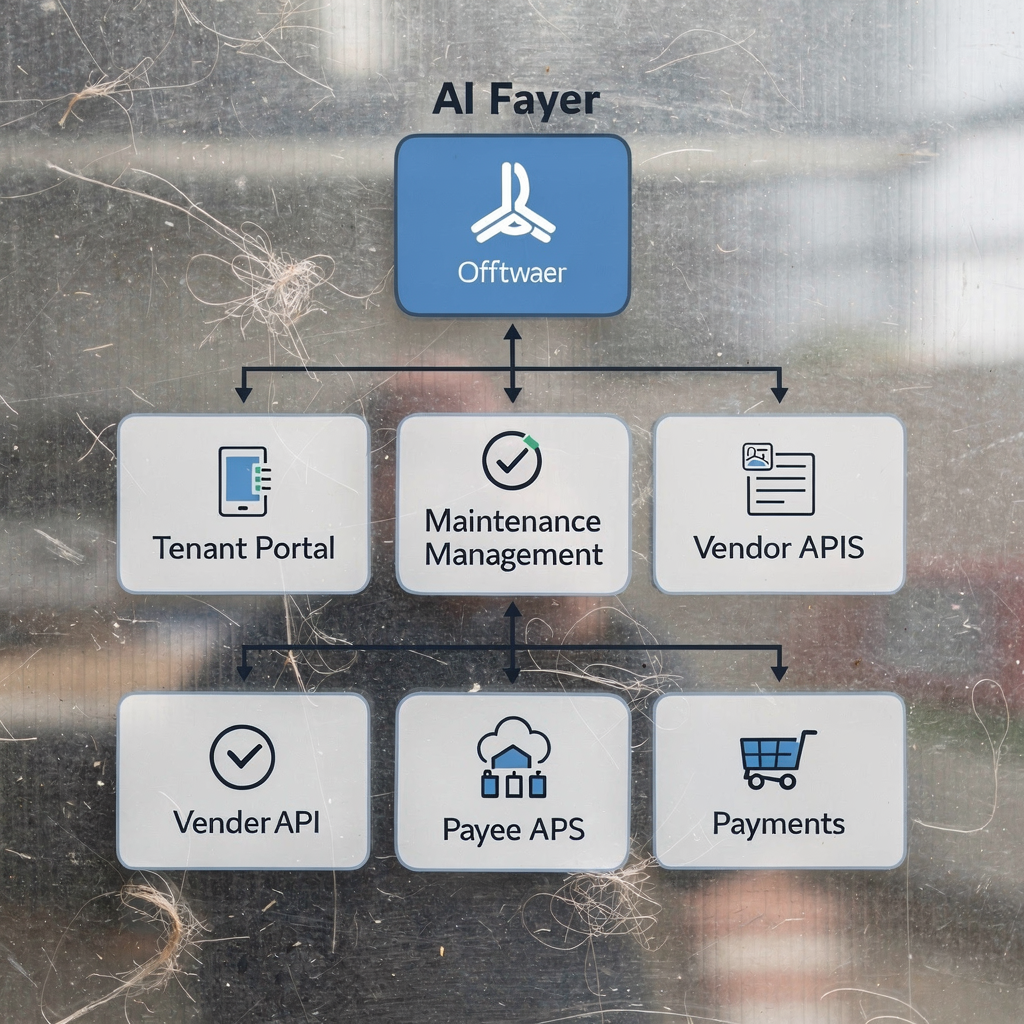
First, map the stack. Core components include tenant portal and messaging, maintenance management, vendor APIs, payment processing, CRM and analytics. Next, add an AI layer to automate triage, replies and data entry. The integration points matter. For example, linking the AI system to a PMS lets agents create tickets directly and update lease records automatically.
Compare off‑the‑shelf property management software with bespoke AI software. Off‑the‑shelf solutions speed deployment and often include standard tenant portals and payment links. Bespoke AI solutions can automate more complex workflows and integrate deeply with back‑end systems such as ERP or document management. Choose based on your portfolio size and technical resources.
Implementation tips: start with a pilot on a subset of properties, integrate with your existing management system and measure ROI over 3–6 months. Also, ensure you can export data and avoid vendor lock‑in. For teams focused on email and operations, the same architecture that powers logistics email automation applies: see https://virtualworkforce.ai/hu/hogyan-skalazzuk-a-logisztikai-muveleteket-ai-ugynokokkel/ for ideas on scaling AI across many inboxes and rules.
Vendors and tech notes: Yardi, AppFolio and HappyCo are common choices for day‑to‑day operations. AI tools from specialised providers add natural language understanding and workflow automation. For example, an ai software layer can read tenant emails, extract maintenance request details and start a payment or vendor booking flow. Integration with document management and lease management is essential for reliable replies and audit trails.
Finally, measure outcomes. Track saved staff hours, reduced tenant turnover and faster case resolution. Pilot small, then expand to additional properties once you validate the business case. This phased approach helps property teams adopt advanced AI while retaining control and oversight.
Drowning in emails?
Here’s your way out
Save hours every day as AI Agents label and draft emails directly in Outlook or Gmail, giving your team more time to focus on high-value work.
Privacy, GDPR and standards for AI property management companies
First, legal compliance must be part of any deployment. Property management companies that use personal data for automated decisions must publish clear privacy notices and identify a lawful basis for processing. Also, you should run Data Protection Impact Assessments (DPIAs) when AI profiling affects tenants. For UK and EU operations, DPIAs are mandatory where automated decision‑making or large‑scale profiling occurs.
Security controls are non‑negotiable. Use encryption, role‑based access, strict retention schedules and clear breach notification procedures. Next, sign Data Processing Agreements with all vendors and require subcontractors to meet the same standards. Also, keep records of algorithmic decisions and document how data was used to reach an outcome. Offer human review of automated decisions and provide opt‑out paths where required.
Operational rules should include staff training on data handling and incident response. Maintain audit trails so you can explain automated results to tenants and regulators. Also, offer simple language privacy notices that tell tenants which data is used and why. For example, if an AI system flags tenant credit risk, explain the factors, allow correction and offer human review.
Further, perform bias audits and fairness tests. Regularly review models for drift and unexpected behaviour. Use anonymised test data to assess performance. Finally, document vendor assessments and show that you have control over the ai system used in decision‑making. These steps protect tenants and reduce organisational risk while you scale AI into property operations.
Future of property management and commercial property management: advantages of AI and how AI real estate will revolutionize tenant communication
First, the future of property management will include more proactive, predictive and personalised contact. AI real estate tools will forecast maintenance needs, automate outreach and reduce avoidable tenant issues. As adoption grows—projected to rise substantially through 2026—property owners who implement AI effectively will see cost savings and higher tenant retention.
Trends & benefits include predictive maintenance, proactive tenant outreach and multi‑agent systems that combine chat, scheduling and analytics. Advanced AI will support leasing agents and property managers by sifting large datasets and recommending actions. This capability leads to operational efficiency and tenant satisfaction. However, risks such as vendor lock‑in, model drift and privacy backlash remain. You can mitigate these with vendor audits, regular model reviews and transparent tenant communication.
An action plan for managers: define pilot KPIs, choose one or two high‑impact workflows to automate, prepare change management and tenant communication templates, then scale gradually. Also, monitor tenant satisfaction and tenant turnover closely to measure impact. Use explainable tools so staff can trust decisions and tenants can contest outcomes.
Finally, the power of AI is not only in automation. It is also in augmentation. AI agents support property managers and allow property teams to focus on relationships, leasing and service recovery. Therefore, property managers can effectively combine human judgement with automated handling of routine tasks. For practical reading on automating operational emails and workflows that apply to property settings, see https://virtualworkforce.ai/hu/automatizalt-logisztikai-levelezes/ which explains how end‑to‑end email automation improves response times and consistency in operations. As AI capability grows, the modern property will evolve into a more responsive, efficient and tenant‑centred service model.
FAQ
What exactly are AI agents for tenant communication?
AI agents are software systems that read tenant messages, classify intent, and act on them. They can log maintenance requests, send automated replies and escalate complex issues to humans.
Can AI really reduce response times for tenant inquiries?
Yes. Studies show AI-powered tools can cut response times by up to 60% when they handle routine contact and triage, which frees staff to resolve complex cases source. Faster replies usually improve tenant satisfaction.
Will AI replace the property manager?
No. AI handles repetitive tasks while property managers keep oversight, handle escalations and manage sensitive lease negotiations. The human role shifts toward relationship and portfolio work.
How does AI affect tenant screening?
AI speeds screening by automating checks and consolidating data. However, human review is essential to ensure fairness, explainability and compliance with local laws.
What privacy steps should property managers take when using AI?
Publish clear privacy notices, identify lawful bases, run DPIAs for profiling, and sign Data Processing Agreements with vendors. Also, provide human review and opt‑out options where required.
Which software and AI tools work best for property teams?
Common platforms include Yardi, AppFolio and niche AI providers that add natural language processing and workflow automation. Choose based on integration needs and scale.
How do I start a pilot for AI in my property portfolio?
Pick one or two high‑impact workflows such as maintenance triage or lease reminders. Define KPIs, run a small pilot for 3–6 months and measure response time, resolution time and tenant feedback.
Are there risks to using AI in commercial property management?
Yes. Risks include vendor lock‑in, model drift and privacy concerns. You can mitigate them with vendor audits, regular model reviews and transparent tenant communication.
How does AI improve tenant experience?
AI provides faster, more consistent replies and proactive updates, which reduces frustration and supports higher renewal rates. Combining AI with human follow‑up strengthens the overall tenant experience.
Where can I learn more about automating operational messages for property teams?
For practical examples of end‑to‑end message automation that apply to property operations, explore https://virtualworkforce.ai/hu/virtualis-asszisztens-logisztika/ and related resources on our site which show how AI can draft, ground and route operational communications.
Drowning in emails?
Here’s your way out
Save hours every day as AI Agents label and draft emails directly in Outlook or Gmail, giving your team more time to focus on high-value work.