


apparel email list for clothing manufacturer teams: ready-to-use mailing list for apparel manufacturers
An effective ready-to-use apparel email list contains structured contact details and business metadata so teams can act fast. Typical fields include company name, professional email, job title, company size, sector, and minimum order. For clarity, a ready-to-use CSV often adds shipping country, manufacturing services offered, and a short note on capacity. This allows a clothing manufacturer to segment quickly and then send targeted messages that drive meetings and orders. Also, sales teams can use direct email to confirm RFQs, set timelines, and request samples.
Use cases span B2B outreach to buyers, order confirmations, supplier negotiations, and trade-show invites. For example, a manufacturing email list can help a garment manufacturer promote bulk production services to brands that source sportswear or women’s clothing. Next, a stores email list can support retail partnerships and wholesale reorder alerts. Because email marketing returns are strong, investing in a curated list often pays off. In fact, email marketing has an average ROI of $42 per $1 spent, which supports budget decisions for lists and campaigns Forbes Advisor.
Deliverable suggestions include a CSV with standard fields, plus a sample contact import template and a short outreach workflow. Provide a sample subject line pack and one automated sequence that covers introduction, follow-up, and a meeting request. For instance, subject lines that use the company name and a clear value point improve open rates. Also, include a short template for order confirmation emails to reduce manual input and errors.
Our company, virtualworkforce.ai, helps teams automate the full email lifecycle so lists become actionable quickly. We connect list records to ERP and then draft replies in Outlook or Gmail, grounded in operational data; this creates a seamless handoff from lead to production. For teams that need further reading on integrating email automation with logistics workflows, see our virtual assistant logistics resource virtuális asszisztens logisztika. Finally, give your marketer a clear CSV, a sample template, and a warm-up schedule so you can scale outreach with consistent quality.

email database and apparel manufacturers email database: hygiene, up-to-date checks and deliverability
Data quality determines how many messages land in inboxes. Therefore, any email database must include verification steps and source validation. Start by documenting the source of each record. Next, run verification checks that confirm email addresses, affiliated domains, and role accuracy. Use SMTP checks, pattern checks for disposable domains, and manual review for high-value decision makers. A clean industry email list reduces bounce rates and protects sender reputation. In practice, teams should remove invalid contact details and flag role changes to keep lists fresh.
Cadence for re-verification matters. For most B2B lists, re-check high-value contacts every three months and broader lists every six months. Stale contacts harm deliverability because repeated bounces lower your sender score. Furthermore, re-engagement campaigns can confirm intent before you delete a contact. For privacy and compliance, keep records of consent and processing activities to meet GDPR requirements and other regional rules; this reduces legal risk and protects customer trust. GoodFirms highlights integration and compliance as common challenges in manufacturing operations GoodFirms.
Deliverability controls include SPF, DKIM, and DMARC setup, plus a warm-up plan for new IPs. Monitor bounce rates, complaints, and open rates; benchmark open rates for apparel campaigns at about 18–22% and CTR at 2.5–4.5% to set realistic goals Forbes Advisor. Use a manufacturing email database only after verification. Also, consider segmented data for different campaign types so content matches recipient interest.
Record data protection measures and restrict access via role-based permissions. When syncing lists to CRM, ensure that the transfer is secure and that audit trails exist. If you need more on automating email drafting tied to operational systems, review our ERP email automation guide for logistics teams to see how inboxes can be turned into structured workflows ERP e-mail automatizálás logisztika. Finally, keep a separate list of high-value decision makers for outreach and treat it with higher verification frequency to preserve deliverability and response rates.
Drowning in emails?
Here’s your way out
Save hours every day as AI Agents label and draft emails directly in Outlook or Gmail, giving your team more time to focus on high-value work.
b2b outreach to fashion companies and apparel industry buyers: target audience, job title and company size segmentation
Effective B2B outreach depends on mapping target audience segments and then tailoring messages. Use the job title field to identify sourcing manager, production head, purchasing lead, or a decision-maker in retail buying. Segment by company size so you can offer minimum order options and production timelines that match capacity. For example, a small boutique brand may prefer custom-made samples, while a large brand needs bulk production and faster lead times. Segmenting by turnover and capacity helps prioritize leads for your sales team.
Target audience mapping clarifies the differences between retail buyers, brand owners, wholesalers, and factory contacts. Retail buyers focus on delivery schedules and product margins. Brand owners care about product quality and certifications. Wholesalers look for pricing and minimum order, while factory contacts handle production details. Use these distinctions to craft messages that highlight the correct products and services. A tailored approach increases conversion and reduces wasted outreach effort.
Personalization at scale is possible with templates that insert company name and job title into subject and preview text. Small changes like referencing a brand’s recent collection or a target market can improve relevance. AI technologies enable personalization without manual editing; for instance, our agents draft replies grounded in ERP and order history so teams respond accurately and quickly. For tactical advice on automated message drafting in Gmail, see our guide on automating logistics emails with Google Workspace and virtualworkforce.ai logisztikai e-mailek automatizálása Google Workspace-szel.
Metrics to track include opens, CTR, meetings booked, and conversion to orders. Also measure time-to-first-response and downstream KPIs like lead generation to order conversion. Track these metrics against the baseline open rate range of 18–22% to identify improvement opportunities Forbes Advisor. Use A/B subject testing and cadence optimization to refine performance. Finally, keep a short feedback loop between sales and operations so that manufacturing constraints inform outreach promises and customer satisfaction stays high.
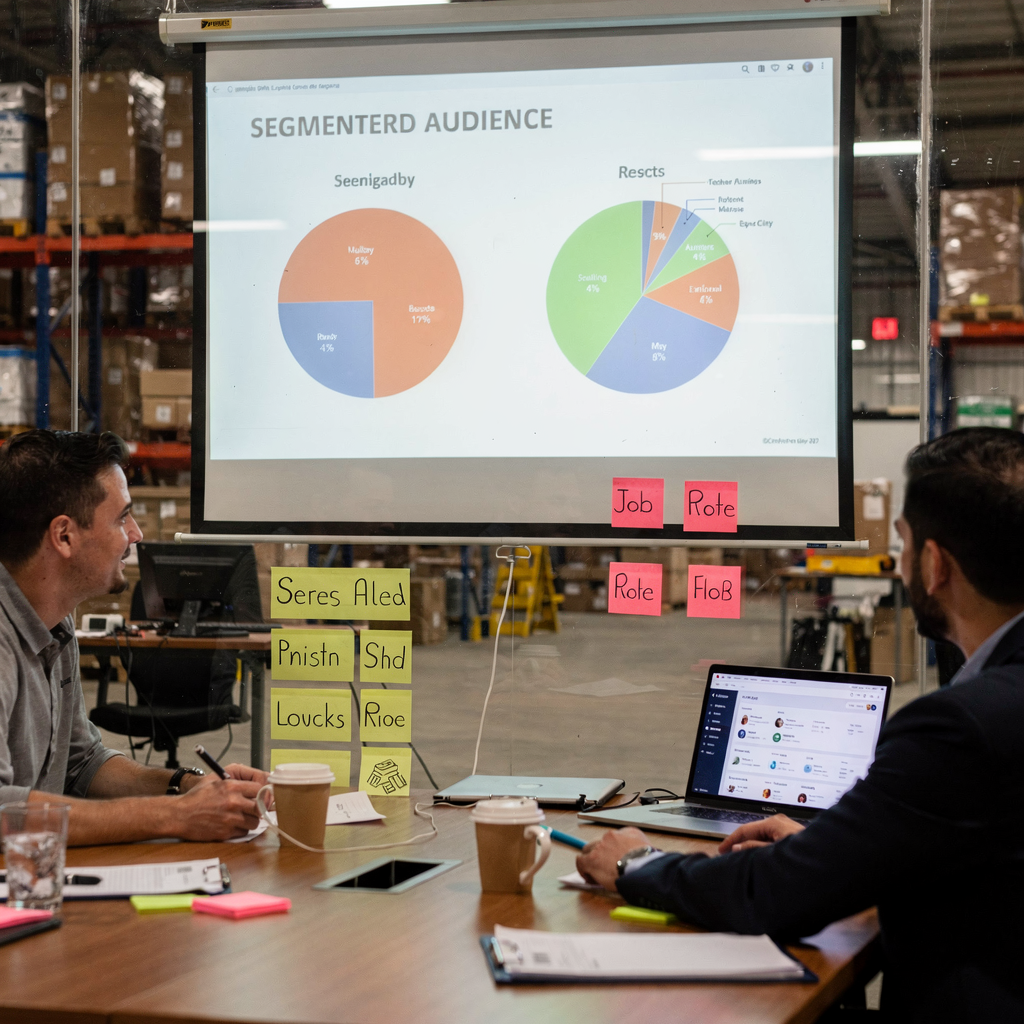
apparel clothing manufacturers email list and manufacturing email database: CRM and ERP integration with business database
Integration transforms static lists into operational assets. Import formats should include CSV, XLSX, and direct API sync options. Map fields such as company name, contact details, job title, and company size to CRM records. Also map business-specific fields like minimum order, manufacturing services, and lead time. When syncing to ERP, ensure order-related fields such as purchase order number and clothing production timelines are linked so automated replies can reference live data. This creates a seamless connection between outreach and operational reality.
Enrichment improves prospect scoring. Link business database fields such as turnover, capacity, certifications, and geographic footprint to predict fit for a given project. Access verified company data where possible so you can prioritize high-probability accounts. Enriched records let sales teams identify potential clients that match bulk production or custom-made needs. Use segmentation to route leads to the right rep and to trigger pre-built workflows for RFQs, sample requests, and order confirmations.
Use in workflows to send triggered messages for RFQs, production updates, and after-sales follow-ups. For example, when a purchase order is confirmed in ERP, an automated sequence can notify the buyer, confirm shipping, and update quality control checkpoints. Integration reduces manual errors and increases customer satisfaction. For teams that need end-to-end automation of logistics correspondence, our resources show how AI agents can thread-aware memory and push structured data back into operational systems automatizált logisztikai levelezés.
Security is critical: encrypt transfers, enable role-based access, and maintain an audit trail for supplier and manufacturer contacts. Keep data protection documentation current and limit export rights for contact lists. Integrate checks to prevent exposing sensitive contact details during routine exports. Finally, link CRM scoring with your business database so the sales team sees lead intent, capacity fit, and a likelihood score for conversion. This helps teams expand your business while preserving the highest quality controls.
Drowning in emails?
Here’s your way out
Save hours every day as AI Agents label and draft emails directly in Outlook or Gmail, giving your team more time to focus on high-value work.
clothing and apparel outreach best practice: deliverability, company name customisation and roi tracking
Deliverability relies on sender reputation and list hygiene. Start with SPF, DKIM, and DMARC; then warm up new IPs gradually. Keep complaint rates low by using clear unsubscribe options and by sending relevant content. Also, track bounce rates and remove hard bounces immediately to protect future campaigns. Use a segmented approach so messages align with recipient interests; this reduces complaints and increases open rates.
Company name customisation in subject and preview text increases relevance. Use short, specific subject lines that reference products and services or a recent industry event. For example, calling out a product line like sportswear or women’s clothing for a relevant buyer can improve open and CTR. Test variations using A/B subject and template tests, and run cadence experiments to find the optimal follow-up rhythm. Re-engagement flows should attempt two to three re-contact tries before archiving a contact.
ROI tracking needs a simple KPI model. Track cost-per-lead, meetings-to-orders, and average order value. Since email marketing offers strong returns, measure true roi by attributing orders to campaign touchpoints. Use internal tracking and link email clicks to CRM opportunities. If you want practical examples for logistics-led ROI improvements, see our virtualworkforce.ai ROI for logistics page where automation metrics are broken down for operational teams virtualworkforce.ai ROI.
Testing and measurement matter. Use small test segments, measure outcomes, then scale winning variants. Keep templates that reference the company name and that show clear next steps to book a sample or to confirm a minimum order. Finally, integrate feedback from customer support and production teams to refine messaging so that promises align with manufacturing capacity and quality of products.
new markets and fashion industry growth: using an up-to-date mailing list to reach new markets and improve b2b roi
The global apparel market reached roughly US$1.79 trillion in 2024, and e-commerce will account for a growing share of sales. This market context means that reaching new markets requires up-to-date contact lists and regional adaptations. For reference on market size, see a recent industry summary Gitnux. Regional lists should include language variants, local norms, and time-zone aware sending so deliverability and engagement improve.
Expansion tactics include localised content, segmented regional lists, and partnerships with local distribution channels. Prioritise prospects by company size, capacity, and fit for your manufacturing services. Score prospects by likelihood to convert, then target high-priority accounts with tailored sequences. Use an apparel manufacturers email database to find buyers who match your minimum order and production capabilities. For teams that want to scale outbound while keeping response accuracy, our AI agents can automate replies and route complex requests to humans only when needed.
Measure expected improvements in outreach efficiency by tracking meetings booked, orders created, and conversion uplift. Use a baseline open rate and CTR to estimate incremental leads. For example, if your open rate moves toward the industry average of 18–22% and CTR toward 2.5–4.5%, you can model lead generation and expected conversion to orders. Finally, adapt campaigns to target new verticals such as sportswear, womens’ collections, or sustainable textile lines to grow market presence and expand their customer base.
To get started, prepare a regional mailing list, set up compliance checks for local data protection rules, and run a short pilot campaign to validate messaging and timing. Use the results to refine your segmentation, templates, and cadence so that your outreach becomes high-performance and scalable.
FAQ
What does a ready-to-use apparel email list include?
A ready-to-use apparel email list typically includes company name, professional email, job title, company size, and sector. It often adds minimum order, manufacturing services, and basic capacity notes so sales teams can prioritise outreach efficiently.
How often should I verify an email database?
Verify high-value contacts every three months and larger lists every six months to keep records accurate. Regular verification reduces bounce rates, protects sender reputation, and improves overall deliverability.
What compliance steps should manufacturers take?
Keep records of consent, data processing activities, and the legal basis for contacting each contact. Also implement role-based access and a clear retention policy for contact lists to meet GDPR and regional data protection expectations.
Which job titles should I target in B2B outreach?
Target sourcing manager, production head, and purchasing roles, plus decision-makers in buying and operations. Tailor messaging by job title so content addresses the recipient’s priorities and increases response rate.
How do I integrate an email list with CRM and ERP?
Use CSV or API imports and map fields such as company name, contact details, job title, and production timelines. Ensure secure transfers, field mapping for orders, and audit trails so operational data and outreach remain aligned.
What deliverability controls are essential?
Set up SPF, DKIM, and DMARC, warm up new IPs slowly, and remove hard bounces immediately. Monitor complaint rates and keep unsubscribe options clear to preserve sender reputation.
How can I personalise at scale?
Use templates that insert company name and job title dynamically, and create short snippets for product lines or regional notes. AI agents can draft personalised replies by pulling in ERP and order history to keep responses accurate and fast.
What metrics should I track to measure ROI?
Track opens, CTR, meetings booked, lead generation, and conversion to orders. Also include cost-per-lead and average order value to create a complete ROI model for marketing strategies.
How can I expand into new markets with email outreach?
Create regional mailing lists with language variants and local compliance checks, then run pilot campaigns to test timing and messaging. Score prospects by company size, capacity, and fit to prioritise high-probability targets.
Who can help automate the email lifecycle for operations teams?
AI agents can automate intent detection, routing, and drafting, while keeping accuracy by grounding replies in ERP and other systems. For teams focused on logistics and operations, resources on automated logistics correspondence explain practical deployments and outcomes automatizált logisztikai levelezés.
Drowning in emails?
Here’s your way out
Save hours every day as AI Agents label and draft emails directly in Outlook or Gmail, giving your team more time to focus on high-value work.