


AI in construction — ai today, construction leaders need AI
AI today is reshaping how the construction industry plans, buys and moves materials. The global ai in construction market is expanding fast, and forecasts show mid‑20% CAGR for 2025–2032, which signals rapid adoption across the supply chain and points to where construction leaders should focus their investment projektált növekedés és piaci adatok. Leaders benefit because AI speeds procurement and improves forecasting, and it lowers project risk by spotting bottlenecks before they cause delays. For suppliers, distributors and contractors the upside is clear. Suppliers can position stock smarter, and distributors can shorten lead times, and contractors get fewer surprises on site.
This chapter sets context. Article explores what AI agents do, and why construction leaders need to act now. The world of construction now blends legacy trade skills and new construction tech. Construction professionals and construction pros who learn to use AI will gain a measurable edge. For example, a supplier that ties purchase rules to predictive demand can reduce waste and free working capital. The potential of AI shows up in safety, in efficiency and in contract clarity. As one trade analysis noted, „AI agents are fundamentally changing how construction professionals approach design, management, and project execution” forrás.
Construction leaders need clear signals. First, examine where emails, orders and site requests create daily friction. Second, map recurring tasks and match them to software systems and field apps. Third, pilot a small project so teams learn fast. Discover how AI can move repetitive work to agents that act and recommend, and then hand off exceptions to humans. The construction sector will not flip overnight. Still, agents are emerging as trusted co‑pilots, and construction companies that plan now will avoid reactive catch-up later. Construction leaders who build skills and governance now will be ready when materials arrive differently and when suppliers need faster decisions.
AI agents in construction — ai agent for construction, agents automate delivery and supply chain
An AI agent for construction is a specialized AI agent that knows construction vocab, contract terms and scheduling logic. Unlike a simple app, an AI agent learns from construction data and adapts as projects change. AI agents in construction do more than show dashboards. They act, they recommend, and they automate tasks such as ETA updates and rerouting. For example, agents track shipments and agents coordinate dispatch windows so that materials arrive aligned with project timelines. That lowers waiting time on site and reduces double handling.
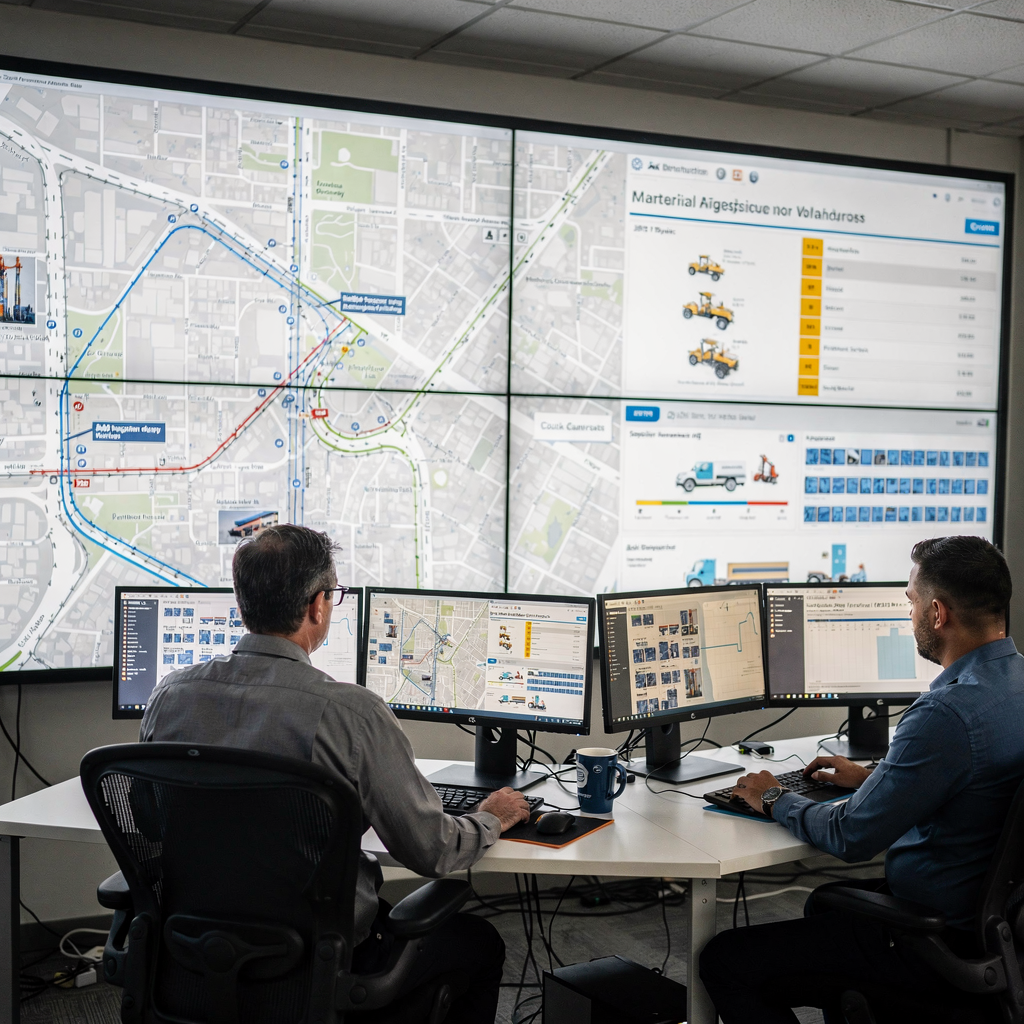
Delivery becomes visible and actionable. Agents can assign drivers, and agents are intelligent software systems that parse manifests, compare truck availability and update customers via email or SMS. In practice agents automate the steps between warehouse and construction site. They reduce missed slots and they reduce late delivery incidents. When agents act, they update teams and they flag conflicts early. For operations that still use shared inboxes, virtualworkforce.ai converts unstructured email requests into structured tasks, and then routes or resolves them by grounding replies in ERP and TMS data. If you want a deep look at automated correspondence workflows for logistics, see a practical example of automated logistics correspondence itt.
AI agents monitor progress in transit and they help suppliers see where stock is moving. Agents track inventory across depots and agents help reconcile handoffs between partners. Compared with basic tracking tools, AI agents continuously analyze exceptions and they recommend the next best slot based on constraints and availability. For suppliers the result is clear: fewer mis‑shipments, a tighter supply chain and clearer accountability. Construction leaders who test agentic AI now will find that agents work both as co‑pilots and as delegated operators, and that agents function best when governance and data feeds are solid.
Drowning in emails?
Here’s your way out
Save hours every day as AI Agents label and draft emails directly in Outlook or Gmail, giving your team more time to focus on high-value work.
Use cases for construction — use case: inventory, forecasting, RFPs and project management
Use cases for construction cover inventory, demand forecasting, RFP processing and field coordination. In inventory and material tracking, agents continuously monitor stock levels and agents track material flows to sites. They process telemetry from weighbridges, site weigh scales and RFID readers and they keep dashboards current. Suppliers can avoid overstocking and they can cut carrying costs. For instance, AI can move daily stock checks from manual log sheets to automated reconciliation, and it can create reorder suggestions tied to delivery windows.
Demand forecasting is another high‑value area. AI agents analyze historical purchases, project timelines and contractor schedules to forecast material needs by phase. This reduces over‑ordering and reduces waste. Project managers get clearer delivery windows and procurement teams can time bulk buys to lower pricing. The claim that RFP review time drops from weeks to hours is backed by data: AI agents can process RFPs in hours rather than weeks, dramatically accelerating procurement cycles RFP és beszerzési statisztika. That speed matters when multiple contractors bid on the same contract and when suppliers must respond quickly.
AI agents analyze past supplier performance and they identify potential supplier alternatives when risks appear. Agents identify quality trends, and they can flag a supplier with repeat delays. An agent can flag contract terms that risk cost overruns, and an agent can recommend the next best slot based on delivery windows and crew availability. On site, agents continuously monitor whether materials arrive on the days crews expect them, and they send alerts when trucks run late or when equipment status threatens schedule. For teams that need email automation tied to operational systems, see how ERP‑grounded email automation supports logistics itt.
Workflow and construction workflows — streamline with ai-powered, agentic ai, ERP and management software
Agents integrate into existing systems and they streamline order‑to‑delivery loops. They connect to ERP and to construction management software so that a PO, a delivery window and a bill of lading all sync. An ai-powered agent can create an automatic order when inventory drops below a threshold, and it can open a ticket when exceptions occur. That saves time and reduces manual entry. If your team uses a shared inbox, agents help by converting incoming requests to structured records, and then they route those records to the right person or tool.
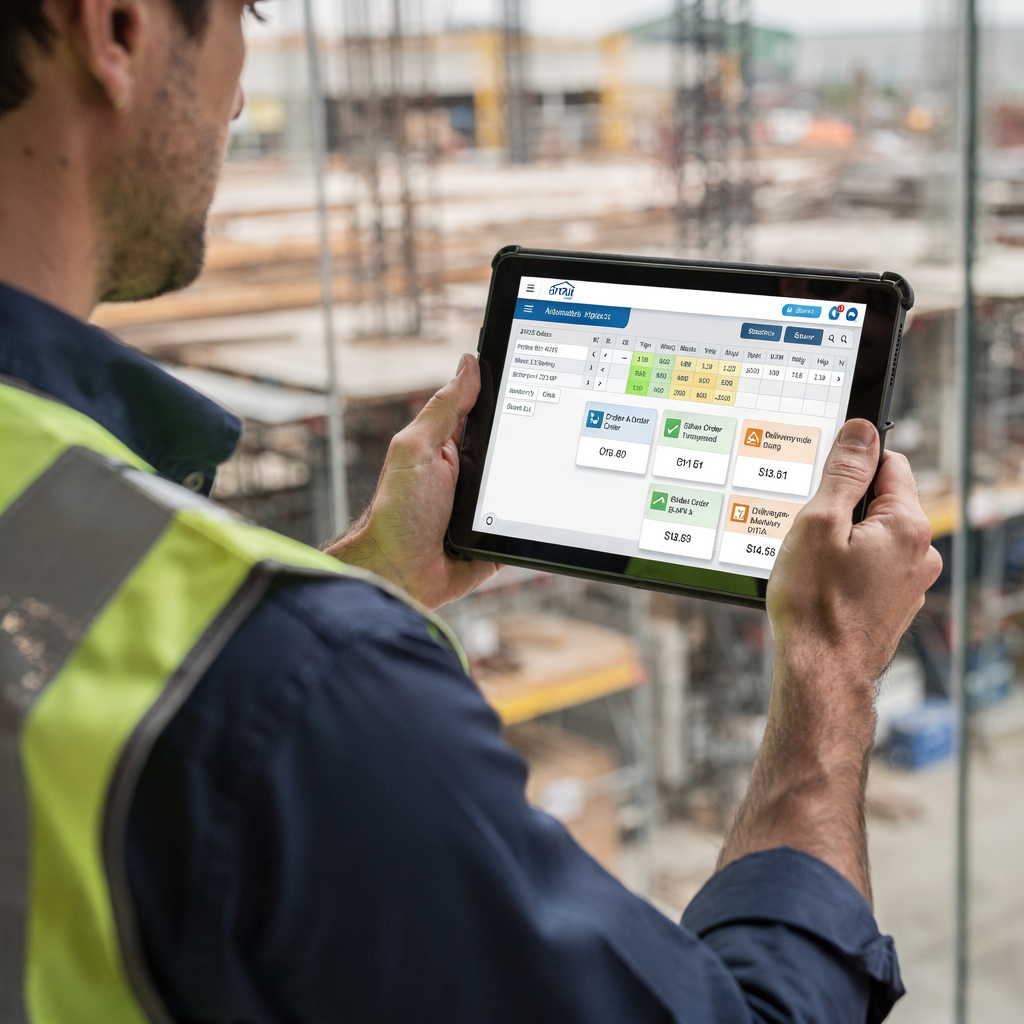
Practical workflows often combine automatic steps with human approvals. Agents work best when they operate as co‑pilots on routine flows and when humans handle edge cases. Project management tools should show the next action, and they should allow a project manager to accept or override agent suggestions. When ERP hooks, GPS/IoT feeds and rules are in place, agents can automate PO creation, confirm delivery slots and update crew schedules. Field apps then receive the confirmed ETA in real‑time, and crews get clear instructions.
Agentic AI can recommend and it can act. Decide which tasks to let agents act on and which to keep under human control. Use access controls and audit trails so that every automated action has context and a rollback path. For teams evaluating tools, a helpful comparison is available for logistics email drafting and operations-driven automation gyakorlati útmutató. Ultimately, well‑designed construction workflows reduce rework and increase on‑time delivery rates, and they free staff to focus on high‑value coordination instead of manual lookup.
Drowning in emails?
Here’s your way out
Save hours every day as AI Agents label and draft emails directly in Outlook or Gmail, giving your team more time to focus on high-value work.
Deploy AI agents — deploy ai agents, custom ai agent, use ai agents, agents fit suppliers and construction firms
Start small and scale fast. Deploy ai agents with a pilot that focuses on one product line, one depot or one frequent request type. Measure KPIs such as procurement cycle time, on‑time delivery and average email handling time. For many suppliers a custom ai agent is justified when SKUs are complex or when contracts are bespoke. Otherwise, off‑the‑shelf agents can speed time to value. A custom AI agent makes sense if your operations need deep grounding in legacy software systems and if edge cases dominate.
Integration checklist for suppliers should include ERP hooks, GPS/IoT feeds, data quality checks and contract and pricing rules. Agents handle email triage and agents can assign responsibilities automatically, and they can escalate only when rules trigger. virtualworkforce.ai focuses on the email lifecycle and shows how grounded replies can reduce handling time from ~4.5 minutes to ~1.5 minutes per email, while preserving traceability and accuracy. If your team wants to scale operational tasks without hiring, see guidance on how to scale logistics operations with AI agents skálázási útmutató.
Decide early which systems will be authoritative. For example, let the ERP author financials and let the TMS author transport events. Agents fit into that architecture and they adapt when data sources change. Also, test field operations integrations so that agents update site teams reliably. For construction firms that juggle multiple sites, use phased rollouts. Start with notifications, then advance to automated ordering and finally add autonomous exception handling. That progression keeps risk low and helps teams trust the agent outcomes.
Benefits of AI agents and adoption risks — benefits of ai agents, adopting ai agents, behind ai, real-time metrics for construction material suppliers
Benefits of ai agents include cost reduction, speed and safety. Studies suggest firms using AI report construction cost reductions around 15% and faster RFP turnaround times, and projects that apply AI report fewer delays and improved safety metrics iparági statisztikák. Safety gains matter to suppliers too because fewer incidents mean fewer claims and steadier demand. The broader market view also signals opportunity: the global AI market in construction is forecast to grow from USD 4.86 billion in 2025 to USD 22.68 billion by 2032, underscoring the rapid expansion of AI solutions for construction piaci előrejelzés.
Track these KPIs: on‑time delivery rate, stock‑out incidents, procurement cycle time, cost per project and real‑time fill rate. Real‑time reporting helps teams decide when to expedite, and when to consolidate orders to reduce cost. Behind AI there must be data governance. Poor data quality undermines agents, and weak rules create risk. To mitigate, enforce master data standards, log every automated action, and maintain human oversight for high‑risk exceptions. BuiltWorlds points out that agents currently show most utility as co‑pilots for structured, text‑based tasks rather than as fully autonomous operators elemzés. That guidance fits most suppliers: start with assisted automation and then expand authority.
Adopting AI agents needs a short roadmap. First, pilot on one depot or one frequent email pattern. Second, measure KPIs and improve data feeds. Third, scale across depots and product lines. Fourth, add autonomy in low‑risk flows and preserve human review for exceptions. As you adopt AI, remember that agents reduce repetitive work and they help teams focus on core construction activities. The benefits are tangible, but success depends on governance, training and clean construction data. For teams curious about end‑to‑end email automation in logistics workflows, see an example that compares vendor approaches and ROI outcomes ROI és összehasonlítás.
FAQ
What exactly is an AI agent and how does it differ from standard software?
An AI agent is a software system that can perceive inputs, reason about them and take actions or make recommendations. Unlike standard software that follows fixed rules, an AI agent learns from data and adapts its responses to changing conditions.
How can suppliers use AI agents to reduce costs?
Suppliers can use AI agents to improve forecasting, reduce waste and automate order processing, which lowers carrying costs and procurement cycle times. For many firms, AI-driven planning reduces material over‑ordering and cuts total project spend.
Will AI agents replace project managers?
No. AI agents automate repetitive tasks and surface recommendations, and they free project managers to focus on decisions that need human judgment. Project management tools integrate agent suggestions so project managers can accept, adjust or reject them.
How fast can an AI agent process an RFP?
Depending on configuration and data access, AI agents can review RFPs in hours instead of weeks by extracting requirements and scoring suppliers against past performance and price. This improves procurement speed and supplier responsiveness.
Are AI agents safe to deploy on active construction sites?
AI agents that monitor schedules and deliveries are safe when they operate with clear governance and human oversight. Agents that affect safety protocols should be deployed with conservative defaults and regular audits.
What integrations are required to deploy AI agents?
Typical integrations include ERP, TMS, WMS and GPS/IoT feeds so agents have authoritative data for decisions. Good integrations let agents automate email replies, order creation and status updates reliably.
Is a custom AI agent necessary for small suppliers?
Not always. Off‑the‑shelf AI agents can provide immediate benefits for standard SKUs and common workflows, while a custom AI agent pays off when catalogs are complex or contracts require bespoke logic. Start small and test whether customization improves ROI.
How do AI agents handle exceptions?
Agents route exceptions to humans with full context, and they can suggest corrective actions based on past resolutions. Escalation paths and audit trails ensure that issues get resolved quickly and transparently.
What KPIs should a company track after deploying AI agents?
Track on‑time delivery rate, stock‑out incidents, procurement cycle time, cost per project and real‑time fill rate. These metrics show operational impact and guide further optimization.
Where can I learn more about integrating email automation into logistics workflows?
For teams focused on logistics and email‑driven workflows, virtualworkforce.ai publishes practical resources and case studies that show how agents automate the email lifecycle and integrate with ERP and TMS systems. Those resources explain setup, governance and measurable outcomes.
Drowning in emails?
Here’s your way out
Save hours every day as AI Agents label and draft emails directly in Outlook or Gmail, giving your team more time to focus on high-value work.