


AI and real estate agents: how AI-powered tools lift productivity and automation
This chapter shows how AI and simple automation lift productivity for real estate agents. It covers concrete tasks that agents and brokers can automate. It also points to tools that integrate with a crm and your MLS. First, AI removes low-value admin work. Next, it keeps your database tidy and helps you stay organised. Then, it drafts property descriptions, sorts inbound enquiries, and sets reminders for followup. These actions let listing agents focus on sales and personalised service.
Many CRE firms are piloting AI already. About Om lag 92 % av kommersielle eiendomsselskaper har startet eller planlegger å pilotere AI-initiativ, yet only a small share have full integration, roughly 5%. The market for AI agents is growing rapidly and is expected to approach USD 50.31 billion by 2025. So the pressure to adopt is real for every real estate business and brokerage.
Examples help. Top Producer is CRM-first and helps agents build automated followup sequences and prospect tagging. Crescendo.ai and Lofty are well-known as ai-powered real estate chatbots that qualify visitors. A Superhuman-style approach to ai-powered email helps agents respond faster. virtualworkforce.ai automates email lifecycles for ops teams and shows how a virtual assistant can reduce handling time and route messages with context; see the virtual assistant logistics overview for how email automation works in practice (oversikt over virtuell logistikkassistent).
Quick takeaway: here is a short task list you can automate in a week. One, generate listing write-ups from property data and listing descriptions. Two, tag and score prospects in your crm. Three, auto-book viewings and sync calendar invites. Four, send property alerts from MLS matches. Each step will streamline workflow and increase productivity. If you use AI assistant tools, you will save hours and move faster in a crowded market.
Real estate AI for lead generation: ai lead generation, cold leads and property alerts
This chapter explains how real estate AI helps with lead generation and nurturing. It shows how platforms find and qualify prospects and how chatbots that qualify can warm cold leads. First, AI models scan public records, social signals and market data to spot owners who are likely to sell. Then, they score leads. This reduces wasted outreach and raises conversion rates. Automated property alerts keep buyers engaged and prompt quicker responses when a match appears.
Platforms report measurable lifts in qualified leads. AI systems triage leads more consistently than manual methods. A major study also shows AI still has accuracy limits, so humans must check valuations and legal statements; see the study that found issues in 45 % av AI-svar på nyhetsrelaterte spørsmål. Even so, agents who adopt AI lead generation and nurturing see better lead flow.
Tools and use cases: Lindy, CINC and Convin help capture and qualify inbound leads. Saleswise and HouseCanary provide market-based alerts, valuations and CMA data. Use an ai platform to run property alerts from the MLS and to send instant messages that invite a viewing. Also consider integrating tools that feed qualified prospects into your real estate crms so your team can act fast. For practical reading on automating message drafting and routing, check automated logistics correspondence guides (automatisert logistikkkorrespondanse).
Metrics to track are simple and actionable. One, lead-to-contact time. Two, qualification rate from AI contacts. Three, showings booked from AI-sourced leads. Four, conversion rate for cold leads after drip sequences. These KPIs reveal whether AI is helping you convert and whether to tweak your alerts or prompts. If you wish to test quickly, run a 30-day pilot on a single neighbourhood and measure change in showing bookings and conversion rates.

Drowning in emails?
Here’s your way out
Save hours every day as AI Agents label and draft emails directly in Outlook or Gmail, giving your team more time to focus on high-value work.
AI assistant and CRM: integrating an AI real estate assistant into daily workflows
This chapter gives practical steps to add an AI assistant to your crm and daily workflow. First, map your data flows and single source of truth. Keep one crm record for each lead and property. Then, set rules so the AI only writes to fields when confidence is high. Use a combination of automated and manual gates to avoid errors. Also, log every change so compliance teams can review decisions.
Best practices include clear handover rules. Let the AI handle initial triage and simple replies. Escalate to a human for valuation, contracts or complex legal questions. Set confidence thresholds and include an audit trail. Many real estate crms now offer AI modules that are designed to integrate seamlessly with your MLS and your email system. If you want to reduce inbox friction, see how virtualworkforce.ai automates entire email lifecycles for operations and customer service teams (AI-e-postutkast for logistikk), a useful model for real estate workflows.
Tools for agents include Top Producer for crm-led automation, Lofty for chatbot-first lead handling, and IDX-enabled platforms with built-in analytics. Also consider ai virtual assistants that can draft listing descriptions, schedule viewings, or push structured data back into your crm. Keep data quality high by regularly cleaning your database and by running spot checks on AI outputs. Remember the 45% error signal in some contexts; use humans to verify valuation outputs and sensitive replies.
Action checklist. One, identify one manual task the AI will automate this week. Two, define the handover rules for that task. Three, configure confidence thresholds in your crm. Four, run a 30-day audit and sample outcomes. This approach will let you integrate an AI real estate assistant without disrupting clients or compliance.
Chose the best real estate AI tools: evaluation checklist for agents and teams
This chapter gives a short, fact-based checklist for choosing real estate ai tools. First, decide what you need: chatbots, ai-powered email, valuation analytics or crm syncing. Next, test integration, data privacy and ROI. Ask whether the vendor supports audit logs and whether the ai platform is auditable. Also check for user-friendly and require minimal technical skills during setup.
Decision points matter. Does the tool handle ai-powered email and chatbots? Does it sync with Top Producer or other real estate crms? Can you export data and maintain a single source of truth? Is the tool powered by artificial intelligence you can test and review? Compare CRM-first options, chatbot-first vendors and valuation specialists like HouseCanary. For teams that want Superhuman-style speed but with operational grounding, see our picks of the best and Superhuman alternatives (beste Superhuman-alternativer).
Comparison samples: CRM-first (Top Producer) passes if it syncs with MLS and supports automation. Chatbot-first (Crescendo.ai) passes if it hands off leads to agents and logs conversations. Valuation/analytics (HouseCanary) passes if it provides audit trails and market insights. All-in-one IDX platforms pass if they integrate seamlessly with your crm and allow export. A short scorecard helps you choose quickly.
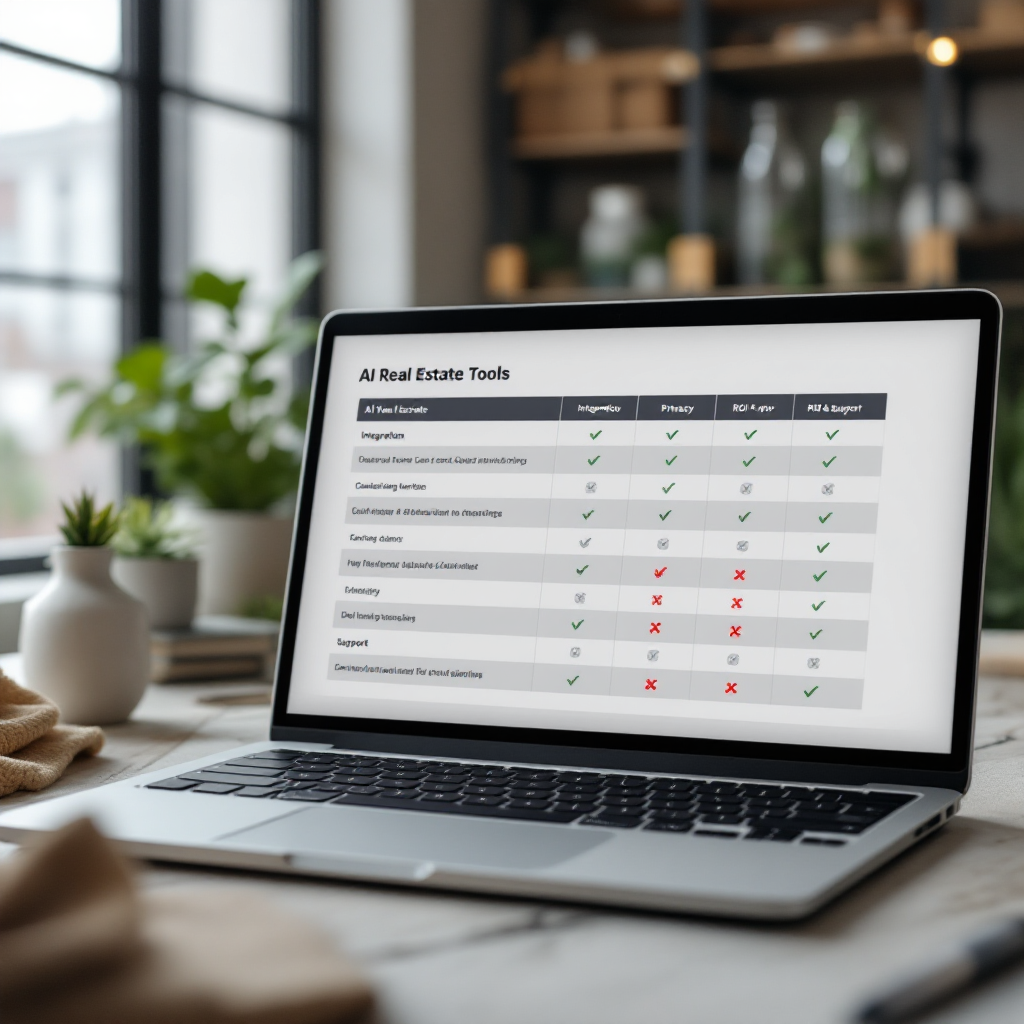
Quick scorecard: use five criteria with pass/fail thresholds. One, Integration: does it sync with your crm and MLS? Two, Data privacy: is data encrypted and governed? Three, Usability: can agents use it without heavy training? Four, ROI: does it cut time or increase conversions? Five, Support: is vendor support responsive? If a tool fails any two checks, it is not the right tools for your team. Choose the best ai tool by scoring vendors and running a 30-day pilot.
Drowning in emails?
Here’s your way out
Save hours every day as AI Agents label and draft emails directly in Outlook or Gmail, giving your team more time to focus on high-value work.
Real estate marketing with AI: ai-powered, marketing tools and intelligent AI tactics agents use
This chapter explains how AI improves real estate marketing across channels. Use AI to create listing copy, to target ads and to personalise followup sequences. AI can also generate visuals for staging and design and help you test A/B creative. Start with clear objectives and measure outcomes. Then, iterate quickly.
Practical tactics are simple. One, use AI to draft two variants of listing descriptions and test engagement. Two, run retargeting lists created from AI lead segments. Three, automate personalised property alerts that match buyer preferences. Four, use creative AI for virtual staging and social posts. Saleswise helps with marketing content and CMAs. For email operations, tools that mimic Superhuman can speed replies and automate followup; see alternatives to Superhuman for ideas (beste Superhuman-alternativer).
Measured outcomes to track include engagement lift on ads, cost per lead, conversion lift for retargeted cold leads, and open rates on ai-powered email. Use market data to refine segments and to provide personalised recommendations. Intelligent AI can surface which homes are likely to sell and who to target, so you convert leads faster. Also, if you integrate an ai virtual assistant, you can automate followup and let agents focus on showings and negotiations.
Action checklist. One, create two versions of each listing and test them. Two, set up a retargeting list from AI segments. Three, schedule automated property alerts for buyers. Four, measure cost per lead and conversion rates. These steps will help you sell more homes and make your marketing tools more effective.
Frequently asked questions: creating an AI roadmap, compliance and getting agents to adopt AI
This chapter answers common operational questions. It gives a six-step implementation roadmap and compliance notes. It also offers quick tips to encourage adoption among licensed real estate staff. Follow the roadmap and you will integrate AI faster and with fewer surprises.
Implementation roadmap (6 steps). First, assess needs and pick one use case. Second, pilot with one team and measure KPIs. Third, scale integrations into your crm and MLS. Fourth, train staff and set clear handover rules. Fifth, monitor quality and log decisions. Sixth, iterate and expand to other teams. Whether you’re a solo agent or part of a large brokerage, this staged approach reduces risk and shows ROI early.
Compliance notes are short. Keep a single source of truth in your crm. Log AI decisions and preserve email trails. Escalate any valuation or legal reply to a human. Remember that many ai tools are designed to automate routine tasks but they can also make mistakes. Use humans for final review on contracts and price opinions.
To get agents to adopt AI, start small. Train a handful of early adopters, show wins and then scale. Use user-friendly tools that are designed to be user-friendly and that require minimal technical skills. Provide templates for listing descriptions, scripts for chatbots and checklists for followup. Finally, pick a KPI, choose a tool, run a 30-day pilot and review results. For teams handling lots of email, see how virtualworkforce.ai reduces handling time and increases consistency in replies (forbedre kundeservice med AI).
Final quick checklist for a trial. One, select a measurable KPI. Two, pick one use case like lead generation or listing copy. Three, choose a vendor and configure CRM sync. Four, run a 30-day pilot and review results with the team. This process will help you integrate AI technology into real estate operations with minimal disruption.
FAQ
What is an AI assistant for real estate?
An AI assistant for real estate is software that automates tasks like lead triage, listing creation and email replies. It uses machine learning and natural language processing to interact with clients and update your crm.
How can AI improve lead generation and conversion?
AI helps by scoring prospects, sending timely property alerts and qualifying cold leads. It reduces lead-to-contact time and increases the rate at which leads convert to showings.
Are AI real estate tools accurate enough for valuations?
AI provides quick valuations and market insights, but models can err. A major study found issues in some AI responses, so you should use human checks for valuation and legal statements (studie).
How do I integrate an AI real estate assistant with my CRM?
Map your data flows, set confidence thresholds, and define handover rules. Keep a single source of truth in the crm and log all AI actions for compliance.
Which tools should I test first?
Start with crm-first tools like Top Producer, chatbot-first vendors like Crescendo.ai and Lofty, and valuation platforms like HouseCanary. Run a short pilot on one neighbourhood and measure showing bookings and conversions.
Can AI handle email for my team?
Yes. Some vendors automate the full email lifecycle, triaging, routing, drafting and creating structured data from messages. See virtualworkforce.ai for an example of end-to-end email automation and reduced handling time (forbedre kundeservice med AI).
What KPIs should I track during a pilot?
Measure lead-to-contact time, qualification rate, showings booked from AI leads and conversion rates. Also track cost per lead and engagement lift on ai-powered campaigns.
How do I get agents to adopt AI?
Start small, train early adopters, show quick wins and use user-friendly tools. Provide templates and clear escalation rules to build confidence.
Is data privacy a concern with AI vendors?
Yes. Confirm encryption, governance and audit trails before you share CRM or MLS data. Ask vendors for compliance documentation and for the ability to export your data.
Should I build my own AI or buy a tool?
For most teams, buying a tested tool is faster and cheaper. Creating an AI requires data, engineering and ongoing maintenance. If you handle specialised email workflows, consider a tailored vendor or a no-code ai platform that integrates with your systems.
Drowning in emails?
Here’s your way out
Save hours every day as AI Agents label and draft emails directly in Outlook or Gmail, giving your team more time to focus on high-value work.