


ai and the energy sector: use cases and benefits of ai
AI already plays a central role in the energy sector. It supports billing, outage updates, meter queries, compliance reporting, sensor monitoring and carbon tracking. For utilities, these are core use cases that turn manual work into automated workflows that scale. For example, AI automates the paperwork mountain and produces timely compliance reports from sensor feeds; this reduces manual error and speeds audit cycles AI i forsyningsbransjen: Automatisering av det mennesker hater å gjøre. In practice, the benefits of AI show as faster reporting, fewer mistakes, and more time for planners.
Operators use AI to analyse smart meter data and detect distribution inefficiencies before they cause failures. This reduces downtime and enables proactive maintenance. At the same time, teams get continuous carbon tracking and energy usage insights that support sustainability goals. Yet the benefits come with a cost. The energy and water footprint of large AI models needs measurement and optimisation so the net gain is positive. Research on measuring AI’s environmental footprint highlights the need to balance compute with operational wins Måling av AIs energimiljøavtrykk for å vurdere påvirkning.
When organisations start with one pilot, outcomes appear quickly. A small use case, such as automated billing queries, lowers repetitive workload and improves timeliness of compliance reports. The end-to-end value grows as systems interconnect. Utilities can then expand to outage detection and carbon reporting. For teams that manage high email volumes, tools that automate the email lifecycle are useful; they create structured data from messages and accelerate account management. For more on how AI automates email-driven operations in logistics and ops teams, see a practical guide to virtual assistants in logistics virtuell logistikkassistent.
ai agents for utilities and utility customer service: key use cases to streamline contact centre work
AI agents for utilities handle routine billing queries, move-in and move-out requests, payments and basic meter problems. They act as the first responder for simple customer inquiries, so human agents can focus on complex faults. Typical call-deflection rates for utilities are around 20–50% for routine contacts, which directly lowers call volume and queue times. Independent industry statistics show AI assistants influence how companies build software and handle routine contacts 40+ AI-assistentstatistikker 2026: Adopsjon, påvirkning og ROI. This level of deflection reduces average handle time and cuts operational costs per contact.

Contact centre leaders track metrics that matter: deflection rate, average handle time, cost per contact and first contact resolution. When AI manages simple billing inquiries, operator workload falls. For instance, an automated workflow can validate meter readings, post payments, and reply to billing inquiries without human intervention. This automates customer service and reduces repetitive tasks. At the same time, the virtual assistant must be designed to escalate when needed.
Moving from pilot to production requires integration with CRM, billing and outage management. Security and consent rules are essential. In many deployments, the outcome is fewer simple customer calls and faster resolution for customers who need specialist help. If you want to see how similar principles apply to logistics email automation and customer response, read how to improve logistics customer service with AI hvordan forbedre logistikk-kundeservice med AI. That resource explains routing, routing rules and escalation paths which also apply to utility customer service.
Drowning in emails?
Here’s your way out
Save hours every day as AI Agents label and draft emails directly in Outlook or Gmail, giving your team more time to focus on high-value work.
ai platform and platform for energy: integrating with utility systems and the contact center
An effective AI platform must connect to billing, CRM, smart meter data, outage management and IVR/contact centre systems. It requires secure APIs, robust authentication and consent workflows. The typical implementation path maps data flows, pilots a use case such as billing or outage notifications, then expands once metrics stabilise. This staged rollout lowers risk and shows measurable gains early. The ai platform should enable end-to-end orchestration across field and contact systems while keeping data governance tight.
Architects should plan for resilience. Peak demand and major outage events stress systems. A resilient design includes fallback routes to human agents, offline caches for critical customer data, and monitoring that triggers failover. Where possible, use thread-aware automation that keeps context across messages and escalations. Our company, virtualworkforce.ai, automates the full email lifecycle for ops teams and demonstrates how end-to-end email automation reduces handling time from ~4.5 minutes to ~1.5 minutes per email. That approach is relevant where inbound mail feeds many service requests and account management cases automatisert logistikkkorrespondanse.
Security, privacy and data lineage are non-negotiable. Audit logs and role-based access help meet regulatory needs. The platform must also expose observability so operators detect errors, latency and model drift. When AI agents built to interface with legacy utility systems work alongside human teams, operational costs fall and service quality improves. Finally, measure the platform’s energy impact and optimise compute to reduce the energy usage of large models while keeping performance high AI vs. mennesker: Den reelle kostnaden for arbeid — energi, vann og penger.
generative ai, conversational ai and smart ai: enabling seamless self-service and better cx
Generative AI and conversational AI serve different but complementary roles. Conversational systems guide customers through structured Q&A and send proactive outage alerts. Generative AI drafts personalised communications and simplifies complex bills into plain language. Together they create a seamless self-service flow that can raise CSAT and speed resolution. For example, an AI can generate a plain-English explanation of a tariff change and include energy usage insights tailored to a household.
Designers must keep customer experience central. A seamless interaction blends natural language understanding with customer data to resolve queries quickly. The virtual assistant should confirm identity, access billing history and provide clear next steps. Always include human fallback so diverse customer needs get expert care. This balance helps transform customer service while protecting satisfaction metrics and trust.
Use generative ai capabilities to draft tailored emails, SMS and voice scripts, then validate them against customer records. That speeds account management and reduces repetitive email drafting. For ops teams overwhelmed by unstructured email, an end-to-end approach to automate the lifecycle of messages improves consistency and traceability. See how zero-code setups and deep data grounding work for email automation in logistics as a useful parallel ERP e-post-automatisering for logistikk.
Finally, measure outcomes with FCR, CSAT and net promoter score. Apply sentiment analysis to conversations and learn how to refine prompts and templates. When done well, AI enables self-service that answers most routine customer inquiries and improves customer experience without alienating anyone. This approach helps the utilities industry move from reactive support to proactive engagement that can proactively notify customers about planned works and outages.
Drowning in emails?
Here’s your way out
Save hours every day as AI Agents label and draft emails directly in Outlook or Gmail, giving your team more time to focus on high-value work.
case study: utility companies in practice (Octopus Energy + conversational outage examples)
Case study material shows how AI works in real operations. Octopus Energy has used chatbots to handle routine tasks, reduce human workload and improve satisfaction. Their implementation highlights the value of conversational automation: the bot covers high-volume enquiries and leaves complex problems for field teams. This type of deployment provides a template for other utility companies that want to reduce service pressure while keeping quality high. The case study approach also stresses careful measurement of call deflection and CSAT.
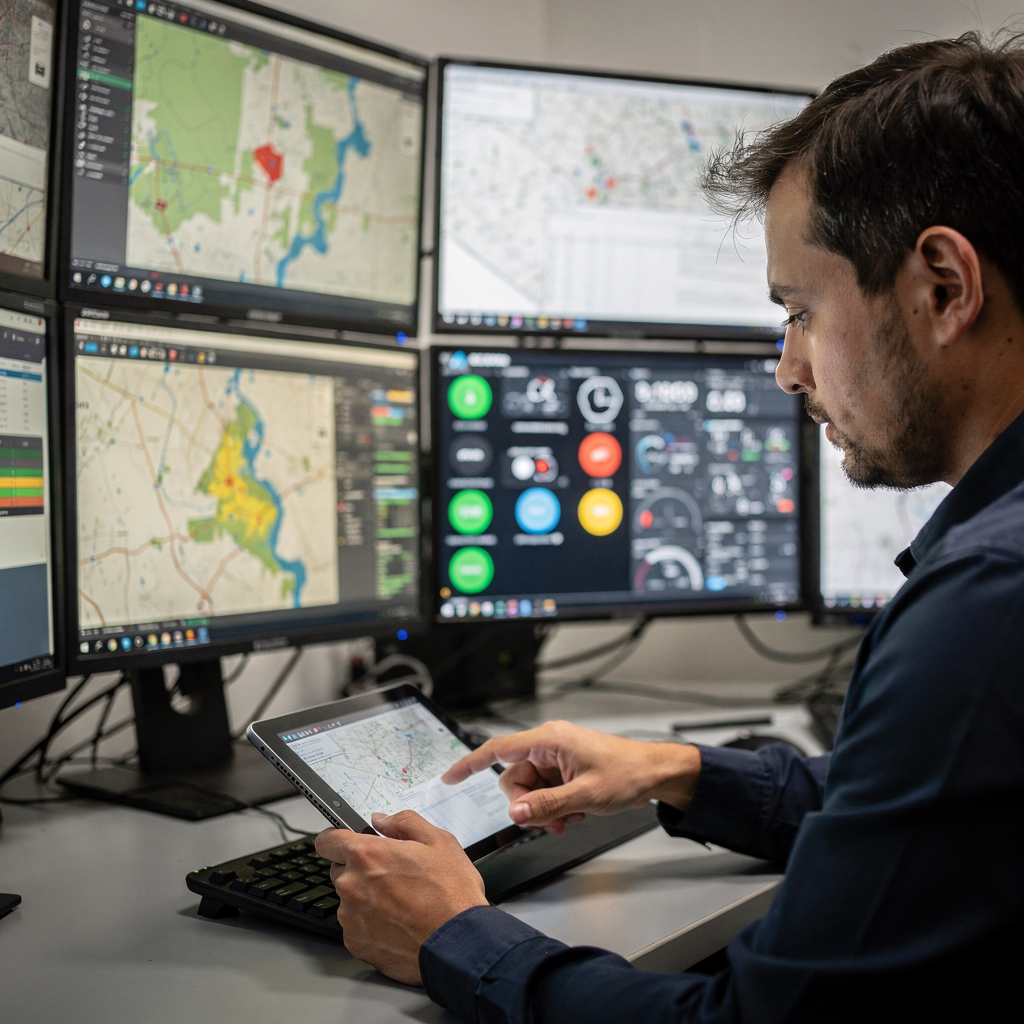
Outage management examples from larger vendors show how conversational systems integrate with outage status APIs to push updates and receive reports from customers. Implementations can proactively notify affected households, publish outage updates, and accept customer reports for triage. That combination reduces inbound call spikes during incidents and helps prioritize field crews through better data flow. Utilities reduce reaction time and improve the accuracy of outage reports by combining automated detection with verified customer input.
Lessons learned include the need for multi-channel alerts, verification of outage information, and resilient fallbacks if the AI or platform fails. Outage management systems must synchronise field crew schedules, automated messages and CRM tickets so that every customer interaction is logged and actionable. When these pieces link, human agents focus on complex restoration tasks while the AI handles status updates and routine communication. This preserves trust, keeps customers informed, and helps energy customers feel supported during incidents.
improving customer satisfaction: KPIs, governance, and how to reduce customer call volume while keeping customers happy
To improve customer satisfaction, set clear KPIs and governance. Track call volume, call deflection rate, CSAT, Net Promoter Score, first contact resolution and average handle time. Also monitor time to resolution and cost per contact. Governance needs include data protection, transparent AI use, audit logs and continuous human oversight. Start with one use case, measure deflection against CSAT, and scale when quality remains steady.
Metrics must tie back to business goals. If automation reduces operational costs but hurts CSAT, pause and refine. Design escalation paths so human agents resolve issues where context or empathy matter. Train the customer support team to handle edge cases and to use AI outputs as a decision aid. This helps human agents to focus on meaningful interactions and complex customer needs instead of repetitive work. Human agents to focus on exceptions is a key operational principle.
Sustainability matters too. Measure the energy and water footprint of models and consider offsets or optimisation. Balancing energy usage with reduced travel for field teams or fewer lengthy calls can yield net environmental wins. Use policy and transparency to build trust. For teams that face heavy email traffic, technologies that automate the end-to-end email lifecycle are designed to support operations and reduce handling time while improving consistency and accessibility. If you plan to pilot, a short checklist and ROI guide can help you scale without hiring more staff virtualworkforce AI ROI for logistikk.
FAQ
What is an AI assistant for utilities?
An AI assistant is a software agent that automates routine tasks for utility providers, from billing replies to outage notifications. It uses AI models to interpret customer inquiries, fetch data and draft responses, while escalating complex cases to human agents.
How do AI agents for utilities reduce call volume?
They handle simple, high-volume inquiries such as billing inquiries, meter reads and account updates, which deflects calls away from the contact centre. As a result, fewer routine contacts reach the call centre and queues shorten.
Can AI platforms integrate with existing utility systems?
Yes. Modern AI platforms connect to CRM, billing, smart meter data and outage management systems via APIs. Integration planning should include authentication, consent and fallback paths for resilience.
Are outage updates reliable when sent by conversational systems?
They can be, provided the system links to accurate outage management systems and uses verification steps. Multi-channel confirmation and clear escalation to field teams improve the reliability of automated outage reports.
What KPIs should utilities track for AI pilots?
Track call volume, call deflection rate, first contact resolution, CSAT, average handle time and cost per contact. Also measure time to resolution and system uptime for the AI platform.
How do utilities manage the environmental impact of AI?
Measure the energy usage of models and optimise compute, schedule heavy workloads for low-carbon times and consider offsets. Compare the model’s footprint against operational savings like fewer site visits.
Will AI replace human agents?
No. AI handles routine work so human agents can focus on complex problems and customer needs. The best deployments pair AI with human oversight and clear escalation paths.
What governance is needed for AI in utilities?
Governance should include data protection, transparent policies, audit logs and continuous evaluation of model accuracy. Regular reviews help maintain trust and compliance.
How should a utility start an AI pilot?
Begin with a single use case such as billing or outage alerts, measure deflection and CSAT, then expand. Include technical integration, stakeholder alignment and a rollback plan.
Can email automation help utility customer service?
Yes. Email automation that creates structured data and drafts responses can speed account management and reduce handling time. For teams dealing with high volumes of operational email, end-to-end automation improves consistency and traceability.
Drowning in emails?
Here’s your way out
Save hours every day as AI Agents label and draft emails directly in Outlook or Gmail, giving your team more time to focus on high-value work.