


ai, ai agent, agent for hotels, and ai agent for hotels: automating booking and concierge tasks (hotel ai)
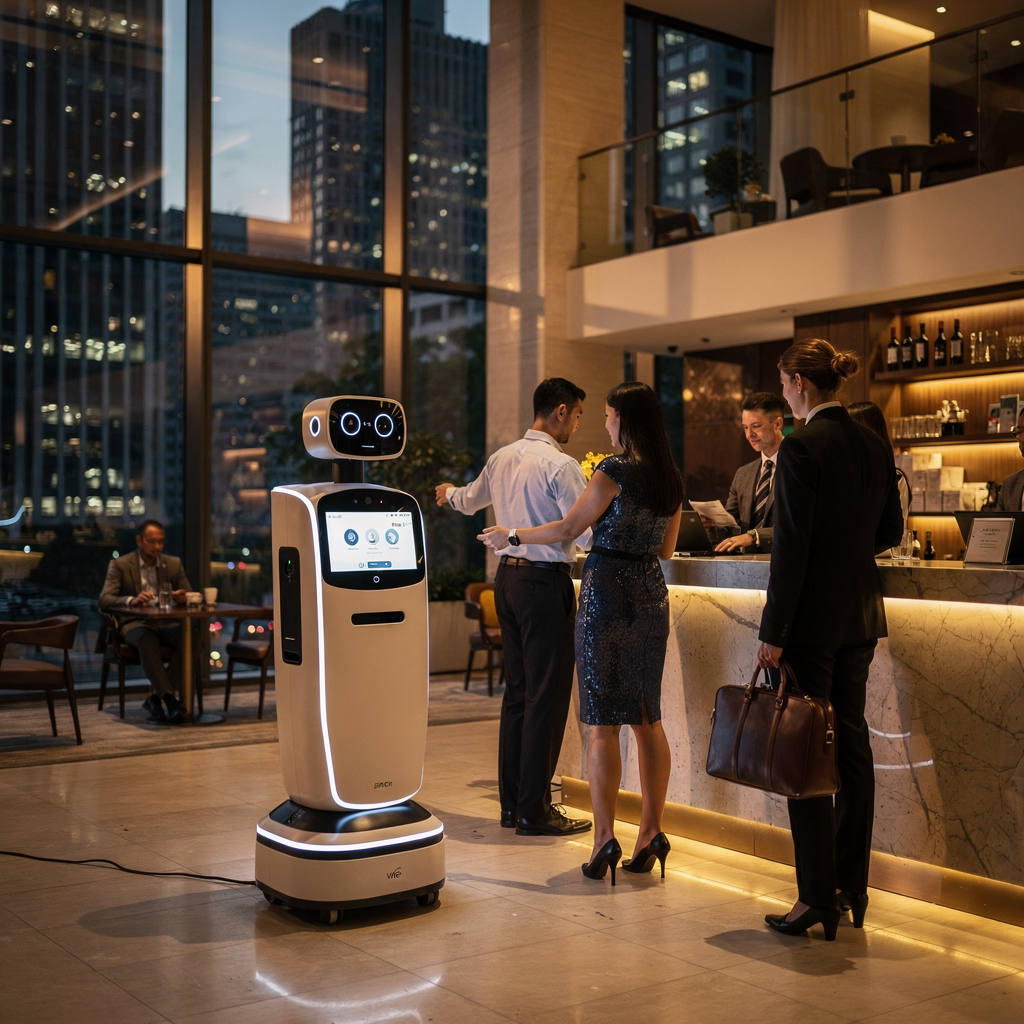
City hotels are adopting AI fast and in practical ways. An AI agent appears as a chatbot on a booking page, an AI booking assistant inside a hotel app, or a concierge robot at a lobby desk. These intelligent agents answer questions, confirm guest booking, modify reservations, and handle many routine concierge tasks. For example, a deployed concierge robot at Novotel Ambassador Seoul Dongdaemun handled check‑in and local recommendations and guests praised the speed and novelty of the interaction, with one guest saying, “The AI robot made check-in seamless and added a futuristic touch to our stay” źródło.
AI shortens response times and keeps services online 24/7, and it can increase bookings when tested on reservation flows. Studies show that AI‑enabled service attributes have a measurable effect on satisfaction; one published analysis reported a positive impact with β ≈ 0.251 on guest outcomes źródło. That study measured how speed and consistency from intelligent systems raise guest satisfaction and conversion. City hotels see the highest value from automation where turnover is high, arrivals are late and multilingual guest flows demand instant answers. Chatbots and AI concierge tools reduce queueing at the front desk and let hotel staff focus on higher‑value work.
In practice an AI agent for hotels integrates with property management and booking engines so that reservations update in real time and secondary services are offered during reservation flow. The agent provides personalized recommendations and can suggest local dining and events based on guest preferences. When hotels use these agents they often see a higher booking conversion and fewer manual calls to the front desk. For proof points and setup patterns, read a practical guide on scaling operational AI pilots from a logistics perspective at virtualworkforce.ai, which explains how to map processes and integrate data systems for reliable automation jak skalować operacje logistyczne przy użyciu agentów AI.
hospitality, hospitality industry and hospitality businesses: why hospitality leaders invest in hospitality ai solutions and hotel tech
Hospitality leaders invest in AI to cut costs and to stand out in crowded city markets. Executives cite cost control as a primary reason, since automation handles routine tasks such as reservation confirmations and simple guest inquiries, and therefore reduces labor pressure. Leaders also look for differentiation: in an urban environment a fast, responsive booking experience can influence which hotel a traveler chooses. Surveys and market reports from 2024–25 show a clear rise in AI adoption and expectations about impact on revenue and operations źródło.
Business drivers include lower cost per handled task, better yield on promotions via personalized recommendations, and improved operational efficiency. Chains with mature hotel systems invest in deeper integrations, and independents focus on nimble pilots. Implementation reality differs: large brands integrate AI into property management systems and central dashboards, and smaller properties adopt cloud agents to support booking and concierge. For hotels considering pilots, consider pairing a booking assistant with your existing CRS and PMS so data flows stay synchronized.
Hospitality businesses find that AI platforms can automate email rules, routing, and replies, which is especially useful for volume‑heavy operations. For teams that handle inquiries across channels, an AI platform that grounds replies in back‑end data reduces errors and improves consistency. The experience from other industries shows that automating operational email workflows returns hours per employee daily; see a logistics example and ROI discussion at virtualworkforce.ai for parallels in structured automation and data grounding virtualworkforce.ai ROI.
Finally, hospitality leaders must weigh integration complexity against the speed of deployment. Larger chains can fund full property rollouts, while boutique hotels test niche features such as ai voice check‑in or an ai concierge focused on local knowledge. Either way, the practical payback often arrives quickly on high‑volume tasks like bookings and late check‑ins.
Drowning in emails?
Here’s your way out
Save hours every day as AI Agents label and draft emails directly in Outlook or Gmail, giving your team more time to focus on high-value work.
guest experience, guest expectations and seamless stays: hospitality ai agents in a smart hotel and ai hotel context
AI agents reshape the guest experience by delivering faster answers and personalized experiences. A chatbot answers booking questions at any hour, an AI assistant suggests upgrades, and a room control interface uses natural language to adjust lighting. These interactions improve guest satisfaction by cutting friction during arrival and in‑stay moments. Empirical research found the presence of AI‑enabled service attributes raised satisfaction with a moderate effect size (β ≈ 0.251) źródło. That kind of metric helps operators quantify the ROI on a guest experience upgrade.
Designing AI for hospitality requires care. Keep the agent as an assistant so staff can focus on human moments. If you automate everything you risk depersonalization and unhappy guests. Instead, let intelligent agents handle routine requests and escalate to human staff for complex needs. This approach keeps the stay seamless and strengthens the human touch at the right time. For example, an AI concierge can book a local dining reservation, and then hand the full context to the front desk to deliver a surprise birthday cake in the room.
Multilingual support is essential in city hotels, and AI agents deliver that capability without hiring dozens of bilingual staff. Chatbots and voice assistant features provide consistent answers, and they can integrate local events and dining suggestions to enhance guest booking and on‑stay offers. For a practical note on using AI to automate email and messaging workflows that affect guest communication, virtualworkforce.ai describes zero‑code setup and business‑rule routing that helps hotels ground replies in operational data jak usprawnić obsługę klienta w logistyce dzięki sztucznej inteligencji. Use clear escalation paths and measure guest feedback, because guest feedback provides the signal you need to refine conversational prompts and response templates.
agentic ai and agents work: how ai agents automate operations and transform hotel industry workflows
Not all automation is equal. Simple scripts handle single tasks, and agentic AI coordinates multi‑step actions across systems. An intelligent agent can accept a booking change, check room availability in the property management system, adjust the reservation, offer a paid upgrade, and send an updated confirmation — all without human intervention. This kind of orchestration is what people mean by agentic AI, and it changes how hotel teams plan work.
Typical agents work on bookings, check‑in/out, in‑stay requests, upsell suggestions, and housekeeping coordination. They use guest data to make personalized recommendations and they log actions in a dashboard so staff see status in real time. Data needs are strict: structured guest data, consent, and reliable API access to property management systems are required. Poor data quality will hurt accuracy and guest trust.
Safety and clarity matter. Agents must escalate errors to a service agent when they cannot resolve a query. Hotels should audit agent decisions and maintain human override. A good pattern is to stage pilots with limited scope and clear rollback rules. For hotels that want to automate hotel operations, start with booking requests and routine FAQs, then expand to more complex workflows. The shift toward agentic AI will let hotel teams focus on relationships and hospitality excellence while intelligent systems handle repetitive tasks.
Drowning in emails?
Here’s your way out
Save hours every day as AI Agents label and draft emails directly in Outlook or Gmail, giving your team more time to focus on high-value work.
hotels use, hotel tech and booking: practical use cases, ROI and integration paths for hotel ai
Here are practical use cases that show where hotels use AI today. Use an online booking assistant to reduce abandonment. Use chatbots in the app to answer last‑minute booking questions. Use an AI concierge to suggest local dining and to handle simple guest requests such as extra towels or room service. Use voice assistant features via in‑room devices to control climate and lights. Some hotels also use AI to coordinate housekeeping and maintenance notifications, and others analyze guest feedback to prioritize repairs.
ROI is visible on a few measures: faster turnaround, lower handling cost per query, higher booking conversion, and improved NPS. In trials hotels often report measurable lifts in conversion and drops in average handling time for common inquiries. To run a pilot, map the process, choose one high‑volume use case, integrate with your property management and booking systems, measure KPIs, and scale. A short checklist helps: define goals; secure data access; pick stakeholders; test integrations with PMS and CRS; set fallback paths; and track KPIs such as booking conversion, response time, cost per interaction, and guest satisfaction.
For hotels that manage heavy email flows or cross‑channel guest messages, the same automation patterns apply. Virtualworkforce.ai automates email lifecycle tasks for ops teams by understanding intent, routing or resolving messages, and drafting replies grounded in ERP or document data. That model translates to hospitality when booking confirmations and vendor inquiries are frequent; see the logistics email automation examples and tool comparisons for implementation ideas zautomatyzowana korespondencja logistyczna. Start small, measure fast, and let the data show where automation reduces cost and raises guest satisfaction by offering timely replies.

future of hospitality, query, frequently asked questions: what hospitality leaders ask about implementing ai and the agent for hotels
Hospitality leaders ask practical questions: Will AI replace staff? How do we protect guest data? Which systems must integrate? What is the payback period? First, AI typically augments front desk staff rather than replacing them, and it frees staff to focus on elevated service. Second, guest data must be handled with consent, encryption, and clear retention policies; many hotels follow GDPR and local rules. Third, integrate with CRS, PMS and property management systems so the agent has accurate inventory. Fourth, pilots focused on bookings and FAQs often show payback within months for high‑volume properties.
Other queries touch on vendor selection and continuity planning. Choose vendors with experience in operations and with transparent escalation paths. Look for agents that produce structured data and push it back into hotel systems so your dashboard reflects real time status. Design fallback plans and train staff on when to take over conversations. For an example of how grounded automation reduces email handling time and improves traceability, see virtualworkforce.ai’s zero‑code setup and governance approach for operational teams wirtualny asystent logistyczny.
Roadmap advice for leaders: pilot with a small scope, measure booking conversion and response times, refine prompts, and scale. Maintain human override and clear guest messaging so guests know when they interact with an AI. Agentic AI will shape the future of hospitality and hotels that align AI to guest expectations and data quality will perform best. If you have one core tip, it is this: invest in data and integration first, and the rest will follow.
FAQ
Will AI replace hotel staff?
AI generally augments staff rather than replaces them. It handles repetitive requests and lets hotel staff focus on personal guest interactions and complex service tasks.
How is guest data protected when using AI?
Hotels must implement consent, encryption, and retention policies that match local law. Use vendors that support data governance and API security to ensure guest data is only used for intended purposes.
Which systems must integrate for an AI booking assistant?
At minimum a booking assistant needs CRS and PMS access. Integrations with payment systems, CRM, and house‑keeping dashboards improve automation depth and reliability.
What is a typical payback period for AI pilots?
Pilots focused on high‑volume tasks like booking confirmations often show payback in months. Metrics such as booking conversion and reduced handling time provide measurable ROI.
Can AI handle multilingual guest interactions?
Yes, multilingual support is one of AI’s strong benefits for city hotels. It reduces the need to hire multiple language staff and improves response consistency.
How should hotels measure success with AI?
Track booking conversion, response time, cost per interaction, and guest satisfaction. Dashboards that show these KPIs in real time help guide scaling decisions.
What fallback plans are recommended?
Always define escalation paths to human staff and automated logging for audits. Test failover procedures so guests do not face service gaps during outages.
How do vendors handle natural language and accuracy?
Vendors use domain training, frequent testing, and audits to improve accuracy in natural language responses. Continuous monitoring and guest feedback loops help refine responses over time.
Which hotels benefit most from AI adoption?
High‑turnover city hotels and those with many late arrivals gain the most immediate benefit. Boutique hotels use targeted features while large chains integrate deeper across hotel systems.
How do we start a pilot for AI in booking and concierge?
Define the goal, secure data access, pick a high‑volume use case, integrate with PMS and CRS, set KPIs, and set a short timeline for measurement. Use a vendor with clear escalation and governance to keep operations reliable.
Drowning in emails?
Here’s your way out
Save hours every day as AI Agents label and draft emails directly in Outlook or Gmail, giving your team more time to focus on high-value work.