


AI in logistics: how AI agents help freight forwarders automate shipment workflow and improve freight forwarding operations
Start with urgency: 45% of shippers have reportedly stopped working with freight forwarders because their technology did not meet expectations, and this gap costs time and revenue (Magaya). For freight forwarders, the message is clear and immediate. AI can shorten quoting cycles, cut manual steps, and raise responsiveness so forwarders keep customers and win new business. AI in logistics now powers intelligent automation across quoting, routing, scheduling, and communications. It replaces repetitive tasks, and it improves decision speed.
Define terms first. An AI agent is an autonomous software actor that senses inputs, reasons with models, and acts to achieve goals. A multi-agent system coordinates several AI agents, and each agent focuses on a domain like quotes, routing, or customs checks. These agents contrast with rule-based automation. A rule engine follows fixed IF-THEN logic. A learning agent adapts from data and improves over time; it can update rates, predict delays, and re-route shipments when conditions change. This difference matters for complex supply chains where exceptions are frequent.
Concrete gains matter to operations teams. AI speeds FTL and LTL quotes by analyzing historical rates, current capacity, and external indicators such as port congestion and weather. It drives port-aware routing that avoids known bottlenecks, and it automates customs checks to flag missing documents before a vessel arrives. Studies show AI implementations can reduce logistics costs by roughly 15% and raise service levels by up to 65% (Virtualworkforce.ai). These are measurable outcomes that change budgets and SLAs.
Freight forwarders gain clearer margins, fewer manual errors, and faster turnaround times. For example, a quoting AI agent can return a firm freight quote in seconds instead of hours, which wins business and lowers back‑office load. An AI agent that scores delay risk reduces missed connections by alerting planners early. In short, AI systems also let teams focus on exceptions and customers rather than repetitive data work. If your operations need faster responses and fewer lost customers, discover how AI integrates with email workflows and ERP data to automate replies and actions via a no-code setup at our virtual assistant platform virtualworkforce.ai/wirtualny-asystent-logistyczny/.
ai agent functions for freight: predictive analytics, routing, scheduling and risk management
AI agent capabilities map directly to freight operations. Core tasks include demand forecasting, ETA prediction, dynamic rerouting, carrier selection, and delay risk scoring. Predictive analytics models combine historical bookings, telematics feeds, weather, AIS, and port status to forecast volume spikes and pinpoint risk. For instance, AI that uses AIS and port data can predict berth delays and recommend alternate sailings or truck transloads. Salesforce documents how these analytics improve service by turning data into actionable predictions (Salesforce).
Required inputs are practical and specific. You need historical bookings, carrier capacity feeds, telematics, customs and booking timestamps, and external signals such as weather and port notices. Expected outputs include risk alerts, optimized schedules, carrier scorecards, and ETA adjustments. An AI agent might issue a priority reroute alert and then assign a task to a planner, or it might recommend a consolidation opportunity to reduce empty miles.
Consider a short case example. A mid‑sized forwarder deployed an AI agent to monitor container discharge times and road congestion. When the model saw a potential missed rail connection, it triggered an automated reroute to a closer railhead, which saved 18 hours and avoided detention charges. KPIs moved quickly: on‑time delivery rose, dwell time dropped, and quoting turnaround improved. Those are the metrics operations leaders track daily.
Predictive models help reduce dwell time and missed connections because they process real-time signals and act before manual teams detect the problem. Research on AI applications in transportation shows strong benefits for routing and scheduling optimization when models run continuously and replan by exception (ResearchGate). Alongside planning, an AI agent can update customer-facing ETAs and create the message content for email or portal updates. To automate that correspondence and cut email handling time, logistics teams often connect AI to email workflows; learn about automated logistics correspondence and drafting at our resource page zautomatyzowana korespondencja logistyczna.

Drowning in emails?
Here’s your way out
Save hours every day as AI Agents label and draft emails directly in Outlook or Gmail, giving your team more time to focus on high-value work.
Automate freight management with ai tool and ai solution: quoting, billing and transportation management
AI tools and an ai solution change how freight management runs from quote to invoice. An ai tool that integrates with transportation management systems can auto-generate freight quotes, match loads to carriers, and feed billing systems. Integration typically uses EDI or API connectors that sync rates, bookings, and status updates. Together, the AI layer and transportation management systems automate workflows, reduce manual copying, and maintain audit trails.
Before: a planner manually searched carrier portals, copied rates into an email, and pasted booking references into the TMS. After: an AI agent scans rate sheets, applies margin rules, and drafts a firm freight quote for approval. The system then books the carrier and creates the invoice draft, which finance reviews. This simple before/after workflow cuts handling time and improves invoice accuracy. Automation like this raises utilization and reduces the cost per shipment.
AI-assisted rate-shopping boosts margins and utilization. An AI agent compares live carrier capacity against historical spot and contract rates, and it recommends the best match for cost and timing. The agent learns from past rejections and human overrides, so recommendations improve. Connectors and rule libraries let you define margin floors, allowed carriers, and escalation paths. Human-in-the-loop handling remains for exceptions such as oversized cargo or special permits.
Measurable outcomes include faster quote times, higher invoice accuracy, and better load utilization. Teams that adopt these practices often see quote turnaround fall from hours to minutes, and dispute rates decrease because the AI cites the correct contract and shipment terms. For logistics firms looking to automate email replies and billing communications specifically, our ai email assistants integrate with ERP and TMS data to draft and send contextual messages; read more about ERP email automation for logistics tutaj.
ai agents in logistics and real-time shipment control: visibility, notifications and exception handling
AI agents in logistics power real-time shipment control. They ingest GPS, EDI, IoT sensors, and carrier status feeds to detect ETA drift, container temperature excursions, and customs holds. When a metric crosses a threshold, the agent runs an action plan: notify the planner, suggest a reroute, or auto-escalate to a named carrier contact. This event-driven automation reduces manual checks and speeds fixes.
Real-time feeds matter. Streamed telematics provide lane‑level insights and enable continuous ETA updates. An AI agent that tracks deviation from predicted ETAs will trigger notifications sooner so teams can act. ScienceDirect research shows machine learning methods that monitor and predict disruptions enable better exception handling and less wasted time at terminals (ScienceDirect).
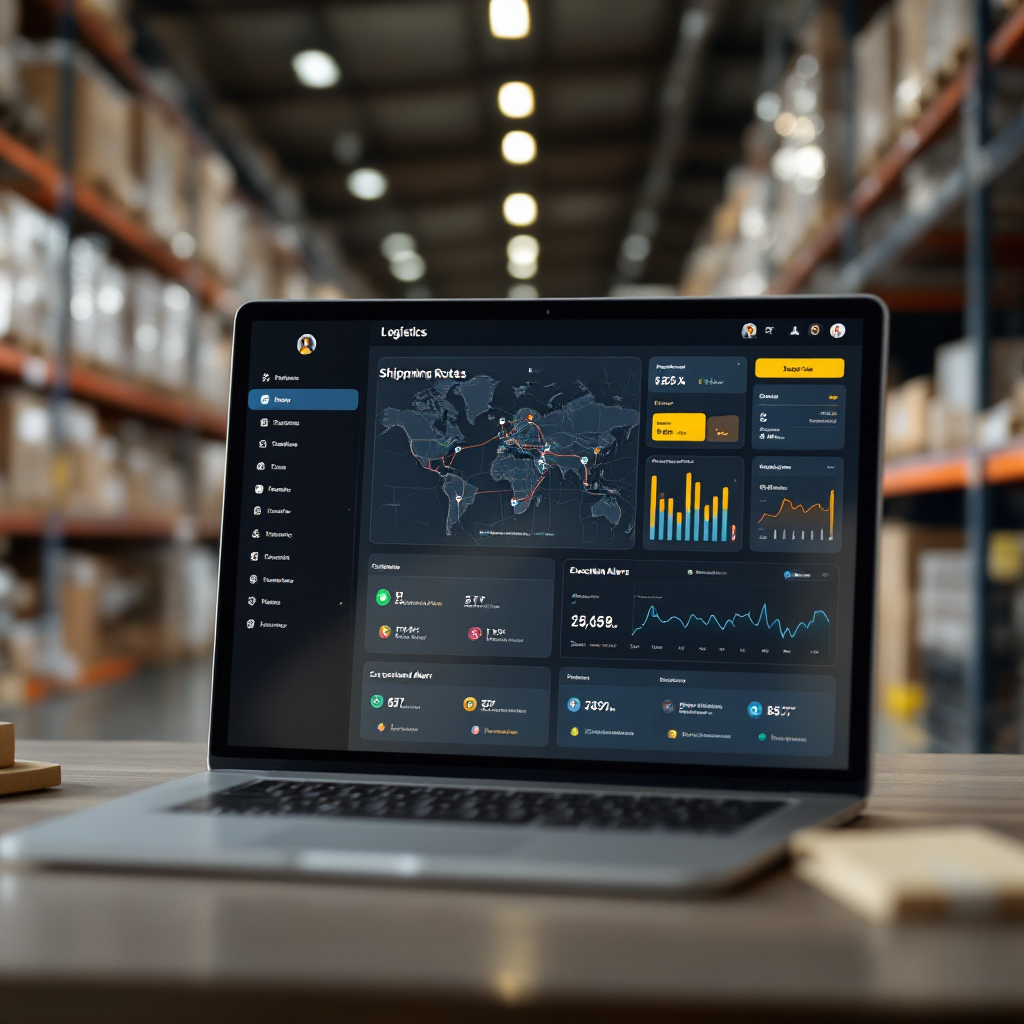
Implementation tips center on tooling and SLAs. Use an event bus to distribute real-time events, set alert thresholds to avoid noise, and define escalation SLAs. Dashboards should show root causes and suggested actions so planners accept or reject AI recommendations quickly. Agents can auto-generate customer notifications that are grounded in data from ERP and TMS, and they can update records automatically to reflect actions taken. For teams that want fast adoption, our no-code AI assistant drafts context-aware replies inside Outlook/Gmail and logs actions back into systems, so customer emails no longer bottleneck resolution zobacz jak.
Operational savings add up. Fewer manual checks mean fewer customer calls, and earlier fixes reduce detention and demurrage exposure. However, don’t over-alert: false positives frustrate teams. Test alert thresholds under load and tune models with historical exception labels. Finally, include human checkpoints for high-cost decisions so AI supports judgement rather than replaces it.
Drowning in emails?
Here’s your way out
Save hours every day as AI Agents label and draft emails directly in Outlook or Gmail, giving your team more time to focus on high-value work.
How freight forwarders adopt ai: data readiness, pilots, governance and change management
Adopting AI requires practical steps and clear governance. Start with a data audit to assess master data quality, timestamp consistency, and which systems contain the truth. Clean master data and label exception cases. Then choose one or two KPI use cases—such as quote turnaround or on‑time delivery—and run a focused 6–12 month pilot. Our recommended pilot timeline begins with a 4–6 week data and connector sprint, followed by a 2–3 month model test in parallel with live operations, and then a 3–6 month scale and governance phase.
Create a cross‑functional team that includes operations, IT, and finance. Decide vendor versus build based on speed to value and internal expertise. For email and correspondence automation, a no-code AI assistant can deliver rapid payoff because business users control behavior and IT only configures connectors. Virtualworkforce.ai delivers that model and typically cuts email handling time from about 4.5 minutes to 1.5 minutes per inbound email by grounding replies in ERP, TMS, and email history (Virtualworkforce.ai ROI).
Governance must cover privacy, explainability, and audit logs. Document model decision rules and keep human-in-the-loop controls for edge cases. Address risks such as data bias and integration bottlenecks early. Regulatory constraints like customs data residency and local rules require careful mapping before you enable full automation. To scale successfully, set success criteria: X% reduction in quote time, Y% fewer manual emails, and Z% improvement in on-time delivery. If those targets hit, plan for staged rollouts across regions and product lines. For a how-to guide on scaling operations without hiring, see our practical walkthrough on scaling logistics operations with AI agents jak skalować operacje logistyczne przy użyciu agentów AI.
Future of freight forwarding and future of logistics: scalability, ROI and how freight forwarders reduce cost and improve service
The future of freight forwarding points to autonomous optimisation and collaborative networks. AI will enable platform interoperability, and it will let freight forwarders orchestrate carriers, terminals, and customers more efficiently. Long-term ROI drivers are lower cost-per-shipment, higher service-level attainment, and reduced detention and demurrage. Aggregate studies report implementations that can lower logistics costs by about 15% and raise service levels by as much as 65% when well executed (Virtualworkforce.ai).
Scalability depends on data pipelines and governance. Build on proven use cases first and then extend. AI agents will increasingly collaborate across the supply chain, and that collaboration reduces friction and boosts resilience during supply chain disruptions. The Nature study on G20 economies highlights how AI improves logistics performance at national scale, which supports smoother global operations (Nature).
Practical next steps for readers include quick wins and investment priorities. Quick wins: automate freight quote generation, add a reroute agent for high‑risk lanes, and connect an AI agent to email to reduce response time. Investment priorities: clean master data, integrate telematics, and add connectors to transportation management systems. When evaluating vendors, test on real workflows, require explainability, and check for prebuilt connectors to ERP, TMS, and email. Our platform shows how a logistics‑tuned, no-code AI assistant can integrate seamlessly with existing management systems and TMS to automate replies and actions without heavy IT overhead; see our comparison pages on best AI tools for logistics companies for vendor selection guidance najlepsze narzędzia AI dla firm logistycznych.
Close with a call to act: pick one KPI, run a 6–12 month pilot, measure ROI, and then scale. The future of freight forwarding rewards those who adopt AI early, who design governance, and who focus on measurable gains. A short checklist for C‑suite and operations leads: pick the pilot, define KPIs, run a vendor trial, and establish governance. Act now to reduce costs and improve service while competitors lag.
FAQ
What is an AI agent and how does it differ from traditional automation?
An AI agent is a software component that senses inputs, reasons with probabilistic models, and takes actions to reach goals. Unlike traditional rule-based automation, an AI agent learns from data and adapts so it improves over time.
How can AI help freight forwarders speed up quoting?
AI automates rate discovery, applies margin rules, and drafts quotes using historical and real-time data. That reduces manual lookups and often shortens quote turnaround from hours to minutes.
What inputs do predictive models need to reduce dwell time?
Predictive models use historical bookings, telematics, carrier capacity, customs timestamps, and external feeds like AIS and weather. Those inputs let models forecast delays and recommend actions.
Will AI replace planners and operations staff?
No. AI automates repetitive tasks and surfaces exceptions so planners focus on higher-value decisions. Human-in-the-loop controls remain important for complex or high-risk situations.
How do AI agents handle real-time exceptions?
AI agents ingest GPS, IoT, and EDI feeds to detect deviations, then trigger alerts, assign tasks, or suggest reroutes. Properly tuned alert thresholds and SLAs reduce noise and speed fixes.
What are the first steps for a freight forwarder that wants to adopt AI?
Start with a data audit, pick 1–2 KPI use cases, and run a focused pilot for 6–12 months. Build a cross-functional team and decide whether to buy a vendor solution or build in-house.
How does AI integrate with existing transportation management systems?
AI integrates via EDI, APIs, and connectors that sync rates, bookings, and status. It can write back actions and drafts into TMS and ERP to automate bookkeeping and messaging.
What measurable benefits should forwarders expect from AI?
Forwarders often see reduced logistics costs, faster quote times, lower dwell, and improved on-time delivery. Studies suggest implementation can reduce logistics costs by roughly 15% and improve service levels significantly (Virtualworkforce.ai).
Are there governance risks with AI in logistics?
Yes. Risks include data bias, privacy concerns, and lack of explainability. Implement audit logs, role-based access, and human review for high-impact actions to mitigate risk.
How do I evaluate AI vendors for freight operations?
Evaluate by testing on real workflows, checking connectors to ERP/TMS, assessing no-code controls for operations teams, and reviewing explainability and audit capabilities. For vendor selection help, see our guide to best AI tools for logistics companies best AI tools for logistics companies.
Drowning in emails?
Here’s your way out
Save hours every day as AI Agents label and draft emails directly in Outlook or Gmail, giving your team more time to focus on high-value work.