


agent AI dla startupu: praktyczne sposoby wykorzystania AI w produkcie i operacjach
Założyciele powinni zacząć od jasnej definicji: agent AI to oprogramowanie potrafiące wykonywać zadania i podejmować decyzje z różnym stopniem autonomii. Dla wielu zespołów oznacza to przejście od scenariuszy prowadzonych przez ludzi do agentów działających bez stałego nadzoru. Agentyczna AI leży pomiędzy regułami a pełną autonomią i ma znaczenie, ponieważ firmy zgłaszają wysoką adopcję: „79% firm już wdrożyło agentów AI, a dwie trzecie odnotowało mierzalną wartość” (Citrusbug). Rynek też rośnie szybko, z prognozami wyraźnego wzrostu w 2025 i 2026 roku (Presta). Startupy i firmy tworzące agentów zyskują, ponieważ agent AI może przyspieszyć powtarzalne prace i przesunąć zasoby ludzkie do zadań o wyższej wartości.
Praktyczne zastosowania są proste. Wykorzystaj agentów AI do triage obsługi klienta, kwalifikacji leadów sprzedażowych, automatyzacji dla deweloperów, takiej jak przegląd kodu, oraz do rekrutacyjnego przesiewu w HR. Dla zespołów produktowych krótka lista metryk ROI pomaga uzasadnić inwestycję: czas zaoszczędzony na zadaniu, redukcja błędów ręcznych, wzrost przepustowości i poprawa satysfakcji klientów. Częstą metryką jest wydajność inżynieryjna: zespoły obserwują typowy wzrost produktywności o 20–30%, gdy używają agentów do obsługi rutynowych prac (ICONIQ). W rezultacie firmy mogą lepiej kwantyfikować wpływ biznesowy i priorytetyzować inwestycje.
Pomyśl o prostym pilocie: agent czatu z klientem, który rozumie intencje, kieruje zgłoszenia, tworzy szkice odpowiedzi i eskaluje złożone sprawy. Ten przykład wyraźnie przekłada się na operacyjne KPI: skrócenie średniego czasu obsługi, zwiększenie rozwiązań przy pierwszym kontakcie i zmniejszenie konieczności poprawek. Dla zespołów logistycznych obsługa e-maili end-to-end to powtarzalny szablon; zobacz, jak nasz zespół automatyzuje tematyczne wiadomości e-mail i opiera odpowiedzi na danych ERP, aby zapewnić spójne wyniki w naszym przewodniku integracji ERP (automatyzacja e-maili ERP). Najpierw zdefiniuj, jak wygląda sukces. Następnie wybierz przykładowe źródła danych i oszacuj oszczędności czasu. Potem przeprowadź krótki pilotaż, aby zweryfikować założenia. Na koniec zaplanuj przyspieszenie adopcji w zespołach produktowych i operacyjnych.
deploy: pick apis and ai tools to connect models and your data
When you deploy a first agent, pick tools that match speed and fidelity needs. Use an API-first approach and treat the model as replaceable. For rapid prototyping, the OpenAI Agents SDK is a pragmatic choice; for retrieval-augmented systems, LangChain plus LlamaIndex work well with vector stores like Pinecone or Weaviate. No-code options and no-code AI platforms such as Lindy and Lutra let non-engineers build proof-of-concepts quickly. Balance cost, latency and data control when you pick an API, and use secure secrets management from day one.
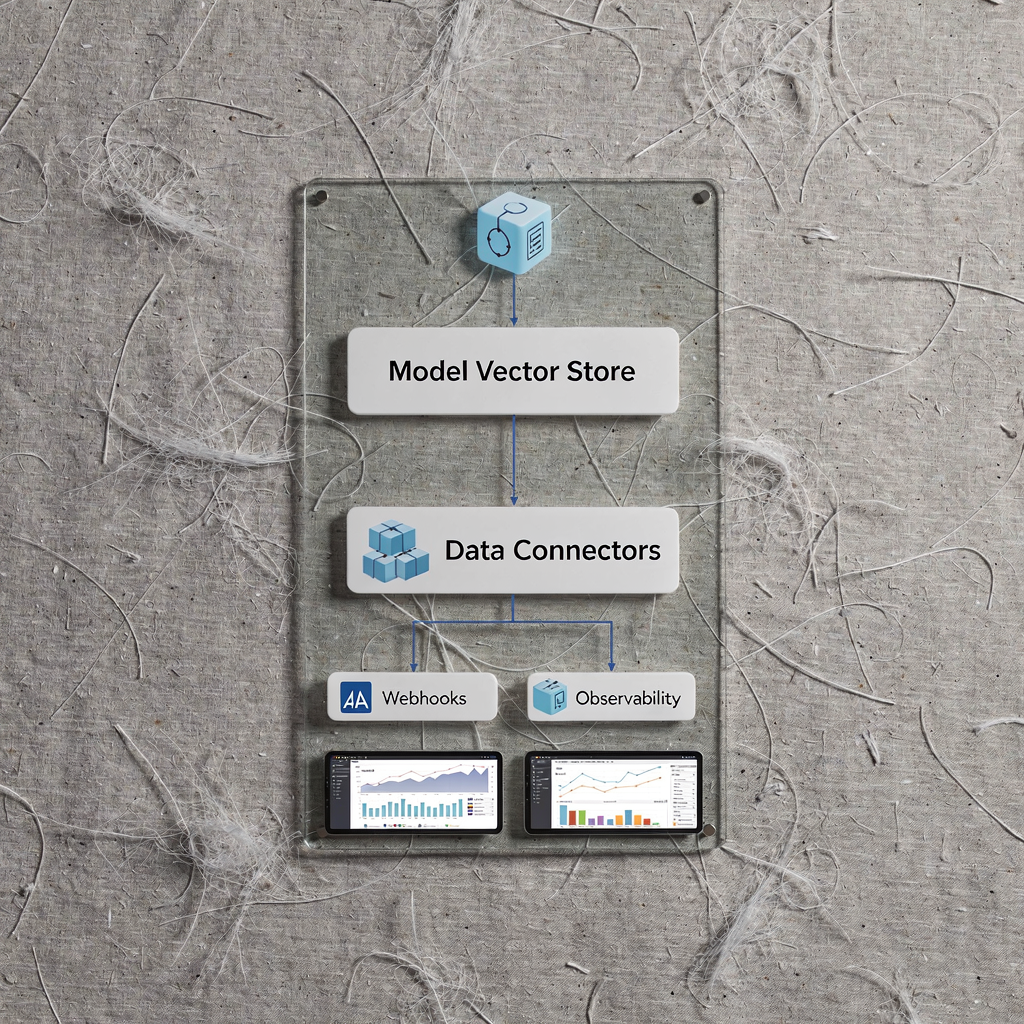
Checklist for a minimal, production-ready stack: connect data sources; select a vector store; choose a model provider; add an authenticator for enterprise data; and define observability. Also consider hybrid setups where local models handle sensitive material and cloud APIs handle general tasks. You will need to decide between single-turn prompts and a memory-backed agent. For conversational flows, Rasa can manage conversational ai state and handoffs. For simple bots and chatbots, an API-first design and a clean webhook layer are enough to move from prototype to pilot.
Practical snippet: build a RAG pipeline that uses LlamaIndex to index documents; use Pinecone for vector search; and call an LLM for generation. Monitor latency and token costs so the team can forecast spending. Use rate limits and throttling to protect downstream systems. For examples of an ops-focused virtual assistant that links email, ERP and other enterprise data, see our logistics virtual assistant page (wirtualny asystent logistyczny). Finally, document the api endpoints and prepare a short playbook for on-call engineers who will maintain the agent.
Drowning in emails?
Here’s your way out
Save hours every day as AI Agents label and draft emails directly in Outlook or Gmail, giving your team more time to focus on high-value work.
using ai agents: how agents work and run ai-powered workflows
Founders should understand the internals so they can scope projects and set expectations. An agent architecture usually includes a model, a prompt or template, retrieval (RAG), memory, an orchestrator and the execution loop. The orchestrator coordinates subtasks and retries. The retrieval component searches indexed documents and other data sources before the model generates a response. This pattern keeps outputs grounded and reduces hallucination.
There are two patterns to consider: a single top ai agent that controls a task end-to-end, and multi-agent setups where specialised agents collaborate. Multi-agent designs let one agent handle routing while others process domain-specific logic. Libraries such as AutoGen or CrewAI provide orchestration frameworks to manage these interactions. Use monitoring to track quality: log inputs and outputs, compute relevance scores, and run human review on low-confidence cases. Include a human-in-the-loop fallback to catch edge cases and to create labelled data for continuous improvement.
Technical terms matter. An LLM or llm provides generation. llms can be supplemented by smaller models that handle classification or intent detection. Memory can be thread-aware so the agent remembers past exchanges, which improves long conversations. Agents can act autonomously or be restricted to recommend actions that humans approve. For startups building an ai roadmap, start with a focused use case, instrument a small set of metrics, and iterate rapidly. When the agent analyzes incoming requests and routes work, the team learns fast and can expand the agent’s remit.
best ai choices and enterprise ai agent playbook for reliability and scale
To move from prototype to production, follow a staged playbook: prototype, pilot, secure and scale. Prototype in 2–4 weeks to validate core hypotheses. Pilot for 1–3 months to measure KPI lift and gather operational feedback. Then implement governance, controls and audits before scaling. This staged approach helps you forecast costs and implement the enterprise controls that matter to legal and IT teams.
Choose technology by need. For knowledge-driven agents use LangChain + LlamaIndex. For conversational control use Rasa. For rapid testing use OpenAI Agents SDK or no-code tools. For enterprise deployments, build an enterprise ai agent with strict access control, tokenisation of enterprise data and audit trails. Add a compliance audit step to verify data handling and to support responsible ai practice. Also specify latency SLAs, model versioning and cost caps so production remains predictable.
Security, governance and performance are non-negotiable. Use role-based access for enterprise data and retain logs for both quality and audit. Plan for EU/GDPR requirements and for data residency if needed. Track performance over time with simple analytics dashboards that show throughput, error rate and confidence scores. Whenever you deploy a new model, run A/B tests and measure the business impact versus the baseline. Finally, prepare a one-page board update that summarises outcomes, costs and risks so the leadership team can approve scaling.
For logistics-focused teams that need an end-to-end solution for email, routing and ERP grounding, see our guide on how to scale logistics operations with AI agents (jak skalować operacje logistyczne z AI). Use it to compare managed offerings and to decide whether to build or to buy.
Drowning in emails?
Here’s your way out
Save hours every day as AI Agents label and draft emails directly in Outlook or Gmail, giving your team more time to focus on high-value work.
transform workflows: quick case studies showing how startups use ai to cut costs and speed delivery
Short, repeatable case studies make it easier to plan pilots. Below are three concise examples that founders can reuse as templates.
Case 1 — Customer support automation. A logistics operator used an ai agent to triage inbound messages, resolve routine queries and draft replies grounded in ERP data. The result was a fall in average handling time from 4.5 minutes to 1.5 minutes per email, showing clear reducing operational costs and improving customer satisfaction; the same pattern appears in several industry deployments. For a hands-on example of email drafting in logistics, review our automated logistics correspondence page (zautomatyzowana korespondencja logistyczna).
Case 2 — Developer assistant. A tech firm built an internal ai copilot to automate PR review, run static checks and draft changelogs. The ai assistant reduced review cycles and allowed engineers to accelerate new feature work. Use a small llm for quick checks and route complex suggestions back to humans. The template is simple: index PR comments, run lightweight tests, and surface flagged diffs for human approval.
Case 3 — Sales automation. A sales team deployed a lead-qualification agent that scores inbound enquiries, enriches records, and schedules demos. The pipeline lifted conversion by enabling reps to focus on higher-intent leads. This kind of bot works best when it has access to CRM data and to external enrichment apis. Each example is reusable: copy the prompt templates, swap data sources, and run a short pilot. These patterns show how building ai agents can transform business processes and accelerate time to value.

playbook: step-by-step checklist to build, test, deploy and govern agents work
This practical playbook takes a team from day one to day ninety. Use it as a template for resource planning and for board updates.
Day 1–14: prototype. Define KPIs and a single success metric. Map data sources and select a vector store. Choose an llm and set a cost limit. Build a minimal agent that performs one end-to-end task and instrument logging. Keep iterations short and ensure the team can reproduce the agent locally.
Day 15–90: pilot and iterate. Run controlled tests with real users. Measure the metric and track confidence distributions. Implement monitoring dashboards, set throttles and enable alerts for anomalous outputs. Collect user feedback and label edge cases. Implement an audit log and a basic responsible ai checklist. Include a human fallback so the agent does not make decisions without human intervention in risky situations. Use a documented integration plan for production systems and a rollback strategy in case of regressions.
Scale and governance: once KPI lift is validated, prepare for broader rollout. Version models and prompts. Add role-based access to enterprise data. Define how agents get updates from source systems, and plan for retention and privacy constraints. Require periodic audits and tests for bias. Track performance over time and schedule model retraining when drift is detected. For teams focused on logistics emails, our ROI and operations guides provide specific templates to justify budget from core spend (virtualworkforce.ai ROI). Finally, prepare a short board slide with success criteria and the next 90-day roadmap so leadership can approve scale.
FAQ
What is an AI agent and how is it different from a bot?
An AI agent is software that can perform tasks and make decisions, often with memory and access to data. A bot usually refers to a simpler scripted process; agents are more likely to act autonomously and to handle a wider range of tasks.
How quickly can a startup build an ai agent pilot?
Many teams can build a focused prototype in 2–4 weeks if they restrict scope and reuse existing connectors. Then they should run a 1–3 month pilot to measure the business metric and to validate production requirements.
Which models work best for knowledge-heavy agents?
Agents that rely on documents usually use retrieval-augmented generation with a language model and a vector store. Popular stacks include LangChain and LlamaIndex paired with Pinecone or Weaviate.
Do I need engineering resources to develop ai agents?
Yes, at least initially. No-code and no-code ai tools can speed prototyping, but engineers are needed to integrate with enterprise data, to secure keys and to handle operational concerns.
How do agents avoid hallucinations?
Ground outputs with retrieval, limit model creativity for critical tasks, and add a human-in-the-loop for low-confidence cases. Regular audits and labelled data help reduce hallucination over time.
Can agents act autonomously in customer-facing workflows?
They can, but start with constrained autonomy and clear escalation paths. For high-risk interactions, require human approval so the agent does not make decisions without human intervention.
What governance should founders set up first?
Begin with access controls, audit logging and a responsible ai checklist. Also define data retention policies and a review cadence for model updates. These steps support both compliance and trust.
How do I choose between cloud APIs and local models?
Use cloud APIs for speed and for top ai model access. Use local models when you need control over enterprise data, lower latency or specific privacy guarantees. Hybrid setups are common.
What KPIs should I track for an AI agent pilot?
Track a single primary metric such as time saved or conversion uplift, plus secondary metrics like confidence score, error rate and cost per transaction. These give a clear view of business impact.
Where can I learn templates for logistics email automation?
For logistics teams, our detailed guides show prompt templates, data connectors and measurable outcomes for email automation. Review the automated logistics correspondence and ERP email automation pages to get started (zautomatyzowana korespondencja logistyczna) and (automatyzacja e-maili ERP).
Drowning in emails?
Here’s your way out
Save hours every day as AI Agents label and draft emails directly in Outlook or Gmail, giving your team more time to focus on high-value work.