


Why ai email automation matters for the front office and front desk
AI email automation has emerged as an essential tool for the front office and front desk teams in hotels. Fast response matters. Guests expect quick, accurate answers to questions about booking, check-in and amenities. AI can classify and route inquiries so a front desk agent can focus on guest interactions that need a human touch. For example, a study shows automation in communication tasks can reduce front office workload by 30–40%. That frees time to handle complex or sensitive requests and improves service quality.
Speed and consistency raise guest satisfaction. Hotels that add AI-driven communication report up to a 23% uplift in guest satisfaction. The same tools also tighten messaging for booking confirmations and pre-arrival instructions. This consistency supports direct booking and reduces reliance on OTAs, which helps revenue managers and front desk staff manage occupancy more profitably.
AI-powered assistants transform repeated manual tasks. A virtual assistant can classifies incoming emails and produce accurate replies without human staff for routine enquiries. That does not mean you remove the human touch. Rather, this shift reduces time spent on triage and increases staff involvement in face-to-face service. When guest requests escalate or are complex, the system routes to the right team member with full context. This approach benefits boutique hotels and large groups alike.
Operationally, AI integrates with hotel management systems and CRM so messages are grounded in booking data and guest profiles. That reduces avoidable errors and ensures the front desk presents precise check-in instructions and late check-out options. In practice, teams see faster response times and improved guest satisfaction scores, and they can track these outcomes on a dashboard and in analytics panels. For more on automating operational email workflows, see resources about how AI agents automate email lifecycles at virtualworkforce.ai.
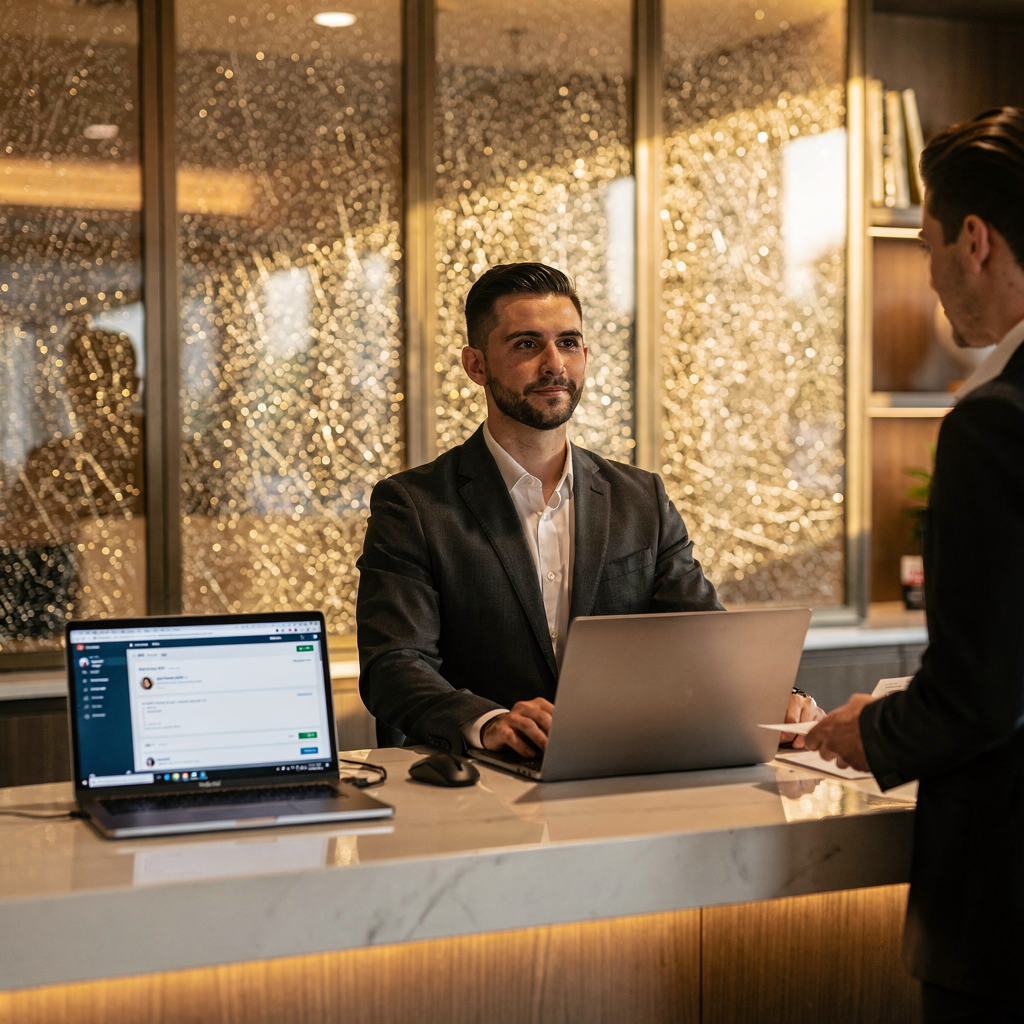
How to automate hotel email and guest communication using hotel management systems and crm
Start by mapping data fields in your hotel management systems and customer relationship management platform. Connect the PMS and CRM so the AI can use booking, room type and guest preferences to personalise hotel email. Map check-in date, loyalty status and special requests. Then configure triggers for booking, pre-arrival and no-show events. These real-time triggers let the system send targeted messages at the right moment and increase conversion rates. Studies show CRM integration can lift direct booking by 15–20%.
Integration must be bi-directional so the AI updates guest profiles and writes structured operational data back to the PMS. This prevents conflicting information in the reservation record. Use middleware where needed to connect legacy property management tools to modern APIs. Test data flows before going live. Audit logs help you trace who changed a booking or who escalated an enquiry.
When deploying an AI-driven assistant for hotels, decide which templates the tool may send without approval. Common templates include booking confirmations, pre-arrival sheets and amenity explanations. For customer segments with high lifetime value, route drafts to a human for final review. This hybrid model balances automation and the personal touch that defines hospitality.
Security and governance matter. IT should control API keys and access. Business teams should configure tone, routing and escalation logic. A zero-code setup reduces the need for prompt engineering. virtualworkforce.ai offers a platform that grounds replies in ERP and operational data, drafts replies inside Outlook or Gmail and escalates only when needed. This approach streamlines email management and shortens handling times dramatically. For examples of end-to-end email automation in operations, see how virtualworkforce.ai automates logistics correspondence para fluxos de trabalho semelhantes.
Drowning in emails?
Here’s your way out
Save hours every day as AI Agents label and draft emails directly in Outlook or Gmail, giving your team more time to focus on high-value work.
Multilingual and omnichannel guest messages for hospitality message consistency
Multilingual capability is essential in a global sector. An AI that speaks many languages helps staff handle international bookings and lowers the chance of miscommunication. Use language templates and an auto-translate layer with review rules to keep tone in check. Ensure the system records the guest’s preferred language in guest profiles so future messages match that preference. This improves clarity and response rates for guests who prefer to read messages in their native language.
An omnichannel strategy keeps the message consistent across email, SMS, WhatsApp and in‑site chat. Link each channel to the same guest profile and inbox so a front desk agent always sees the full thread. That unified context prevents duplicated replies and reduces staff involvement. Use the same content library for booking confirmations and pre-arrival reminders so the wording stays aligned across channels. Tracking metrics across channels helps you understand where guests engage most and which channels drive direct booking.
Measure open, reply and conversion rates by language and channel. For example, a hotel might find SMS has higher open rates for last-minute offers and email performs better for booking confirmations. Use a dashboard and analytics to compare channel performance and refine templates. When you integrate omnichannel data into your CRM and PMS, you build a single view of guest interactions across channels. This view helps teams anticipate guest needs and send specific communication at key points of the guest journey.
For boutique hotels and independent hotels, multilingual and omnichannel stacks let a small team deliver consistent service globally. You can also link to internal resources that describe how to scale operations without adding staff. See a practical guide on scaling operations that applies to hospitality at como escalar operações sem contratar.
Pre-arrival, in-stay and post-stay flows: upselling and message timing
Segmented flows convert better than one-size-fits-all messages. Pre-arrival emails should include check-in instructions, transport options and targeted upsell offers. Time these messages to reach guests when they plan travel. Targeted offers and well-timed upsell messages can achieve conversion lifts in tests between 15–30%.
During the stay, fast replies matter. An ai-powered assistant can respond to simple guest requests and common questions without human intervention. For requests that need hands-on service, the system routes to a front desk agent or relevant team member immediately. This mix of automation and human touch improves operational efficiency and increasing guest satisfaction.
Post-stay messages close the loop. Automated review requests and personalised loyalty offers drive repeat stays and increase guest loyalty. Integrate post-stay surveys with your CRM and track guest feedback through analytics. Use the results to refine upselling tactics and to personalise future booking confirmations and offers.
Timing is key for upselling and ancillary revenue. Send upgrade options before check-in when guests still decide their room, and present on-property experiences during the first night of stay. Offer late check-out or early check-in on the day of arrival when inventory is clear. Track conversion rates and attribute revenue to each message. That makes it possible to measure ROI for each flow and to optimise campaigns by guest segment and guest preferences.

Drowning in emails?
Here’s your way out
Save hours every day as AI Agents label and draft emails directly in Outlook or Gmail, giving your team more time to focus on high-value work.
Hotel ai to enhance operations across hotel size, PMS and crm integration
Hotel AI works for every hotel size, from boutique properties to large groups. Independent hotels can automate core flows like pre-arrival and booking confirmations at low cost. Larger brands can add complex brand rules and regional compliance. The difference is control and complexity. Smaller teams focus on a few high-impact templates, and larger teams scale governance and review processes.
AI models surface upsell opportunities using operational data and guest profiles. These suggestions help revenue teams and front desk staff decide when to offer an upgrade. An AI solution that integrates with property management and customer relationship management records gives context. It recognises a frequent guest and suggests a value-packed offer. It can also flag when a guest requests local recommendations so staff can add personalised touches.
Technical requirements include bi-directional sync with PMS and CRM, role-based access, and audit logs. Make sure your middleware supports these needs. For hotels that run legacy systems, middleware bridges can keep data flowing seamlessly. Also ensure your deployment supports natural language understanding so the system correctly interprets incoming messages from guests.
When deploying an AI, start with high-volume templates and escalate complex or sensitive queries. Training the model on your hotel’s voice and policies reduces errors. You should also monitor dashboards and analytics to measure impact on guest satisfaction scores and on booking behaviour. Using AI this way helps anticipate guest needs, and it frees front desk staff to focus on moments that shape the guest experience.
Implementation checklist: email automation must include escalation, data controls and measurement for email communications
An effective rollout follows a checklist. First, map which messages will send automatically and which require review. Define SLA thresholds for escalation so front office queries move to a human when response time or complexity exceeds limits. This ensures staff involvement where it matters. For instance, complex or sensitive enquiries should always route to human staff. That protects guest privacy and brand reputation.
Second, secure guest data. Comply with GDPR and local laws. Keep opt-out controls visible on booking confirmations and in the inbox. Use role-based access and audit logs so you can trace who changed a reservation or who edited an automated template. These controls keep hotel operations compliant and auditable.
Third, measure performance. Track response time, reduction in front desk email volume and direct booking lift. Monitor upsell conversion and guest satisfaction scores. Use dashboards and analytics to spot trends and to refine templates. Also measure staff time saved. Many teams reduce handling time from about 4.5 minutes to 1.5 minutes per email when they adopt AI agents for operations, according to virtualworkforce.ai data.
Fourth, plan for continuous training. Update templates after seasonal changes and after you review guest feedback. Maintain a feedback loop between the front desk agent and the AI system so the model learns from new patterns. Finally, document escalation paths, data flows and middleware connections. This documentation helps when you upgrade PMS integrations or add channels to your omnichannel stack.
By following the checklist, hotels can streamline email communications, keep specific communication on brand, and prove ROI to stakeholders in the competitive hospitality industry. If you want practical examples from other operational teams that automated email lifecycles, check resources on virtualworkforce.ai about automating logistics emails and email drafting for operations.
FAQ
What is an AI email assistant for hotel front office?
An AI email assistant is software that reads, classifies and drafts replies to hotel email. It can route complex enquiries to human staff and resolve routine requests without human intervention. This helps reduce manual triage and increases response speed.
How does AI improve guest satisfaction?
AI improves guest satisfaction by speeding up responses and ensuring consistent, accurate messaging. Faster, clearer replies reduce confusion and raise guest satisfaction scores across the guest journey.
Can AI handle multilingual guest messages?
Yes. A multilingual AI can auto-translate and use templates in the guest’s preferred language. Human review rules keep tone and brand voice consistent when needed.
Will automation reduce the need for front desk staff?
Automation reduces repetitive tasks but it does not replace human staff. It shifts staff involvement toward higher-value guest interactions and complex requests that require empathy and judgement.
How does AI integrate with PMS and CRM?
AI integrates by syncing booking confirmations, guest profiles and operational data between systems. A bi-directional connection ensures the AI reads up-to-date reservation details and writes structured updates back to the PMS and CRM.
Are automated upsell messages effective?
Yes. Timed, targeted upsell messages sent before check-in or during the stay can drive ancillary revenue. Tests commonly show healthy conversion rates when offers match guest preferences.
What privacy rules should hotels follow?
Hotels must follow GDPR and local data laws, keep opt-out options clear and secure guest data in integrations. Role-based access and audit logs help maintain compliance.
How do you measure ROI from an AI email assistant?
Measure ROI by tracking response time, reduction in inbox volume, direct booking lift and upsell conversion. Combine these metrics with guest feedback and dashboard analytics to evaluate impact.
Can independent hotels use this technology?
Yes. Independent hotels can automate core flows like pre-arrival and booking confirmations with low complexity. This gives smaller teams the same service power as larger groups.
How do I start deploying an AI assistant?
Start by mapping high-volume templates and data fields in your hotel management systems. Secure integrations and define escalation rules. Run a pilot with clear KPIs and monitor dashboards to refine the system before full rollout.
Drowning in emails?
Here’s your way out
Save hours every day as AI Agents label and draft emails directly in Outlook or Gmail, giving your team more time to focus on high-value work.