


How ai is changing the way you recruit and what recruiters must know about modern recruitment
AI is changing hiring fast. First, the market signals how rapidly the shift is happening: the AI recruitment market was about $661.56m in 2023 and is forecast to reach ~$1.12bn by 2030 (CAGR ≈ 6.8%). Second, this growth translates into real changes for every recruiter and hiring manager. AI speeds sourcing, automates CV parsing, and creates data-driven shortlists. As a result, recruiters spend less time on repetitive screening and more time on interviews.
For example, recruiters using a talent intelligence platform cut manual CV review time while improving shortlist quality. In practice, an AI agent that parses resumes, tags candidate profiles, and ranks best-fit applicants saves hours per role. Also, AI can standardize screening so every candidate faces the same base criteria. This reduces human inconsistency in the hiring process and helps teams focus on cultural fit and unique skills.
Define AI plainly. AI is software that learns patterns from data, then automates decisions or suggestions. In recruitment, an AI system reads thousands of resumes, scores them against job requirements, and recommends qualified candidates. The immediate benefits for hiring managers include faster hiring, consistent shortlists, and better use of recruiter time. Additionally, AI can maintain and refresh talent pools so the recruiting team can re-engage passively sourced talent when a new role opens.
Finally, practical advice: start small. Pilot an AI tool for one role or team. Track time-to-hire and quality-of-hire. Also, check candidate feedback to protect candidate experience. If your organization handles operational email in hiring or onboarding, solutions like virtualworkforce.ai show how automating back-and-forth emails and routing can reduce manual lift and keep communications consistent. This makes the handoff between operations and recruiting smoother and more traceable.

What an ai agent does, why agentic projects matter and how agentic ai and ai agents for recruiting differ
An AI agent is an autonomous or semi-autonomous system that performs specific recruiting tasks. For example, an AI agent can source candidates, send initial outreach, schedule interviews, and triage replies. When you think of AI agents, imagine software that can act across systems, not only run single commands. This distinction explains why agentic projects have momentum: they let a team of AI agents coordinate across ATS, calendar, CRM, and messaging.
Agentic AI differs from basic automation. Traditional bots complete one task, then stop. In contrast, an agentic AI can follow rules, make followup choices, and adapt across a pipeline. For instance, a recruiting agent might re-route a lead into a new talent pool, sequence followup messages, and escalate a hot prospect to a recruiter. Adoption reflects this value: about 35% of organisations already use agentic AI in operations, and another 44% plan to adopt. Therefore, the path from one-off automations to agentic projects is clear.
Pick one use case to pilot. High-volume sourcing suits a team of specialized AI that can screen for skill keywords, map candidate profiles to job requirements, and surface top candidates. Also, agentic AI handles ongoing followup without human prompting until a human must step in. That balance preserves human oversight while unlocking faster sourcing.
Quick tip: document success metrics before you start. Track response rates, time-to-fill, and quality of shortlists. Use those data-driven insights to decide when to scale. Finally, remember that agentic AI is not a silver bullet. Protect fair outcomes by testing models for bias, and keep a hiring manager in the loop for final hiring decisions. When architecting systems, plan clear escalation and review points so the recruiting team stays in control.
Drowning in emails?
Here’s your way out
Save hours every day as AI Agents label and draft emails directly in Outlook or Gmail, giving your team more time to focus on high-value work.
How to automate your recruitment workflow with an ai recruiter to hire faster
Automating the recruiting workflow starts with mapping every step of your current process. First, list repetitive tasks such as resume screening, interview scheduling, and outreach. Next, match each task to an AI capability. For example, an AI recruiter can parse resumes, tag candidate profiles, and recommend best-fit applicants. Then, integrate that recruiter with your ATS and calendar to automate handoffs. Many programs report AI screening and scheduling can cut time-to-hire by about 30% in pilot deployments.
Integration matters. Connect an AI recruiter to your ATS, HRIS, and calendar so the system updates applicant stages and can schedule interviews automatically. Use secure API connectors to limit data access. Also, include a rollback path if the model drifts or outputs unexpected results. Maintain human oversight at key gates: screening, interview selection, and final offers. Humans must sign off on offer letters and major hiring decisions to preserve compliance and fairness.
Actionable steps: map your current workflow; identify repetitive tasks to automate; run a 6–12 week pilot; measure time-to-fill and quality-of-hire; then scale. Use a talent intelligence platform to centralise sourcing candidates, manage pipelines, and maintain curated lists. Additionally, tools you use to automate candidate communications should allow configurable templates and personalized outreach so messages stay on-brand.
Finally, consider operational email automation where recruiting overlaps with operations. If your recruiting team exchanges frequent operational messages, solutions like virtualworkforce.ai can automate back-and-forth emails, draft accurate replies grounded in internal systems, and reduce manual handling time. That keeps hiring cycles tight and reduces candidate friction while your team focuses on interviews and assessments.
Leading ai platforms, the tools you use for ai interview and how they personalize candidate contact
Several vendors lead the market today. Examples include Eightfold, HiredScore, Beamery, HireVue, Paradox (Olivia), and Mya. Each focuses on different parts of the recruiting funnel: sourcing, ranking, CRM, video assessment, and chat. When evaluating a recruiting platform, match features to your hiring needs. For instance, if you have high-volume hiring, pick vendors strong in ai sourcing and automated shortlisting.
AI interview technologies standardize first-round assessments. Video or chat assessments capture consistent candidate screening data and speed early rounds. These tools use conversational AI and structured scoring to compare applicants fairly. However, validate any automatic assessment for fairness and explainability before production use. This reduces bias and supports compliant hiring decisions.
Personalize at scale. AI can craft tailored messages, recommend roles, and sequence followup based on candidate profiles and past interactions. That personalized outreach improves response rates and candidate experience. Use A/B testing on message variants to refine tone, length, and call-to-action. Also, ensure the system allows a recruiter to step in and edit messages easily.
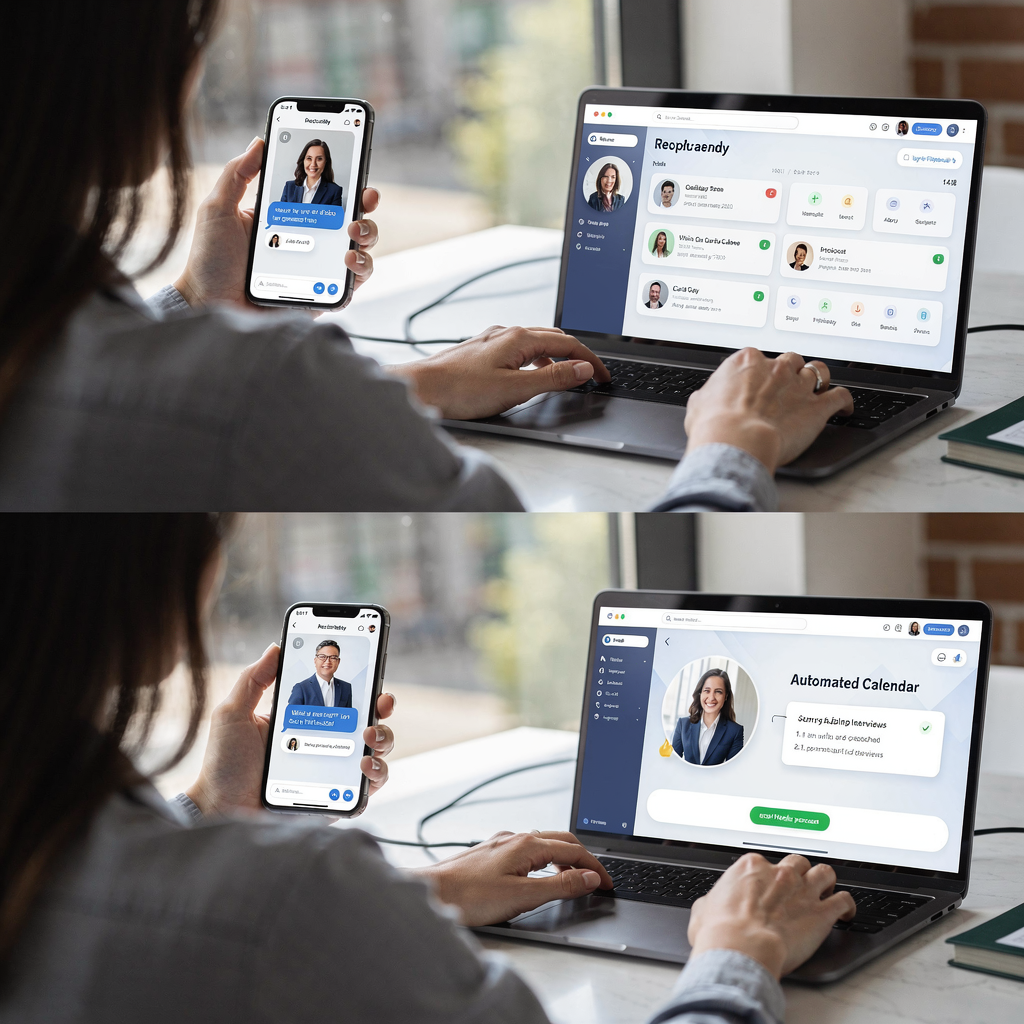
When you assemble tools, think of an integrated AI stack. Use a talent intelligence platform for sourcing candidates and a conversational AI for live screening. Then add an AI assistant that schedules interviews and manages interview scheduling across panels. Also, check vendor claims about explainability and request audit logs. If your team needs help automating candidate emails or syncing operational context, look at automated logistics correspondence and email drafting solutions that can be adapted for recruiting workflows.
Drowning in emails?
Here’s your way out
Save hours every day as AI Agents label and draft emails directly in Outlook or Gmail, giving your team more time to focus on high-value work.
How to measure candidate experience and what hiring teams need from an ai agent and recruiter
Measure candidate experience with clear KPIs. Useful metrics include candidate experience score (CES), application completion rate, response time, offer acceptance rate, diversity metrics, and quality-of-hire. Track these over time to spot improvements or regressions. For example, quicker response times from an AI agent raise candidate experience and reduce drop-off. A steady application completion rate shows your job posting and application flows work.
Hiring teams want transparency and control. They need reports that explain how an AI agent scored candidates and what data informed a recommendation. Also, hiring teams must be able to override automated decisions and to edit communications before they send. This ensures human oversight and preserves employer brand. Additionally, include logs of outreach so recruiting managers can audit followup history and candidate interactions.
Cost and quality matter. Many organizations find AI reduces repetitive tasks and cuts hiring expenses by up to 20–25% when properly implemented. That saving comes from less manual screening and faster hiring cycles. To protect quality, measure time-to-fill alongside quality metrics like retention at 6 months and hiring manager satisfaction.
Best practices: run A/B tests on messaging, track candidate drop-off points, and regularly validate ai models for bias. Use candidate feedback surveys after key touchpoints to capture qualitative data. As you refine your approach, keep a talent intelligence platform and your ATS aligned so candidate profiles and pipelines stay current. Finally, ensure your AI assistants are configured to respect candidate privacy and consent during outreach.
Risks, compliance and a practical checklist for adopting ai agents for recruiting
AI brings benefits but also risks. Main threats include poor data quality, biased training data, opaque decision logic, and privacy or regulatory concerns in the EU and beyond. To manage risk, treat agent projects like any software rollout: define success metrics, confirm legal requirements, and test for bias. For example, run fairness checks on ai models to ensure underrepresented groups receive equitable treatment.
A governance checklist helps. First, obtain legal review and confirm data processing agreements. Second, keep human oversight and require a hiring manager sign-off at decisive stages. Third, log decisions and keep audit trails so you can explain why an applicant was moved or rejected. Fourth, monitor bias and performance, and set rollback procedures if problems emerge. Finally, ensure data retention and deletion policies meet regulatory standards.
Deployment steps: select a pilot use case, integrate with your ATS, validate outcomes against quality and speed metrics, and then scale with monitoring dashboards. Also, educate your recruiting and HR partners about agent limits and escalation paths. If your roles involve frequent operational coordination, aligning with operational email automation tools can reduce friction and keep candidate communications synced with internal systems.
Remember that building agentic AI requires both technology and governance. Treat ai agents as tools that extend your recruiting team’s capacity rather than replace it. With clear guardrails, transparent reporting, and periodic audits, you can harness agentic projects safely. For hands-on examples of integrating AI into workflows and how email automation supports operations, read about how to scale logistics operations with AI agents and related implementations to adapt the approach for recruiting.
FAQ
What is an AI agent in recruiting?
An AI agent is software that performs recruiting tasks with some autonomy. It can source candidates, send outreach, score resumes, and schedule interviews while following rules and escalation paths.
Can AI reduce time-to-hire?
Yes. AI screening and automated scheduling have reduced time-to-hire by around 30% in many pilots. Faster hiring comes from automating repetitive tasks and improving shortlist quality.
Are AI interview tools fair?
AI interview tools can provide consistency, but fairness depends on the training data and model design. Always validate assessments for bias and explainability before using them in production.
How do I start a pilot with an AI recruiter?
Map your current workflow, choose a repetitive use case, connect the AI to your ATS and calendar, run a 6–12 week pilot, and measure time-to-fill and candidate quality. Keep human oversight at decision gates.
What KPIs should hiring teams track?
Track CES, application completion rate, response time, offer acceptance rate, diversity metrics, and quality-of-hire. These give a balanced view of candidate experience, speed, and outcome quality.
Do AI agents replace recruiters?
No. AI agents automate repetitive tasks so recruiters can focus on interviewing and strategy. Think of AI as an assistant that improves efficiency and sourcing reach.
How do organisations avoid biased hiring from AI?
Use diverse training data, run bias audits, allow human overrides, and log decisions for review. Regular validation of ai models reduces the risk of discriminatory outcomes.
Can I integrate AI with my ATS?
Yes. Many AI solutions integrate with common ATS platforms via secure APIs. Integration enables automatic stage updates, interview scheduling, and data-driven insights.
What legal checks are needed for AI in recruiting?
Obtain legal review for data processing, ensure consent and data minimisation, and comply with regional rules such as GDPR. Maintain audit logs and transparent decision records.
Where can I learn more about applying AI to operational communications that touch recruiting?
For organisations that need to automate intensive email flows and operational handoffs, resources on automating logistics emails and virtual assistant deployments show how email automation reduces manual work and improves traceability. See examples of virtual assistants for logistics and automated logistics correspondence to adapt those patterns to recruiting communications.
Drowning in emails?
Here’s your way out
Save hours every day as AI Agents label and draft emails directly in Outlook or Gmail, giving your team more time to focus on high-value work.