


senior and ai: why AI agents matter now
Fact: Ageing populations and staff shortages mean automation is a practical necessity for many care sites.
– What it is: AI that supports routine tasks for older people and teams. It can run reminders, manage simple admin and help with safety checks.
– Why it matters: Fewer staff and more complex care needs push operators to find ways to save time and keep quality of care. AI frees human caregivers for tasks that need judgement and personal attention.
– Example: A system that sends timely medication reminders and flags missed doses helps reduce unnecessary hospital visits and keeps residents safer. It logs followup, it notifies family and it keeps a record for audits.
– Action step: Start with one repeatable task to automate, test it with a small group, and measure response times and missed doses.
Operators need clear data. For example, studies show that „Learning to use new technologies early can significantly improve outcomes for older adults” „Învățarea utilizării noilor tehnologii devreme…”. That quote supports early onboarding for elderly residents. In practice, introducing voice-activated assistants and simple chatbots early makes later tools easier to accept.
AI can handle repetitive tasks such as appointment reminders, tour scheduling and email triage. Our team at virtualworkforce.ai builds AI agents that automate the full email lifecycle, which helps reduce administrative burden and speed up family communication. For operations teams, solving shared inbox problems can cut handling time by minutes per message and improve consistency; see a relevant approach for scaling operations without hiring here: cum să-ți extinzi operațiunile logistice fără a angaja personal.
Keep sentences short. Design for dignity and clarity. Make sure residents can opt out and that staff stay in control. That approach helps senior living operators introduce AI more confidently, improves quality of care and reduces wasted staff time.
senior living and ai agent: core use cases (medication, monitoring, fall detection)
Fact: High-value use cases include medication management, continuous monitoring and fall detection, which reduce errors and speed response.
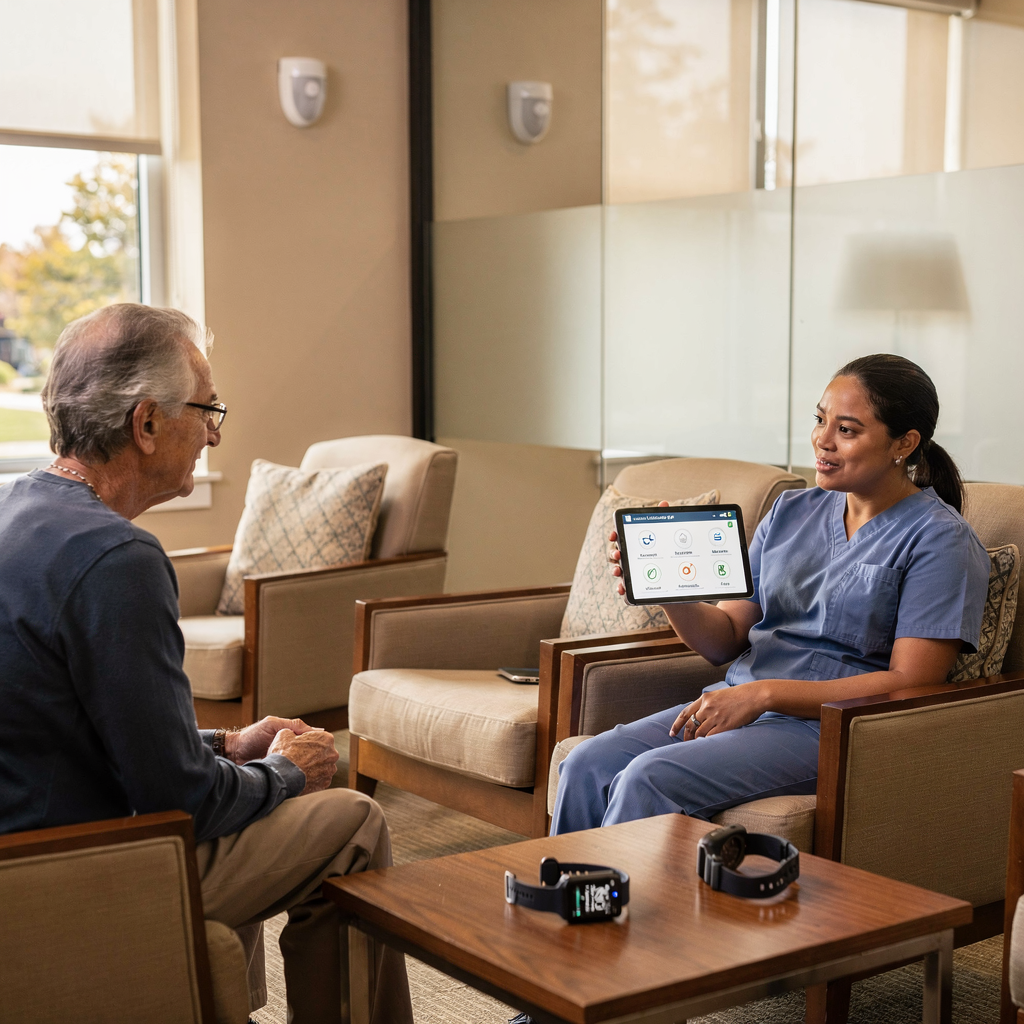
– What it is: AI systems combine sensors, analytics and rules to track movement, vitals and medication events. They can raise an alert to staff or family in real-time when thresholds are crossed.
– Why it matters: These systems reduce avoidable admissions and provide peace of mind to families. Fall detection that uses sensors and machine learning can trigger faster help and improve outcomes. For evidence on medication support, see how AI helps manage complex regimens and flags interactions Avantaje, bariere și nevoi pentru inteligența artificială….
– Example case study: A 60-bed community trialled sensor-based fall detection across four weeks. The system cut average response times to true falls by over a minute and reduced transfers to A&E for minor incidents. Staff reported fewer missed calls and more time for personal attention.
– Technical sidebar: A typical fall detection alert flows like this. A motion sensor or wearable detects unusual acceleration. A local edge processor classifies the event. The system sends a real-time alert to a staff mobile app. If unanswered, it escalates to a second caregiver and then to family contacts. This chain reduces false alarms and ensures a human caregiver can respond when needed.
Practical note: Select systems that integrate with nurse call panels and electronic care records. Also, train staff on calibration, false-alarm management and privacy settings. For those interested in automating administrative messaging and incident emails, an example of email automation that links operational data to responses is here: corespondență logistică automatizată. That method translates well to incident reporting and followup in senior living.
Design for simplicity. Offer timely medication reminders on devices residents already use. Pair sensor alerts with human oversight so residents keep a human touch in their care.
Drowning in emails?
Here’s your way out
Save hours every day as AI Agents label and draft emails directly in Outlook or Gmail, giving your team more time to focus on high-value work.
senior care and ai agents for senior care: benefits, limits and hard numbers
Fact: AI agents can boost adherence and speed up response, but roughly 90% of organisations still struggle to scale agent deployments.
– What it is: AI agents perform tasks such as medication reminders, routing alerts and drafting routine messages. They support care teams by reducing repetitive tasks and administrative burden.
– Why it matters: Faster response times and fewer missed doses mean better outcomes for care residents. Market demand for agent systems is strong; forecasts show a high growth rate across sectors 22 statistici și tendințe AI – Forbes Advisor. At the same time, a report notes that 90% of organisations face scaling challenges for agents 26 statistici despre agenți AI (adopție + impact asupra afacerii).
– Measured benefits: Track KPIs such as missed doses per month, average response times to alerts, false alarm rate and staff time saved on email triage. Operators often see a clear drop in administrative burden after automating the most repetitive tasks.
– Limits and barriers: Integration with legacy records and staff acceptance are common obstacles. Privacy rules and security concerns require strong governance. Also, some AI models need ongoing calibration for different populations and facility layouts.
For operators, clear KPIs matter. Suggested KPIs: average response times to fall detection alerts, percentage of on-time medication doses, false alarm rate, and email handling time. Our platform work with ops teams demonstrates how improving email workflows can reduce handling time and free staff for higher-value care; read about improving logistics customer service with AI for an operational view: cum să îmbunătățiți serviciul pentru clienți în logistică cu AI.
Use evidence-based pilots. Start small, measure effects on quality of care and resident satisfaction, then expand. Remember that AI is only part of a care model. Human caregivers remain essential for complex judgement and emotional support. Where agentic AI acts autonomously we must protect dignity and ensure human oversight is always available.
agentic ai, using ai and ai tools: design, privacy and usability for older adults
Fact: Agentic AI that acts autonomously raises ethical and safety questions; usability for older adults is essential to adoption.
– What it is: Agentic AI refers to systems that take actions on behalf of users. In senior living, that might mean sending messages, adjusting schedules or escalating incidents without a human click.
– Why it matters: Autonomy reduces friction but increases risk. Operators must balance convenience with explainability and consent.
– Example: A medication dispenser that switches to automatic refills and notifies family can simplify routines. But residents must understand and consent to data use and escalation paths.
– Actionable design tips: Build simple interfaces, use voice-activated assistants where helpful, and provide gradual onboarding. Default to local data storage where possible and minimise unnecessary data sharing. Ensure clear consent flows and audit trails so staff can review decisions.
Include GAO-style risk controls. The U.S. GAO warns that AI agents „could be used as tools by malicious actors for disinformation, cyberattacks, and other illicit activities” and that giving agents deep access to personal data brings privacy risks Science & Tech Spotlight: AI Agents | U.S. GAO. Design must include encryption, role-based access and error logging. A quick checklist for product teams: consent flows, explainability, fallback to human oversight, error logging and periodic audits.
For senior users, emphasise clarity. Use large type, simple prompts and clear confirmation steps. Test with residents who have mobility challenges and cognitive variability. Aim to make the system feel like an assistant, not an intrusive monitor. This helps seniors feel comfortable and keeps adoption rates higher.
When using AI, document decisions and keep staff informed. Train human caregivers on when to override the system. That maintains safety and preserves the human touch that residents value.
Drowning in emails?
Here’s your way out
Save hours every day as AI Agents label and draft emails directly in Outlook or Gmail, giving your team more time to focus on high-value work.
senior living communities, transforming senior living and streamline: operations, staffing and marketing
Fact: AI tools streamline admin and support marketing by demonstrating safety gains and tech readiness to prospective families.
– What it is: AI in operations can handle rostering, incident logs, tour scheduling and resident communications. It links operational systems like CRM and shift planners to reduce manual work.
– Why it matters: Staff can spend more time on personal attention and less on repetitive administrative tasks. That raises quality of care and operational efficiency.
– Example operational wins: Automated rostering that reduces conflicts, a chatbot that answers routine senior care inquiries, and CRM-connected followup that improves conversion for tours. For operators focused on communications, see an example of AI email drafting applied to logistics which can be adapted to senior living communications: AI de redactare a e-mailurilor pentru logistică.
– Action step for managers: Pilot one workflow such as tour scheduling or incident email automation. Use measurable goals: conversion, average response times and resident satisfaction scores.
Marketing professionals can use data to show results for senior living: reduced response times, fewer unnecessary hospital transfers, and faster followup for family questions. A clear playbook helps. First, run a small pilot for schedule a tour requests that integrates with CRM. Then measure conversion and publish results for prospects.
AI-powered chatbots can handle basic queries about amenities, pricing and schedule a tour requests while human staff handle complex cases. That balance keeps the human touch and improves throughput for sales teams. When rolling out new tools, involve frontline staff in testing. That prevents missed edge cases and improves acceptance.
fall detection and senior living marketing: deployment, ethics and next steps
Fact: Fall detection is a high-impact selling point, but false alarms and privacy concerns must be managed carefully.
– What it is: Fall detection systems use a mix of wearables, ambient sensors and analytics to detect likely falls and trigger alerts to care teams in real-time.
– Why it matters: Families ask about fall prevention technology when choosing communities. Clear evidence of improved response times and reduced unnecessary hospital visits help with sales and trust.
– Example deployment checklist: device choice, placement, calibration, false-alarm thresholds, escalation paths, family notifications and staff training. Tune thresholds to reduce nuisance alerts but keep a low miss rate.
– Ethical considerations: Get explicit consent, minimise data retention and communicate who sees the data. Keep a human in the loop to review critical escalations. That protects dignity and respects privacy concerns.
Practical next steps for operators: run a short pilot, measure false alarm rate and average response times, then publish results to support senior living marketing and admissions. Use clear metrics such as percentage of true positives and the change in avoidable hospital visits. A market snapshot shows rapid growth in AI solutions with high projected CAGR, yet deployment often stalls without a clear plan proiecții de piață and many organisations report scaling problems probleme de scalare.
Finally, pair technology with training. Make sure human caregivers can override alerts and that family communication lines are tested. Do a post-deployment check-up and keep logs for continuous improvement. This approach helps senior living communities deliver high-quality care while protecting residents’ dignity and security.
FAQ
How do AI systems help with medication management?
AI systems can track doses, send timely medication reminders and flag missed or conflicting medications. They create logs that staff and family can review, which reduces errors and supports clinical audits.
Can fall detection systems work without wearables?
Yes. Some systems use ambient sensors and cameras with edge analytics to detect falls. However, wearables can improve accuracy and help when residents move between private and shared spaces.
What privacy safeguards should we require?
Require encryption, role-based access, minimal data retention and explicit consent from residents or their lawful proxy. Also insist on audit logs and periodic security reviews to address security concerns.
How should we measure success for a pilot?
Track response times, missed doses, false alarm rate, staff time saved and resident satisfaction. Use those KPIs to decide whether to scale the solution.
Will AI replace human caregivers?
No. AI is a tool to reduce repetitive tasks and give caregivers more time for personal attention. Human judgement, compassion and complex decision-making remain essential.
How do we address false alarms from fall detection?
Calibrate sensors, adjust thresholds and combine multiple data sources to lower false positives. Train staff on escalation paths and maintain a rapid followup process to reduce nuisance alerts.
Can we integrate AI with our CRM and booking systems?
Yes. Integrations let AI route enquiries, manage tour scheduling and improve conversion for admissions. For examples of how automation links operational systems to email workflows, see approaches to automate and draft complex operational messages: inteligența artificială în comunicarea logistică de mărfuri.
What is agentic AI and is it safe for senior living?
Agentic AI acts on behalf of users and may automate decisions. It can be safe if designed with clear consent, human oversight, explainability and strong error logging. Always include fail-safes to revert to human control.
How do we get residents to accept new technology?
Start early, keep interfaces simple and involve residents in testing. Offer gradual onboarding and continue in-person support so seniors feel comfortable with changes.
Where can we learn more about automating operational communications?
Look for case studies that show reduced handling time and clearer ownership of messages. For an operational example relevant to care teams and incident emails, explore automated email lifecycle tools that ground replies in operational data: virtualworkforce.ai ROI și cazuri de utilizare.
Drowning in emails?
Here’s your way out
Save hours every day as AI Agents label and draft emails directly in Outlook or Gmail, giving your team more time to focus on high-value work.