


How an ai agent helps recruit top candidates and automate screening.
First, think of an AI agent for recruiting as a multipurpose assistant that runs sourcing, CV screening, interview scheduling, and initial outreach. It can source candidates from public job boards, social networks, and internal talent pools. Next, it can triage incoming résumés and rank applicants against job requirements. Then, it can manage interview scheduling and perform first-touch outreach with templated, personalized messages. As a result, the recruiting team saves time and focuses on higher-value conversations with top candidates.
AI tools cut cost-per-hire by roughly 30% on average. This figure comes from industry reports that track AI-driven screening efficiency and improved matches (sursa). Also, an expert framing captures the partnership between people and automation: „AI agents don’t replace recruiters, they amplify them. The best results happen when humans lead and AI handles the repetitive, operational tasks” (sursa). That quote clarifies why human oversight matters. Moreover, autonomous candidate sourcing can find a wider net fast, while human sourcing remains better at nuanced cultural fit and senior roles.
For example, an AI sourcing agent scans thousands of profiles overnight, then flags 20 high-fit candidates. A human recruiter then reviews the shortlist for soft-skill fit and strategic fit. This division of labor shortens time-to-hire and increases shortlist precision. Therefore, outcome metrics to measure include reduction in recruiter hours per hire and improved shortlist-to-hire ratio. Also, track interview-to-offer conversion and candidate engagement rates.
Practical note: start with a single role. Pilot an AI screening workflow that integrates with your ATS. Then, compare baseline metrics. If you need an example of email-led outreach automation that ties into operational data and governance, see how teams automate outreach workflows for operational emails (ciclul de viață automatizat al e-mailurilor). Finally, keep human touchpoints where judgement and negotiation matter. Use the AI agent to remove repetitive work so recruiters can build rapport with top candidates.
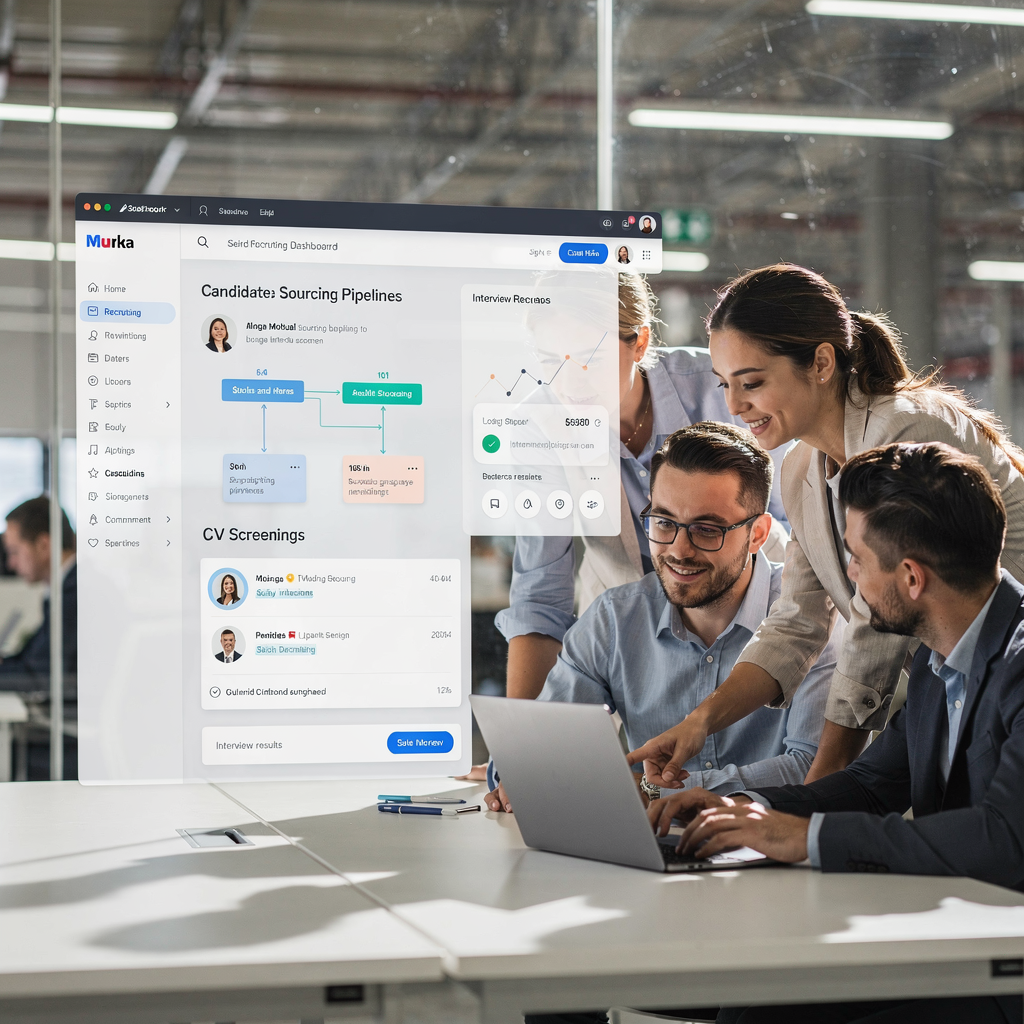
Why ai agent for recruiting lowers costs and scales volume hiring.
Automation matters when volume hiring strains teams. First, an AI agent reduces repetitive tasks like resume parsing, initial screening, and scheduling. Second, integrated AI workflows connect with ATS systems and calendars so tasks move without manual handoffs. As a result, hiring teams scale outreach and screening while keeping a small headcount. Industry cases show firms report faster screening and fewer open vacancies after deploying AI-driven hiring tools (sursa). Also, many organizations report substantial cost savings per hire when they automate well.
Run a cost baseline. Then pilot a narrow workflow. For instance, automate candidate matching and interview scheduling for one role. Next, measure time-to-fill and cost-per-hire before and after. This practical testing avoids over-commitment. Also, integrate the AI screening tool with your ATS and calendar so data flows cleanly. If your hiring relies on email outreach, platforms that automate the entire email lifecycle show how grounded responses and routing cut handling time. See a practical reference for email automation and ROI in operations automation (referință ROI).
AI capabilities that matter here include scalable candidate-matching, automatic pre-screening, and bulk outreach with personalization. For volume hiring, a team of specialized AI can run parallel sourcing funnels and re-rank candidates as new data arrives. Then, recruiters focus on interviews and offer negotiation. Consequently, hiring efficiency rises. Also, faster hiring reduces vacancy costs. For example, a well-tuned AI reduces time-to-hire, which lowers lost productivity and recruitment advertising spend. Finally, plan governance: set thresholds for automatic rejection and for escalating qualified candidates to a human recruiter.
Drowning in emails?
Here’s your way out
Save hours every day as AI Agents label and draft emails directly in Outlook or Gmail, giving your team more time to focus on high-value work.
How agentic ai and ai recruiting improve decisions while keeping humans in charge.
Agentic AI brings autonomy, multi-step actions, and the ability to act across systems. First, agents can run multi-step pipelines: source, screen, message, schedule, and report. Second, they can escalate when uncertainty exceeds a threshold. However, autonomy does not remove human responsibility. Organizations must define clear guardrails and escalation points so hiring decisions stay trustworthy. McKinsey finds that agentic systems can boost productivity and innovation, yet organisations must manage trust and training (sursa). Therefore, using agentic AI requires explicit boundaries.
Practical actions include human-in-the-loop checkpoints, decision thresholds, and audit logs for agent actions. Also, keep a human recruiter assigned as the primary approver for offers and final hiring decisions. In practice, agents can draft interview questions, recommend assessments, and summarize candidate histories. Then, humans make the judgement calls. For transparency, maintain an edit trail so hiring managers can trace why the agent flagged a candidate. This helps when legal or compliance questions arise.
Trust remains low in many workplaces. Only a small share of desk workers currently trust AI outputs enough to fully rely on them for job tasks (sursa). Thus, training and iterative validation matter. Also, define which tasks agents can perform autonomously and which need escalation. For example, let a reporting agent assemble candidate shortlists, but require a hiring manager sign-off before interviews. Finally, document the advantages of agentic AI, and monitor actual hiring outcomes so you can adjust thresholds and workflows as you scale.

Talent acquisition playbook: leveraging ai in talent acquisition and ai recruiting for better quality of hire.
Start with clear hiring needs. Then create accurate job requirements and data-driven role profiles. Use those profiles to train an AI recruiter and to calibrate candidate scoring. Also, craft the job description so it reflects core competencies and objective criteria. For quality-of-hire metrics, combine TA KPIs like retention and performance with AI performance metrics like shortlist accuracy and engagement rates. This hybrid measurement ties AI outputs to actual hiring outcomes.
Next, optimize sourcing strategies. Use AI sourcing to surface passive candidates and re-rank internal talent pools. Also, tailor outreach to segments for better response rates. For candidate experience, keep communications timely and transparent. AI can automate confirmations, scheduling, and status updates while preserving a human point of contact. If your operations include heavy email flows, consider how end-to-end email automation improves candidate communications; our operations work shows how email automation can cut handling time while keeping context and governance (cum să extindeți operațiunile cu agenți AI).
Practical moves include iterative job posting tests, A/B messaging, and closed-loop feedback between recruiters and the AI system. Also, monitor quality-of-hire over time and feed outcomes back into training datasets. For employer branding, use AI assistants to maintain consistent tone across messages and interviews. However, keep senior and sensitive communications human-led. Finally, measure results: track time-to-hire, candidate satisfaction, and retention. Also, test specialized AI agents for hard-to-fill roles. When you blend human judgement with automated precision, you improve offer acceptance and reduce early turnover.
Drowning in emails?
Here’s your way out
Save hours every day as AI Agents label and draft emails directly in Outlook or Gmail, giving your team more time to focus on high-value work.
Addressing bias and risk: ai in recruitment, ai models and ethical safeguards.
Bias arises from training data, labels, and design choices. First, legacy HR data often reflects historical biases. Second, proxies like alma mater or gaps in employment can introduce unfair signals. Third, model drift can amplify bias over time. Research based on interviews with HR professionals and AI developers highlights that „Reducing AI bias in recruitment and selection requires continuous collaboration between HR and AI developers” (sursa). Therefore, cross-functional work is essential.
Mitigation starts with diverse training data and robust bias-testing frameworks. Also, run counterfactual audits and evaluate fairness metrics for gender, race, age, and other protected classes. In practice, set up continuous monitoring and HR–developer feedback loops so you can fix model drift quickly. Additionally, log agent actions and maintain human review checkpoints for edge cases. That way, recruiters and hiring managers can challenge automated decisions and adjust rules.
Legal and reputational risk also matters. For example, the rise of autonomous AI that applies on behalf of candidates has created a flood of AI-generated résumés, which complicates verification and screening (sursa). As a result, companies must update verification steps and add provenance checks. Also, keep a documented policy for when agents may act autonomously and when they must escalate. Finally, adopt transparent explainability practices so hiring teams can explain automated recommendations to candidates and auditors. These steps protect fairness and trust across the recruitment process.
Practical checklist for recruiters: use ai recruiting agent, craft job description and measure benefits of ai.
Define the hiring problems first. Then pick pilot roles with clear job requirements and available outcome data. Also, set baselines for time-to-hire, cost-per-hire, and shortlist accuracy. Next, select an AI recruiting agent and integrate it with your ATS and calendar. Train the team on the tool. In parallel, enforce detection of AI-generated CVs and add human review stages for final decisions. For teams that rely on email outreach, tools that automate email workflows can improve consistency and speed; see our guide to automating email-driven tasks and response routing (ghid de automatizare e-mail).
Checklist items:
– Define hiring problems and success metrics. First, set KPIs like time-to-hire, shortlist accuracy, candidate satisfaction, and quality-of-hire. Second, document escalation rules and decision thresholds. Third, select pilot roles and run a short trial.
– Configure and test. Integrate the AI screening tool with your ATS. Then map workflows, set data access, and run end-to-end tests. Also, ensure audit logs capture agent decisions.
– Train people. Train recruiters and hiring managers on tool outputs, biases to watch, and how to override suggestions. Also, schedule regular feedback loops between recruiting and engineering. For governance, start small and expand the team of ai agents only where controls are proven.
– Measure benefits. Compare cost-per-hire and time-to-fill against baseline. Then evaluate actual hiring outcomes, including retention and performance. Finally, iterate job description wording and role profiles based on results. Use these steps to make recruiting more efficient, fair, and human-centered while leveraging advanced AI safely.
FAQ
What is an AI agent in recruitment?
An AI agent is an automated system that performs specific recruiting tasks such as sourcing, screening, outreach, and scheduling. It reduces manual work and helps recruiters focus on high-value interviewing and candidate relationships.
How does an AI agent improve time-to-hire?
AI agents automate screening and scheduling, which speeds up the early stages of talent acquisition. As a result, recruiters spend less time on admin tasks and more time closing candidates.
Will AI replace recruiters?
No. AI agents handle repetitive tasks and amplify human capacity. Human recruiters still lead candidate selection, negotiation, and culture-fit decisions.
How do I measure the benefits of an AI recruiting agent?
Track KPIs such as time-to-hire, cost-per-hire, shortlist accuracy, candidate satisfaction, and retention. Run a pilot and compare these metrics to your baseline.
Can AI reduce bias in recruitment?
AI can help if it is trained and audited correctly. However, biased training data or models introduce risk, so continuous monitoring and HR–developer collaboration are required to reduce bias.
What is agentic AI and why does it matter in hiring?
Agentic AI refers to autonomous systems that can perform multi-step actions across systems. It matters because it can free up time across the entire hiring life cycle, but it requires clear guardrails and human oversight.
Are AI-generated résumés a problem?
They can be. Autonomous AI that applies on behalf of candidates has increased the number of AI-generated applications, which complicates verification and screening. Employers should add provenance checks and flag suspicious submissions.
How do I start a pilot with an AI screening tool?
Pick a single role with clear metrics, define success criteria, integrate the tool with your ATS, and run a short test. Then review outcomes, adjust thresholds, and expand gradually.
What safeguards should be in place when using recruiting AI?
Implement bias tests, audit logs, human-in-the-loop checkpoints, and clear escalation rules. Also, maintain cross-functional feedback loops between recruiting and technical teams.
Where can I learn more about automating outreach and candidate communications?
Look for resources that show end-to-end email automation and ROI examples. For operations-heavy teams, guides on automating email workflows and scaling with AI agents can offer practical insights (asistent virtual pentru logistică).
Drowning in emails?
Here’s your way out
Save hours every day as AI Agents label and draft emails directly in Outlook or Gmail, giving your team more time to focus on high-value work.