


ai agents for renewable energy: market size, growth and adoption now
The market for AI in renewable energy is growing fast. Allied Market Research estimates the market at about US$0.6 billion in 2022 and projects growth to roughly US$4.6 billion by 2032, a CAGR near 23.2% (Allied Market Research‑prognos). These figures matter for procurement, because they signal rising competition for talent, platforms and compute. They also affect capital planning for pilots and production systems.
At the same time, industry leaders report mixed results. A Boston Consulting Group survey found that almost 60% of energy leaders expected AI to deliver tangible results within a year, yet some 70% said they were dissatisfied with current AI projects (BCG‑undersökning). This gap shows that many pilots do not scale cleanly into long‑running operations. As a result, energy companies must balance investment with clear procurement criteria and governance.
For buyers, the implication is simple. First, insist on measurable KPIs before you sign. Second, require references for production deployments and clear SLAs for latency, accuracy and model updates. Third, budget separately for integration, change management and operational monitoring. Finally, consider vendor maturity when you evaluate AI platforms and ai systems for critical control functions.
Fact box:
– Market size: ~US$0.6bn in 2022 → ~US$4.6bn by 2032 (CAGR ~23.2%) (Allied Market Research‑prognos)
– Adoption sentiment: ~60% expect results in a year; ~70% report dissatisfaction with current implementations (BCG‑undersökning)
For operational teams, virtualworkforce.ai shows how to move from pilot to repeatable work by automating repetitive workflows and preserving context. See a practical guide on how to scale logistics operations with AI agents for an operational view of governance and rollout (hur man skalar logistiska operationer med AI‑agenter).
ai agents in renewable energy: predictive forecasting for solar, wind and demand
The forecast problem is straightforward. Solar and wind generation vary with weather, while short‑term energy demand shifts with temperature and human behaviour. Poor forecasts force grid operators to hold higher reserves or to use fossil backup. AI agents improve short‑term and day‑ahead forecasts by combining weather data, sensor feeds and historical generation.
Different ai models bring different strengths. Time‑series models capture seasonal and diurnal patterns. Ensemble models blend multiple predictors to reduce single‑model bias. Generative AI can synthesise scenario trajectories and improve density forecasts (studie om generativ AI och prognoser). Each approach lowers uncertainty and helps operators decide when to dispatch storage or activate peakers.
Practically, improved forecasts reduce reserve requirements and curtailment. For example, a pilot study using advanced probabilistic models reported meaningful reductions in forecast error for wind and solar; operators then lowered reserve margins and cut fossil peaker hours (generativ AI‑studie). Consequently, energy providers can run plants more flexibly and commit fewer costly thermal reserves.
Agents run at the edge and in the cloud. They ingest NWP (numerical weather prediction), turbine SCADA and satellite irradiance. Then, they output probabilistic forecasts and control signals. The measurable benefits include percent reductions in mean absolute error, fewer ramp events, and lower curtailment rates. Next, utilities should verify model performance over seasonal cycles and across weather regimes.
For teams seeking operational examples, consider pilots with European utilities that combined generative AI forecasts and battery dispatch. Those pilots provide concrete test cases for grid balancing and short‑term energy markets. Also, energy companies can learn how to embed forecasting agents in wider energy management processes by reviewing integration patterns from vendors and projects.
Drowning in emails?
Here’s your way out
Save hours every day as AI Agents label and draft emails directly in Outlook or Gmail, giving your team more time to focus on high-value work.
integrating ai agents: optimize energy production, storage and grid operations
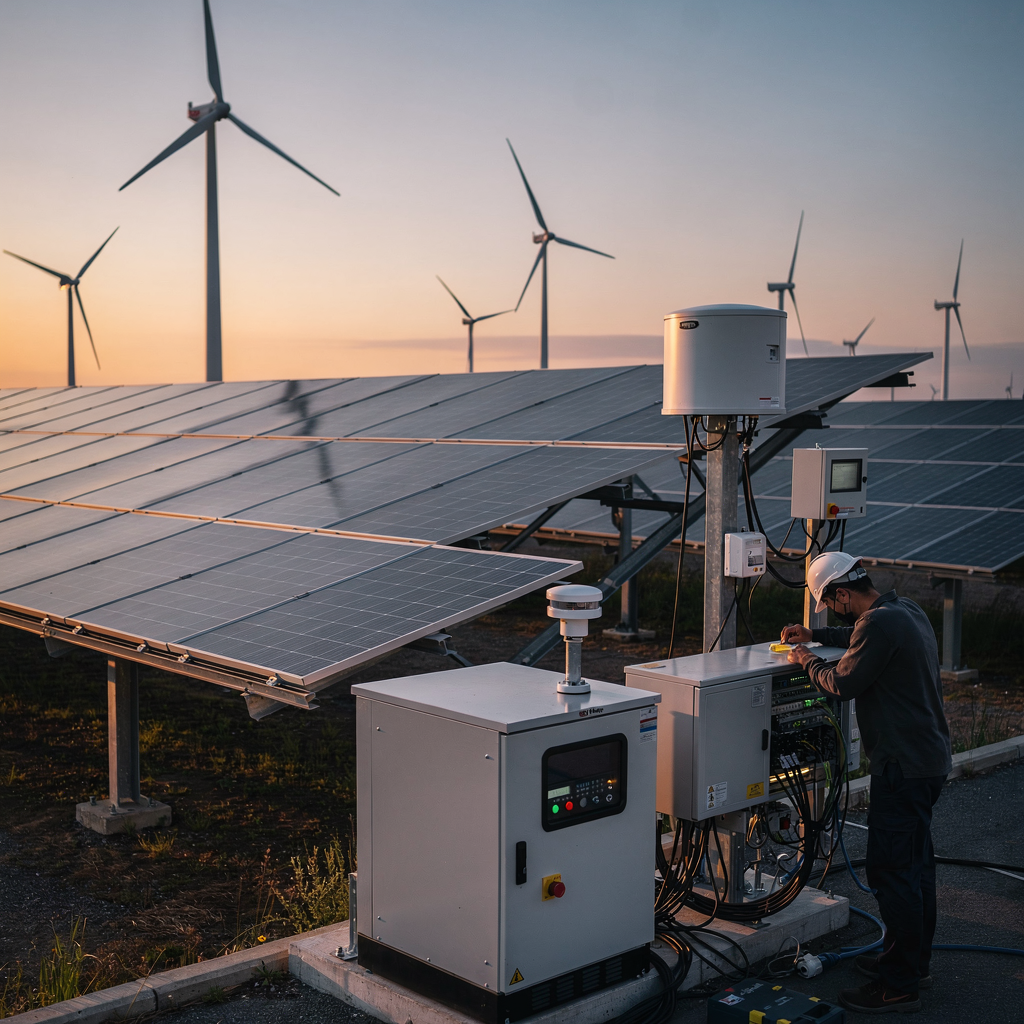
Agents adjust control settings across production, storage and dispatch. The optimisation goals are clear: minimise cost, maximise renewable utilisation and maintain reliability. AI agents connect to control systems, edge devices and market APIs to make short‑horizon decisions. They also embed rules for safety and regulatory compliance.
Production control. First, AI agents tune generator or inverter setpoints to smooth ramps and to reduce curtailment. They can coordinate curtailment across sites to keep grid frequency and voltage stable. An operational metric to track is the percentage of available renewable energy delivered to the grid versus curtailed energy.
Storage management. Second, agents manage charge/discharge schedules for batteries and other energy storage systems. They optimise for price arbitrage, reserve provision and peak shaving. Typical controls include state‑of‑charge limits, ramp rate settings and end‑of‑day energy targets. Trackable metrics include cycle efficiency, battery degradation rate and percent renewable energy served.
Grid operations. Third, agents coordinate with aggregators and virtual power plants to bid in energy markets and provide ancillary services. Edge sensors and IoT integration enable near‑real‑time telemetry, while cloud agents run optimisation layers. This pattern increases utilisation of distributed energy resources and reduces peaking fossil use. For implementation examples and technical patterns, utilities can review IoT and agent integration guides (Avigna‑guide).
Operational teams should measure latency, solution uptime and margin improvement. They should also adopt standard APIs for SCADA and DERMS integration. Finally, internal workflows change because agents make frequent, automated decisions; human teams then shift to oversight and exception handling. For practical steps on automating operational correspondence and control handovers, see guidance on automated logistics correspondence that covers governance and traceability in operational automation (automatiserad logistikkorrespondens).
ai adoption and deploying ai: barriers, scaling and the energy cost of AI itself
AI adoption faces technical, organisational and environmental barriers. Data quality remains primary. Many sites run legacy SCADA with inconsistent timestamps and missing labels. Integration with control systems requires careful change management and certification. Human skills are also scarce; energy companies must hire or train ai specialists. The BCG finding that ~70% of leaders are dissatisfied with AI projects highlights the people and process gap (BCG).
Key barriers and mitigations:
– Data quality: establish data contracts, standardise timestamps and add validation. Use data ops to keep models fed.
– Systems integration: run adapter layers for SCADA and MES. Test in shadow mode first, then incrementally enable control handoffs.
– Skills and governance: hire AI engineers and set clear roles for human agents in approvals and overrides.
– Regulation and cyber: include cybersecurity reviews and regulatory traceability in design. Maintain auditable logs for each decision.
Energy cost of AI. Training large models and running real‑time inference consume electricity. The IEA warns that AI and data centre demand can add to electricity use and emissions, depending on the energy mix (IEA‑analys). IBM also discusses efficiency opportunities and the need to align compute with low‑carbon power (IBM om AI och energieffektivitet). Therefore, teams should estimate compute carbon and then shift or purchase renewable compute where possible.
Practical steps to reduce AI footprint include model compression, spot training windows when low‑carbon grid supply is high, and colocating training near renewable energy sources. Energy companies must also build a scaling plan that moves from pilot to production with clear KPIs, cost models and operations playbooks. For an operational ROI perspective on automation and governance, review a practical ROI study for automated operations (virtualworkforce.ai‑avkastning för logistik).
Drowning in emails?
Here’s your way out
Save hours every day as AI Agents label and draft emails directly in Outlook or Gmail, giving your team more time to focus on high-value work.
ai agents can monitor renewable assets: predictive maintenance, faults and safety
Asset monitoring covers turbines, solar arrays, inverters and balance‑of‑plant. The problem is simple. Unplanned outages cut energy output and raise operating costs. Predictive maintenance aims to predict faults before they occur, reduce downtime and extend equipment life. AI agents detect anomalies from vibration, temperature and electrical signals. They issue alerts and recommend remedial actions.
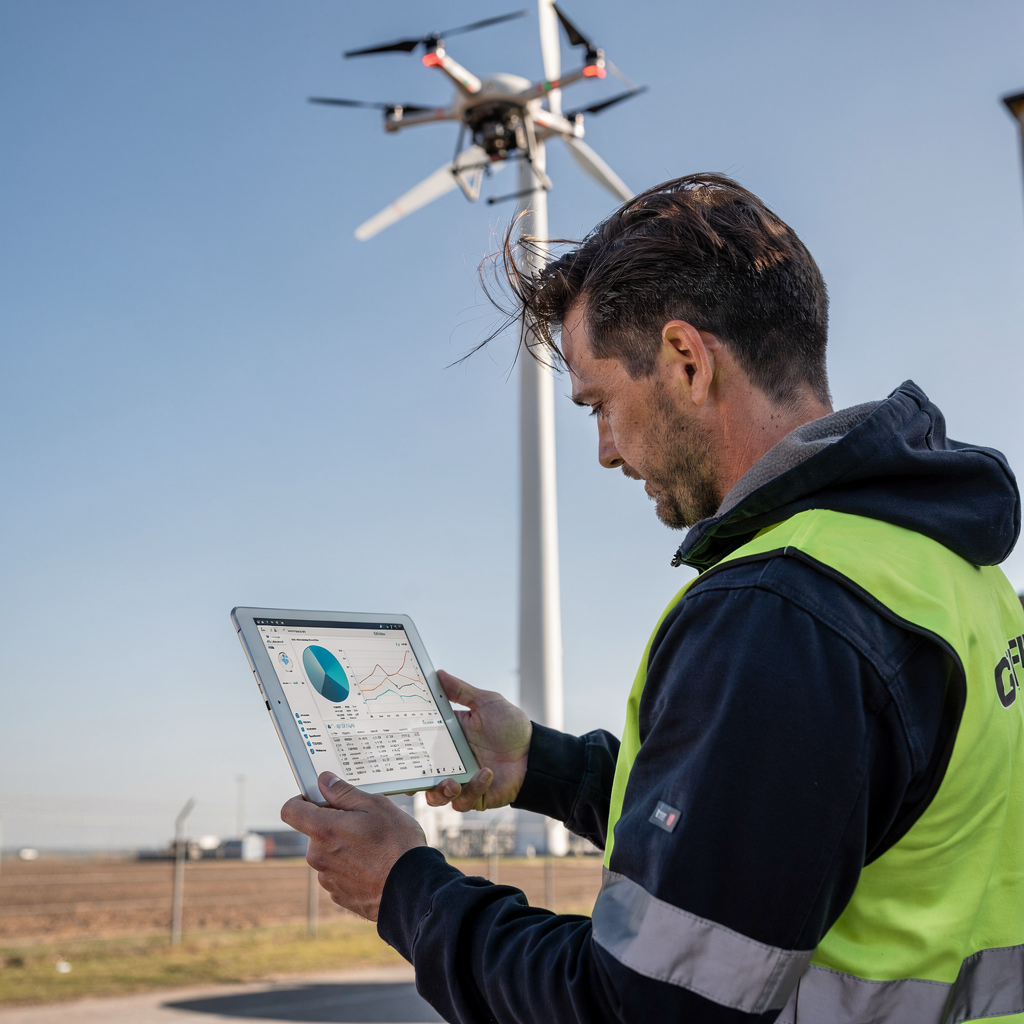
Agent capability. AI agents combine sensor data, maintenance logs and inspection images. Computer vision on drone imagery finds blade erosion, soiling and panel hotspots. Edge agents flag urgent faults, while cloud agents perform trend analysis. This two‑tier pattern limits bandwidth and speeds responses. Typical KPIs are mean time between failures (MTBF), reduction in unplanned outages and maintenance cost per MWh.
Expected ROI. Firms report faster fault detection and lower mean time to repair. Predictive maintenance can reduce unplanned downtime by large percentages in some cases; verification depends on asset class and baseline practices. Also, automated inspection reduces OPEX for routine surveys and cuts health and safety risks for field crews.
Implementation notes. Deploy sensors and ensure timestamp synchronisation. Train models on labelled faults, and then expand using transfer learning across sites. Keep human review in the loop for high‑risk actions. For utilities that already automate communications and data processing, embedding AI to automate emails and maintenance workflows is a proven pattern; see examples of ERP email automation for operational handoffs (ERP‑epostautomation).
Finally, maintain clear change logs and rollback plans. Successful deployments combine good sensors, robust models and disciplined operations. Agents can help deliver safer, more predictable renewable energy operations and improve long‑term asset returns.
using ai agents to integrate renewable energy into the energy sector: case studies, governance and next steps for energy companies
This chapter sketches practical case studies, governance and a rollout checklist. First, a grid operator pilot used probabilistic forecasts and battery optimisation to lower reserve margins. Second, a utility integrated edge agents for inverter control and reduced curtailment. Third, a corporate buyer used AI‑driven forecasts to optimise renewable PPA schedules and reduce imbalance charges. These case sketches show measurable benefits and lessons for scale.
Governance and standards. Good governance includes data lineage, model validation, human‑in‑the‑loop controls and cybersecurity. Energy companies must document decision logic and maintain audit trails. Also, use standard interfaces for SCADA and market APIs. For auditability, require deterministic fallbacks for failed agents and record every recommended action.
Roadmap: a five‑step rollout checklist
1. Assess datasets and systems. Catalog sensors, SCADA endpoints and market feeds.
2. Run targeted pilots. Start with forecasting or storage optimisation where ROI is trackable.
3. Define KPIs. Track error reduction, reserve hours avoided and percent renewable energy served.
4. Scale with governance. Add continuous training, monitoring and incident response.
5. Optimise compute carbon. Estimate energy consumption, then shift training to low‑carbon windows or providers that use renewables.
Calls to action. Energy providers should pilot ai applications for frequency response and energy trading alongside traditional dispatch. They should also create a policy for model risk and vendor selection. For operational automation that reduces manual email load and keeps teams focused on exceptions, teams can learn from automation patterns used in logistics customer service and correspondence (hur man förbättrar logistikens kundservice med AI). Finally, for teams working on market participation, review tools and vendor integrations that support bidding and energy markets with automated workflows (AI‑integrationsmönster för frakt och logistik).
Overall, the potential of ai and the integration of ai agents is clear. By combining pilots, governance and carbon‑aware compute, energy companies can move towards sustainable energy sources while maintaining reliability and commercial value.
FAQ
What are AI agents and how do they differ from regular AI models?
AI agents are systems that perceive, decide and act in an environment with some autonomy. They differ from standalone AI models by combining perception, planning and action, often interacting with control systems or human operators.
How quickly can energy companies expect results from AI pilots?
Many energy leaders expect results within a year, but actual speed depends on data quality and integration complexity. The BCG survey found that around 60% expected quick results, yet many reported dissatisfaction, so realistic timelines matter (BCG).
Can AI agents reduce the use of fossil fuel backup?
Yes. Better forecasts and storage optimisation lower reserve needs and peaker hours. Improved accuracy allows operators to rely more on variable renewable energy and less on thermal backup.
Do AI agents increase energy consumption through compute demand?
Training and inference consume electricity, and demand can grow with model scale. The IEA discusses the energy footprint of AI and recommends efficiency and low‑carbon compute sourcing (IEA).
What governance practices are essential for deploying AI in the energy sector?
Key practices include data lineage, model validation, human‑in‑the‑loop controls, auditable logs and cybersecurity reviews. Clear KPIs and rollback plans are also essential.
How do AI agents support predictive maintenance?
AI agents analyse sensor telemetry and inspection imagery to detect anomalies and predict faults. This reduces unplanned outages and maintenance costs by enabling condition‑based interventions.
Are there operational examples I can study?
Yes. Research on generative AI for forecasting and vendor guides show pilot examples. For integration and operational automation patterns, review vendor resources and case studies in the industry (Avigna‑guide).
What role do IoT and edge computing play?
IoT delivers real‑time sensor data and edge computing reduces latency and bandwidth. Together, they let agents act quickly on local conditions while central systems handle large‑scale optimisation.
How should companies measure success of AI deployments?
Measure forecast error reduction, reserve hours avoided, percent renewable energy served, MTBF and reduction in unplanned outages. Also track model drift, uptime and compute carbon where relevant.
How can my organisation start with AI agents?
Begin with a data and systems assessment, run a narrow pilot for forecasting or storage, set measurable KPIs and plan governance. For operational automation examples that reduce manual work, see approaches to scale operations with AI agents (hur man skalar logistiska operationer med AI‑agenter).
Drowning in emails?
Here’s your way out
Save hours every day as AI Agents label and draft emails directly in Outlook or Gmail, giving your team more time to focus on high-value work.