


AI recruitment for staffing agencies and staffing firms: what AI staffing means for recruitment
AI agents and AI recruiter tools are software that act like helpers for hiring teams. They read resumes, search job boards, rank candidates, and manage simple communications. In plain terms, they sit across the recruitment process where repetitive tasks slow people down. For example, an AI recruiter can screen CVs, tag qualifications, and push shortlisted profiles into an ATS so recruiters can act faster. Also, these tools reduce manual triage and free recruiters for relationship work.
Adoption has surged. In fact, nearly all hiring managers now use machine support in hiring. Insight Global reported that 99% of hiring managers use AI in some stage of hiring. And more than 80% of firms use AI for resume screening, which shortens time spent per application and increases throughput. Therefore, staffing firms can scale candidate intake quickly and handle peaks in high-volume hiring without adding headcount.
Immediate benefits are clear. Staffing firms cut time-to-fill, raise hiring speed, and improve candidate engagement. Also, AI-powered screening boosts shortlist relevance and reduces repetitive work so recruiting teams focus on client relationships. However, limits remain. Accuracy varies by model and dataset. For example, BBC reporting shows some AI screening tools can filter out strong applicants if not tuned and monitored. So human oversight must stay in place for final hiring decisions and nuanced interviews.
Practical note: when you integrate AI staffing, choose systems that connect to your ATS platforms and allow rule edits. Also, test with real roles and measure results. If you want to see how AI can automate communication workflows in other operations, our company work explains how agents automate entire email lifecycles to free teams for higher-value tasks. See our guide to automated logistics correspondence for a practical example of end-to-end automation that parallels recruitment automation.
AI agent, AI agents for recruiting and agents for staffing that source and surface top candidates
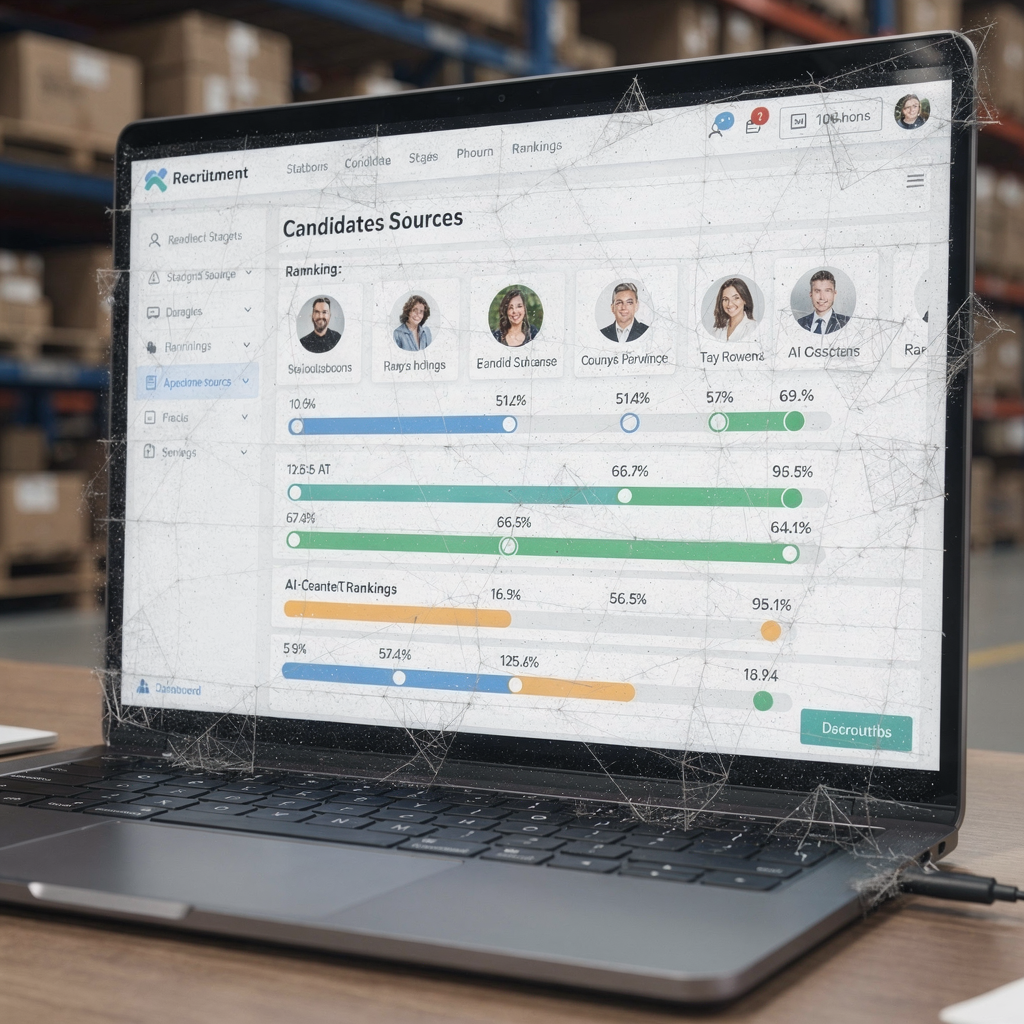
AI agents and agents for staffing automate sourcing, matching, and ranking so you surface top candidates faster. First, they crawl CVs, job boards, LinkedIn, and internal ATS content. Then they score and rank profiles against job criteria. Also, AI systems can pull passive candidates from social feeds and build candidate lists while recruiters sleep. As a result, candidate pipelines move quicker and recruiters get higher-quality leads.
Typical data sources include resumes, internal ATS records, job boards, and public profiles. Additionally, some platforms enrich profiles with skills signals and project history. For example, a modern ai platform will merge ATS data with LinkedIn signals and referral lists. For metrics, recruiters care about pipeline velocity, response rates, and shortlist quality. You should track how fast sourced candidates reach first contact, and how many become qualified candidates. Also, measure reply rates for outreach templates written by generative AI.
To avoid missing unconventional talent, combine automated sourcing with recruiter validation. Use the AI to surface a ranked set of profiles and then have a human check edge cases. Also, keep a small control group that the AI does not touch so you can compare outcomes. If you want practical parallels to other operational automations, review how email agents route and resolve messages with deep data grounding in complex systems for an example. That approach mirrors how recruiting agents should access structured and unstructured data to make better matches.
Finally, choose vendors that let you tune sourcing rules and that provide clear audit logs. Also, ensure the platform supports export into your ATS and that it logs why a candidate was ranked. This helps with compliance, with fairness, and with continuous improvement. If you need a comparison of tools that help teams scale, our customers often review best AI tools for logistics and operations to see how scale works in practice and adapt lessons to recruiting.
Drowning in emails?
Here’s your way out
Save hours every day as AI Agents label and draft emails directly in Outlook or Gmail, giving your team more time to focus on high-value work.
Talent intelligence, talent management and quality of hire: AI‑powered platforms and generative AI improving hiring outcomes
Talent intelligence turns raw candidate signals into actionable insight. A talent intelligence platform ingests CVs, interview notes, and performance data. Then it highlights trends, skills gaps, and potential internal hires. AI helps surface career pathways and build talent pools for future roles. Also, talent management teams can use these insights to match skills to upcoming demand and to create targeted development plans.
Generative AI plays a practical role. It drafts job descriptions, personalizes candidate outreach, and creates clear interview briefs for hiring managers. In many cases, generative AI reduces time spent writing by 50% and improves message personalization. For quality of hire, measure time to hire, offer acceptance rate, and first-year retention. Additionally, use quality-of-hire surveys to track performance after onboarding.
Tradeoffs exist. Efficiency gains can increase bias risk if models rely on biased training data. Therefore, run bias audits and track diversity metrics. Remember that algorithmic decisions should not replace human judgment for final hiring decisions. Also, combine AI outputs with assessor calibration and structured interviews to protect long-term hiring quality.
KPIs to track include time to hire, offer acceptance, first-year retention, and quality of hire surveys. Also, monitor recruiting costs per hire and shortlist conversion. Advanced AI platforms like those used by leading vendors and by some operations teams offer audit trails and explainability. For example, firms reference agentic studies and industry reviews when they build governance into procurement. If you want to review how structured automation improved response times in operations, see our case work on scaling logistics operations without hiring, which shows measurable time savings and consistency gains you can parallel in recruiting.
Recruitment automation, workflow and the rising role of conversational AI, AI interviewer and AI voice agents to automate the hiring workflow and ai interview stages
Conversational AI and AI voice agents now handle many front-facing steps in recruitment. They manage scheduling, run screening questionnaires, answer candidate FAQs, and sometimes conduct asynchronous AI interviews. These tools let recruiting teams scale candidate conversations without losing responsiveness. For example, an AI interviewer can ask structured questions, capture responses, and provide a transcript for human review.
Use cases include automated screening questionnaires that pre-qualify applicants, asynchronous video interview review where hiring managers watch short clips on demand, and real-time candidate triage that routes candidates to the right recruiter or role. Also, AI voice agents can confirm availability and reduce scheduling friction. These automations improve candidate experience and reduce time spent on repetitive tasks.
Yet evidence calls for caution. Reporting shows that some AI hiring tools may inadvertently filter out top talent if models rely on narrow signals that exclude diverse backgrounds. Therefore, keep humans in the loop for final hiring decisions and for ambiguous cases. Start by automating low-risk tasks such as interview scheduling and CV parsing. Then measure candidate experience closely and iterate.
Measure throughput, candidate experience, and quality signals. Also, integrate AI interview outputs into your ATS platforms so hiring managers see context within the recruitment process. If your firm needs proven examples of end-to-end automation in operational inboxes, look at our guide on automating logistics emails with Google Workspace and virtualworkforce.ai which shows how to maintain traceability and accuracy across long threads and apply similar controls to recruiting. Finally, remember that automated hiring should augment recruiters, not replace them.
Drowning in emails?
Here’s your way out
Save hours every day as AI Agents label and draft emails directly in Outlook or Gmail, giving your team more time to focus on high-value work.
Agentic AI and customizable AI: when autonomous agents accelerate hiring but add governance needs for the hiring team and hiring automation
Agentic AI refers to autonomous agents that act with more independence than task-focused tools. They can search roles, apply business rules, and in some designs even make offer recommendations. Recent industry work shows that roughly 35% of organisations already use agentic AI and many more plan to adopt it as reported by BCG. Therefore, agentic AI can accelerate routine decisions and reduce time spent on repetitive steps.
Contrast this with customizable AI that stays in a recruiter’s control. Customizable AI lets you set rules, adjust scoring, and tune language for outreach. Use customizable AI for predictable tasks. Use agentic AI for controlled, repeatable activities that have clear escalation paths. Also, remember candidates may now use autonomous agents to apply for roles, which changes the applicant pool dynamics as reported by the New York Times.
Governance needs increase with autonomy. Your hiring team must require transparency, bias audits, consent, data protection, and escalation paths. Also, add logging and manual override features. Ethical AI principles should guide vendor selection and internal policy. For practical procurement, demand vendor explanations for decisions and access to audit logs. Additionally, test how agents handle edge cases and how they escalate to recruiters.
If you plan to build or buy, pay attention to how agents access data and how they change hiring decisions. For guidance on building governed automations in operations, our company work shows how to allow IT control while giving business teams rule-level configuration for tone and routing which is a useful model for staffing teams. Finally, align agentic AI use with legal and compliance teams and with HR teams so that candidates and clients remain protected.

Implementing leading AI platforms and AI recruiter tools: practical steps for staffing agencies to select, integrate and measure success
Choose vendors with transparency and strong integration options. Your procurement checklist should include vendor transparency, bias mitigation, API / ATS integration, data security, and customisability. Also, demand audit logs and explainability for scoring decisions. For example, check that the solution can push data back into ATS platforms and that it supports standard export formats.
Start with a pilot plan. Pick one workflow to automate, define baseline KPIs, run A/B tests, and iterate. For instance, automate interview scheduling and CV parsing first. Then measure impacts on hiring speed and candidate experience. Also, run blind reviews to test shortlist quality. Track speed, cost per hire, shortlist relevance, and candidate satisfaction. If you need examples of scalable automation, study implementations in operations where agents reduce handling time and increase consistency and apply those lessons. That will help you streamline your hiring process while protecting service levels.
Measure impact on hiring outcomes with clear metrics. Use time to fill, offer acceptance, quality of hire, and first-year retention as core KPIs. Also, measure recruiting costs and candidate engagement rates. Invest in upskilling so recruiters can use AI as an assistant and a recruiting assistant. Train teams to read AI outputs critically and to escalate when models disagree with human judgment.
Finally, treat AI as an augmentation not a replacement. Keep final hiring decisions with people. Also, require vendors to support compliance and ethical AI practices. If your firm runs high-volume hiring, select platforms that scale and that allow you to tune rules and measure bias. In many cases, the right leading AI tools will help you reduce cycle time and improve shortlist relevance while keeping humans firmly in control.
FAQ
What exactly is an AI agent in recruitment?
An AI agent in recruitment is software that performs specific hiring tasks autonomously. It might screen resumes, schedule interviews, or source candidates from public profiles while following preset rules, and it can surface ranked candidates for review.
How do AI agents help staffing agencies scale?
AI agents increase throughput by automating repetitive tasks such as CV parsing and scheduling. They let recruiters focus on candidate relationships and client strategy, and they often reduce time-to-fill and recruiting costs.
Are AI recruiters biased?
AI recruiter tools can reflect bias present in their training data or rules. Therefore, agencies must run bias audits, monitor diversity metrics, and keep humans in the loop for final hiring decisions to protect fairness.
Can conversational AI replace phone screens?
Conversational AI and AI voice agents can handle structured phone screens and collect standardized answers. However, recruiters should review outputs and keep nuanced assessments for human interviewers.
What is agentic AI and should my firm use it?
Agentic AI are autonomous agents that act with more independence than task-focused tools. They can accelerate routine decisions, but they require stronger governance, transparency, and escalation processes before you deploy them.
How do I measure quality of hire when I implement AI?
Measure time to hire, offer acceptance, first-year retention, and performance-based quality-of-hire surveys. Also, compare shortlist conversion rates before and after AI implementation to see real impact.
What integrations should I require from an AI vendor?
Require API and ATS integration, data security certifications, audit logs, and customisability. Ensure the vendor can export candidate data back into your ATS and can explain scoring decisions.
Can candidates use AI agents to apply for jobs?
Yes, some candidates now pay for autonomous agents that find and apply to roles on their behalf. This trend adds complexity to sourcing and verification, so teams should adjust screening rules and fraud checks.
How do I protect candidate data when using AI platforms?
Ensure vendors follow data protection standards, use secure APIs, and provide consent mechanisms. Also, limit data retention to business needs and document governance processes for audits.
Where can I learn more about practical automation examples?
Look for case studies that show end-to-end automation in operations and recruiting. For example, our guides on automating logistics emails and on scaling logistics operations with AI agents offer practical controls and results that translate well to recruitment automation for teams curious about implementation.
Drowning in emails?
Here’s your way out
Save hours every day as AI Agents label and draft emails directly in Outlook or Gmail, giving your team more time to focus on high-value work.